
What does a range hood do? It pulls smoke, steam, grease, and combustion byproducts out of your kitchen air. It either vents them outside or filters them before recirculating. That’s the difference between air that clears in seconds and air that lingers, coats your cabinets, and irritates your eyes and throat. Below is exactly how a range hood works, why it matters, and what to look for when sizing one.
Key Takeaways
- A range hood’s fan pulls cooking byproducts into a filter. It then either vents them outside (ducted) or filters and recirculates them (ductless).
- Gas stoves release NO2 and carbon monoxide during cooking. The Washington State Department of Health cites EPA data showing NO2 levels run 1.5 to 4 times higher in gas-stove homes than electric.
- Size your hood using the HVI rule of thumb: 1 CFM for every 100 BTUs of your cooktop’s total output.
What Does a Range Hood Do?
So what does a range hood do, exactly? It captures the smoke, steam, grease particles, and gases that rise off your cooktop while you cook. Its fan pulls that plume of air into a filter. From there, a ducted hood pushes the captured air outside through ductwork. A ductless hood runs it through a charcoal or grease filter and releases the cleaned air back into the kitchen.
This matters more than it might seem. Cooking, especially on a gas range, generates real air pollutants, not just smells. Frying and searing release fine particulate matter (PM2.5). Gas burners add nitrogen dioxide, carbon monoxide, and trace formaldehyde on top of that, all byproducts of incomplete combustion. Without ventilation, this mix builds up fast and drifts into other rooms.
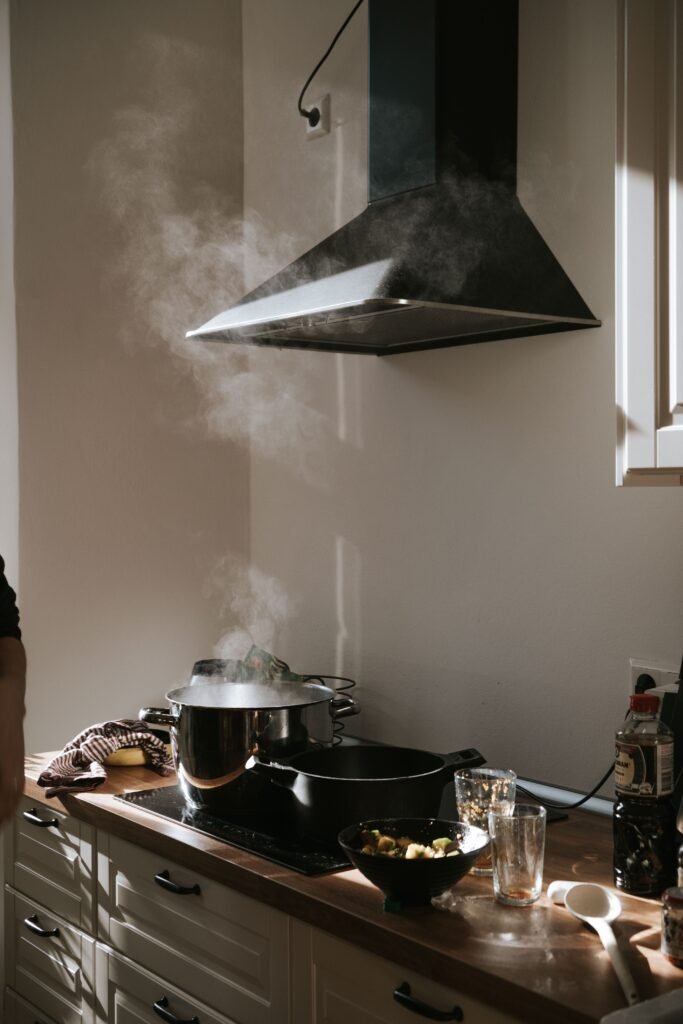
Table: Range Hood Components and Their Function
Before getting into how a range hood works, it helps to see the parts laid out at a glance:
| Component | Function |
|---|---|
| Hood/Canopy | Captures smoke, fumes, and pollutants generated during cooking |
| Fan | Pulls air, carrying smoke, fumes, and pollutants up and away from the cooking surface |
| Duct | Routes captured air outside the home (ducted models only) |
| Grease Filter | Traps airborne grease before it reaches the fan or is recirculated |
| Charcoal Filter | Neutralizes odors in ductless models before air is released back into the kitchen |
| Control Panel | Operates fan speed and lighting |
| Lights | Illuminate the cooktop area |
How a Range Hood Works
Every range hood shares three core parts: the hood itself, a fan, and a filter. The hood is the visible shell that sits over your cooktop and captures the rising plume. The fan, mounted inside or remotely, pulls that air up and away from the burners. The filter catches grease and particulates, either trapping them for a ducted system’s exhaust or scrubbing them clean for recirculation.
Turn on the hood, and the fan starts pulling air upward immediately. As it draws air in, it carries smoke, steam, and grease with it. The filter catches most of the particulates. A ducted hood then pushes the remaining air outside. A ductless hood runs it through an additional charcoal filter to neutralize odors before releasing it back into the room.
Types of Range Hoods
- Wall-mounted: The most common style, installed directly on the wall above the cooktop.
- Island: Mounted from the ceiling over a cooktop set in a kitchen island.
- Under-cabinet: Fixed to the bottom of a cabinet above the stove, a compact and budget-friendly option.
- Downdraft: Built into or beside the cooktop itself, pulling air down and out rather than up.
- Pro-style: Larger, higher-CFM hoods built for commercial-style ranges and heavy cooking.
Every one of these types comes in either ducted or ductless form. Ducted models exhaust air outside and are more effective at removing gases like NO2, but they need proper duct routing. Ductless models are easier to install in kitchens without existing ductwork, though they only filter particulates and odors, not gases. For a full breakdown of which fits your kitchen, see our guide on the difference between duct and ductless range hoods.
Why Ventilation Matters: The Air Quality Case
Cooking without a range hood isn’t just a smell problem. The Washington State Department of Health cites EPA data showing homes with gas stoves have NO2 levels 1.5 to 4 times higher than homes with electric stoves. NO2 exposure is linked to worsened asthma and breathing problems, especially in children. A 2006 study cited by the department found gas-stove pollution more than doubled the odds of wheezing and shortness of breath in kids with asthma living in multifamily housing.
Gas combustion also releases carbon monoxide and trace benzene, a known carcinogen. A range hood that vents outside removes these pollutants at the source, rather than letting them spread through the house. If you’re weighing whether ventilation is worth the investment at all, our guide on what an exhaust fan does in your kitchen covers the case for basic ventilation even without a dedicated hood.
Beyond Air Quality: Everyday Benefits
A More Comfortable Kitchen
A range hood pulls excess heat and steam out of the cooking area, keeping the kitchen more comfortable during long cook sessions. It also clears cooking odors faster, so smells don’t linger into the evening.
Less Cleanup
Airborne grease settles on cabinets, walls, and countertops if it isn’t captured. A working range hood catches much of that grease before it lands. That cuts down on the sticky film that builds up over months of cooking without ventilation.
Kitchen Style
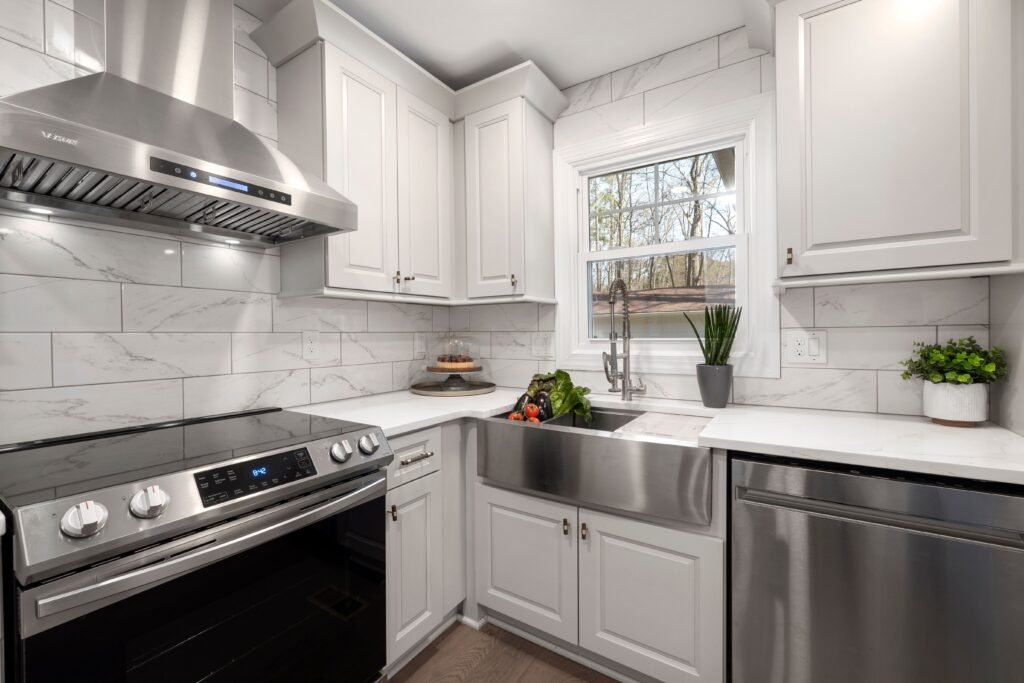
Beyond function, a range hood is one of the most visible design elements in a kitchen. Stainless steel, custom wood covers, and sleek under-cabinet models all shape the room’s look. A well-chosen hood can be a genuine style statement and a selling point if you ever list the home.
Real estate agents often point to a well-integrated range hood as a small but noticeable upgrade. It signals to buyers that the kitchen has been thought through, not just decorated.
Sizing a Range Hood: The CFM Rule
Range hood power is measured in CFM, cubic feet per minute of airflow. The Home Ventilating Institute’s standard guideline is 1 CFM for every 100 BTUs of your cooktop’s total burner output. A 40,000-BTU gas range needs a hood rated at least 400 CFM. For electric or induction cooktops, a simpler rule applies: about 100 CFM per linear foot of cooktop width for wall-mounted hoods. Island installations need 150 CFM per foot, since open airflow on all sides reduces capture efficiency.
Don’t rely on BTUs alone. Duct length, elbow turns, and mounting height all reduce real-world airflow below the rated CFM. If you’re unsure of your range’s total BTU output, check our guide on how many BTUs you need for a gas range before shopping for a hood.
What to Consider When Buying a Range Hood
- CFM: Match airflow to your cooktop’s BTU output or width, using the guidelines above.
- Size: The hood should be at least as wide as your cooktop, ideally a few inches wider on each side.
- Venting type: Ducted for maximum pollutant removal, ductless if duct routing isn’t possible.
- Noise: Fan noise is measured in sones. Look for a low sone rating if you plan to run the hood on high often.
- Mounting height: Manufacturers typically specify 24 to 30 inches above the cooktop; too high reduces capture efficiency.
- Features: Multi-speed fans, built-in lighting, and auto-shutoff timers add convenience.
- Budget: Basic under-cabinet models start under $200; pro-style ducted hoods can run well over $1,000 installed.
Installing and Maintaining a Range Hood
Installation involves mounting the hood at the correct height, then connecting it to ductwork (for ducted models) or wiring it into an existing electrical circuit. Ducted installations often require cutting through a wall or roof to route the exhaust outside. That’s why professional installation is worth the cost for most homeowners. If you’re planning a DIY ducted install, our step-by-step guide on venting a range hood through a roof walks through the process.
Maintenance is simpler. Clean or replace grease filters every one to three months, depending on how often you cook. Have the fan and any ductwork inspected periodically to make sure grease buildup isn’t restricting airflow. Neglecting filters doesn’t just hurt performance either. A clogged filter forces the fan motor to work harder, which can shorten its lifespan and raise your energy costs. Our guide on keeping a range hood clean covers the full routine.
Watch: What a Range Hood Does and How It Works
This video breaks down the types of range hoods and what each one does for your kitchen, a useful visual companion to the guide above.
Frequently Asked Questions
What to look for when buying a range hood for my kitchen?
Match the CFM to your cooktop’s BTU output or width. Check that the hood is wide enough to cover your burners. Decide between ducted and ductless based on whether duct routing is possible in your kitchen. Knowing what does a range hood do in your specific setup, gas versus electric, small kitchen versus open-plan, will guide the right size and type.
How do I install a range hood?
Mount the hood at the manufacturer’s recommended height above the cooktop, typically 24 to 30 inches. Connect it to ductwork or your home’s electrical system. Professional installation is recommended for ducted models, since incorrect duct sizing reduces airflow significantly.
How do I maintain my range hood?
Clean or replace the grease filter every one to three months. Wipe down the exterior regularly to prevent grease buildup. Have the fan and ductwork inspected periodically, and follow the manufacturer’s specific maintenance guidelines.
What does a range hood do that a window fan can’t?
A window fan moves air around the room but doesn’t target the plume rising directly off the cooktop. A range hood captures pollutants at the source before they spread, which is far more effective than relying on general room airflow.
Do I really need a range hood if I have a window nearby?
An open window helps, but it’s inconsistent and depends on weather and outdoor air quality. A range hood captures pollutants right at the source. That’s far more reliable than passive airflow.
Is a ductless range hood as effective as a ducted one?
No. Ductless hoods filter grease and odors well but can’t remove gases like NO2 or carbon monoxide. They recirculate air rather than exhausting it outside. A ducted hood is the better choice if gas combustion byproducts are a concern.
Bottom Line
So, what does a range hood do? It removes the smoke, grease, and combustion pollutants that build up every time you cook, protecting both your air quality and your kitchen surfaces. Size it correctly using the CFM-to-BTU rule, choose ducted venting if you can, and keep the filters clean. It’s one of the few kitchen upgrades that pays off in health, comfort, and resale value all at once. Once you understand what a range hood does behind the scenes, it’s easy to see why it belongs on the essentials list for any serious kitchen.

Hey, My name is MAMON. I am a SEO content creator and affiliate marketer with over 8 years of experience. I create honest product reviews, in-depth buying guides, and practical how-to articles to help readers make informed decisions. My mission is to provide trustworthy, research-backed content that delivers real value.
Leave a Reply