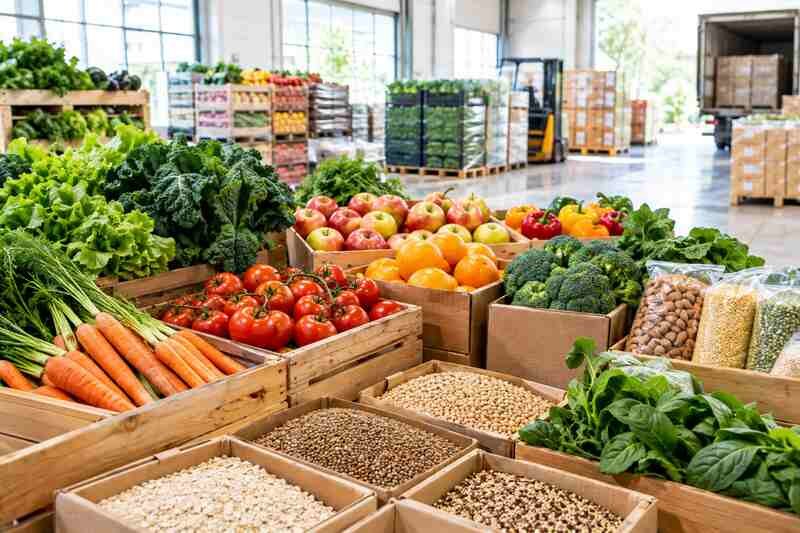
If you sell organic food, your supplier relationships make or break the business. Organic wholesale food suppliers move perishable products on tight timelines. A late truck or a mislabeled pallet can cost you certification, inventory, or trust with your own customers. Finding organic wholesale food suppliers who deliver on time, ship the right products, and can prove their organic credentials is the single most important sourcing decision most wholesalers make.
So how do you find the right wholesale supplier for organic food? This guide walks through what to look for, profiles six established U.S. organic wholesale food suppliers worth evaluating in 2026, and covers current market pricing and growth so you can plan with real numbers. Whether you’re stocking a natural grocery store, supplying restaurants, or building an online organic marketplace, the fundamentals of vetting a supplier stay the same.
Key Takeaways
- U.S. organic food sales hit $76.6 billion in 2025, up 6.8% year over year, according to the Organic Trade Association’s 2026 market report.
- A legitimate organic wholesale supplier must hold current USDA Organic certification as a handler, not just sell products labeled organic.
- Established U.S. organic wholesale suppliers include Feeser’s, Ace Natural, Albert’s Organics, Sanz Wholesale Foods, Hummingbird Wholesale, and Harvest Food Distributors.
- Organic wholesale prices typically run 20-40% above conventional, though the premium varies widely by product category.
Why Your Organic Wholesale Supplier Choice Matters
Organic products are perishable by nature and often more fragile than their conventional counterparts, since they skip synthetic preservatives. Fast, reliable delivery isn’t a nice-to-have here. It’s the difference between selling fresh inventory and writing off spoiled stock. A trustworthy supplier also protects your own organic certification. Every link in the supply chain has to maintain proper handling and documentation for the organic label to hold up.
Beyond logistics, your supplier shapes what you can actually offer customers. A distributor with a narrow catalog limits your growth. One with deep category coverage, from dairy to dry goods to specialty diets, lets you expand without adding a new vendor every time you add a product line.
Cold chain management deserves its own mention. Dairy, meat, and fresh produce need consistent refrigeration from the supplier’s warehouse through final delivery. A single break in that chain, even for an hour during a hot delivery day, can spoil product before it reaches your shelves. Ask any prospective supplier how they monitor temperature during transit and what happens when a shipment arrives outside the acceptable range.
Organic vs. Natural: Why the Distinction Matters for Wholesale Buyers
Wholesalers sometimes treat “organic” and “natural” as the same thing. They aren’t. USDA Organic is a strict, regulated label with clear rules on pesticides, synthetic fertilizers, and GMOs. “Natural” has no real federal standard for most foods. A product labeled natural can still contain synthetic additives, or come from a conventionally raised animal.
This distinction matters directly for your business. If you market products as organic without verifying actual USDA certification through your supplier, you risk regulatory penalties and damage to your reputation. Always confirm which specific products in a supplier’s catalog carry organic certification. Natural and clean-label items often sit right next to certified organic ones in the same order guide.
What to Look for in an Organic Wholesale Food Supplier
Start with certification. Any legitimate supplier needs current USDA Organic certification as a handler. This is separate from the certification held by the farms that grow the food. Ask to see the actual certificate. Don’t just trust a badge on a website.
After certification, evaluate these factors:
- Delivery reliability and coverage area: Ask about on-time delivery rates and whether the supplier serves your region directly or through a regional partner.
- Catalog breadth: A supplier with thousands of SKUs across multiple categories reduces how many vendor relationships you need to manage.
- Minimum order requirements: These vary significantly and can make or break the fit for a smaller wholesale operation.
- Traceability systems: Look for suppliers that can trace products back to the source farm, which matters for both compliance and customer trust.
- Pricing transparency: Reliable suppliers give you clear, consistent pricing rather than quotes that shift order to order.
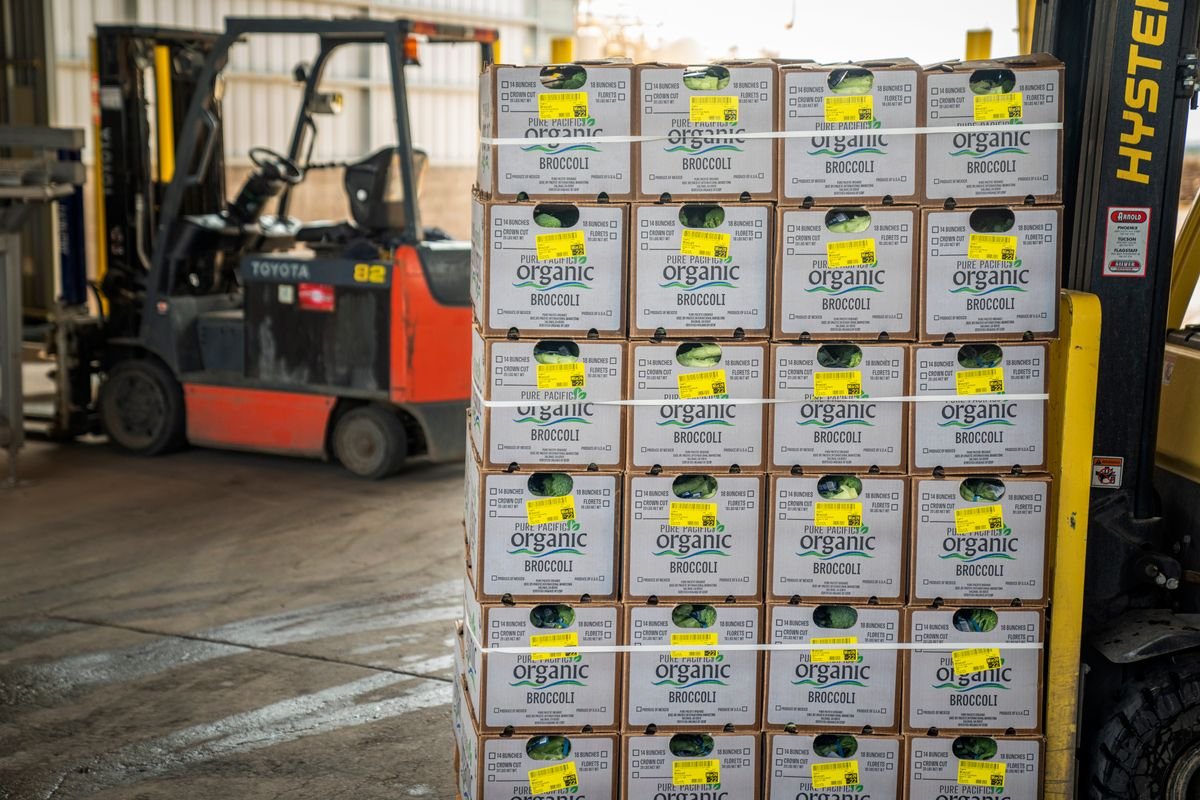
Top Organic Wholesale Food Suppliers in the U.S. for 2026
These six suppliers represent established, verifiable players in U.S. organic wholesale distribution. Each has a track record, a defined specialty, and a real operating footprint.
1. Feeser’s
Feeser’s is a family-owned wholesale food distributor serving the Mid-Atlantic region, founded in 1901. The company distributes more than 8,000 products sourced from roughly 400 local and national manufacturers. Its organic and natural offerings span dairy, coffee and beverages, meat and poultry, seafood, specialty diets, and dry groceries. That breadth makes it a strong fit for wholesalers who want broad category coverage from one relationship.
2. Ace Natural
Ace Natural operates out of Long Island City, New York, and has served wholesalers, restaurants, and caterers in the tri-state area for over two decades. The company focuses specifically on natural and organic products, including a strong plant-based selection. It has also partnered with traceability platforms to give customers more visibility into where their food comes from.
3. Albert’s Organics
Albert’s Organics, now operating as UNFI Fresh under parent company United Natural Foods, has specialized in organic produce and perishables since 1982. It runs seven distribution centers across the country, in states including New Hampshire, New Jersey, North Carolina, Florida, Colorado, Minnesota, and California. That gives it one of the widest direct-delivery footprints of any organic produce distributor in the U.S.
4. Sanz Wholesale Foods Co
Sanz Wholesale Foods Co was established in 1999 to improve efficiency across the organic food supply chain. The company focuses on organic, gluten-free, kosher, and vegan products, and emphasizes sourcing food grown without synthetic pesticides, chemicals, or toxins. It’s a solid pick for wholesalers who need certified kosher or allergen-specific inventory alongside standard organic lines.
5. Hummingbird Wholesale
Hummingbird Wholesale, based in Eugene, Oregon, built its business around sustainable organic sourcing. Its catalog covers condiments, dried fruits, snacks, granola and trail mixes, flour and milled grains, nuts and nut butters, seeds, spices, teas, and sweeteners. The company’s Pacific Northwest sourcing network makes it a strong option for wholesalers prioritizing regional, small-farm relationships.
6. Harvest Food Distributors
Harvest Food Distributors has operated since 1989, helping independent food companies access organic and specialty products. It covers a wide protein range: beef, pork, seafood, chicken, turkey, lamb and goat, plus bakery, deli, dairy, smoked and processed items, and halal options. For wholesalers whose business leans heavily on protein categories, its range is hard to match. If you’re sourcing organic meat and want it to arrive in top condition, our guide on the best way to tenderize meat covers what actually affects texture once it reaches your kitchen or your customer’s.
How Much Does Organic Wholesale Pricing Typically Run?
Organic wholesale pricing runs above conventional pricing in nearly every category, though the gap varies. Fresh produce and dairy tend to carry a 20-30% premium. Packaged, shelf-stable organic goods can run 30-40% higher than conventional versions. The premium reflects real costs. Certified organic farms get lower yields, face stricter rules on what they can use, and pay for yearly certification audits that conventional farms skip.
Pricing also depends heavily on order volume and delivery frequency. Suppliers that require large minimum orders often offer better per-unit pricing. Smaller, more flexible orders come at a premium for the convenience. When comparing suppliers, ask for pricing on your actual expected order profile rather than published list prices, since real quotes can differ substantially.
Seasonality plays a role too. Organic produce prices swing more than conventional produce because organic growers have less flexibility to offset weather losses with synthetic inputs. Building a small pricing buffer into your own margins during known seasonal gaps, like early spring for many leafy greens, helps absorb these swings without passing every price spike straight to your customers.
The U.S. Organic Food Market in 2026
Demand for organic food keeps climbing. U.S. organic sales reached $76.6 billion in 2025, a 6.8% increase over the prior year, according to the Organic Trade Association’s 2026 Organic Market Report. That growth rate runs roughly double the pace of the broader conventional food and beverage market. Organic demand is not slowing down.
For wholesalers, that growth curve matters directly. A supplier with the infrastructure to scale alongside rising demand protects you from stockouts during peak seasons. It’s worth asking any prospective supplier how they’ve handled recent growth, and whether their distribution capacity has kept pace with order volume across their existing customer base.
How to Vet a Wholesale Supplier Before You Commit
Request the supplier’s current USDA Organic handler certificate and confirm it hasn’t lapsed. Certifications require annual renewal, and a supplier operating on an expired certificate is a serious red flag.
Ask for references from other wholesalers or retailers who’ve worked with the supplier for at least a year. A supplier that hesitates to provide references, or only offers references from brand-new accounts, deserves a closer look.
Order a small trial shipment before committing to a large contract. This lets you evaluate actual delivery timing, packaging quality, and product condition on arrival, which matters enormously for perishables. If you’re building out your own receiving and storage process, our guide on how to wrap meat for freezing covers practical steps for protecting perishable inventory after it reaches your facility.
Finally, confirm the supplier’s minimum order requirements and delivery schedule align with your actual sales volume. A supplier that’s an excellent fit for a large grocery chain may not work well for a smaller specialty shop, and vice versa.
Documents to Request From Every Supplier
A few other documents help protect your business. Ask for proof of insurance. It confirms the supplier carries coverage if a product issue affects your customers. Ask for their recall plan in writing, too. A supplier with no written recall plan is a real risk. Even well-run organic operations deal with recalls sometimes.
Also ask for a sample lab test report, called a certificate of analysis or COA, for one product you plan to order often. This report shows results for things like pesticide residue and food safety. A supplier that hands one over fast is usually running tighter quality control than one that stalls.
Watch: How to Source and Vet Wholesale Suppliers
This walkthrough from Shopify covers the fundamentals of finding and evaluating wholesale suppliers, which applies directly to organic food sourcing even though it isn’t organic-specific.
Frequently Asked Questions
What certification should an organic wholesale food supplier have?
Look for current USDA Organic certification as a handler, which is distinct from the certification held by the farms that grow the products. Ask to see the actual certificate rather than relying on a website badge.
How much more do organic wholesale products cost than conventional?
Organic wholesale pricing typically runs 20-30% above conventional for fresh produce and dairy, and 30-40% above conventional for packaged goods, though the exact premium varies by product category and order volume.
How big is the U.S. organic food market?
U.S. organic food sales reached $76.6 billion in 2025, up 6.8% from the previous year, according to the Organic Trade Association’s 2026 market report.
What should I check before signing with a new organic supplier?
Verify current USDA Organic handler certification and request references from established customers. Order a small trial shipment to check delivery and packaging quality, and confirm minimum order requirements fit your actual sales volume.
Do organic wholesale suppliers serve small businesses?
Many do, though minimum order requirements vary widely between suppliers. Regional distributors and suppliers focused on specialty categories tend to offer more flexibility for smaller wholesale operations than large national distributors.
What’s the difference between organic and natural food labeling?
Organic is a regulated USDA certification with strict rules on pesticides, synthetic fertilizers, and genetically modified ingredients. Natural has no binding federal standard for most food categories, so natural-labeled products can still contain synthetic additives.
How often should I audit my wholesale supplier’s certifications?
Check certification status at least once a year, since USDA Organic certificates require annual renewal. Many wholesalers also spot-check certification status whenever they add a new product line from an existing supplier.
Conclusion
The organic wholesale market keeps growing, and that growth makes supplier selection more important, not less. Prioritize verified USDA Organic certification, real delivery reliability, and a catalog that matches your growth plans. Feeser’s, Ace Natural, Albert’s Organics, Sanz Wholesale Foods, Hummingbird Wholesale, and Harvest Food Distributors each bring a different strength to the table. Match your choice to what your business actually needs, not to the biggest name on the list.

Hey, My name is MAMON. I am a SEO content creator and affiliate marketer with over 8 years of experience. I create honest product reviews, in-depth buying guides, and practical how-to articles to help readers make informed decisions. My mission is to provide trustworthy, research-backed content that delivers real value.
Leave a Reply