When you carve a turkey, break down a whole chicken, or prep vegetables for a big family dinner, a small board just will not cut it. Instead, you need room to work. That is why a large wooden cutting board is one of the best upgrades you can make to a busy U.S. kitchen.
In this guide, we compared 8 large and XL boards in maple, walnut, teak, acacia, larch, and bamboo. As a result, you will find options for every budget, from heirloom butcher blocks to affordable extra-large prep boards. Each review also covers size, wood type, weight, and care needs.
This is a specification-based editorial review, not a lab test. Since product details and prices change, check the current Amazon listing before you buy.
Affiliate Disclosure: KitchenRank may earn a commission when you purchase through links in this article, at no additional cost to you.
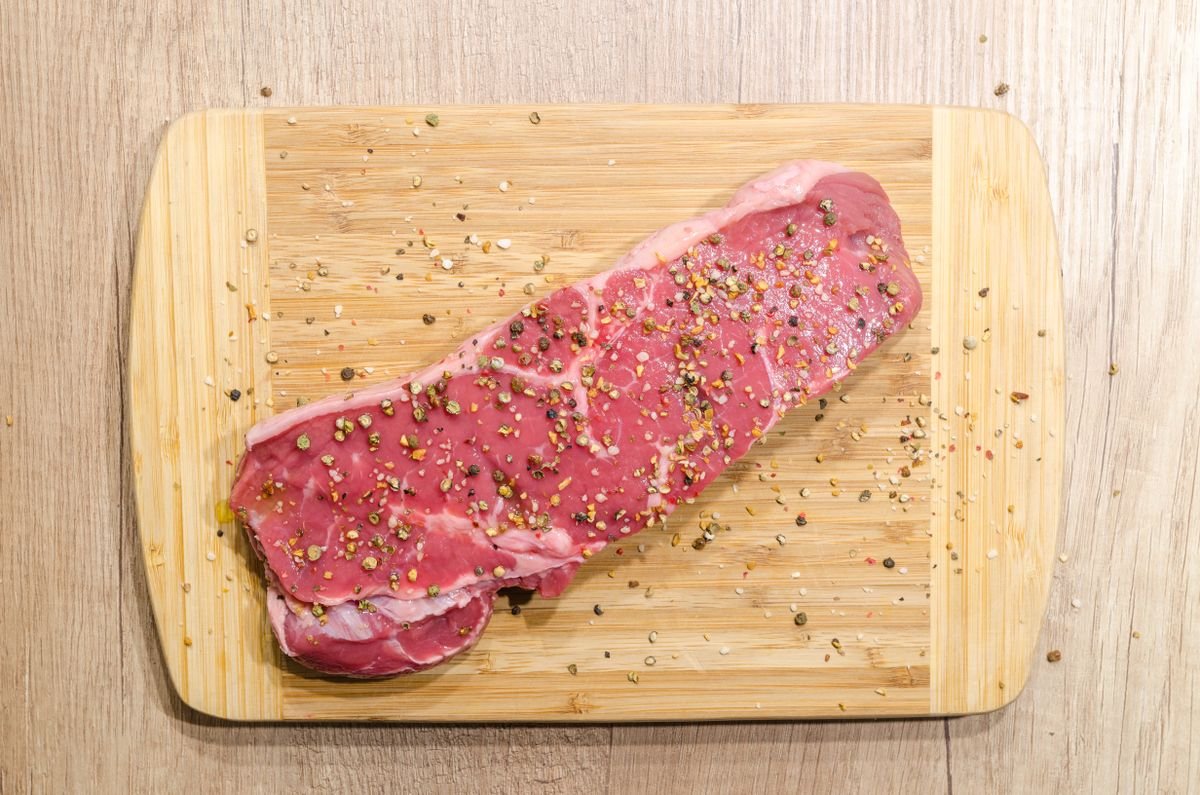
Large boards give you room for big cuts of meat. Photo: Lukas Blazek via Pexels.
Key Takeaways
- Most large cutting boards for kitchen use measure about 17 x 11 inches or larger, while XL boards reach 24 x 18 inches.
- Overall, the John Boos R02 24 x 18 maple board is our top pick for durability and size.
- For knife care, end-grain boards from Sonder Los Angeles and Larch Wood Canada stand out.
- On a budget, however, the Sonder Winsome acacia and Greener Chef bamboo boards offer the most space for the money.
- Above all, a large wooden cutting board needs handwashing, regular oiling, and a dry storage spot.
Quick Picks: Best Large Wooden Cutting Board Options
When you are short on time, this table shows how the 8 boards compare at a glance.
| Board | Size | Wood | Best For |
|---|---|---|---|
| John Boos R02 | 24 x 18 x 1.5 in | Maple, edge grain | Best overall |
| Teakhaus Edge-Grain XL | Extra large | Teak | Moisture resistance |
| Sonder LA Alfred | 17 x 13 x 1.5 in | Walnut, end grain | Premium end grain |
| Larch Wood Canada | 21.6 x 13 x 1.75 in | Larch, end grain | Knife-friendly surface |
| Ironwood Gourmet Charleston | 20 x 14 in | Acacia, end grain | End grain value |
| Virginia Boys Kitchens | 17 x 11 in | Black walnut | Made in USA |
| Greener Chef 24-Inch | 24 in (2XL) | Bamboo | Budget XL cutting board |
| Sonder LA Winsome | 16 x 12 x 1.5 in | Acacia | Budget hardwood |
What Size Is a Large Wooden Cutting Board?
Although sizes are not standardized, most brands group boards into three ranges. Use this guide to match a size to your counter and cooking style.
| Size Group | Typical Dimensions | Best For |
|---|---|---|
| Large | 16 x 12 to 18 x 12 in | Everyday prep for families |
| Extra large (XL) | 20 x 14 to 20 x 15 in | Batch cooking and roasts |
| 2XL or butcher block | 24 x 18 in and up | Turkeys, brisket, big holiday meals |
Before you buy, measure your counter and your sink. For instance, a 24 x 18-inch board may not fit in a standard kitchen sink, so you will often wash it on the counter instead.
How We Chose These Boards
To begin with, we looked for large boards that are widely available on Amazon and suit American home kitchens. Then each board was compared on five factors: usable surface, wood type, construction, weight, and value. In addition, we favored close-grained hardwoods and end-grain designs, since they are gentler on knives. Finally, boards already reviewed in our other cutting board guides were left out.
The 8 Best Large Wooden Cutting Boards Reviewed
1. John Boos R02 Maple Cutting Board, 24 x 18 x 1.5 Inches

Image: Amazon
Best for: A lifetime butcher block for serious cooks
The John Boos R02 is the classic American butcher block. According to the listing, it is a 24 x 18 x 1.5-inch reversible edge-grain maple board that weighs about 18 pounds. It also has finger grips on the sides and is made in the USA.
Because it is so big and heavy, it stays put while you carve. Moreover, hard maple is dense and close-grained, which is why the FDA Food Code accepts it for commercial cutting boards. The trade-off, however, is weight: at 18 pounds, it is not a board you will move often.
- Pros: Huge surface, reversible, stable, made in USA
- Cons: Very heavy; too large for most sinks
Our take: Overall, the best large wooden cutting board for cooks who want one board for life.
2. Teakhaus Edge-Grain Teak Cutting Board with Grip Handles, Extra Large

Image: Amazon
Best for: Humid kitchens and frequent washing
Teakhaus is known for edge-grain teak boards. Since teak is naturally oily, it resists moisture better than many hardwoods and needs a little less upkeep. This extra-large version also adds grip handles, so lifting it to the sink or table is easier.
On the other hand, teak contains natural silica, which can dull knives a bit faster than maple or walnut. Still, it is a durable, attractive choice, especially if your kitchen sees a lot of moisture.
- Pros: Water-resistant teak, grip handles, low maintenance
- Cons: Silica can dull knives; check exact dimensions
Our take: In short, a low-fuss XL board with built-in handles.
3. Sonder Los Angeles Alfred Walnut End Grain Board, 17 x 13 x 1.5 Inches

Image: Amazon
Best for: A premium end-grain board made in the USA
The Alfred is a black walnut end-grain board made in the USA, according to Sonder. It measures 17 x 13 x 1.5 inches and includes non-slip feet, a juice groove, and sorting compartments for chopped ingredients.
Because it is end grain, knife edges slip between the wood fibers rather than slicing across them. As a result, the surface hides marks well and stays kind to your blades. However, the feet mean you can only use one side.
- Pros: End-grain walnut, non-slip feet, juice groove, made in USA
- Cons: One usable side; premium price
Our take: Above all, a beautiful board that protects expensive knives.
4. Larch Wood Canada End Grain Large Cutting Board, 21.6 x 13 x 1.75 Inches

Image: Amazon
Best for: Cooks who prize knife-friendly end grain
Larch Wood Canada makes handcrafted end-grain boards with a distinctive mosaic pattern. This large board measures about 21.6 x 13 inches and is 1.75 inches thick, so it feels solid and stable on the counter.
Larch is a dense conifer that is somewhat softer than maple. Consequently, it is very gentle on knife edges, though it may show marks a little sooner. Like any end-grain board, it also needs regular oiling to keep the exposed fibers from drying out.
- Pros: Handcrafted end grain, thick and stable, knife-friendly
- Cons: Softer than maple; needs frequent oiling
Our take: In other words, a craftsman’s board with a unique look.
5. Ironwood Gourmet Charleston End Grain Prep Station, 20 x 14 Inches

Image: Amazon
Best for: End grain on a moderate budget
The Ironwood Gourmet Charleston is a 20 x 14-inch end-grain prep station made from acacia. Because it is end grain, it offers some of the same knife-friendly benefits as pricier boards, but usually at a lower cost.
Acacia is also hard and naturally water-resistant. However, harder acacia species can be slightly tougher on blades than walnut. Even so, the size and construction make it a strong value for everyday prep.
- Pros: End-grain construction, roomy surface, good value
- Cons: Acacia can be harder on knives
Our take: Overall, the best-value end-grain board in this roundup.
6. Virginia Boys Kitchens Black Walnut Cutting Board, 17 x 11 Inches

Image: Amazon
Best for: A lighter large board made in the USA
According to the listing, this 17 x 11-inch board is made in the USA from sustainable black walnut and includes a juice well. As a result, it works for carving as well as daily chopping.
Since it is smaller and lighter than a 24 x 18 butcher block, it is much easier to lift and wash. In addition, walnut is soft on knife edges and hides stains well thanks to its dark color.
- Pros: Made in USA, juice well, easier to handle
- Cons: Smaller than true XL boards
Our take: In short, the right pick if you want walnut without the bulk.
7. Greener Chef 24-Inch Extra Large Bamboo Cutting Board
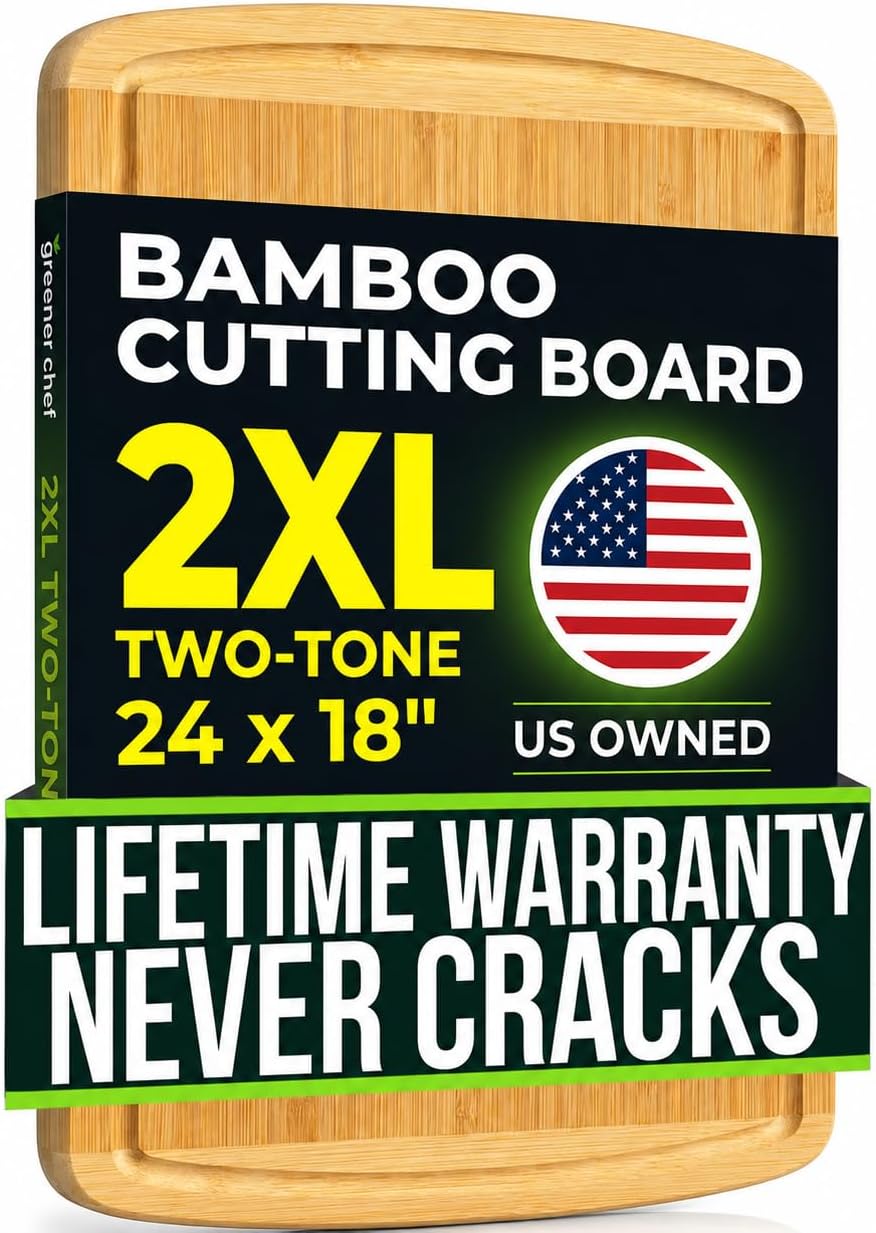
Image: Amazon
Best for: The most space for the money
If you simply want a huge surface, this 24-inch bamboo board from Greener Chef is hard to beat on price. The listing describes it as a 2XL board with deep juice grooves and a lifetime replacement guarantee.
Bamboo is technically a grass, so this is not a true hardwood board. Moreover, bamboo can dull knives faster than maple or walnut. For more on the pros and cons, read our guide on whether bamboo cutting boards are safe.
- Pros: Huge 2XL surface, low price, lifetime replacement
- Cons: Bamboo is harder on knives; not solid hardwood
Our take: Overall, the best budget XL cutting board.
8. Sonder Los Angeles Winsome Acacia Cutting Board, 16 x 12 x 1.5 Inches

Image: Amazon
Best for: A thick hardwood board on a budget
The Winsome is a 16 x 12 x 1.5-inch acacia board. Notably, America’s Test Kitchen named it the Best Buy in its small cutting board testing, praising its durability and juice trench. Although it sits at the smaller end of “large,” its thickness makes it feel substantial.
Like other wood boards, however, it needs regular oiling, and some testers found the juice trench took extra cleaning.
- Pros: Thick, durable, juice trench, good price
- Cons: Smallest board here; trench needs scrubbing
Our take: In short, a dependable entry-level hardwood board.

A large board doubles as a serving surface. Photo: cottonbro studio via Pexels.
Large Cutting Board Material: Which Wood Is Best?
The large cutting board material you choose affects knife wear, weight, and upkeep. Here is a quick summary:
- Hard maple: Dense, durable, and close-grained. It is also the classic butcher-block wood.
- Walnut: Softer than maple, so it is gentle on knives and hides stains.
- Teak: Naturally oily and water-resistant, but its silica can dull edges.
- Acacia: Hard, water-resistant, and affordable.
- Bamboo: Light and cheap, but harder on knives and held together with glue.
In general, maple and walnut are the safest bets for a large wooden cutting board. For a deeper comparison, see our guide to the best wood for cutting boards. The FDA Food Code also allows hard maple or an equally hard, close-grained wood for cutting boards in restaurants.
How to Choose the Right Large Wooden Cutting Board
End Grain vs. Edge Grain
End-grain boards show the ends of the wood fibers, often in a checkerboard pattern. As a result, they are the gentlest on knives and hide cut marks. By contrast, edge-grain boards are lighter, less expensive, and still very durable.
Thickness and Weight
Thicker boards, around 1.5 inches or more, resist warping and stay put. However, they are heavy. For example, a 24 x 18 x 1.5-inch maple board can weigh about 18 pounds, so think about where you will store it. Our guide to cutting board storage covers adjustable racks that fit thick boards.
Juice Grooves and Handles
Juice grooves catch liquid when you carve roasts, which keeps your counter clean. Meanwhile, handles or finger grips make a heavy board much easier to move.
Space and Storage
Because a large board rarely fits in a cabinet, many cooks leave it on the counter. Therefore, measure your counter depth and plan a spot where air can reach both sides.
Food Safety
Even with large cutting boards for kitchen prep, keep a separate plastic board for raw meat and use your wooden board for produce, bread, and cooked foods. Our guide to preventing cross contamination on cutting boards explains how to set this up.
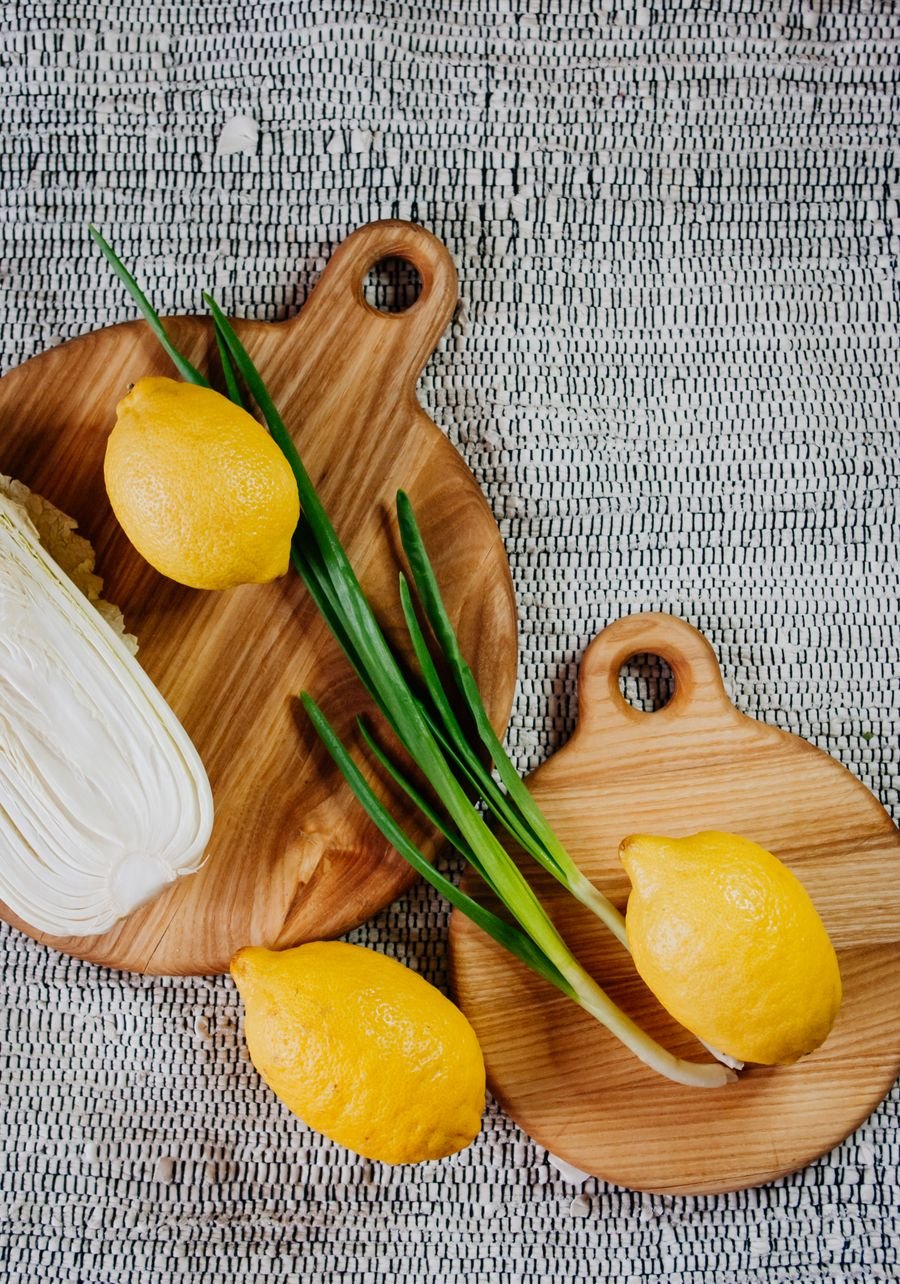
Plenty of room for produce prep. Photo: Dagmara Dombrovska via Pexels.
How to Care for a Large Wooden Cutting Board
Since a big board will not fit in most sinks, care looks a little different. Follow these steps:
- Wipe and wash on the counter. Scrape off scraps, then scrub with a sponge and warm, soapy water.
- Rinse with a damp cloth instead of running it under the tap for long.
- Dry both sides right away with a towel, and then stand it on edge to air-dry.
- Oil it about once a month, or whenever it looks dry. End-grain boards may need oil more often.
- Never soak it or put it in the dishwasher.
For a full routine, read our guide on how to take care of a wooden cutting board. John Boos also publishes a helpful wood cutting board care guide with oiling tips.
Frequently Asked Questions
What size is considered a large cutting board?
Generally, boards around 16 x 12 to 18 x 12 inches are considered large. Boards 20 x 14 inches and up are usually called XL, while 24 x 18 inches is butcher-block size.
What is the best large wooden cutting board?
For most people, the John Boos R02 24 x 18 maple board is the best large wooden cutting board. It is huge, stable, reversible, and made in the USA. If you want end grain, however, the Sonder Los Angeles Alfred is a great alternative.
Is an XL cutting board worth it?
Yes, especially if you cook for a family, carve roasts, or batch-prep meals. On the other hand, it is not ideal if you have very little counter space.
How do you clean a cutting board that does not fit in the sink?
Instead of soaking it, wash it on the counter with a soapy sponge, wipe it with a damp cloth, and dry both sides right away.
Final Thoughts on Choosing a Large Wooden Cutting Board
In the end, the right large wooden cutting board gives you space, stability, and years of reliable use. For most kitchens, the John Boos R02 is our top pick. Meanwhile, the Sonder Alfred and Larch Wood Canada boards are ideal if you want end grain, and the Ironwood Charleston offers end grain at a lower price.
If you are on a budget, the Sonder Winsome acacia and the Greener Chef 24-inch bamboo board are great value. Finally, for a broader look at board safety and materials, see our guide to the safest and healthiest cutting boards.

Hey, My name is MAMON. I am a SEO content creator and affiliate marketer with over 8 years of experience. I create honest product reviews, in-depth buying guides, and practical how-to articles to help readers make informed decisions. My mission is to provide trustworthy, research-backed content that delivers real value.
Leave a Reply