Knowing how to disinfect cutting boards is one of the simplest ways to stop foodborne germs from moving from raw chicken to your salad. Soap and water remove grease and food bits, but they do not reliably kill bacteria such as Salmonella, E. coli, and Listeria. In this guide, you will learn which household products actually work, how long they need to sit, and how to adjust the method for plastic, wood, bamboo, and other boards. Every recommendation here is based on guidance from American university extension services.
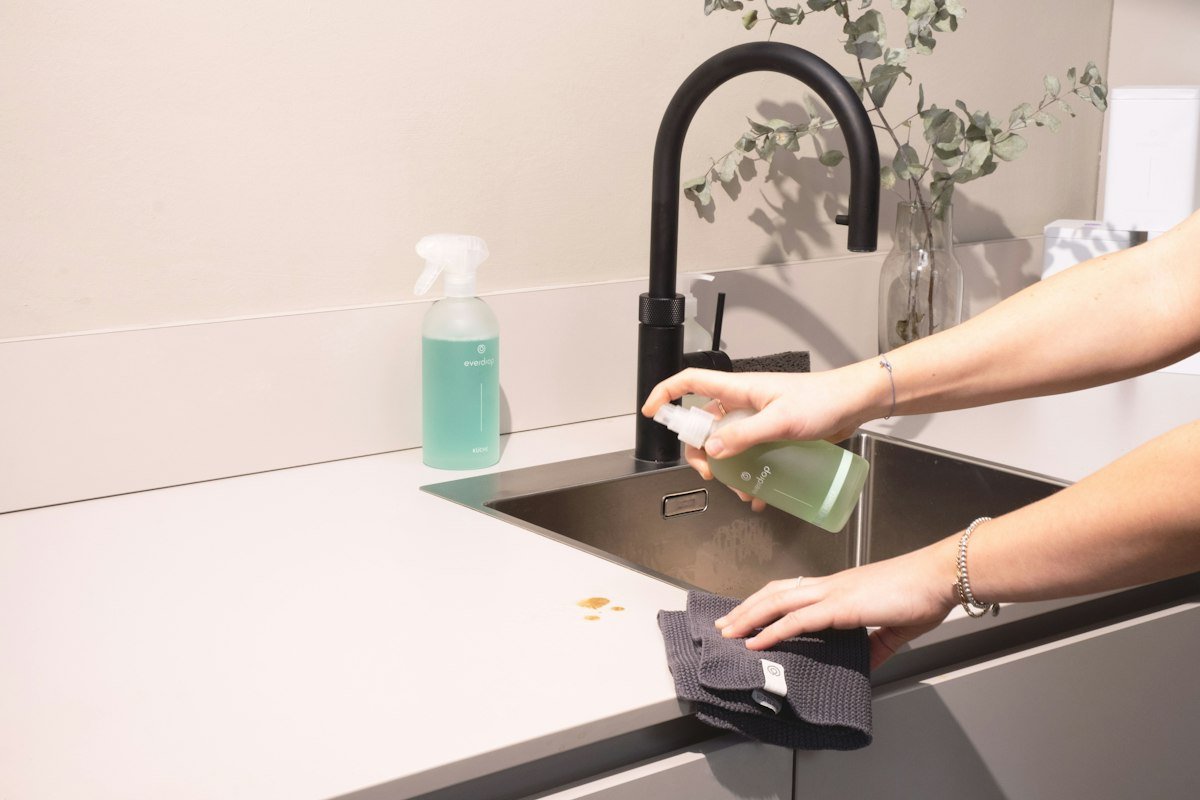
Photo: everdrop GmbH via Unsplash.
Key Takeaways
- Always wash first, then sanitize. Dirt and soap residue weaken sanitizers.
- For most homes, a bleach solution of 1 tablespoon unscented bleach per gallon of water is the standard extension recommendation.
- In UF/IFAS testing, bleach worked in 1 minute, while room-temperature vinegar needed 10 minutes and still did not kill all three test pathogens.
- Baking soda is a good scrub, but it is not a sanitizer.
- Above all, never mix bleach with vinegar, or hydrogen peroxide with vinegar, in the same container.
Why It Matters: Foodborne Illness by the Numbers
Cutting boards may seem like a small detail, yet they are one of the easiest ways for germs to spread in a kitchen. According to the CDC, about 48 million people in the United States get sick from foodborne illness each year. Of those, roughly 128,000 are hospitalized and about 3,000 die. Most of these cases are never linked to a specific meal, which is why everyday habits matter so much. In short, learning how to disinfect cutting boards protects your family from a risk that is both common and preventable.
Cleaning vs. Sanitizing vs. Disinfecting
These three words often get mixed up, yet they mean different things. So, understanding them is the first step in how to disinfect cutting boards correctly.
- Cleaning removes visible food, grease, and dirt with soap, water, and scrubbing.
- Sanitizing reduces germs on a surface to a safe level. For food-contact surfaces, this is usually the step most guides mean.
- Disinfecting kills a higher share of germs and is usually done with stronger chemicals on non-food surfaces.
At home, most people use “disinfect” and “sanitize” as the same idea, so we do too. Either way, the order never changes: clean first, then sanitize. According to UF/IFAS Extension, dirt and detergents inactivate chlorine, so a sanitizer works best on a surface that is already clean and rinsed.
When Should You Disinfect a Cutting Board?
You do not need to sanitize a board after slicing bread. However, you should sanitize it after any of these situations:
- Cutting raw meat, poultry, seafood, or eggs
- Preparing food for someone who is pregnant, elderly, very young, or has a weak immune system
- Noticing a sour smell, slimy film, or mold spots
- Someone in the house has had a stomach bug
- Using a board that has been stored for weeks
Of course, the best protection is to keep separate boards for raw meat and ready-to-eat foods. In fact, our guide on how to prevent cross contamination with cutting boards explains that system in detail.
Which Household Sanitizers Actually Work?
A UF/IFAS Extension fact sheet compared common household products against three major foodborne pathogens: Listeria, E. coli, and Salmonella. A product counted as effective when it achieved more than a 99.99 percent reduction, based on research by Yang and colleagues (2009). Here is what the extension reported:
| Product | Contact Time | Temperature | Pathogens Reduced 99.99%+ |
|---|---|---|---|
| Chlorine bleach solution (1 scant tsp per quart) | 1 minute | Room temp (77°F) | 3 of 3 |
| White vinegar (5%), undiluted | 1 minute | Heated (130°F) | 3 of 3 |
| White vinegar (5%), undiluted | 10 minutes | Room temp | 1 of 3 |
| Hydrogen peroxide (3%), undiluted | 1 minute | Heated (130°F) | 3 of 3 |
| Hydrogen peroxide (3%), undiluted | 10 minutes | Room temp | 2 of 3 |
| Baking soda | 10 minutes | Any | 0 of 3 |
In other words, bleach is the fastest and most reliable option at room temperature. Heated vinegar and heated hydrogen peroxide also work well. By contrast, cold vinegar straight from the bottle is far weaker than many cleaning blogs suggest, and baking soda does not sanitize at all.
How to Disinfect Cutting Boards With Bleach (Step by Step)
Bleach is the method most American extension services recommend. Washington State University Extension, for example, advises a dilute solution of 1 tablespoon chlorine bleach per gallon of cool water for both plastic and wooden boards. Follow these steps:
- Scrape and wash. First, scrape off food scraps. Then scrub the board with hot, soapy water and a brush, including the edges and any juice groove.
- Rinse. Rinse away all soap, since detergent residue weakens chlorine.
- Mix the solution. Stir 1 tablespoon of unscented liquid chlorine bleach into 1 gallon of cool water. Alternatively, for a smaller batch, use 1 scant teaspoon per quart.
- Apply it. Flood the surface, or wipe it on with a clean cloth. You can also pour it into a spray bottle.
- Wait. Leave it on for at least 1 minute. In addition, Oklahoma State University Extension notes that 1 to 5 minutes is usually enough for chlorine sanitizers.
- Rinse and air-dry. Rinse with clean water, then stand the board upright to air-dry.
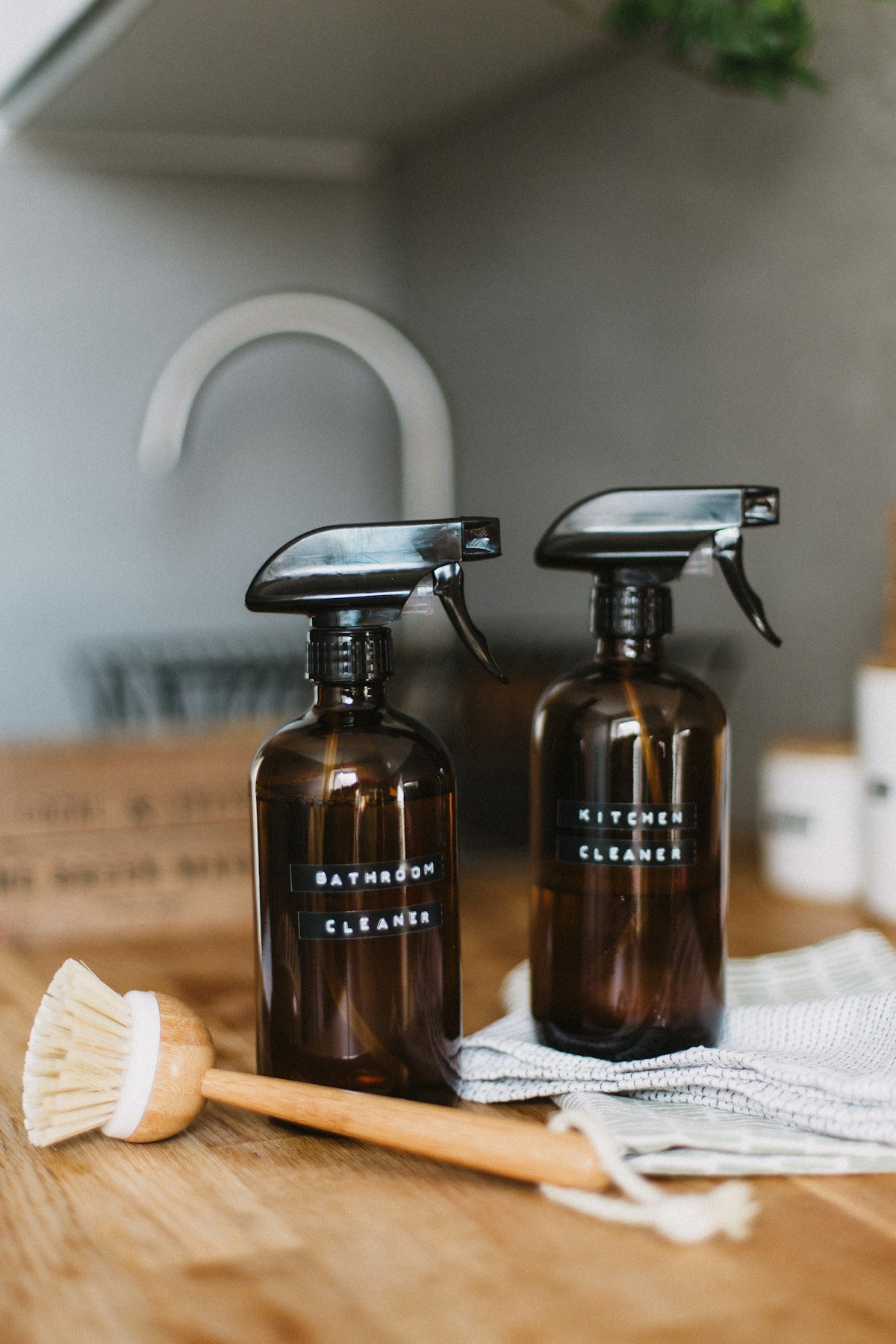
Photo: Daiga Ellaby via Unsplash.
Bleach Safety Tips
- Use unscented bleach. Scented and “splash-less” bleaches may contain additives not meant for food surfaces.
- Make it fresh. Chlorine weakens over time, so UF/IFAS recommends mixing a new batch at least weekly and storing it in a dark place.
- Never mix with acids or ammonia. Oklahoma State Extension warns that adding acid, such as vinegar, to chlorine can release toxic chlorine gas.
- Do not go stronger. More bleach is not better. In fact, about 1 tablespoon per gallon is the practical maximum for food-contact surfaces.
How to Disinfect Cutting Boards Without Bleach
Some people prefer to avoid bleach, especially on wooden boards. Fortunately, the UF/IFAS data shows two effective alternatives, as long as you use them correctly.
Heated White Vinegar
- Wash and rinse the board first.
- Heat about 1/2 cup (4 oz) of undiluted 5% white vinegar to around 150°F. A microwave works, but check the temperature with a thermometer.
- Then pour it into a heat-safe spray bottle and spray the board.
- Wait 1 minute, then wipe and rinse.
If you skip the heat, leave room-temperature vinegar on for at least 10 minutes. Even then, it was effective against only one of three pathogens in the UF/IFAS table, so heated vinegar is the better choice.
3% Hydrogen Peroxide
Similarly, standard 3% drugstore hydrogen peroxide works when heated to about 150°F and left on for 1 minute. At room temperature, give it 10 minutes. However, test it on a hidden spot first, because it can lighten some wood and dyed surfaces. Also, never mix hydrogen peroxide and vinegar in the same bottle. If you use both, apply one, wipe, and then apply the other.
What About Baking Soda, Salt, and Lemon?
Admittedly, these are great scrubbing and deodorizing tools. For example, a paste of baking soda and water lifts stains, and coarse salt with half a lemon removes odors from wood. Still, none of them is a sanitizer. Always follow up with bleach, heated vinegar, or hydrogen peroxide after raw meat.
Video: America’s Test Kitchen answers how to sanitize a wooden cutting board.
How to Disinfect Cutting Boards by Material
Overall, the basic process stays the same, yet each material needs a few adjustments.
Plastic Cutting Boards
Plastic is the easiest to sanitize. Many plastic boards are dishwasher safe, and a hot wash with a heated dry cycle cleans and sanitizes in one step. Otherwise, use the bleach method above. Over time, however, knife grooves trap bacteria. So, replace plastic boards once they have deep, hard-to-clean scratches.
Wooden Cutting Boards
Wood can be sanitized with the bleach solution, but keep the contact short and never soak the board. Afterward, rinse, towel-dry, and stand it upright. Because bleach and water dry out wood, rub in food-grade mineral oil once the board is fully dry. For details, our guide on how to take care of a wooden cutting board covers oiling in detail.
End Grain Boards
End grain boards absorb liquid faster than other wood boards, since their fibers face up. Therefore, use a spray or a damp cloth instead of flooding the surface, and dry them quickly. You can learn more in our guide to end grain cutting boards.
Bamboo Boards
Bamboo is harder and less porous than many woods, so it handles a quick bleach wipe well. Even so, it can split if soaked. For more, read whether bamboo cutting boards are safe.
Glass, Composite, and Stainless Steel Boards
Nonporous boards can go in the dishwasher in most cases and handle bleach easily. One exception is stainless steel: chlorine can corrode metal over time, so rinse it thoroughly after sanitizing or use hot water and the dishwasher instead.
How to Disinfect Cutting Boards After Raw Chicken
Raw poultry is the most common reason people search for how to disinfect cutting boards, and for good reason. Chicken can carry Salmonella and Campylobacter, and juices spread easily across a board and counter. Follow this routine every time:
- Keep the mess contained. First, place the board on a damp towel so it does not slide, and keep a trash bowl nearby for packaging.
- Do not rinse the chicken. Rinsing raw poultry splashes bacteria around the sink and onto nearby boards.
- Wash the board right away. As soon as you finish, scrub it with hot, soapy water. Do not let juices dry on the surface.
- Sanitize. Next, apply the bleach solution for at least 1 minute, or use the dishwasher for plastic boards.
- Clean around it. Also, wipe the counter, faucet handles, and knife, since they touched the same juices.
- Wash your hands. Finally, scrub for at least 20 seconds with soap before touching other food.
Even better, use a plastic board for raw poultry and keep it only for that job. That way, a mistake on one board never reaches your vegetables.
Make a Ready-to-Use Sanitizer Spray
If you cook raw meat often, a pre-mixed spray saves time. To make one, add 1 scant teaspoon of unscented bleach to 1 quart of cool water in a clean spray bottle. Then label it clearly with the contents and the date. Because chlorine breaks down, replace the mixture at least once a week, and store it away from light and out of reach of children. Likewise, never refill a bottle that once held vinegar or another cleaner without washing it well first.
Can You Disinfect Cutting Boards in the Dishwasher?
Yes, for dishwasher-safe boards. In fact, the high water temperature and heated dry cycle in most dishwashers clean and sanitize plastic and composite boards well. So, choose a “sanitize” or high-temperature setting if your machine has one. However, never put wood or bamboo in the dishwasher. The heat and long exposure to water can warp, crack, or split the board and weaken the glue.
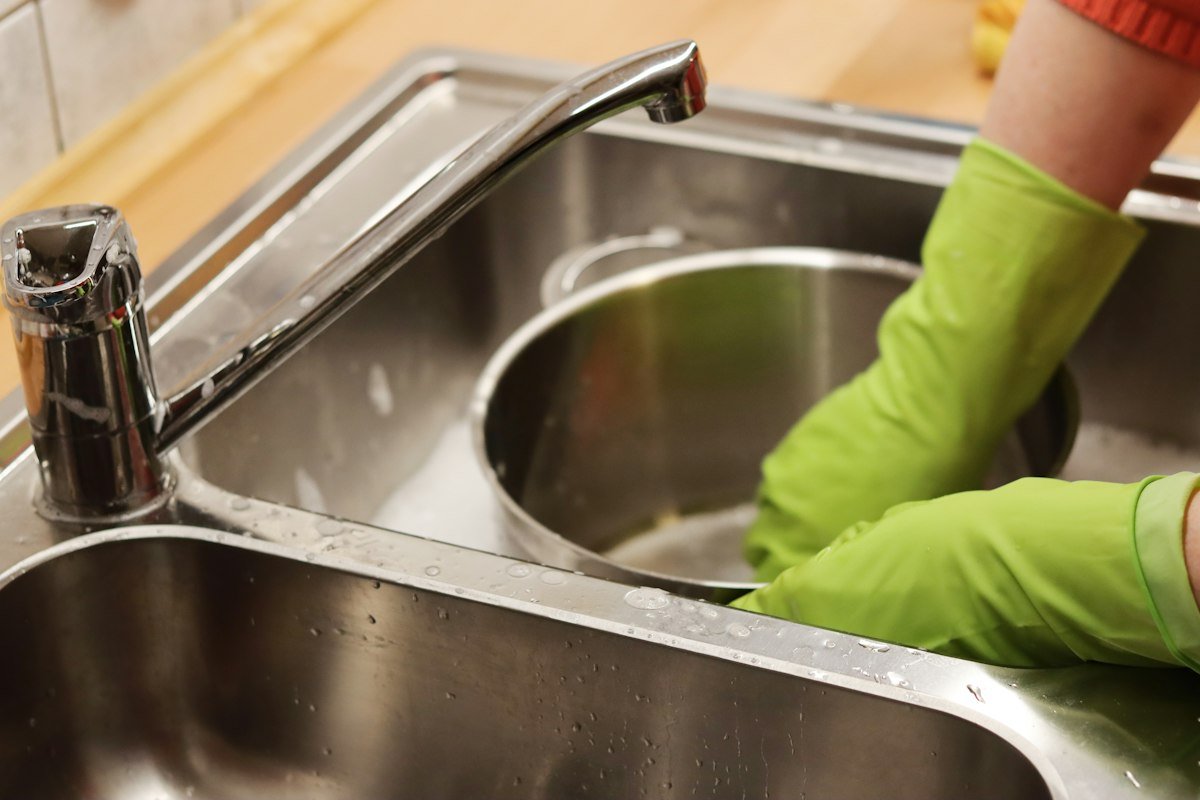
Photo: Marek Studzinski via Unsplash.
What to Do About Mold on a Cutting Board
Small surface spots on a plastic board can usually be scrubbed off and sanitized with bleach. On wood, however, mold can grow into cracks where you cannot reach it. If mold returns after cleaning, or if the board has deep cracks, throw it away. Likewise, discard any board that smells musty even after sanitizing. To prevent mold, always dry boards upright and store them only once they are completely dry. For example, a cutting board organizer makes upright drying easy.
Don’t Forget Your Sponges and Towels
Disinfecting a board does little good if you wipe it with a dirty cloth afterward. Kitchen sponges and towels pick up bacteria from raw meat, too. So, wash cloths in hot water and replace sponges often. For specific steps, see our guides on how to disinfect kitchen cloths after wiping raw meat and how to clean kitchen dish towels without bleach.
Common Mistakes to Avoid
- Skipping the wash. Sanitizer on a dirty board barely works, because food residue uses up the chlorine.
- Wiping too soon. Each product needs its full contact time, from 1 minute for bleach to 10 minutes for cold vinegar.
- Using too much bleach. In fact, a stronger mix does not clean better, and it leaves harsh residue.
- Mixing chemicals. Bleach plus vinegar, or bleach plus ammonia, creates dangerous gases.
- Soaking wood. Long soaks cause warping and cracks, which then trap more bacteria.
- Storing boards wet. Otherwise, damp boards stacked in a cabinet are a perfect home for mold.
When to Replace a Cutting Board
Even perfect cleaning has limits. As WSU Extension notes, boards with knife cuts should be sanded or replaced. In practice, replace a board when:
- Deep grooves no longer come clean
- Wood has cracks or splits along glue lines
- Mold keeps coming back
- A plastic board is warped or fuzzy
When it is time for a new one, our guide to cutting boards that are the safest and healthiest compares the best materials.
FAQ
What is the best way to disinfect a cutting board?
Wash it with hot, soapy water, rinse, then apply 1 tablespoon of unscented bleach per gallon of water for at least 1 minute. Finally, rinse and air-dry.
Does vinegar disinfect cutting boards?
Partly. Heated 5% vinegar killed all three tested pathogens in 1 minute in UF/IFAS data. At room temperature, however, it needed 10 minutes and was effective against only one.
Can I use bleach on a wooden cutting board?
Yes. In fact, WSU Extension recommends the same dilute bleach solution for wood and plastic. Just avoid soaking, rinse well, and re-oil the board once dry.
How often should I disinfect my cutting board?
Sanitize it after every use with raw meat, poultry, seafood, or eggs. However, for produce and bread, regular washing is usually enough.
Is hydrogen peroxide safe on cutting boards?
Yes, 3% hydrogen peroxide is safe for food-contact surfaces when rinsed. Test it on a hidden spot first, because it can lighten some woods.
How long should bleach sit on a cutting board?
Leave the solution on for at least 1 minute. Oklahoma State Extension notes that 1 to 5 minutes is usually enough, depending on how clean the surface is. After that, rinse with clean water and let the board air-dry.
Should I disinfect a new cutting board before using it?
Yes, a quick wash is a good idea. Wash a new board with hot, soapy water, rinse, and dry it. For wood, also apply a coat of mineral oil before the first use.
Final Thoughts
Now you know how to disinfect cutting boards the way food safety experts recommend. Clean first, then sanitize with a dilute bleach solution, heated vinegar, or 3% hydrogen peroxide, and give each one its full contact time. Afterward, dry the board upright and store it only when it is completely dry. As a result, with these simple habits, your boards will stay safe for every meal.

Hey, My name is MAMON. I am a SEO content creator and affiliate marketer with over 8 years of experience. I create honest product reviews, in-depth buying guides, and practical how-to articles to help readers make informed decisions. My mission is to provide trustworthy, research-backed content that delivers real value.
Leave a Reply