Grease stains on kitchen cloths can be tough to get rid of, but learning how to remove grease stains from kitchen cloth doesn’t require anything exotic from a specialty store. The process comes down to three simple stages: pretreat, wash, and dry, each done in the right order.
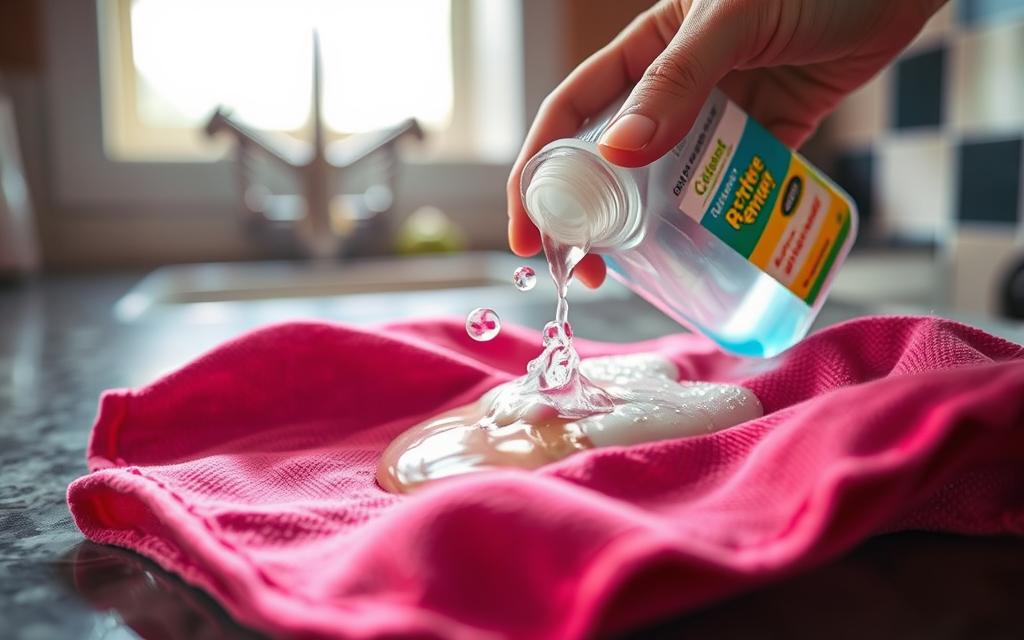
The pretreatment step is the most important part of removing grease from kitchen towels. Dish soap, cornstarch, or talcum powder can all lift oil out of the fibers before the cloth ever goes into the wash. After pretreating, washing in the hottest water the fabric can safely handle helps finish the job and sanitizes the cloth at the same time. Skipping fabric softener and using less detergent than usual also helps prevent new stains from building up.
Key Takeaways
- Pretreatment is crucial for effectively removing grease stains from kitchen cloths.
- Hot water is essential for washing and sanitizing greasy towels.
- Avoid fabric softeners and use less detergent to prevent grease buildup in the future.
- Baking soda, vinegar, and enzymatic cleaners are effective solutions for degreasing and odor removal.
- Proper drying techniques, such as air-drying in the sun, can help maintain stain-free kitchen cloths.
Understanding Why Grease Stains Are So Stubborn
Grease stains are common in kitchens. They come from oils and fats in cooking and food prep. Stains from sizzling meat, splattering oils, or dripping salad dressings can stick to kitchen linens and seem to resist ordinary washing.
What Causes Grease Stains?
Grease stains happen when fatty compounds from food or cooking surfaces get on fabric. According to the American Cleaning Institute, grease is a lipid that doesn’t dissolve in water on its own. Surfactant molecules in detergent solve that problem: one end of each surfactant molecule clings to the oily soil while the other end stays attracted to water, forming tiny clusters called micelles that trap the grease and let it rinse away instead of resettling on the fibers. That’s why detergent, not water temperature, does most of the actual work.
Common Sources of Grease in the Kitchen
- Cooking oils, such as olive, vegetable, or canola oil
- Butter and other dairy-based fats
- Meat drippings and juices
- Salad dressings and marinades
- Sauces and gravies
Knowing how grease stains form makes it much easier to treat them effectively.
The Importance of Quick Action
Removing stubborn grease stains from kitchen cloths is all about timing. Fresh stains are much easier to deal with than old ones. The sooner you clean a grease spill, the better your chances of getting rid of it completely.
Quick action helps prevent the grease from sticking to the fabric. This makes it simpler to remove the stain without leaving a mark behind.
Why Timing Matters
Grease stains that dry out become much harder to remove. Heat from a dryer can make the stain set permanently, which then requires special cleaning methods to reverse. Acting fast is key to keeping your kitchen cloths looking new.
Stains That Set In
- Grease stains that have been machine dried are very hard to remove.
- Older, dried-out stains need stronger cleaning, like commercial degreasers or a baking soda paste.
- Set-in stains might need several treatments and a long soak to fully remove the grease.
Acting quickly keeps a small grease stain from turning into a much bigger problem.
Basic Cleaning Supplies You’ll Need
To get rid of tough grease stains on your kitchen cloth, you need the right cleaning products on hand. You might assume special stain removers are required, but many common household items work just as well.
Common Household Products
Begin with the basics: dish soap, white vinegar, baking soda, and cornstarch. These simple items can be combined in different ways to make effective homemade grease removers. A baking soda and water paste, for example, can gently scrub a stain before it goes into the wash.
An enzymatic pre-treatment spray is also worth keeping on hand. The enzymes target the protein and fat molecules in food-based stains directly, which makes them especially useful on the greasy, food-soiled cloths that pile up near the stove.
Specialized Stain Removers
For really tough grease stains, it’s good to have a specialized stain remover ready. Products like OxiClean or Persil can be very effective. Always read the instructions and test on a small, hidden area first.
Hot water is key for removing grease. Skip the chlorine bleach on colored fabrics, since it can fade or discolor them.
| Cleaning Product | Recommended Use | Effectiveness |
|---|---|---|
| Dish Soap | Pretreatment for grease stains on clothes and linens | Highly effective |
| Baking Soda + Water | Paste for scrubbing grease stains before washing | Moderately effective |
| Enzymatic Pre-Treatment Spray | Breaking down protein and fat in food-based stains | Highly effective |
| White Vinegar | Soaking tough, caked-on grease stains | Highly effective |
| Specialized Stain Removers (OxiClean, Persil) | Treating stubborn grease stains on fabrics | Highly effective |
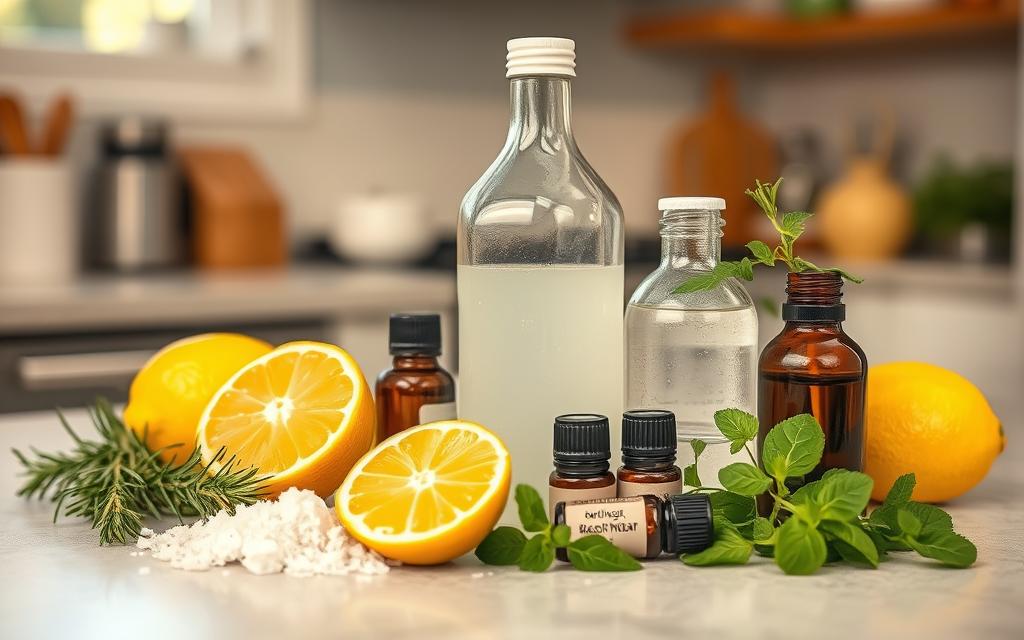
Keeping a small stock of these supplies on hand makes it easier to react quickly the next time a grease stain shows up.
Pre-Treating the Stain
Learning how to remove grease stains from kitchen cloth starts well before the cloth ever reaches the washing machine. Start by blotting the stain with a clean paper towel to soak up as much grease as possible. Don’t rub it, since rubbing can spread the oil further into the fabric.
Blotting the Stain
After blotting, choose a pretreatment based on how tough the stain is: a sudsy dish soap solution works for everyday spills, while a baking soda paste is better once grease has started to set in.
Making a Homemade Stain Treatment
- Mix a few drops of dish soap with warm water to create a sudsy solution.
- Apply the solution directly to the grease stain and let it sit for 15 to 30 minutes.
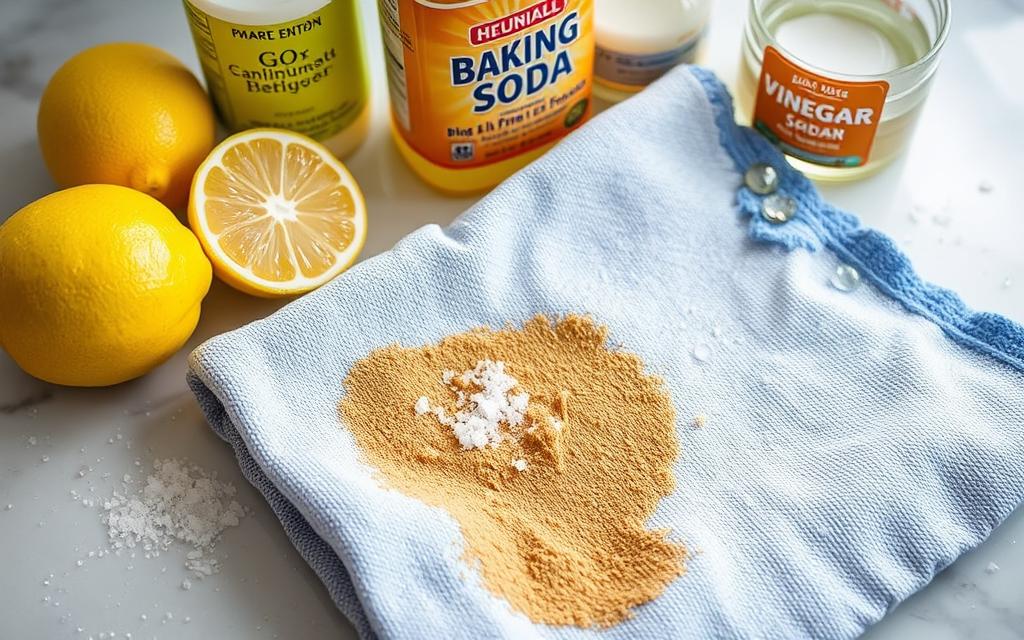
- For stubborn stains, make a paste with baking soda and water, then use a soft-bristled brush to work it into the fabric.
The University of Georgia Extension recommends this same pretreat-then-launder approach for oil-based food stains, along with always testing a hidden area of fabric first for colorfastness. By pretreating with these simple homemade solutions, you’ll be well on your way to lifting those pesky grease marks for good.
Washing Techniques for Different Fabrics
When washing kitchen towels, fabric type matters as much as the stain treatment itself. Cotton towels can take tough cleaning, but synthetic ones need gentler care. Knowing your towel’s material helps you remove grease effectively without damaging the cloth.
Cotton Kitchen Cloths
Cotton towels can handle hot water and strong detergents well. Wash them in the hottest water safe for cotton, paired with a heavy-duty detergent. This combination breaks down grease effectively. Skip the fabric softener, since it can trap grease in the fibers instead of releasing it.
Synthetic Kitchen Cloths
Synthetic towels, like polyester or nylon, need gentler care. Wash them in warm water with a mild detergent, since hot water and harsh cleaners can damage synthetic fibers over time. Skip the fabric softener here too, and add a splash of white vinegar to the rinse cycle for extra cleaning power.
Knowing how to remove grease stains from kitchen cloth by fabric type keeps your towels ready for the next cooking project, whichever material they’re made from.
How to Remove Grease Stains from Kitchen Cloth: Effective Methods
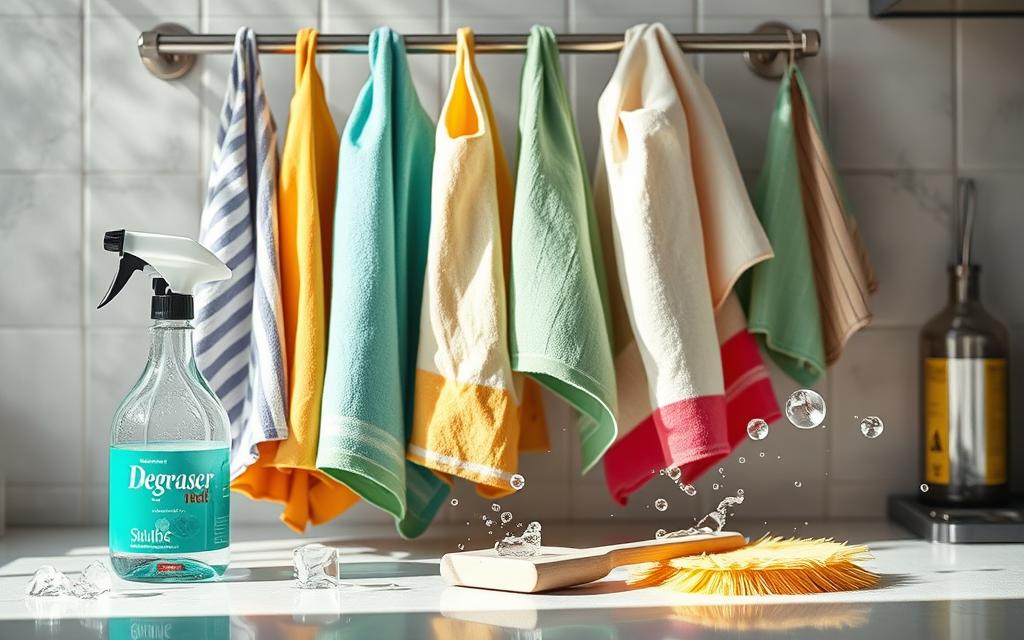
Dealing with stubborn grease stains on kitchen cloths can be tough, but a few tried-and-true methods really work. Simple household items or specialized degreasers can both get fabrics looking new again.
Dish Soap Method
The dish soap method is easy and effective. Just put a bit of dish soap on the stain, rub it in gently, and wait a few minutes before washing as usual. The soap’s grease-cutting ingredients help break down the oil, making it easier to rinse away.
Baking Soda Paste Method
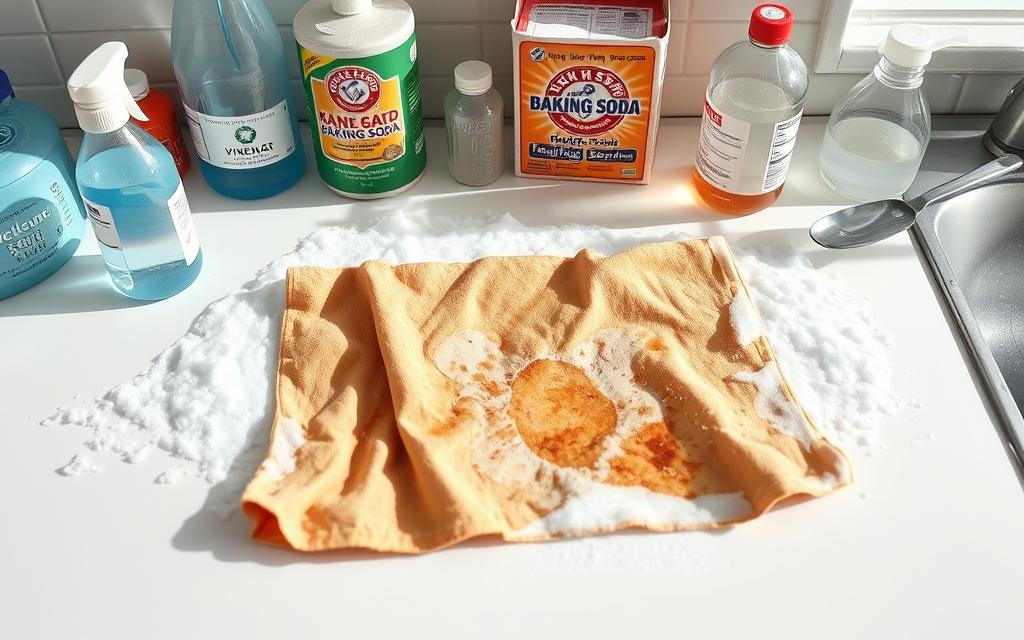
The baking soda paste method is another natural way to tackle grease stains. Mix baking soda with water to make a thick paste, apply it to the stain, and let it sit for 30 minutes to an hour so the baking soda can absorb the grease.
Commercial Degreasers
For really tough stains, try a commercial degreaser like Simple Green or CitriSolve. These products are formulated to dissolve grease and oil quickly. Always test a small, hidden area first to make sure they won’t harm the fabric.
It pays to act fast once you spot a grease stain, since the longer it sits, the harder it becomes to remove. For a deeper look at ditching harsh chemicals altogether, see this guide on cleaning kitchen towels without bleach.
Rinsing and Drying Your Cloth
After treating a grease stain on your kitchen linens, the rinse-and-dry step matters just as much as the treatment itself. Getting it right ensures no oil is left behind and helps prevent musty smells from developing.
Proper Rinse Techniques
Rinsing the cloth thoroughly removes any leftover cleaning solution or stain treatment. Run it under hot water to flush out soap or baking soda residue, which also helps stop chemicals from damaging the fabric or causing color changes.
Best Practices for Drying
- Air drying in direct sunlight helps break down leftover grease and odors, since UV rays naturally bleach and deodorize fabric.
- If using a dryer, choose the highest heat setting the fabric allows, and don’t dry the cloth if any stain is still visible, since heat can set it permanently.
- For delicate fabrics, a mesh laundry bag keeps the cloth from getting caught on the drum and worsening the stain.
Drying properly keeps your kitchen linens fresh, grease-free, and ready for their next use.
Tips for Maintaining Stain-Free Kitchen Cloths
Keeping kitchen cloths grease-free takes consistency more than any single trick. A few simple habits can help your cloths last longer and keep the whole kitchen cleaner.
Regular Cleaning Habits
Wash kitchen cloths daily if they see heavy use, and avoid reaching for a greasy cloth a second time without washing it first. Pairing a regular wash schedule with the odor-prevention habits in this guide to keeping kitchen towels from smelling stops both grease and odor from building up at the same time.
Storage Tips to Avoid Grease Build-Up
- Keep clean kitchen cloths in a dry, well-ventilated spot to prevent grease and moisture buildup.
- Set aside a dedicated stack of cloths for greasy jobs, like wiping down the stovetop or cleaning up spills.
- Rotate kitchen cloths often so grease doesn’t concentrate on just one or two of them.
Regular washing and smart storage keep kitchen cloths stain-free with very little extra effort.
Handling Stubborn Stains
Figuring out how to remove grease stains from kitchen cloth once they’re already set in takes a bit more patience, and it’s normal to repeat the cleaning steps a few times. Soaking the cloth in a mix of oxygen-based bleach and water before rewashing can help break down a set-in stain, and enzymatic cleaners made specifically for grease stains are another good option to keep on hand.
Re-treating Stains
If the first cleaning attempt doesn’t fully work, don’t worry. Try again with a homemade or commercial stain remover, be patient, and let the cleaner do its work. Keep washing until the stain is gone.
When to Seek Professional Help
For really tough stains or delicate fabrics, it’s worth taking the cloth to a professional dry cleaner. They have the tools and solvents to remove stubborn stains without harming the fabric, which is a smart move for valuable or special kitchen towels.
Frequently Asked Questions
Is it hard to figure out how to remove grease stains from kitchen cloth?
Not really. Most grease stains respond well to a simple pretreat-wash-dry routine using dish soap, baking soda, or an enzymatic spray, as long as you treat them before they set in.
Does hot water alone remove grease from kitchen cloths?
Not on its own. Grease is a lipid that doesn’t dissolve in plain water, so detergent’s surfactants do the real work; hot water just helps them work faster.
Can I use bleach on greasy kitchen towels?
Regular chlorine bleach can fade colored fabric and isn’t necessary for grease. Oxygen-based bleach or an enzymatic cleaner is a gentler, equally effective alternative for most kitchen cloths.
What if the grease stain has already gone through the dryer?
Heat-set stains are harder, not impossible. Re-treat with a baking soda paste or commercial degreaser, repeating as needed before rewashing.
How often should I wash kitchen cloths to prevent grease buildup?
Daily is best for cloths in heavy rotation near the stove. Waiting too long lets grease set into the fibers, which makes the next cleaning session much harder.
Are homemade grease removers as effective as store-bought ones?
For most everyday stains, yes. Dish soap and baking soda handle the majority of kitchen grease, and degreasers or enzymatic sprays are best saved for tougher holdouts.
Final Verdict
Learning how to remove grease stains from kitchen cloth really comes down to acting quickly, choosing the right pretreatment, and washing at a temperature your fabric can handle. Dish soap, baking soda, and enzymatic sprays cover almost every situation a home cook will run into, and a professional cleaner can handle the rare stain that won’t budge. Build a quick pretreat-wash-dry habit into your routine, and grease stains stop being a recurring headache in the kitchen.

Hey, My name is MAMON. I am a SEO content creator and affiliate marketer with over 8 years of experience. I create honest product reviews, in-depth buying guides, and practical how-to articles to help readers make informed decisions. My mission is to provide trustworthy, research-backed content that delivers real value.
Leave a Reply