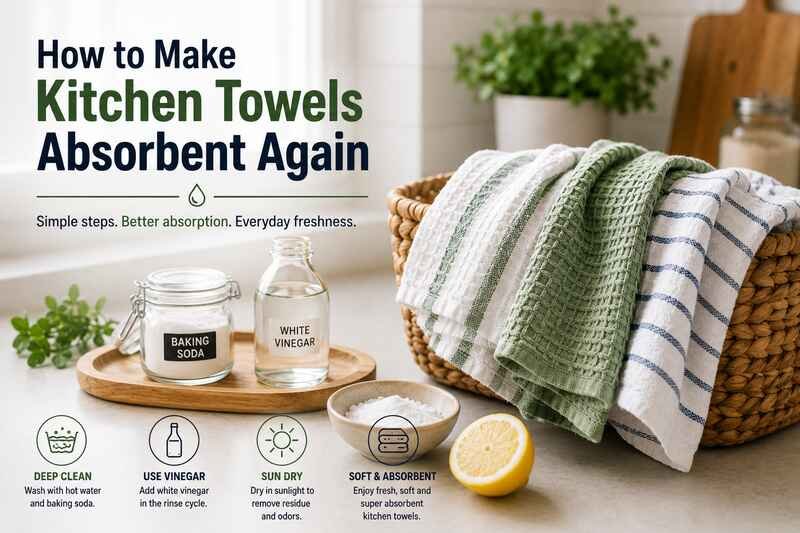
Your kitchen towels might lose their absorbency over time. This happens due to regular use and exposure to cleaning chemicals. You might end up with towels that are flat, rough, and struggle to hold water, and they might even start to smell musty. But don’t worry: if you’re wondering how to make kitchen towels absorbent again, the good news is that with the right methods, you can restore their absorbency and make them work like new.
Key Takeaways
- Washing towels twice, once with vinegar and once with baking soda, can help strip buildup and improve absorbency.
- Adding white vinegar during the first wash cycle can effectively break down detergent and mineral residue.
- Using baking soda in the second wash cycle can further enhance towel absorbency.
- Avoiding overloading the washer ensures detergent and rinse water reach every fiber.
- Skipping fabric softener and hanging towels outside to dry can help prevent buildup and maintain absorbency.
Understanding Why Kitchen Towels Lose Absorbency
Kitchen towels are essential in any kitchen, but they can stop absorbing water and spills over time. This makes you wash them more often while dealing with leftover residue. Knowing why this happens is the first step toward keeping your towels working well.
Common Causes of Loss in Absorbency
Residue from detergents and fabric softeners is a major reason towels lose their absorbency. These products leave a film on the fibers that makes it harder for towels to soak up liquid. According to the Water Quality Association, dissolved calcium and magnesium in hard water also cause mineral scale that stiffens laundry and reduces how well fabric absorbs water.
Oils and grease from everyday kitchen use add to the problem, too. These substances get trapped in the fibers, blocking towels from drawing in water and spills the way they used to.
Impact of Fabric Types on Absorbency
The fabric of a kitchen towel matters a lot for absorbency. Cotton towels are great at soaking up moisture thanks to their natural fibers, while synthetic materials like polyester don’t absorb quite as well.
Learning how to make kitchen towels absorbent again starts with understanding why they lost that ability in the first place. Once you’ve tackled the root cause, keeping them fresh and absorbent is much easier.
Preparing Your Kitchen Towels for Revival
Before you can make your kitchen towels absorbent again, you need to prepare them. First, sort your towels by fabric type, then check for any residue that might be holding them back.
Sorting Towels by Fabric Type
Begin by sorting your kitchen towels by fabric. This ensures you treat each material correctly. Common fabrics include:
- Cotton
- Microfiber
- Linen
- Blended fabrics
Sorting helps you choose the right washing and drying methods for each type, which does a lot to restore how well a towel wicks moisture and dries surfaces.
Checking for Residue Buildup
Next, look for residue on your towels, whether from detergent or fabric softener, since it lowers absorbency. Check the towels closely, focusing on the center and edges where they see the most use.
If you find residue, that’s a clear sign your towels need a deeper clean. This will strip the buildup and restore their ability to wick moisture and dry surfaces quickly. From here, it’s time to revive them properly.
| Fabric Type | Absorbency Characteristics | Recommended Care |
|---|---|---|
| Cotton | Highly absorbent, but can become less so over time | Wash in warm water, avoid fabric softener |
| Microfiber | Excellent water absorption, dries quickly | Wash in cool water, air dry or low heat |
| Linen | Absorbs moisture well, becomes softer with use | Wash in cool water, line dry or low heat |
| Blended | Varies based on fabric composition | Check manufacturer instructions |
How to Make Kitchen Towels Absorbent Again: Washing Techniques
It mostly comes down to the right washing method and ingredients. Choose a mild detergent that won’t leave residue, since too much detergent can make towels less absorbent.
Optimal Washing Settings
Hot water is best for washing towels, since it removes grime and boosts absorbency. Also, avoid overloading your washing machine, since a packed load can keep towels from getting clean evenly.
Adding White Vinegar for a Boost
- Put one cup of white vinegar in the wash cycle. It dissolves soap residue and mineral deposits.
- For really dirty towels, use two cups of vinegar as a stronger treatment.
- Vinegar’s acidity breaks down the residues that reduce a towel’s ability to soak up liquid.
America’s Test Kitchen recommends this same hot-water-plus-vinegar approach for restoring old, worn kitchen towels, which is a good sign this isn’t just a home remedy myth. If your towels also need a deeper, bleach-free clean, that guide pairs well with the vinegar step here.
Rinsing for Maximum Effectiveness
Thorough rinsing is key for actually restoring towel absorbency, not just cleaning towels. After washing with vinegar, run a second cycle with hot water and half a cup to one cup of baking soda. Baking soda softens fibers and helps flush out residue that blocks towels from absorbing moisture.
Importance of Rinsing Thoroughly
It’s vital to rinse towels completely to remove all detergent and vinegar, since any leftover residue can reduce their absorbency all over again.
Using Baking Soda in Rinse Cycles
- Add half a cup to one cup of baking soda to the second wash cycle.
- Baking soda helps break down and flush out any remaining detergent or fabric softener buildup.
- This two-step process of a vinegar wash followed by a baking soda wash strips out the substances that hinder absorbency.
Following this two-step method leaves towels noticeably softer, fluffier, and ready to absorb spills and messes again.
Drying Your Kitchen Towels Properly
Drying kitchen towels the right way matters just as much as washing them for keeping them absorbent.
Air Drying vs. Machine Drying
Air drying in the sun is a great option between deep cleans, since sunlight’s UV rays help freshen towels naturally. If you do use a dryer, choose low heat, since high heat can harm fibers over time and make towels less absorbent. Avoid overloading the dryer, too, or towels won’t dry evenly.
Temperature Considerations
The vinegar-then-baking-soda wash works together with proper drying, stripping chemicals and minerals a dryer alone can’t remove.
Mixing machine and air drying tends to give the best long-term results.
The Role of Fabric Softener
Fabric softener might seem like a simple way to keep towels soft, but it actually works against absorbency. These products coat fibers with chemicals that repel water instead of letting towels soak it up.
Why to Avoid Fabric Softener for Towels
The waxy buildup from fabric softener coats towel fibers, preventing them from wicking away moisture well. Over time, towels become less absorbent, feeling damp and heavy even right after washing. Avoiding fabric softener altogether keeps towels working at their best.
Alternatives to Fabric Softener
- Dryer balls: These reusable balls help fluff and soften towels without chemicals.
- Clean tennis balls: A few clean tennis balls in the dryer can soften towels much like dryer balls do.
- Vinegar: A cup of white vinegar in the wash cycle removes fabric softener residue and boosts absorbency.
- Baking soda: A half-cup of baking soda in the wash cycle softens towels and gets rid of odors.
Avoiding fabric softener and reaching for these natural alternatives instead keeps kitchen towels absorbent and fresh for longer.
Essential Tools for Towel Care
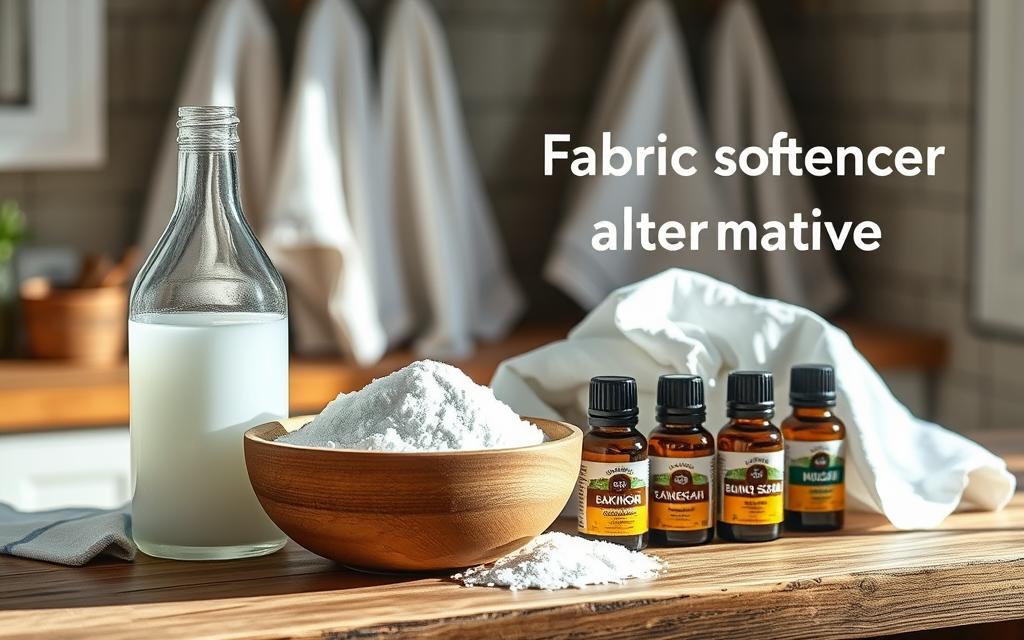
Knowing how to make kitchen towels absorbent again is only half the job; keeping them that way takes the right tools and products on hand. Gentle detergent, white vinegar, and baking soda cover most of what you need to keep towels absorbent and long-lasting. If grease is a recurring problem on your towels, this guide to removing grease stains covers pretreatment steps that pair well with the routine below.
Recommended Laundry Products
Choosing the right detergent matters for washing towels. Look for a mild, fragrance-free option that doesn’t leave residue behind. Adding white vinegar and baking soda to your wash can further boost absorbency.
- Gentle, residue-free detergent
- White vinegar (about 1 cup per load)
- Baking soda (approximately 1/2 cup per load)
Tools for Testing Absorbency
It’s worth testing your towels’ absorbency now and then. Pour a small amount of water on a clean towel and see how fast it soaks in. This simple test shows whether your towels need a refresh or are still doing their job.
Tips for Maintaining Absorbency
Once you know how to make kitchen towels absorbent again, keeping them that way takes only a bit of ongoing effort with the right habits.
Best Practices for Everyday Care
Use less detergent when washing towels, since too much soap leaves residue that reduces absorbency. Choose a gentle, non-toxic detergent, and add a cup of white vinegar to the wash to help remove oils and grime.
Skip the fabric softener, since it makes towels less absorbent over time. For softness instead, use dryer balls or clean tennis balls in the dryer.
Proper Folding and Storage Techniques
- Make sure towels are fully dry before folding and storing them, since damp towels can turn musty and lose absorbency.
- Store towels somewhere with good airflow, and avoid overcrowding closets or drawers.
- Rotate your towels regularly so they wear evenly and stay absorbent longer.
A little consistent care goes a long way toward lasting absorbency.
Signs Your Kitchen Towels Need Replacement
It’s important to know when to replace kitchen towels for good, since worn-out, stained, and permanently less absorbent towels can hurt both hygiene and everyday function.
Identifying Wear and Tear
Look for frayed edges, holes, or stains that won’t wash out. These signs mean a towel needs to be replaced. Thin, rough fabric that’s lost its softness is another sign it’s time for new ones.
Knowing When to Let Go
If a towel still can’t absorb well after trying the methods above, it’s time to retire it. Persistent odors or trouble drying dishes and surfaces are other signs a towel has reached the end of its useful life. A fresh set of cotton dish towels is a reasonable next step once a batch is truly past saving.
Checking towels often keeps cleanup routines effective.
Eco-Friendly Methods to Refresh Towels
Keeping kitchen towels fresh doesn’t require harsh chemicals. Natural ingredients and a few simple habits can make towels feel new again while being gentler on the planet.
Using Natural Ingredients
Household items like vinegar, baking soda, and lemon juice can make a real difference. Vinegar breaks down dirt and mineral residue, while baking soda’s alkalinity helps neutralize odors. Combining vinegar and baking soda in the wash tackles both smells and absorbency at once, similar to the approach in this guide to keeping kitchen towels from smelling.
DIY Solutions for Fabric Care
- Hang towels outside to dry, since sunlight helps reduce the bacteria that cause odors.
- Use dryer balls or clean tennis balls in the machine to fluff towels without added chemicals.
- Wash towels separately from clothes so they get cleaned properly and stay absorbent.
These eco-friendly habits freshen towels and clear out buildup without harsh chemicals.
Frequently Asked Questions
How to make kitchen towels absorbent again without buying new ones?
Wash them once with a cup of white vinegar, then again with baking soda, using hot water and no fabric softener. This strips the residue that’s usually behind the problem.
Why do my kitchen towels repel water instead of absorbing it?
That’s almost always a sign of buildup, usually from fabric softener or hard water minerals coating the fibers so water beads up instead of soaking in.
Can I use fabric softener sheets in the dryer instead of liquid softener?
No, dryer sheets leave a similar waxy residue and can reduce absorbency just as much as liquid fabric softener.
How often should I strip my kitchen towels with vinegar and baking soda?
Every one to two months for towels in heavy daily use is usually enough to keep them working well between deep cleans.
Does hot water alone restore towel absorbency?
Hot water helps loosen grime, but it won’t fully remove fabric softener or mineral buildup on its own. Pairing it with vinegar and baking soda gets much better results.
Is it worth buying special “quick-dry” kitchen towels instead of restoring old ones?
Restoring your current towels is usually cheaper and just as effective, though very worn or thin towels are better replaced than repeatedly treated.
Conclusion: Keep Your Towels Absorbent
Knowing how to make kitchen towels absorbent again comes down to a simple routine: strip buildup with a vinegar wash and a baking soda wash, skip the fabric softener, and dry towels with care. Following the tips in this guide restores a towel’s ability to soak up moisture without needing anything harsher than what’s already in your pantry.
Recap of Key Tips
Use vinegar and baking soda washes, choose the right drying method for your fabric, and check your towels’ absorbency now and then. These steps help towels last longer and stay effective for daily use.
Encouragement to Maintain Towel Care
Regular care for kitchen towels pays off in how well they perform every day. With a bit of consistent effort and the right techniques, your towels can stay genuinely absorbent for years, not just for a few washes after a deep clean.

Hey, My name is MAMON. I am a SEO content creator and affiliate marketer with over 8 years of experience. I create honest product reviews, in-depth buying guides, and practical how-to articles to help readers make informed decisions. My mission is to provide trustworthy, research-backed content that delivers real value.
Leave a Reply