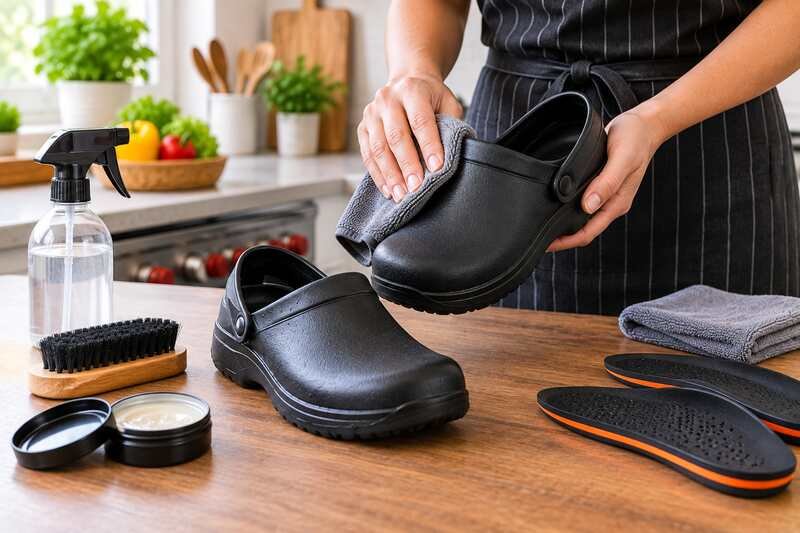
If you work in a kitchen, your shoes matter as much as any other piece of your kit. Learning how to make kitchen shoes last longer keeps you safer on wet floors and more comfortable through a long shift. It also saves you from replacing a pair every few months.
Good care doesn’t take much time. But it pays off in fewer slips, less foot fatigue, and a lower total cost per year of wear. Here’s what actually moves the needle.
Key Takeaways
- Knowing how to make kitchen shoes last longer starts with regular cleaning, which stops food, grease, and liquids from breaking down the materials
- Well-maintained soles keep their anti-slip grip longer, which matters for safety as much as for lifespan
- Small habits, like insole replacement and rotating between two pairs, extend the life of your shoes without much extra effort
- Proper storage and drying prevent the mold, odor, and material breakdown that end a shoe’s life early
- A clean, well-cared-for pair also keeps your kitchen more hygienic and looks more professional
Understanding the Importance of Kitchen Shoe Maintenance
Keeping your kitchen shoes in good shape is key for your safety and performance. It’s also central to how to make kitchen shoes last longer in practice. Regular care keeps the soles grippy, which lowers your risk of a fall on a wet floor.
Impact on Safety and Performance
Kitchen shoes are built to resist slips, with soles designed to grip wet or greasy floors. Cushioned insoles and arch support keep your feet comfortable through hours of standing, but only while those features are still intact. If you’re still deciding what to buy, our guide on how to choose the best shoes for working in the kitchen covers fit and support.
Cost-Effective Benefits of Proper Care
Looking after your kitchen shoes saves you money over time. They’re built for a harsh environment, and the right care keeps them performing near their original level instead of degrading fast. That means more use out of every dollar you spent.
Professional Kitchen Standards
Professional kitchens expect clean, well-maintained footwear as part of a safe, sanitary workspace. Some shoe materials clean and disinfect more easily than others. But all of them last longer when you keep up with basic care.
Essential Cleaning Techniques for Kitchen Footwear
Keeping your kitchen shoes clean is one of the most direct ways to make them last. It keeps your workspace safer too.
Cleaning Leather Shoes
Wipe leather shoes with a damp cloth to remove surface dirt, then follow with a gentle leather cleaner. This keeps the material soft and helps prevent cracking. Keep leather away from direct heat, which dries it out and speeds up damage.
Cleaning Synthetic Shoes
For synthetic shoes, use a mild detergent and warm water with a soft-bristled brush or sponge for tough stains. Rinse well and let them air dry, since heat can warp synthetic materials.
Cleaning Canvas Shoes
Brush off loose dirt first, then clean with warm water and mild soap, using an old toothbrush on stubborn spots. Rinse thoroughly and stuff the shoes with paper towels while they dry to help them hold their shape.
Cleaning Clogs and Boots
Soak clogs and boots in soapy water if they’re heavily soiled, then scrub lightly and rinse. Let them air dry completely before wearing them again. Some kitchen shoes are dishwasher-safe, but always check the manufacturer’s label first.
For a deeper walkthrough of the cleaning process itself, see our guide on how to clean non-slip kitchen shoes properly.
| Shoe Type | Cleaning Method | Drying Technique |
|---|---|---|
| Leather | Damp cloth, gentle leather cleaner | Air dry, avoid direct heat |
| Synthetic | Mild detergent and warm water, soft-bristled brush | Air dry |
| Canvas | Stiff-bristled brush, warm water and mild soap, toothbrush | Air dry with paper towel stuffing |
| Clogs/Boots | Soak in soapy water, light scrubbing | Air dry |
Keeping your kitchen shoes clean this way protects both their safety features and their lifespan. That’s really the whole point of the routine.
How to Make Kitchen Shoes Last Longer
Once cleaning is handled, a simple daily, weekly, and monthly routine is what actually makes kitchen shoes last longer over the long run.
Daily Maintenance Practices
Wipe down your shoes after every shift with a clean, damp cloth to remove spills and dirt before they set in. Let them air out before you store them. This slows bacterial growth and keeps them from developing odor.
Weekly Care Routine
Set aside a few minutes each week for a deeper clean of the uppers and outsoles with a soft-bristle brush and mild soap. Deodorize while you’re at it, either with a commercial product or a natural option like baking soda or a few drops of essential oil.
Monthly Deep Cleaning
Once a month, go deeper: condition the leather, check the insoles for wear, and inspect the whole shoe for damage. Wearing a second pair on alternating days also helps, since it gives each pair time to fully rest and dry.
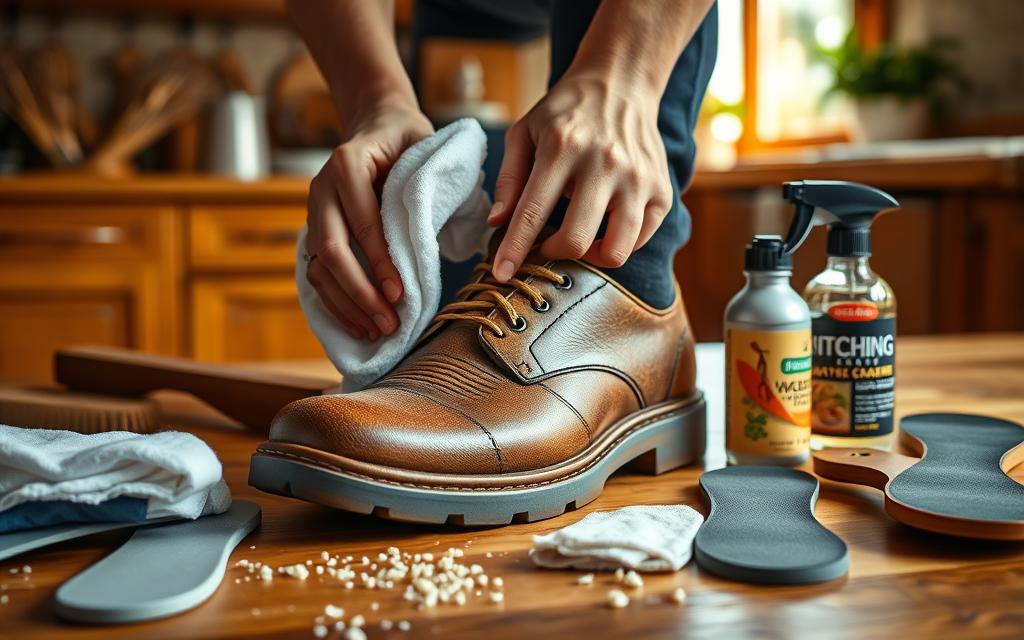
A little consistency with this routine goes further than any single deep clean. It catches small problems before they become expensive ones.
Proper Storage Solutions for Extended Lifespan
How you store your kitchen shoes between shifts matters almost as much as how you clean them. A few habits make a real difference:
- Store shoes in a well-ventilated spot to prevent dampness and mold. Keep them away from direct heat sources that can damage the materials.
- Use shoe trees to help leather shoes hold their shape, even on days you’re not wearing them.
- For strappy or open shoes, stuff the toe area with newspaper or tissue paper to keep the shape.
- When traveling, use a shoe bag or wrap shoes in soft material so they don’t get scuffed in a larger bag.
| Storage Tip | Benefits |
|---|---|
| Well-ventilated storage area | Prevents dampness and mold growth |
| Use of shoe trees | Maintains the shape of leather shoes |
| Stuffing toe caps | Retains the shape of strappy shoes |
| Utilizing shoe bags or wraps | Protects shoes during travel and storage |
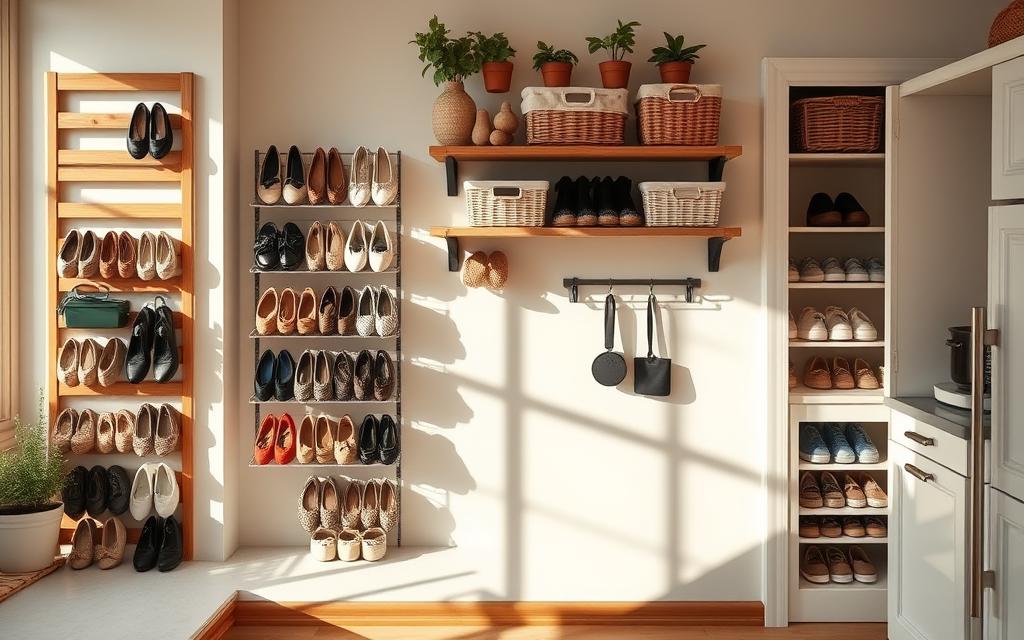
Effective Deodorizing Methods
Odor control matters for comfort. It’s also a sign of shoe health, since bacteria that cause smell also break down materials over time.
Natural Deodorizing Solutions
Baking soda is a cheap, effective option. Sprinkle some inside your shoes and leave it overnight to absorb odor. A few drops of rosemary essential oil or a small sachet of dried sage adds extra freshness.
Commercial Products and Their Uses
Deodorizing sprays and inserts can keep shoes smelling fresh for months. Many rely on activated charcoal to trap and neutralize odor rather than just masking it.
Preventing Odor Build-up
- Let shoes dry completely before wearing them again, and use moisture-wicking socks to help them stay dry through a shift.
- Keep your feet clean by washing them with soap and water. Bacteria on skin is a major source of shoe odor.
- Alternate between pairs so each one gets a full day to dry out.
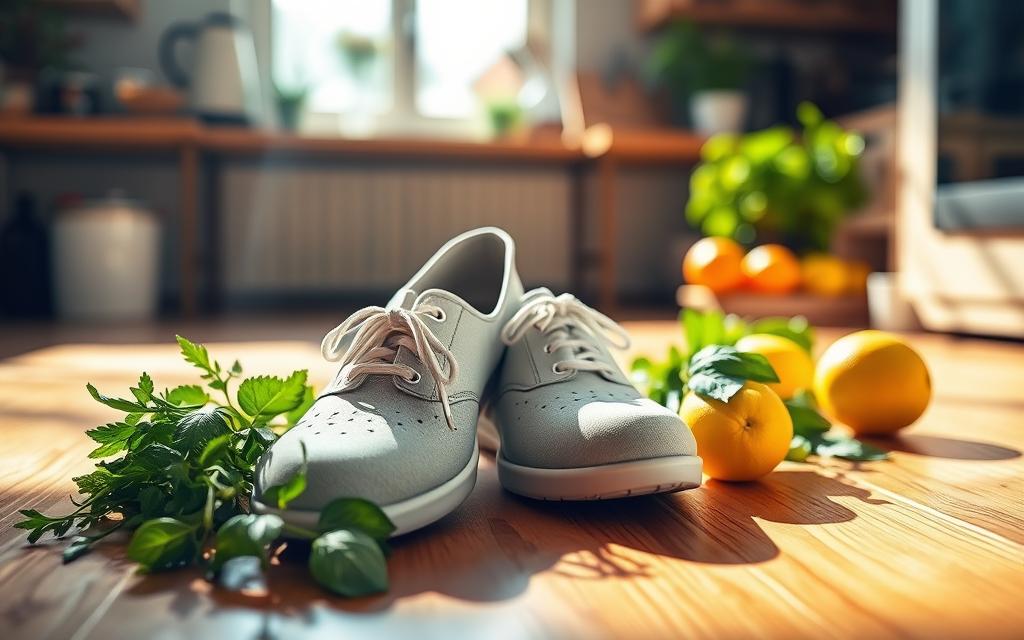
Leather Care and Conditioning Tips
Leather kitchen shoes need a bit more attention than synthetic ones. The payoff in lifespan is worth it.
After cleaning, work in a leather conditioner with circular motions. This keeps the material soft and prevents it from drying out and cracking. For suede, use a dedicated suede brush and cleaning block instead, since suede needs its nap preserved rather than sealed.
Before wearing new leather shoes, apply a water-repellent spray to protect against spills and moisture. If they do get wet, let them air dry naturally with newspaper stuffed inside to hold their shape. Never use direct heat to dry wet leather, since it causes cracking and shrinkage.
Reapply conditioner every month or so, more often if you wear the shoes daily in a hot, greasy environment. Choose conditioners with natural oils, like neatsfoot, mink, or castor oil. They nourish the leather without fully sealing it, since leather needs to breathe to stay flexible.
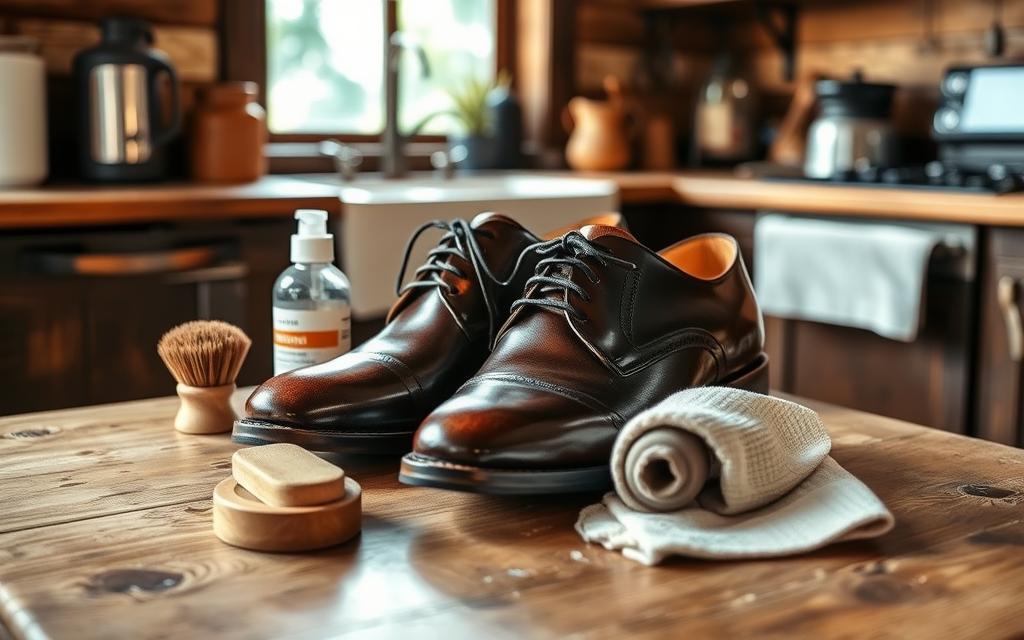
With consistent care, leather kitchen shoes can outlast synthetic pairs by a wide margin. That makes the extra few minutes a month worth it.
Replacing and Maintaining Insoles
Insoles do a lot of the work of keeping your feet comfortable and supported through a long shift. Knowing when to replace them matters for both performance and safety.
Signs of Insole Wear
Watch for thinning cushioning, a flattened arch, or foot discomfort that wasn’t there before. Any of these means the insole has compressed past the point of doing its job. Replacing it restores support fast.
Choosing the Right Replacement Insoles
Think about what you actually need: more arch support, more cushioning, or better breathability to manage sweat and odor. Memory foam or gel insoles work well for all-day standing. Clean your insoles regularly too, since they trap moisture and bacteria that can shorten the life of the whole shoe.
Rotating Your Kitchen Shoes Effectively
If you’re looking for a single habit with the biggest payoff, this is it: switching between two pairs is one of the simplest ways to make kitchen shoes last longer. It gives each pair a full day to dry out completely, which cuts down on odor. It also lets the cushioning foam decompress and recover its shape between wears.
Sports-medicine research on running shoe rotation backs this up: resting shoes between uses lets compressed cushioning materials recover. That reduces the wear that builds up when one pair absorbs every shift’s impact alone.
- Set a simple rotation plan with at least two pairs, letting each one dry fully before you wear it again.
- Store the pair you’re not wearing properly, in a shoe bag or wrapped in something soft, so it stays in shape.
- When buying a second pair, look for shoes that meet a recognized slip-resistance standard like ASTM F2913 or SATRA TM144. These test how a shoe performs against wet or greasy flooring.
| Benefit | Impact |
|---|---|
| Extending footwear lifespan | Rotating shoes lets cushioning recover between wears and spreads wear more evenly across both pairs. |
| Reducing odor | Letting shoes air out fully between uses limits the moisture and bacteria that cause odor. |
| Improving comfort | Alternating shoes gives some variety in support and cushioning, which can ease fatigue over long shifts. |
A simple two-pair rotation keeps your kitchen shoes performing longer. It also keeps your work area safer and more comfortable.
Preventive Maintenance Strategies
Catching problems early is what actually prevents a shoe from failing you mid-shift.
Regular Inspection Points
Check your shoes often for uneven sole wear, an early warning sign of reduced slip resistance. Also check the upper material for cracks, tears, or loose stitching before they get worse.
Addressing Wear and Tear
Act quickly when you spot uneven soles, less grip, or a change in shape. Use a shoe horn to protect the heel counter when putting shoes on. Apply a protective spray after cleaning to keep the material water- and stain-resistant.
| Maintenance Task | Frequency |
|---|---|
| Inspect soles and uppers | Daily |
| Apply protective spray | After each cleaning |
| Perform deep cleaning | Monthly |
| Replace insoles | Every 2-3 months |
| Rotate shoes | Daily |
Professional Repair Options and When to Consider Them
When wear goes beyond what home care can fix, a professional cobbler is usually cheaper than replacing the shoes outright.
Shoe repair shops can handle worn soles, broken straps, and more. Get professional help for major sole wear, deep leather cracks, or anything that compromises safety. A cobbler can resole your shoes, mend small holes, repair broken hardware, and condition leather back into shape.
- Resoling typically runs $35 to $185 depending on the sole type and construction, according to cobbler pricing data. Basic half-soles sit at the low end, premium materials at the high end.
- Leather cleaning and conditioning as an add-on service typically runs $10 to $25.
- Strap, buckle, and other hardware repairs vary more by shop and damage, so ask for a written estimate before authorizing the work.
Timely repairs almost always cost less than a new pair. They also keep a shoe you already know fits well in service longer. For more on the ASTM and SATRA slip-resistance standards mentioned above, this ISHN explainer covers how the testing actually works.
A good cobbler can extend the working life of a shoe well past what home care alone can manage, especially for a well-built leather pair.
Conclusion
Knowing how to make kitchen shoes last longer comes down to a handful of habits. Clean them often, store them properly, rotate between two pairs, and address wear before it becomes a safety issue. None of it takes much time on its own, but together it adds up to real savings.
Choosing quality, slip-resistant shoes in the first place matters too. Pair that with the routine above, and the whole approach stays simple: clean, store, rotate, repair. If your current pair is past saving, our non-slip kitchen shoes reviews and buyer’s guide can help you find a replacement built to last.

Hey, My name is MAMON. I am a SEO content creator and affiliate marketer with over 8 years of experience. I create honest product reviews, in-depth buying guides, and practical how-to articles to help readers make informed decisions. My mission is to provide trustworthy, research-backed content that delivers real value.
Leave a Reply