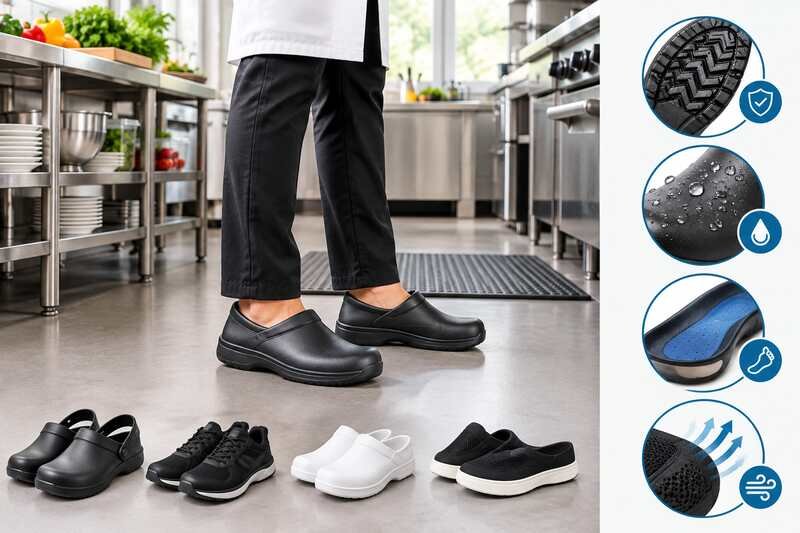
Knowing how to choose the best shoes for working in the kitchen matters as much as any knife skill. The kitchen is a place where safety and comfort are key. As a chef or kitchen staff, you’re on your feet for hours. You face hot surfaces, spills, and hard floors. The right shoes are vital for your safety, foot support, and to avoid getting tired.
Many chefs suggest brands like Birkenstock, Dansko, and Blundstone. They’re known for being tough, supportive, and easy to clean. Birkenstock clogs, for example, are made of polyurethane. They’re great at keeping oil and grease out, and their footbed can be washed and disinfected.
The Dansko Professional Leather Clog is a favorite. It’s good for people with flat feet because it absorbs shock. It also has a memory foam footbed for great arch support. Blundstone work boots are another top pick. They’re water-resistant, have a slip-resistant sole, and a steel shank for extra support. Plus, their footbed is antibacterial, washable, and breathable.
Key Takeaways
- Knowing how to choose the best shoes for working in the kitchen starts with slip resistance, support, and easy-to-clean materials.
- Chefs recommend shoes with nonslip soles, closed toes, and easy-to-clean materials.
- Birkenstock, Dansko, and Blundstone are popular brands among professional chefs for their durability and support.
- Shock absorption, arch support, and water resistance are essential features to look for in kitchen shoes.
- Investing in high-quality work shoes can mean fewer replacements and a lower total cost over time.
Understanding Kitchen Safety and Footwear Requirements
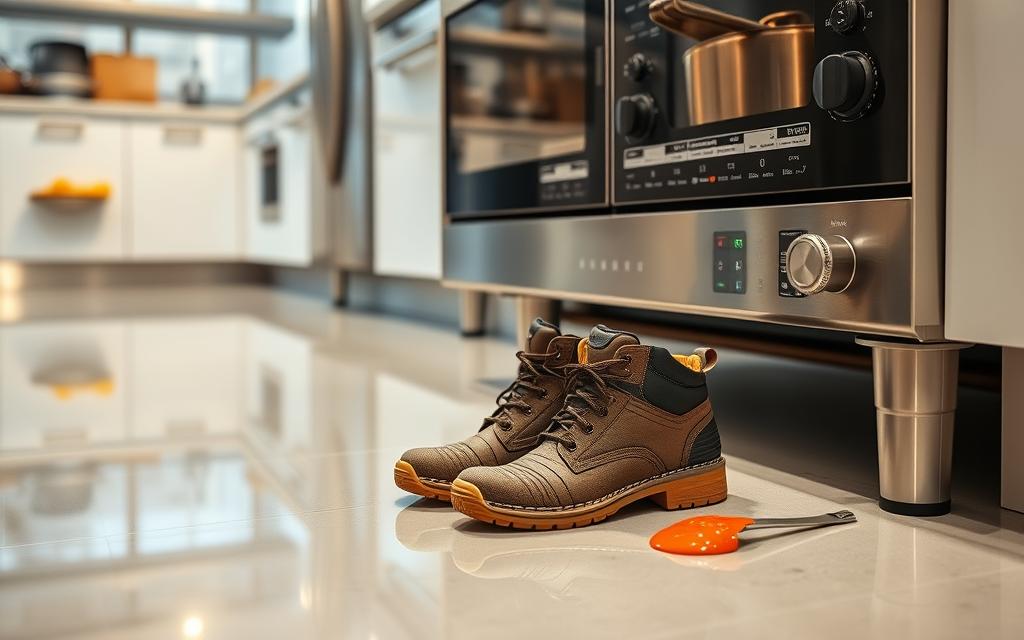
Keeping a professional kitchen safe is very important. The right shoes are key to this safety. Kitchen floors can be slippery, with grease and water making them even more dangerous.
Common Kitchen Floor Hazards
Slipping on wet floors can cause serious injuries. These can range from minor sprains to broken bones. Standing for long periods can also hurt your feet and back, making it hard to work well.
Essential Safety Features in Kitchen Shoes
Kitchen staff need shoes that can handle the kitchen’s tough conditions. Shoes with non-slip soles and special tread patterns help prevent slipping. They should also be water-resistant to keep feet dry and comfortable.
Professional Kitchen Standards for Footwear
Kitchens have strict rules for shoes. They must be easy to clean and support your feet well. Some places even require shoes with steel toe caps for extra protection.
OSHA’s walking-working surfaces standard requires employers to keep floors clean and free of slip hazards where possible. When wet conditions can’t be fully avoided, the standard treats slip-resistant footwear as one of the accepted ways to manage the risk. That’s part of why so many kitchens make it a job requirement rather than just a suggestion.
Choosing non slip kitchen shoes can make a big difference. It keeps staff safe, comfortable, and productive. It also helps keep the kitchen clean and healthy.
The Importance of Proper Support and Comfort
Working in a kitchen can be tough on your feet and back. Standing for long periods on hard floors can cause pain and even injuries. It’s important to wear shoes that support your arches, absorb shock, and cushion your feet.
Features like memory foam, contoured insoles, and rocker heels help spread out your weight. This reduces pressure on your joints.
Certain shoes come up again and again as favorites among kitchen workers. Brands like Birkenstock, Crocs, Dansko, and Blundstone are common picks. Birkenstock shoes are known for their sturdy design and slip-resistant soles. Crocs On the Clock Work Clogs are praised for being light, cushioned, and supportive.
Foot fatigue is a real problem for kitchen staff who stand for hours at a stretch, especially on hard tile or concrete. A survey of professional chefs by Fine Dining Lovers found that 60% work 9 to 12 hour shifts, and 23% work more than 12 hours. That’s a lot of time spent standing, often without much of a break. Wearing the wrong shoes for a shift that long doesn’t just cause sore feet by closing time. Over months and years, it can contribute to knee, hip, and lower-back strain too.
When picking shoes for the kitchen, look for support, cushioning, and grip. The right combination of arch support, shock absorption, and slip resistance will keep your feet and body comfortable, even during long hours.
Key Features to Look for in Kitchen Shoes
You need safety and comfort. Look for shoes with slip-resistant soles to avoid falls on wet floors. They should also handle water and heat well.
Easy-to-clean materials like polyurethane or leather are a must. They let you quickly disinfect your shoes. This keeps your kitchen clean and safe.
Non-slip Soles and Traction
Slips, trips, and falls are common in kitchens. Shoes with slip-resistant soles help prevent these accidents. They give you the traction you need on wet or uneven floors.
These features are crucial for staying safe while working. They help prevent injuries and keep you on your feet.
Water and Heat Resistance
Kitchens can be messy and hot. Shoes that resist water keep your feet dry. This is important for your comfort and focus.
Heat resistance is also key. You’ll be near ovens and stovetops all day. Shoes that handle heat well protect your feet.
Easy-to-Clean Materials
Hygiene is essential in kitchens. Shoes made from easy-to-clean materials help keep things clean. Look for ones with smooth surfaces and removable insoles.
These features make cleaning up easy. They help prevent the spread of bacteria and odors. Clean shoes mean a healthier kitchen. Our guide on how to clean non-slip kitchen shoes properly covers the specific steps for keeping them in good shape.
Remember, the best kitchen shoes are comfortable too. They should have a roomy toe box and be lightweight. This way, you can work hard all day without discomfort.
How to Choose the Best Shoes for Working in the Kitchen
Choosing the right shoes for kitchen work is key. You need comfort, support, and safety. Restaurant workers often log several thousand steps a shift, sometimes more on busy, high-turnover days.
Try on shoes when your feet are swollen at the end of the day for a fit that won’t feel too tight later. Look for strong arch support and removable insoles you can swap for custom orthotics.
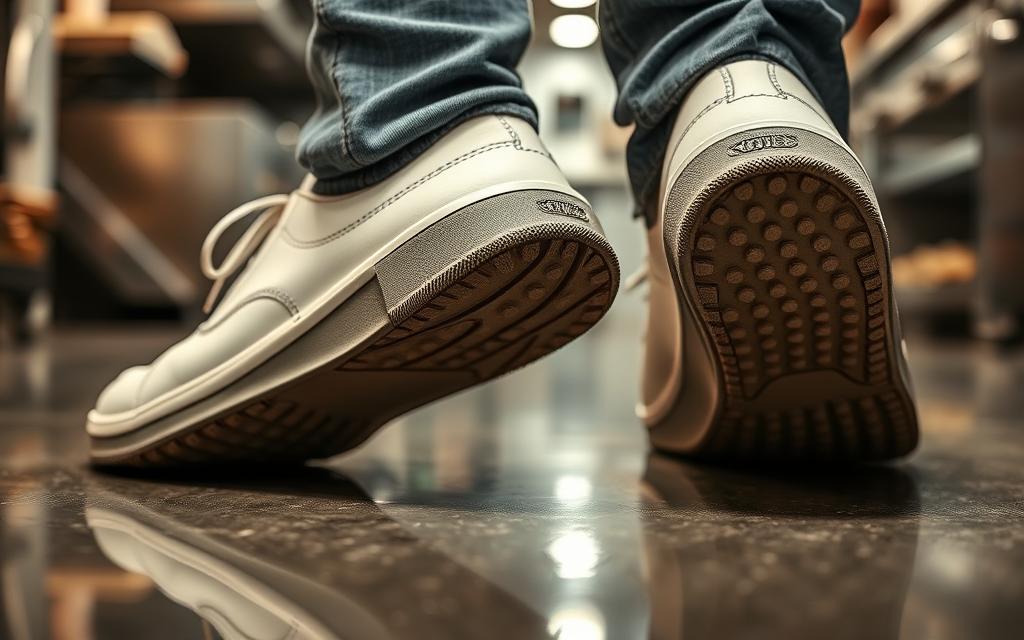
The kitchen can be dangerous. So, pick professional kitchen footwear that’s genuinely safe. Choose shoes with slip-resistant soles to avoid slipping on wet floors. Also, pick shoes that can handle water and heat.
- Choose shoes with memory foam or EVA insoles for superior arch support and shock absorption
- Look for bend-resistant shoes that will maintain their shape and provide stability throughout long shifts
- Ensure your footwear has a wide toe box to allow for natural foot expansion and prevent pinching
So, how to choose the best shoes for working in the kitchen that actually fit your job? Think about your specific role and the kitchen’s demands, from a fast-paced line station to a slower prep area. Matching the shoe to the job keeps you comfortable, supported, and safe during long hours.
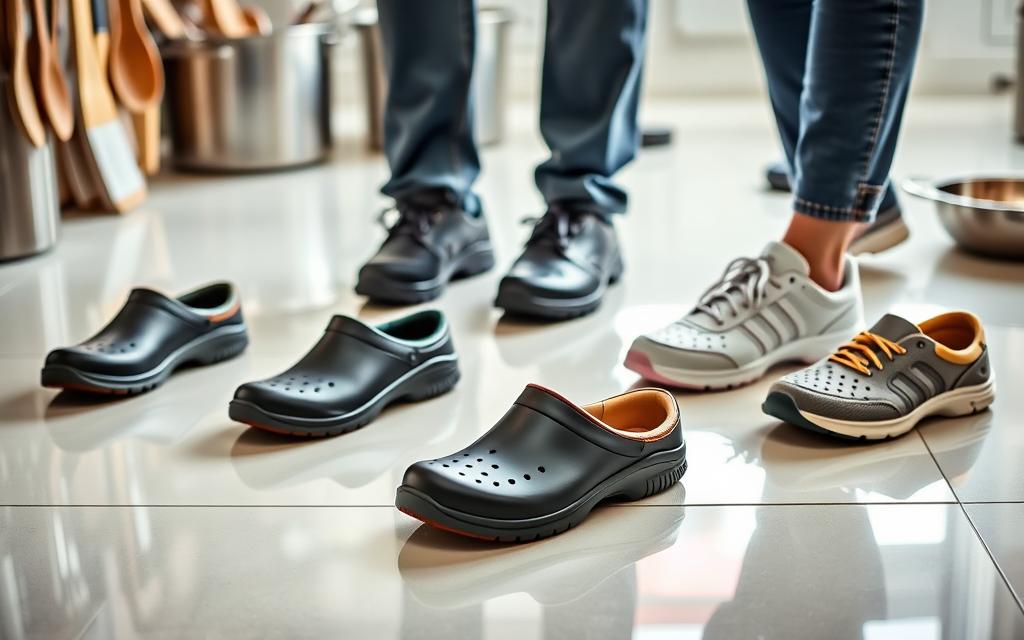
A good rule of thumb: your kitchen shoes should be appropriately sized, comfortable, supportive, and slip-resistant. If a shoe is missing any one of those, it’s worth trying a different pair rather than pushing through discomfort for months.
Types of Professional Kitchen Footwear Options
Part of learning how to choose the best shoes for working in the kitchen is knowing your options. Clogs, work boots, and sneakers each suit different roles and floor conditions.
Clogs and Their Benefits
Clogs, from brands like Birkenstock and Dansko, are popular among chefs. They are easy to slip on and off and have supportive footbeds. They also breathe well, keeping your feet cool during long hours.
Many clogs have slip-resistant soles. This makes them great for walking on wet or oily floors in the kitchen.
Kitchen-Specific Work Boots
Work boots, like those from Blundstone, offer great foot protection. They cover your feet fully, protecting them from heavy objects or sharp edges. Their sturdy build and slip-resistant soles are perfect for tough kitchen environments.
Professional Grade Sneakers
Sneakers, like those from Skechers and Asics, offer a mix of comfort and safety. They have cushioning and support, along with slip-resistant soles and water-resistant materials. They’re a good choice between boots and clogs.
Think about your kitchen’s needs when picking shoes. Consider wet floors, ankle support, and how long you’ll be on your feet. The right shoes can keep your feet safe and comfortable all day.
| Shoe Type | Key Features | Pros | Cons |
|---|---|---|---|
| Clogs | Slip-resistant soles, supportive footbeds, easy on-and-off design | Excellent breathability, comfortable for long shifts, good traction on wet/oily floors | May not provide as much foot coverage as other options |
| Work Boots | Full foot protection, durable construction, slip-resistant soles | Highest level of foot protection, ideal for demanding kitchens, provide ankle support | May be heavier and less breathable than other options |
| Sneakers | Cushioned comfort, slip-resistant outsoles, water-resistant materials | Balance of comfort and safety features, lightweight and breathable, versatile for various tasks | May not provide as much support or protection as other options |
Maintaining Foot Health During Long Kitchen Shifts
Working in the kitchen means long hours on your feet. This can hurt your foot health. It’s key to take steps to keep your feet comfortable and supported, not just by wearing the right shoes.
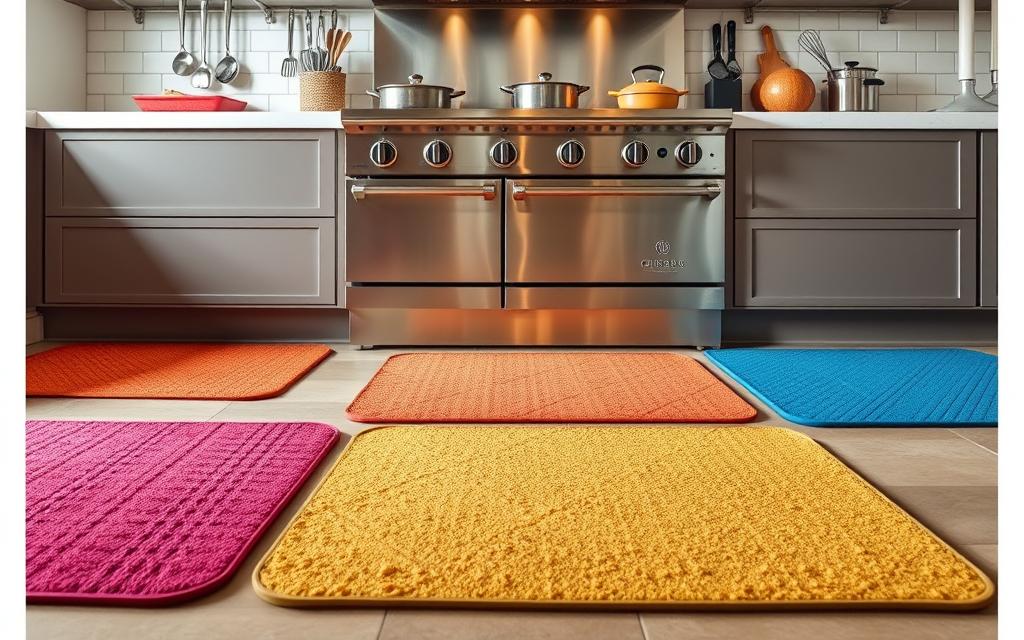
Using anti-fatigue mats in busy kitchen areas is a smart move. These mats add extra cushioning and support. They help spread out your weight, easing pressure on your feet and back.
Good foot hygiene is also important. Make sure to change your socks often and let your shoes dry completely before wearing them again. Wearing two pairs of shoes and switching between them can also help them last longer and give your feet a break.
During breaks, stretch and exercise your feet. Try toe curls, ankle rotations, and calf raises. These simple moves can boost circulation and cut down on fatigue. Spending a little time on these exercises can greatly help your foot health and prevent problems later on.
| Foot Health Tip | Benefit |
|---|---|
| Use anti-fatigue mats | Reduces strain on feet and lower back |
| Practice good foot hygiene | Keeps feet dry and comfortable |
| Alternate between two pairs of shoes | Extends the life of your kitchen footwear |
| Stretch and exercise your feet | Improves circulation and reduces fatigue |
By following these easy tips, you can keep your feet healthy and do well in the kitchen. Remember, taking care of your feet is vital for your overall health and job success.
Price Considerations and Value for Money
When picking kitchen shoes, the price matters a lot. Budget-friendly choices like Crocs and Sloggers are great for home cooks or those in the kitchen part-time. But, for full-time kitchen staff, investing in top-notch shoes is often better in the long run.
Budget-Friendly Options
For those watching their budget or not on their feet much, Crocs and Sloggers are good. They focus on being comfy and slip-resistant, perfect for home or light kitchen tasks. But, they might not last as long as pricier, professional shoes.
Investment-Worthy Professional Shoes
Full-time kitchen workers should think about spending more on shoes. Brands like Birkenstock, Dansko, and Blundstone are built for the job, with real support, grip, and water and heat resistance. They cost more upfront, but they’re often worth it for the comfort and lasting use. Our guide on how to make kitchen shoes last longer covers care habits that help justify that cost.
Breaking in Your New Kitchen Shoes
Getting high-quality kitchen shoes is key for comfort and safety during long hours. It’s vital to break them in before using them a lot. Some shoes, like leather boots, need a little time to fit your feet right.
Begin by wearing your new shoes around the house for a bit before your first full shift. This helps you find any tight spots or hotspots early. Wearing thick socks or using bandages can help avoid blisters at first.
Slowly increase how long you wear your new shoes. This lets your feet get used to the materials and design. For example, the Blundstone #2309 Low Cut Shoe has a cork footbed that molds to your feet over time. Breaking in your shoes properly means they’ll be comfy and supportive for your kitchen work.
Conclusion
Learning how to choose the best shoes for working in the kitchen comes down to a handful of things: slip resistance, support, water and heat resistance, and materials that are easy to clean and disinfect. Brands like Birkenstock, Dansko, and Blundstone show up again and again for a reason, but the right pick ultimately depends on your role, your kitchen’s floors, and how many hours you’re on your feet each shift.
Don’t treat kitchen shoes as an afterthought. With chefs regularly working 9 to 12 hour shifts or longer, the right footwear affects how your feet and back feel by the end of the week, not just one shift. Try shoes on later in the day, break them in gradually, and pair them with habits like anti-fatigue mats and regular foot stretches.

Hey, My name is MAMON. I am a SEO content creator and affiliate marketer with over 8 years of experience. I create honest product reviews, in-depth buying guides, and practical how-to articles to help readers make informed decisions. My mission is to provide trustworthy, research-backed content that delivers real value.
Leave a Reply