Burnt popcorn smell can take over a kitchen fast, and it tends to stick around long after the bag itself has cooled off. If you’re wondering how to get rid of burnt popcorn smell in microwave interiors specifically, the good news is simple. A few pantry staples handle most cases without any special cleaners.
This guide walks through why the smell clings the way it does. It covers a step-by-step routine using vinegar, baking soda, and a couple of other household items, plus what to do when the smell just won’t quit. It also covers how to prevent the next bag from burning, since the fastest way to deal with burnt popcorn smell is never having to clean it up at all.
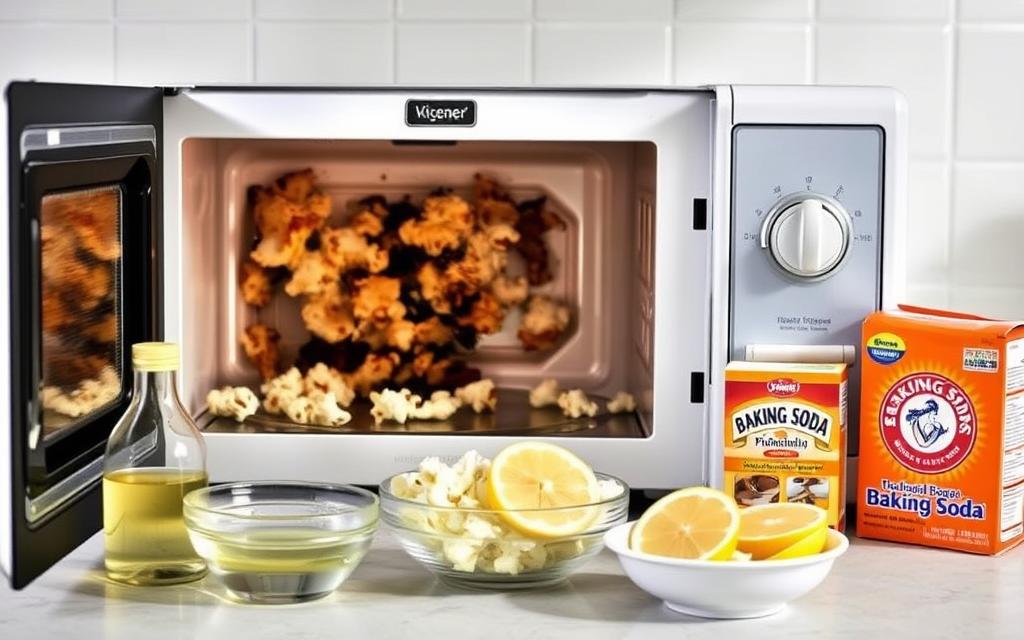
Key Takeaways: How to Get Rid of Burnt Popcorn Smell in Microwave
- Burnt popcorn odor lingers because scorched oils and sugars get absorbed into the microwave’s plastic interior and door seal.
- Vinegar or lemon steam cleaning handles most everyday cases in under 10 minutes.
- Baking soda left inside overnight is the go-to fix for smells that don’t fully clear the first time.
- Severe cases can genuinely take a few days to fade completely, even with proper cleaning.
- Preventing burnt popcorn in the first place saves you the cleanup entirely.
Why Burnt Popcorn Smell Lingers in a Microwave
Popcorn kernels contain natural oils and sugars. Once they scorch, those compounds turn into odor molecules that don’t just float away. They settle into the microwave’s plastic ceiling, walls, and rubber door seal, all of which are slightly porous. That’s why the smell keeps coming back every time you run the microwave again, even after a quick wipe-down.
Heat makes this worse. Every time you microwave something else afterward, the residual heat releases a little more of whatever soaked into those surfaces. That’s why a burnt-popcorn microwave often smells fine when it’s cold, then faintly scorched again the moment it warms up.
Common Causes of Burnt Popcorn
Burning a bag is easier than most people expect. A few things usually cause it:
- Stepping away instead of listening for the popping to slow down
- Using a wattage or time setting that doesn’t match your microwave
- Stale or old kernels that pop unevenly and scorch before the rest finish
- Reusing a bag setting meant for a much larger or smaller microwave
Listening for the Right Moment to Stop
Most popcorn bags are designed to be pulled the moment pops slow to a 2-3 second gap, not when they stop entirely. Waiting for complete silence is one of the most common reasons bags burn. The last few kernels scorch fast once there’s nothing left to pop.
What You’ll Need
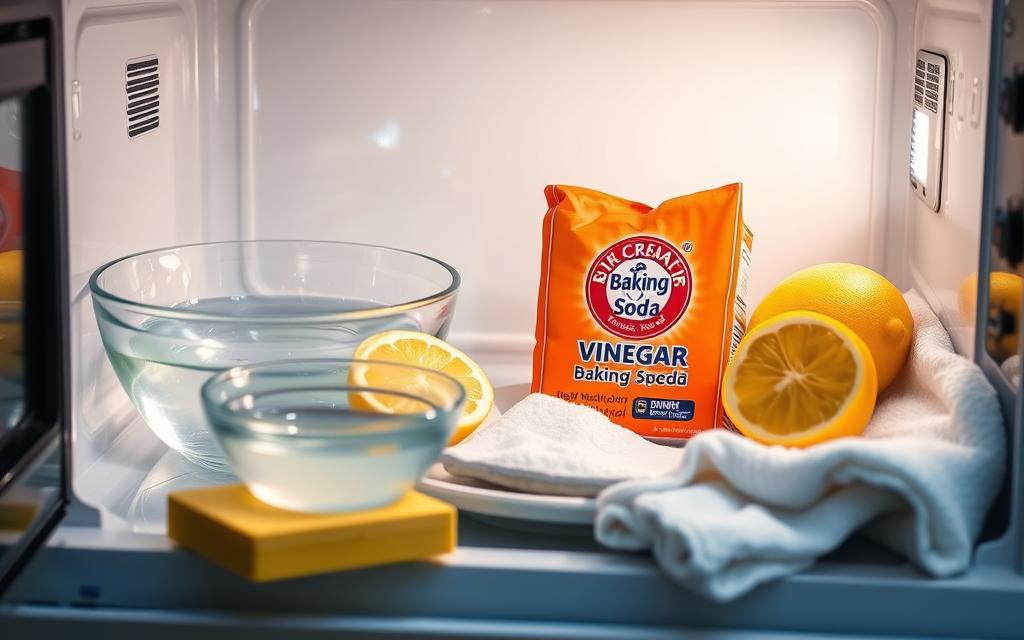
Nearly everything you need to get rid of burnt popcorn smell in microwave interiors is already in your kitchen. Here’s what to keep on hand:
- White vinegar or lemon juice
- Baking soda
- Water
- Dish soap
- Vanilla extract or coffee grounds (optional, for a milder scent)
- A microwave-safe bowl and a soft cloth
Which combination works best depends on how strong the smell is and how much time you have. It helps to know a few different methods rather than relying on just one. Vinegar and lemon juice both work through steam and mild acidity, which loosens residue on contact. Baking soda works more slowly, absorbing odor molecules over hours instead of breaking them down on the spot. That makes it better suited to smells that survive a first round of steam cleaning.
Skip Bleach and Ammonia-Based Cleaners
It’s tempting to reach for a stronger cleaner on a stubborn smell. But bleach and ammonia products aren’t a good match for a microwave’s small, enclosed cavity. Fumes can linger in the same porous surfaces that trap food odors. Traces can even transfer to food the next time you heat something. Stick to the food-safe options above instead.
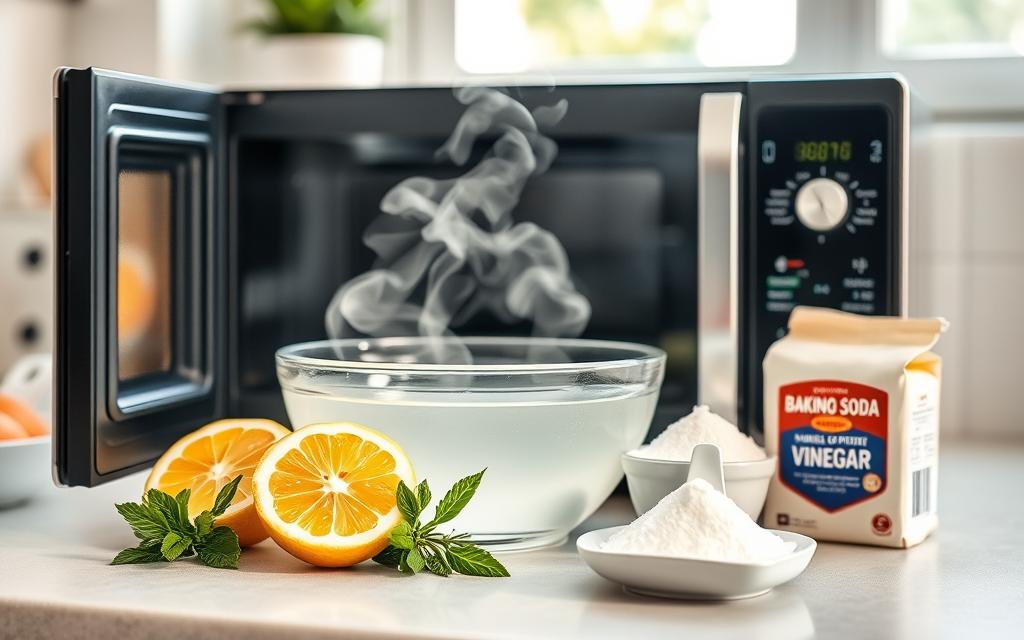
How to Get Rid of Burnt Popcorn Smell in Microwave: Step-by-Step
Method 1: Vinegar or Lemon Steam Clean
This is the fastest fix for a fresh burnt smell, and it’s usually the first thing worth trying. Whirlpool’s own cleaning guide recommends mixing 1 cup of water with 1 tablespoon of white vinegar or lemon juice in a microwave-safe container. Heat it for 2 to 5 minutes so the interior fills with steam. Let it sit for a few minutes after the microwave stops, then wipe down the walls and ceiling with a dry cloth or paper towel. The steam does most of the work here, so avoid opening the door too early. You’ll lose most of the benefit if you do.
Method 2: Baking Soda Steam or Overnight Soak
For a stronger smell, GE’s official odor-removal guidance suggests combining 6 tablespoons of baking soda with 1 cup of water. Microwave the mixture for 2 to 3 minutes, then leave the door closed for at least 15 minutes before opening it and wiping the interior dry. If the smell is still hanging around after that, pour about half a cup of plain baking soda onto a plate. Set it inside the closed microwave and leave it overnight to absorb what’s left.
Method 3: Vanilla Extract or Coffee Grounds
If you’d rather mask a lingering smell with something milder while the underlying odor fades, this method works well. Place about 4 teaspoons of vanilla extract, or 2 tablespoons of coffee grounds mixed with half a cup of water, in an open container inside the microwave. Leave it for a few hours or overnight rather than heating it.
Method 4: Activated Charcoal for Stubborn Cases
Activated charcoal is one of the more effective options for smells that survive a few rounds of steam cleaning. It absorbs odor molecules rather than just masking them. Set an open container or a charcoal deodorizer bag inside the microwave and leave the door closed for a day or two. It won’t do anything for grease or residue on the walls, though, so pair it with a wipe-down rather than using it alone.
Deep Cleaning for Severe Cases
When a fast steam clean isn’t enough, the smell is usually trapped somewhere the vinegar solution didn’t fully reach. Our guide on how to clean a burnt microwave covers the physical cleaning side in more depth, for a broader look at scrubbing away scorched residue itself rather than just the smell.
Clean the Waveguide Cover and Interior Panels
The waveguide cover, the small panel usually on the side or ceiling of the cavity, traps grease and odor easily. Wipe it gently with a soft, damp cloth and mild dish soap rather than anything abrasive. Scratching it can affect how the microwave heats.
Don’t Forget Door Seals and Corners
Odor-causing residue likes to hide in places a quick wipe misses:
- Door seals and gaskets: wipe with a cloth dampened in mild dish soap and water. This is one of the most absorbent spots in the whole cavity.
- Tight corners and edges: use a cotton swab dipped in vinegar solution to reach in without scratching the interior coating.
- Interior edges near the turntable: a light baking soda paste lifts grease without scratching. It’s also worth removing the turntable and its ring to clean underneath.
When It Might Not Just Be the Smell
If a burning smell shows up with no obvious scorched food, sparking, or a hum that sounds different than usual, that’s a different situation entirely. GE and other manufacturers recommend having the appliance serviced rather than continuing to use it in that case. Those signs can point to an issue with the waveguide cover, a worn door seal, or the internal electronics, none of which a cleaning routine can fix.
How Long It Actually Takes to Clear
Most people asking how to get rid of burnt popcorn smell in microwave interiors want a same-day fix, and that’s realistic for most cases. Everyday smells clear up within 10 minutes to a few hours using the steam methods above. Severe cases take longer, though. GE’s own guidance notes that odors from fish or burnt popcorn can take several days to fully wear away even after cleaning. The compounds that soaked into plastic and rubber surfaces simply need time to off-gas. If a treatment doesn’t fully clear the smell right away, repeating the vinegar steam method once a day for a couple of days usually finishes the job.
Preventing Burnt Popcorn Next Time
The easiest way to deal with burnt popcorn smell is to avoid burning the popcorn in the first place.
Know Your Microwave’s Wattage
Microwave wattage typically ranges from 600 to 1,200 watts, and popcorn bag instructions assume a specific range. A bag timed for a 1,000-watt microwave will likely burn in a more powerful one. Check your appliance’s wattage, usually printed inside the door or in the manual, before trusting the bag’s default time. Compact and countertop models can run hotter than their size suggests. If you’re shopping for a new one, our smallest microwave oven reviews cover wattage differences across popular compact picks.
Stay Within Earshot
Popping intervals are your best warning sign. Stay near the microwave. Stop it as soon as the pops slow to a couple of seconds apart, rather than trusting the bag’s printed time exactly.
Use the Right Container
Stick to bags or bowls labeled specifically for microwave popcorn. Improvised containers and off-brand bags are more likely to heat unevenly, which raises the odds of scorching.
Keeping the Rest of the Kitchen Fresh
Run Your Range Hood or Vent
A working range hood or exhaust fan pulls smoke and odor out of the air. That keeps it from settling into cabinets, curtains, and other surfaces near the microwave. If your kitchen doesn’t have one yet, our guide to installing a kitchen exhaust fan walks through the process.
Tackle Other Kitchen Odors Too
Burnt popcorn is rarely the only smell fighting for space in a busy kitchen.
Frequently Asked Questions
What’s the fastest way to get rid of burnt popcorn smell in microwave interiors?
Heat a cup of water with a tablespoon of vinegar or lemon juice for a few minutes, let it steam, then wipe the interior dry. That clears most everyday smells in under 10 minutes, though it won’t fully solve a severe case.
Does baking soda actually work better than vinegar?
They work differently rather than one being simply better. Vinegar steam loosens residue and cuts through grease fast. Baking soda absorbs odor molecules over time instead, which makes it better suited to smells that linger after a steam clean.
Is it safe to eat food from a microwave that still smells like burnt popcorn?
The smell itself isn’t a food safety issue, but it can transfer to whatever you heat next. Anything without its own strong smell or packaging, like rice, milk, or plain leftovers, picks it up easily. It’s worth clearing the odor before microwaving delicate foods again.
Why does my microwave still smell after I already cleaned it?
Scorched oils can soak into the door seal and plastic ceiling, which hold onto odor longer than the smooth interior floor does. Repeating the vinegar steam method and giving the door seal extra attention with a damp cloth usually finishes the job.
Can I prevent the smell from ever happening again?
Not entirely, since even careful cooking occasionally goes a few seconds too long. But matching your popcorn bag’s timing to your microwave’s actual wattage helps a lot. Staying within earshot while it pops eliminates most burnt bags before they start.
Final Thoughts
A burnt popcorn smell feels bigger than it is in the moment, but it’s rarely a one-and-done problem to solve. Knowing how to get rid of burnt popcorn smell in microwave interiors really comes down to picking the right method for how bad the burn was. Steam cleaning with vinegar or lemon handles most cases quickly. Baking soda mops up what’s left overnight, and a little extra attention to your microwave’s wattage keeps the next bag from burning at all. If the smell still lingers after a couple of rounds, give it a few days; that’s normal for a genuinely scorched batch, not a sign you’re doing something wrong.

Hey, My name is MAMON. I am a SEO content creator and affiliate marketer with over 8 years of experience. I create honest product reviews, in-depth buying guides, and practical how-to articles to help readers make informed decisions. My mission is to provide trustworthy, research-backed content that delivers real value.
Leave a Reply