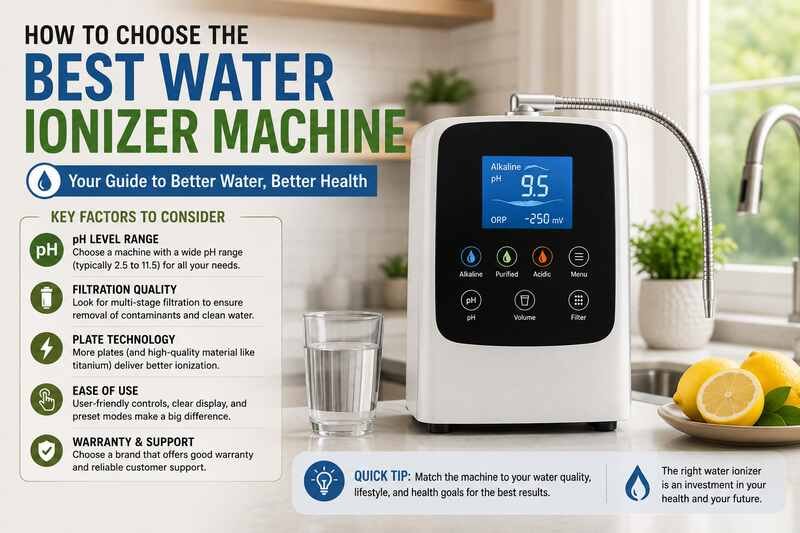
Here’s how to choose the best water ionizer machine: match the pH range and plate count to how you’ll actually use the water. Prioritize a filtration stage rated for your tap water. Confirm the manufacturer publishes real certification or test data instead of vague marketing claims. Get those three things right, and the rest, brand, price tier, and design, comes down to personal preference.
This guide walks through the features that matter, the price ranges you’ll actually encounter, and the buying mistakes that lead people to return a machine within the first year.
Key Takeaways
Learning how to choose the best water ionizer machine starts with pH range, plate count, and filtration quality. Brand name and price come second.
Countertop models are the easiest entry point for most U.S. kitchens. Under-sink models cost more upfront, but they keep your counter clear.
Look for a manufacturer that publishes third-party certification or test data. NSF/ANSI 42 or 53 is a good sign, and it beats relying on unverified marketing claims.
Mayo Clinic notes that alkaline water isn’t proven to be healthier than plain water for most people. Weigh health marketing claims carefully before they drive your purchase.
Budget for filter replacements and occasional electrode cleaning. That’s the real cost of ownership, not just the sticker price.
How Water Ionizers Work
A water ionizer uses electrolysis to split tap water into two streams. Electrochemical plates, usually titanium coated with platinum, carry a current through the water as it passes over them. One stream comes out alkaline, with a higher pH and more dissolved hydrogen. The other comes out acidic. It typically routes to a separate tap, often marketed for cleaning or skin care.
Alkaline water from most machines falls in the 8.5 to 9.5 pH range. The acidic stream typically lands between 4.0 and 6.0. Your exact numbers depend on your source water’s mineral content and your machine’s settings. Filtered, un-ionized water sits closer to neutral, around 7.0.
Plate count and material affect how consistently a machine hits those numbers across a range of flow rates. More plates generally mean steadier ionization. That’s part of why higher-end machines cost more. A well-maintained mid-range machine still outperforms a neglected expensive one, though, and that matters once you’re comparing models on paper.
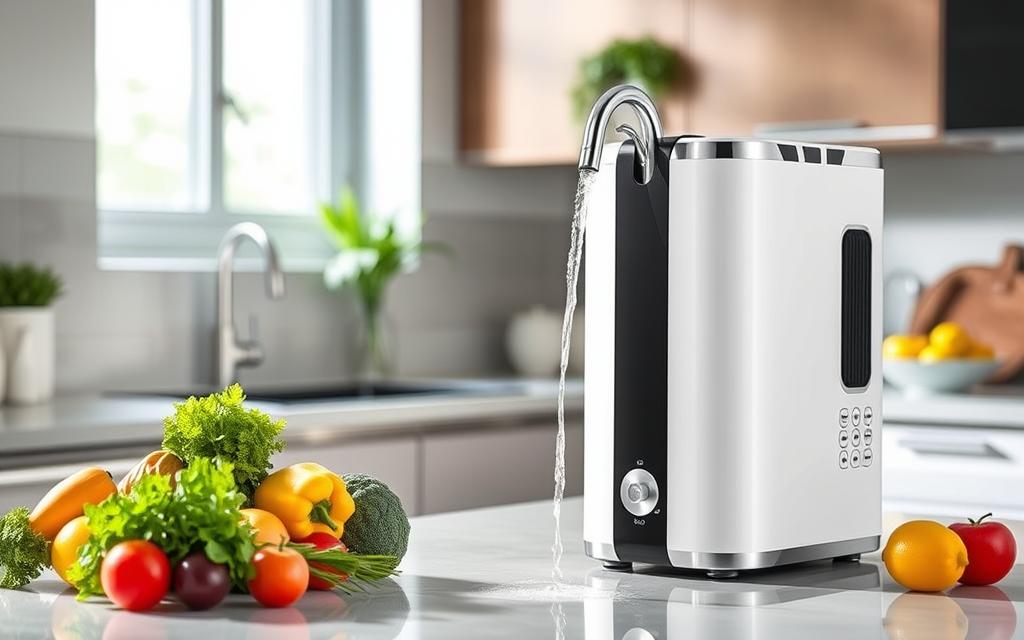
How to Choose the Best Water Ionizer Machine: Key Features to Check
Once you understand the basic technology, a handful of specific features separate a machine you’ll use daily from one that ends up unplugged in a cabinet.
pH and ORP Range
Check the pH range a machine can actually produce. Also check whether it displays ORP (oxidation-reduction potential) readings on the unit itself. A wider adjustable range gives you more flexibility for drinking water versus cleaning or gardening uses. Machines that show you the reading, rather than just a preset button, make it easier to confirm the machine is performing as advertised over time.
Filtration Stage
The filter does the real work of removing chlorine, sediment, and other contaminants before ionization even happens. A weak filtration stage undermines everything else about the machine, no matter how many plates it has. Look for multi-stage filtration. Look for a manufacturer that’s upfront about filter lifespan and replacement cost too, since that’s an ongoing expense you’ll pay for years. Our guide on how to replace water ionizer filters breaks down typical filter costs and replacement schedules by model type.
Flow Rate and Plate Count
Flow rate determines how quickly you can fill a pot or a large pitcher. It’s directly tied to plate count and surface area. If you cook for a household or fill large containers often, a low flow rate will frustrate you daily. Test this in person when you can. Spec sheets don’t always reflect real-world performance.
Power Consumption and Water Waste
Ionization takes electricity, and most machines draw very little of it. Still, a machine left running constantly adds up on your utility bill over a year. Some models also send a portion of the acidic stream down the drain if you’re not using it for anything, so check whether a machine lets you divert or reduce that waste stream when you only want the alkaline side.
Types of Water Ionizers
Water ionizers come in three basic formats. The right one depends on your kitchen layout and budget.
Countertop Models
Countertop ionizers connect directly to your faucet. They need no plumbing modifications, and they’re the easiest option to install yourself. They’re also the most common starting point for U.S. buyers trying a water ionizer for the first time, since you can return or resell one without touching your plumbing.
Under-Sink Models
Under-sink models tie into your cold water line and keep your counter completely clear. They typically cost more, and they often benefit from professional installation to avoid leaks. In exchange, they free up counter space and can integrate with a dedicated faucet.
Portable Ionizers
Smaller battery or pitcher-style ionizers trade ionization strength and consistency for portability. They’re a reasonable option for travel or a small apartment kitchen. Don’t expect the same pH range or flow rate you’d get from a full-size unit, though.
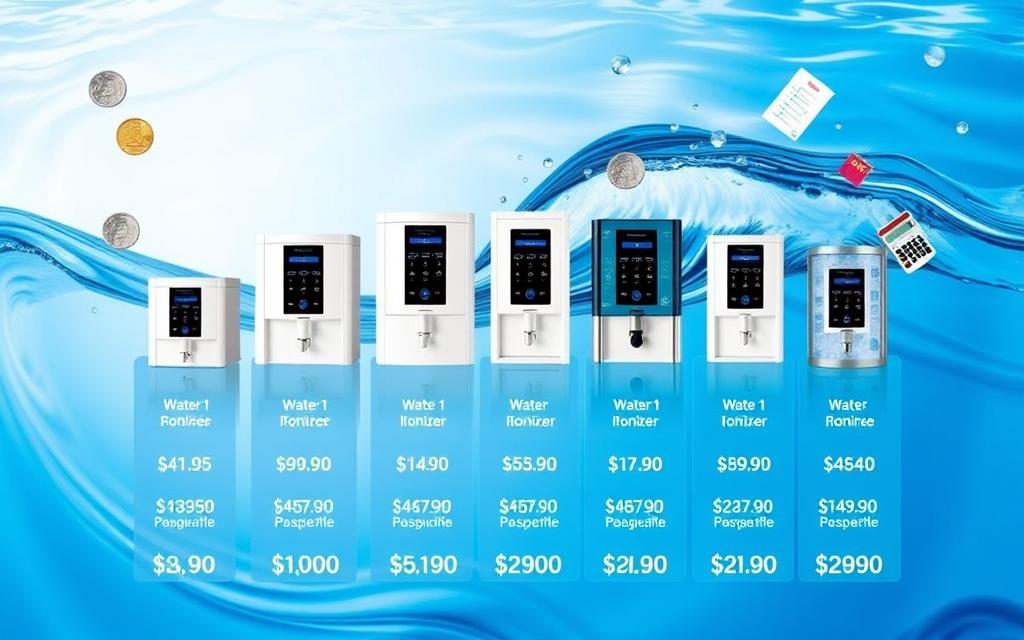
How Much You Should Expect to Pay
Water ionizers span a wide price range in the U.S. market. The differences usually come down to plate count, filtration stages, and included warranty coverage.
Entry-level countertop models sit at the lower end of the market. They cover the basics: a handful of plates, a single filter stage, and manual pH settings. Mid-range machines add more plates, dual filtration, and a digital display with ORP readings. High-end and under-sink systems sit at the top of the market. They come with the highest plate counts, the longest warranties, and the most consistent output across flow rates.
Don’t evaluate price in isolation. Factor in filter replacement cost over a few years. A cheaper machine with expensive proprietary filters can cost more to own over time than a pricier machine with widely available filters.
Certifications and Reviews: What Actually Means Something
Marketing claims about “hospital-grade” plates or specific disease-fighting benefits are common in this category. Most aren’t backed by independent testing. A more reliable approach to how to choose the best water ionizer machine is to check whether the manufacturer holds real third-party certification.
NSF International certifies water treatment products against structural, safety, and contaminant-reduction standards, including NSF/ANSI 42 and 53. A machine or filter carrying one of these certifications has actually been tested against a published standard. That’s a real signal, not a manufacturer’s own claim. It’s a small detail to check, but it’s one of the few objective signals in a market full of vague marketing language.
Beyond certification, read reviews from verified buyers rather than testimonials on a manufacturer’s own site. Our water ionizer machine reviews and alkaline water system reviews round up specific models if you want to compare real owner feedback rather than spec sheets alone.
This video walks through what to look for when buying a water ionizer, including the features covered above.
Is Alkaline Water Actually Healthier?
This is the question that comes up most once people start comparing machines. It’s worth answering honestly before it drives your budget.
According to Mayo Clinic, alkaline water isn’t proven to be healthier than plain water for most people. More research is needed before many of the claims made about it can be considered settled. Some limited research points to a possible benefit for bone health or acid reflux when alkaline water is combined with other dietary changes. That’s a long way from the sweeping health claims often used to sell these machines. Mayo Clinic also flags a real risk: water with a pH above 9.8 can contribute to hyperkalemia, or elevated blood potassium. That’s especially dangerous for people with kidney disease.
None of this means a water ionizer is a bad purchase. Many owners simply prefer the taste, and the filtration stage provides a genuine benefit on its own. It just means the health claims shouldn’t be the deciding factor in how you choose the best water ionizer machine for your kitchen.
Installation and Ongoing Maintenance
Most countertop models install in minutes with no tools beyond what’s included in the box. Under-sink models usually call for basic plumbing skills or a professional installer, especially if your cold water line isn’t easily accessible.
Whichever type you choose, factor in ongoing care before you buy, not after. Filters typically need replacing every 6 to 12 months. The ionizing plates need an occasional citric acid cleaning cycle too, to prevent scale buildup, especially if you’re on hard water. Our full guide on how to maintain a water ionizer machine covers the complete care schedule. Our guide on washing a water ionizer machine covers day-to-day cleaning of the exterior and pitcher.
If you’d rather test the waters before committing to a machine, our guide on how to make alkaline water without a machine covers simpler, lower-cost methods worth trying first.
Warranty and Customer Support
Warranty length varies widely across this category. It’s one of the more telling signals of how confident a manufacturer is in their own plates and electronics. Compare warranty terms carefully. Some cover the full unit, while others cover plates and electronics separately with different terms.
Before buying, check how the manufacturer handles support. Do they offer phone or chat support in U.S. time zones? How easy are replacement filters to source? Do they publish clear troubleshooting documentation? A machine backed by responsive support is worth more over its lifespan than one that’s marginally cheaper but leaves you stuck if something goes wrong. A quick search for the brand name alongside words like “support” or “replacement parts” before you buy can save you a frustrating call later.
Where to Buy a Water Ionizer
Online retailers offer the widest selection. They also make it easiest to compare specs and verified-buyer reviews side by side. The tradeoff is you can’t test flow rate or build quality in person before buying.
Specialty water treatment retailers and some appliance stores let you see a machine in person and ask questions. Some can even arrange installation as part of the purchase. Buying directly from a manufacturer’s website can also unlock better warranty support, though prices are rarely lower than authorized retailers.
Whichever route you take, confirm the return policy before buying, especially for higher-end models. A generous return window matters more than it seems until you actually need it. Save your receipt and any packaging until you’re confident the machine performs the way you expected, in case you do need to send it back.
Making Your Final Decision
The right way to think about how to choose the best water ionizer machine is to start with how you’ll actually use it. A single person who wants better-tasting filtered water is served well by an affordable countertop model. A household that drinks a lot of water daily, or wants the cleanest possible counter, is better matched to a mid-range or under-sink system with a stronger filtration stage.
Match your budget to total cost of ownership, not just the sticker price. Prioritize real certification and verified reviews over marketing language. Get the fundamentals right, and the machine will still be doing its job well past the point where a poorly chosen one would already be gathering dust.
Frequently Asked Questions
How do I choose the best water ionizer machine for a small kitchen?
A compact countertop model is usually the best fit for a small kitchen. It needs no plumbing changes, and you can unplug and store it when the counter is needed for something else.
What pH level should I look for in a water ionizer?
Most drinking water sits in the 8.5 to 9.5 pH range on ionizer settings. Look for a machine with adjustable settings so you can dial it back if that range feels too strong for your taste.
Is a more expensive water ionizer always better?
Not automatically. Price often reflects plate count, filtration stages, and warranty length. A well-maintained mid-range machine can outperform a neglected expensive one. Compare specs and certifications rather than price alone.
Do I need a plumber to install a water ionizer?
Most countertop models don’t require one, since they connect directly to your existing faucet. Under-sink models that tie into your cold water line more often benefit from professional installation.
Is alkaline water actually good for you?
The evidence is limited. Mayo Clinic notes it isn’t proven to be healthier than plain water for most people. Many owners still prefer the taste and the filtration benefit on its own.
How much does it cost to maintain a water ionizer after buying one?
Budget for filter replacements every 6 to 12 months and an occasional electrode cleaning cycle. These ongoing costs vary by brand. It’s worth checking filter prices before you buy, not after.
What’s the difference between a water ionizer and a regular water filter?
A standard filter removes contaminants but doesn’t change pH. A water ionizer filters the water first, then uses electrolysis to separate it into alkaline and acidic streams. That extra step is what defines how to choose the best water ionizer machine versus a basic filter pitcher.
Can hard water damage a water ionizer?
Hard water speeds up mineral scale buildup on the plates, which is the most common reason ionizers need cleaning more often than the manual suggests. An anti-scale filter or regular electrode cleaning keeps this in check, so it’s more of a maintenance issue than a reason to avoid a machine entirely if you’re on hard water.

Hey, My name is MAMON. I am a SEO content creator and affiliate marketer with over 8 years of experience. I create honest product reviews, in-depth buying guides, and practical how-to articles to help readers make informed decisions. My mission is to provide trustworthy, research-backed content that delivers real value.
Leave a Reply