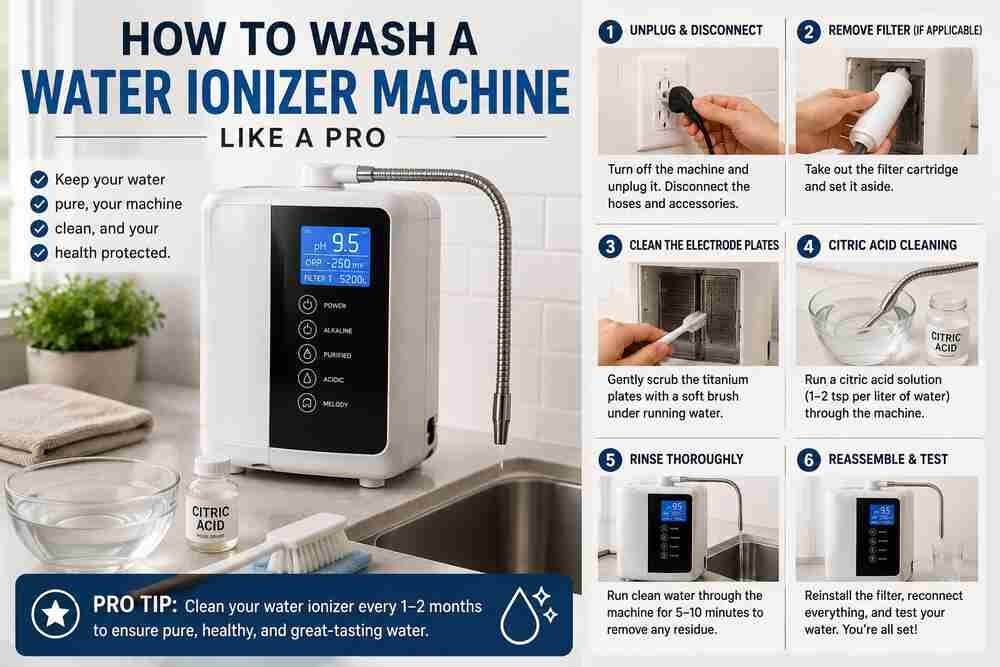
Water ionizers work hard behind the scenes, running tap water across charged electrode plates every time you fill a glass. Over months of daily use, minerals in your source water build up on those plates. Knowing how to wash a water ionizer machine properly is what keeps it producing clean, properly balanced water instead of scaled-up, sluggish output.
Skip regular cleaning and calcium deposits accumulate on the electrode plates. Biofilm can build up inside the filter housing, too, and the machine’s pH readings start to drift as a result. This guide covers exactly how to wash a water ionizer machine, inside and out. It also covers how often to do it and what a properly maintained unit looks like.
Key Takeaways
- Wipe the exterior weekly with a damp cloth. The internal electrode plates need a citric acid cleaning cycle every 6-12 months, according to ionizer maker Tyent USA.
- Households with hard water should run a citric acid cleaning cycle up to three times a year, instead of the standard once-annual baseline.
- Rinse new replacement filters for 2-5 minutes before installing them to flush out manufacturing residue.
- Mayo Clinic notes there isn’t strong evidence that alkaline water offers health benefits over plain water. Water above pH 9.8 also carries some safety concerns.
How to Wash a Water Ionizer Machine: The Basics
Keeping your machine in excellent condition comes down to a few consistent habits, not one big cleaning session. It’s what lets it keep delivering properly balanced water.
Some water ionizers include a built-in self-cleaning cycle that flushes the plates automatically after every use. Others rely on periodic manual cleaning instead. Machines without an automatic cleaning cycle typically need a dedicated cleaning cartridge run through the system. That’s usually on a quarterly or biannual schedule, depending on the manufacturer and your water hardness.
Cleaning New Filters Before First Use
Before installing any new replacement filter, rinse it under running water for 2 to 5 minutes. New filters carry loose carbon dust and manufacturing residue. Left unrinsed, that residue flows straight into your first few glasses of water. This step takes only a few minutes and is easy to skip. Still, it makes a real difference in how your water tastes right after a filter change.
Cleaning the Exterior
Wipe down the housing, touchscreen, and spout at least once a week using a soft, damp cloth or sponge. Avoid abrasive scrubbers or harsh chemical cleaners on the display panel. They can scratch the surface or damage touch-sensitive controls. A quick wipe-down also gives you a chance to spot mineral crusting around the spout. Catching it early keeps a small buildup from turning into a bigger clog.
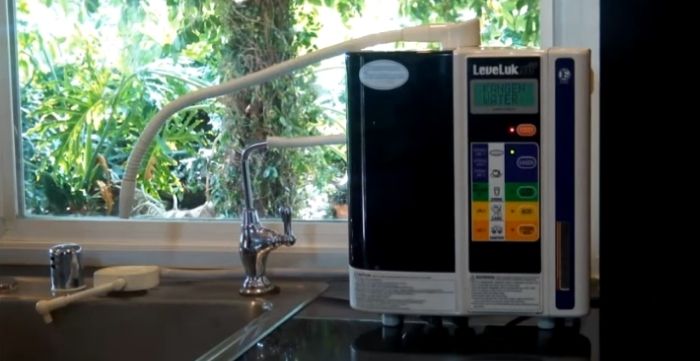
Internal Cleaning: The Citric Acid Cleaning Cycle
The electrode plates inside the machine are where most scale buildup actually happens, and wiping the outside won’t touch it. Most manufacturers sell a dedicated citric acid cleaning cartridge that screws into the machine in place of your normal filter.
A typical cleaning cycle, based on Tyent USA’s documented procedure, looks like this:
- Turn off the machine’s power and shut off the water supply.
- Remove the standard filter and install the citric acid cleaning cartridge in its place.
- Run the machine on its cleaning or “H2O clean” setting for about 5 minutes, letting the citric acid solution circulate across the plates.
- Let the solution sit inside the unit for roughly 3 hours so it has time to dissolve mineral deposits.
- Remove the cleaning cartridge and reinstall your standard filter.
- Run a fresh water cycle for another 5 minutes to flush out any remaining residue, then check that pH readings have returned to normal.
Manufacturers generally recommend this internal cleaning cycle every 6 to 12 months for average use, according to Tyent USA’s cleaning guide. If your machine has a built-in scale filter or anti-scale cartridge for hard water areas, that extends the interval between deep cleanings.
How Often Should You Wash a Water Ionizer Machine?
Cleaning frequency depends heavily on your water hardness and how often the machine runs. The table below breaks down a general starting point for each situation.
| Water Condition | Recommended Citric Acid Cleaning Frequency |
| Soft to moderate water, average use | Once a year |
| Heavy daily use | Twice a year |
| Hard water areas | Up to three times a year |
These are starting points, not hard rules. Homes on notably hard water may still need to clean more often than the table suggests, since scale can build up faster than the machine handles on its own. Wipe the exterior weekly regardless of water hardness. That habit costs almost nothing and prevents mineral crusting from spreading around the spout and control panel.
Signs Your Water Ionizer Needs Cleaning
A few warning signs point to a machine overdue for cleaning. Water flow noticeably slows down, even with a fresh filter installed. The pH readings on your display start drifting away from their usual range for the same water source. You might also notice a metallic or off taste. Visible white, chalky buildup around the spout or on the electrode plates is another giveaway if you can see them. Any of these signs is a good reason to run a cleaning cycle ahead of schedule, rather than waiting for the calendar reminder.
What Is Water Ionization?
A water ionizer works through electrolysis. Water passes over electrically charged plates inside the unit. That process separates it into two streams: an alkaline stream enriched with minerals like calcium and magnesium, and a more acidic stream. The alkaline stream is what most people drink. The acidic stream is typically used externally instead, for cleaning or skincare purposes rather than consumed.
Does Ionized Water Have Health Benefits?
Ionized alkaline water is often marketed with bold health claims, but the evidence behind them is thinner than the marketing suggests. According to the Mayo Clinic’s review of alkaline water, for most people it isn’t better than plain water. Claims that it helps prevent conditions like cancer or stroke still need more research before they can be confirmed. Some limited research points to possible benefits for bone health and acid reflux when paired with dietary changes. Even so, Mayo Clinic notes the research base isn’t strong enough yet to say for sure.
Mayo Clinic also flags a real safety consideration. Water with a pH above 9.8 has been linked to safety concerns, including elevated blood potassium in people with kidney disease. Most home ionizers produce water well under that threshold. Still, it’s worth checking your machine’s typical output range, especially if you have an existing kidney condition.
Common Mistakes When Washing a Water Ionizer Machine
Skipping the initial filter rinse is one of the most common mistakes. It leaves carbon dust in your first several glasses after a filter change. Using regular tap water instead of the recommended citric acid solution for internal cleaning is another. Plain water won’t dissolve calcium scale the way citric acid does. A third mistake is ignoring the exterior entirely and only running internal cleaning cycles. Mineral crusting around the spout can restrict flow long before the plates themselves need attention.
Watch: How to Clean a Water Ionizer Machine
This walkthrough shows the citric acid cleaning cycle in real time, which helps if you’re running through the steps for the first time. If your machine’s pH readings still seem off after a cleaning cycle, our guide on how to maintain a water ionizer machine covers the next steps to check.
It’s also worth reviewing how your unit was set up in the first place, since incorrect installation can mimic the symptoms of a dirty machine.
Filter Replacement and Ongoing Maintenance
Cleaning and filter replacement are two separate jobs that often get confused. Cleaning removes scale from the electrode plates. Replacing the filter swaps out the carbon media that removes chlorine, sediment, and other contaminants before your water ever reaches those plates. Most filters need replacing every 6 to 12 months as well, though usage volume affects that timeline more than calendar time does. Our guide to replacing water ionizer filters walks through that process step by step. For a broader maintenance schedule covering both cleaning and filters together, see our water ionizer maintenance guide.
Still shopping for your first unit? Our roundup of water ionizer machine reviews covers models with easier-to-clean plate designs and more accessible filter housings.
Frequently Asked Questions About How to Wash a Water Ionizer Machine
Can I use vinegar instead of citric acid to clean my water ionizer?
Some owners use diluted white vinegar as a DIY descaling method, but most manufacturers specifically recommend citric acid cleaning cartridges designed for their machines. Citric acid is formulated to dissolve calcium scale without leaving behind the odor or residue vinegar sometimes does.
How do I know if my water ionizer’s electrode plates are damaged?
Persistently low pH readings even after a full cleaning cycle are one sign. Unusual noises during operation or visibly pitted, discolored plates are other signs of possible plate damage. At that point, contacting the manufacturer or an authorized service center is usually the next step.
Do I need to clean my water ionizer if I already have a whole-house water filter?
Yes. A whole-house filter reduces sediment and chlorine reaching the unit, which can extend the interval between cleanings. It won’t eliminate mineral buildup entirely, though. Regular electrode cleaning is still necessary.
What happens if I never clean my water ionizer?
Calcium scale gradually coats the electrode plates, reducing their ability to ionize water effectively. Over time, you’ll notice slower flow, inconsistent pH readings, and eventually reduced water output until the plates are cleaned or replaced.
Is ionized water safe to drink every day?
For most healthy adults, moderate alkaline water consumption is considered safe. People with kidney disease should talk to a doctor first, as should those on medications affecting potassium levels. That caution follows directly from the safety concerns Mayo Clinic notes around higher-pH water.
Conclusion
Knowing how to wash a water ionizer machine properly comes down to two habits working together. Wipe the exterior weekly, and run a citric acid cleaning cycle every 6 to 12 months, more often if your water is hard. Skip either one and scale buildup will eventually show up as slower flow and drifting pH readings.
Stay consistent with both habits. Rinse new filters before installing them, too, and keep an eye out for the warning signs covered above. Do that, and your water ionizer will keep producing clean, properly balanced water for years. You’ll get more life out of the electrode plates in the process, and fewer surprises with your pH readings along the way.

Hey, My name is MAMON. I am a SEO content creator and affiliate marketer with over 8 years of experience. I create honest product reviews, in-depth buying guides, and practical how-to articles to help readers make informed decisions. My mission is to provide trustworthy, research-backed content that delivers real value.
Leave a Reply