Color coded cutting boards are one of the simplest food safety tools you can bring into a home kitchen. The idea is easy: each board color is reserved for one food group, so raw chicken never touches the board you use for salad. As a result, you cut the risk of cross-contamination without having to remember which board you used for what. In this guide, we explain the standard cutting board color chart used in U.S. kitchens, show where the charts disagree, and help you build a simple system that fits the way you actually cook.
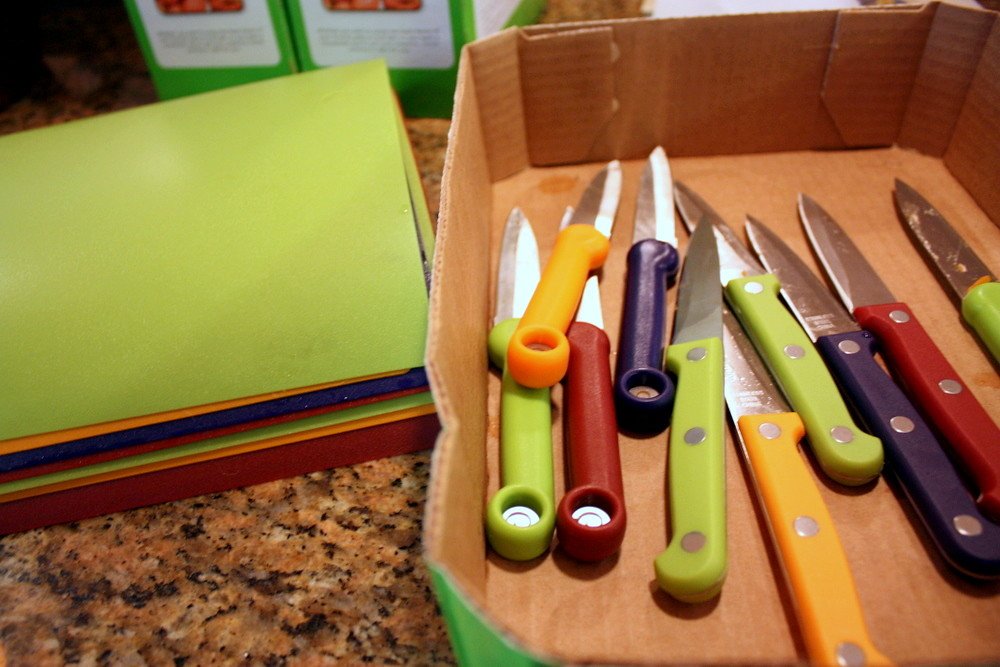
Photo: La.Catholique via Flickr (CC BY 2.0).
Key Takeaways
- First, the most common U.S. chart uses red for raw meat, yellow for poultry, blue for seafood, green for produce, white for dairy and bread, brown for cooked meat, and purple for allergen-free food.
- However, there is no single federal color standard, so charts from different suppliers do not always match.
- The FDA Food Code requires kitchens to keep raw animal foods away from ready-to-eat foods, but it does not tell anyone which colors to use.
- For most homes, therefore, a three- or four-board system is enough.
- Above all, color is only a reminder. Cleaning, drying, and replacing worn boards still matter.
Why Color Coded Cutting Boards Matter
To begin with, foodborne illness is common. According to the Centers for Disease Control and Prevention, about 48 million Americans, or roughly 1 in 6, get sick from foodborne disease each year. In addition, around 128,000 are hospitalized and about 3,000 die. Notably, many of these cases start with cross-contamination, where germs from raw meat, poultry, or seafood spread to food that will not be cooked again.
Of course, a cutting board is one of the easiest places for that to happen. For example, if you slice raw chicken and then chop tomatoes on the same surface, bacteria such as Salmonella and Campylobacter can move straight onto your salad. Color coded cutting boards, however, solve this problem visually. Instead of relying on memory, you simply grab the board that matches the food.
In addition, color coding helps everyone in the household follow the same rules. A teenager, a guest, or a partner who cooks only now and then can see at a glance that the red board is for raw meat. For a full look at how germs spread in the kitchen, see our guide on how to prevent cross contamination with cutting boards.
The Standard Cutting Board Color Chart
Most U.S. restaurant suppliers and food safety trainers use a similar six- or seven-color system. Below is the version you will see most often:
| Board Color | Food Group | Examples |
|---|---|---|
| Red | Raw red meat | Beef, pork, lamb |
| Yellow | Raw poultry | Chicken, turkey, duck |
| Blue | Raw fish and seafood | Salmon, shrimp, shellfish |
| Green | Fruits and vegetables | Lettuce, herbs, apples |
| White | Dairy and bakery | Cheese, bread, pastries |
| Brown or tan | Cooked meat | Roast beef, rotisserie chicken |
| Purple | Allergen-free prep | Meals for guests with food allergies |
This table follows the chart published by StateFoodSafety, a U.S. food handler training provider. Even so, that page notes that each kitchen has its own rules, so you will find small differences from one source to the next.
Where the Charts Disagree
Interestingly, the biggest difference is yellow and brown. For instance, some suppliers use yellow for raw poultry and brown for cooked meat, as shown above. Others, such as restaurant supplier KaTom, use yellow for cooked meat and brown for root vegetables. Meanwhile, some charts group all raw meat and poultry on red.
So, which one is right? In short, any of them, as long as everyone in your kitchen uses the same one. In other words, the system only works when it is consistent. Therefore, pick one chart, print it, and stick it inside a cabinet door.
Is Color Coding Required by Law?
For home cooks, no. For restaurants, the answer is more nuanced. The FDA Food Code, which most U.S. states adopt for food service rules, requires kitchens to separate raw animal foods from ready-to-eat foods and to clean and sanitize food-contact surfaces between tasks. However, it does not require any specific colors.
That said, many health inspectors and HACCP plans treat color coded cutting boards as a best practice, because they make separation easy to prove. As a result, color systems are standard in most commercial kitchens, school cafeterias, and hospitals, even where they are not strictly required.
Purple Boards and Food Allergies
Purple is the newest color in most charts, and it has become more important in recent years. The FDA now recognizes nine major food allergens: milk, eggs, fish, crustacean shellfish, tree nuts, peanuts, wheat, soybeans, and sesame. Most recently, sesame was added under the FASTER Act, with labeling rules that took effect on January 1, 2023.
Because even a trace of an allergen can trigger a serious reaction, a dedicated purple board, along with a purple-handled knife, gives allergy-safe meals their own clean lane. So, if anyone in your home has a food allergy, a purple board is one of the most useful additions you can make. Also, wash it separately and store it apart from the others, so it never picks up crumbs or residue.
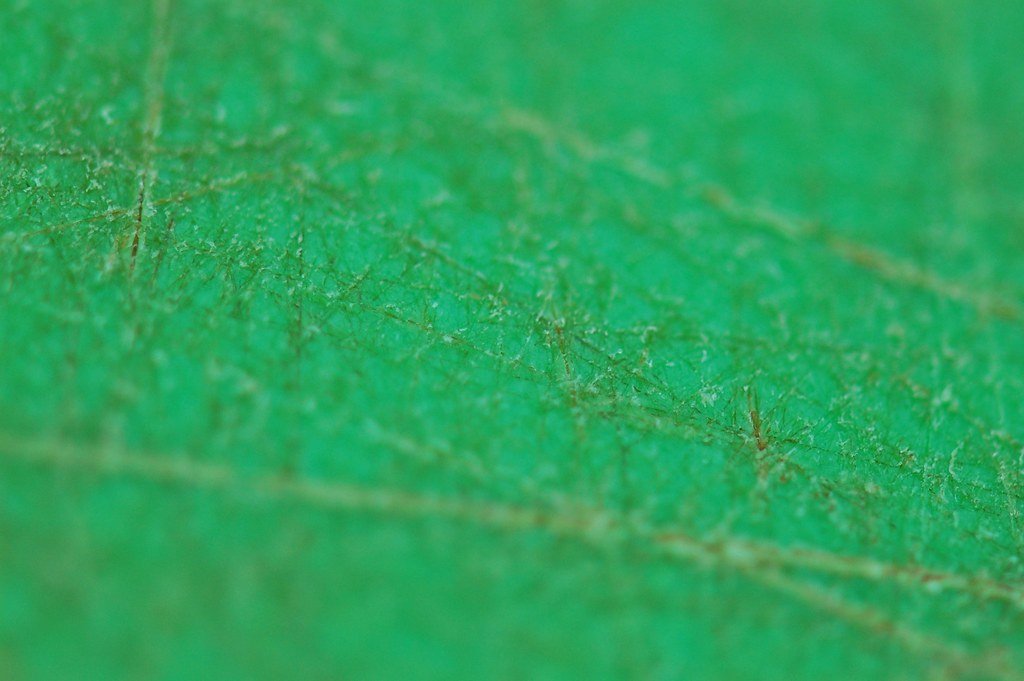
Photo: Steve Snodgrass via Flickr (CC BY 2.0).
How Many Color Coded Cutting Boards Do You Need at Home?
Fortunately, most home cooks do not need all seven colors. In fact, too many boards can make the system harder to follow. Instead, match the number of boards to what you cook:
| Household Type | Suggested Boards | Colors |
|---|---|---|
| Vegetarian kitchen | 2 | Green (produce), white (bread and cheese) |
| Typical home cook | 3 | Red (raw meat and poultry), green (produce), white (ready-to-eat) |
| Cooks fish often | 4 | Red, blue, green, white |
| Food allergy in the home | 4 to 5 | Red, green, white, purple, plus blue if needed |
| Serious home chef | 6 | Full chart: red, yellow, blue, green, white, brown |
For most families, the three-board setup covers almost everything. Specifically, the red board handles raw proteins, the green board handles produce, and the white board handles bread, cheese, and cooked foods. Then, add blue or purple only if your cooking calls for it.
Best Materials for Color Coded Cutting Boards
Nearly all color coded cutting boards are made of plastic, usually high-density polyethylene (HDPE). That is because plastic takes color well, does not absorb juices, and can go in the dishwasher. In addition, commercial boards are often certified to NSF/ANSI Standard 2, which covers food equipment design and cleanability.
However, plastic has one major drawback: it scars. Over time, for example, knife grooves can trap moisture and bacteria. So, replace plastic boards once deep cuts appear that no longer come clean. For comparison, here is how common board materials stack up for a color system:
| Material | Available in Colors? | Dishwasher Safe? | Best Use in a Color System |
|---|---|---|---|
| HDPE plastic | Yes, full range | Yes | All colors, especially raw proteins |
| Polypropylene mats | Yes | Usually | Budget sets and flexible boards |
| Rubber | Some colors | No | Premium knife-friendly option |
| Wood | No (natural color) | No | Bread, cheese, and produce as a “white” board |
| Bamboo | No | No | Serving and dry foods |
Many cooks also mix materials. For example, they use a wooden board for bread and vegetables, then keep a red plastic board for raw meat. That approach works well, since the wooden board is clearly different from the colored one. For help choosing wood, see our guide to the best wood for cutting boards.
Video: MealPro explains how to use color coded cutting boards for food safety.
How to Set Up a Color System That Sticks
Buying the boards is the easy part. On the other hand, getting everyone to use them correctly takes a little planning. So, follow these steps:
- Choose one chart. First, decide which colors mean what, and write it down.
- Post the chart. Next, tape a small printed chart inside a cabinet door or on the side of the fridge.
- Match your knives. If possible, buy knives with matching handle colors. That way, the red knife stays with the red board.
- Store boards by color. Keep them upright in a rack so each color is easy to grab. Also, our cutting board organizer guide shows several options.
- Keep the raw-meat board separate. For instance, store red and yellow boards apart from the green and white ones, and never stack wet boards together.
- Review the system now and then. Finally, if you notice someone using the wrong board, a quick reminder keeps the habit strong.
Cleaning Color Coded Cutting Boards
Color coding prevents mix-ups, but it does not kill germs. Therefore, every board still needs proper cleaning after each use. Here is a simple routine:
- Wash right away. First, use hot, soapy water, and scrub the whole surface, including the edges.
- Use the dishwasher for plastic. Most HDPE boards are dishwasher safe, and in addition the heat helps sanitize them.
- Sanitize raw-meat boards. For extra protection, FoodSafety.gov suggests a solution of 1 tablespoon of unscented liquid chlorine bleach per gallon of water. Then rinse and air dry.
- Dry upright. Moisture helps bacteria grow, so let boards dry fully before you store them.
- Replace worn boards. Deep grooves are hard to clean, so retire boards once they are heavily scarred.
For step-by-step methods, read our guide on how to disinfect cutting boards. In addition, if you use a wooden board as part of your system, our guide on how to take care of a wooden cutting board covers oiling and drying.
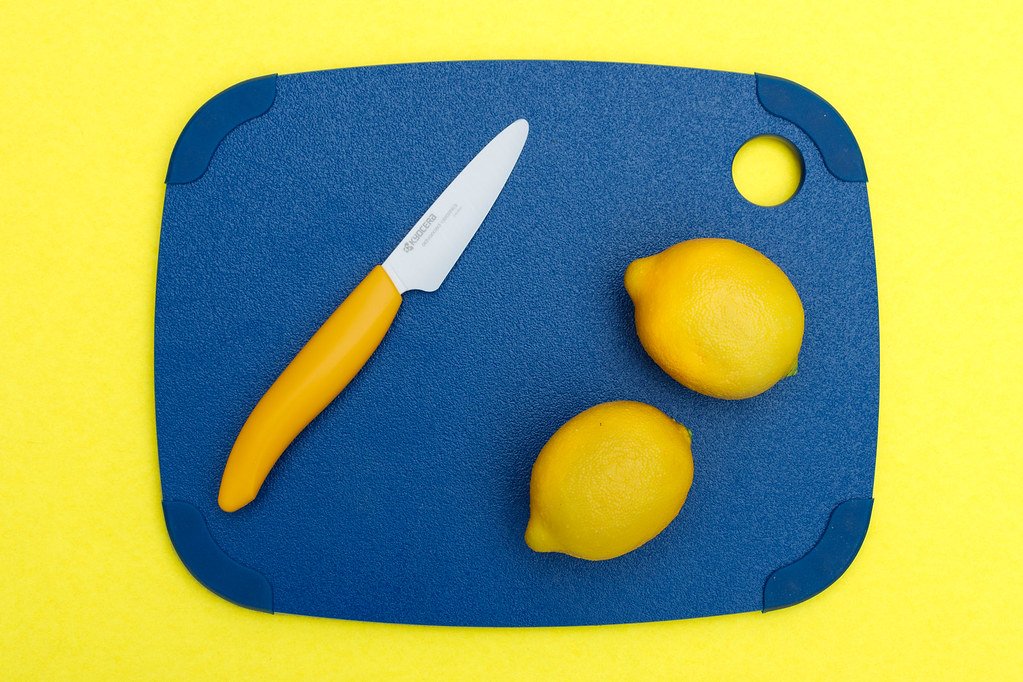
Photo: Didriks via Flickr (CC BY 2.0).
Common Mistakes With Color Coded Cutting Boards
- Using the right board with the wrong knife. A clean green board does not help if you use the same knife you just used on raw chicken. So, wash knives between tasks, or use color-matched knives.
- Mixing charts. For example, if one person thinks yellow means raw poultry and another thinks it means cooked meat, the system fails. Pick one chart and share it.
- Stacking boards while wet. Similarly, damp boards pressed together can transfer germs and trap moisture.
- Keeping boards too long. Colors fade and surfaces scar. Once a board is deeply grooved or stained, replace it.
- Forgetting the countertop. Likewise, juices can run off the board, so wipe and sanitize the counter after handling raw meat.
- Thinking color replaces cooking. Even with perfect separation, raw meat still needs to reach a safe internal temperature: 165°F for poultry, 160°F for ground meat, and 145°F for whole cuts of beef, pork, and fish, followed by a rest time for whole cuts.
What to Look for When You Buy a Set
Color coded cutting board sets come in a wide range of quality. So, check these features before you buy:
- Thickness. Generally, boards at least 1/2 inch thick resist warping better than thin ones.
- Non-slip edges or feet. These keep the board steady, which is safer when you cut.
- Juice grooves. In particular, a groove helps on the raw-meat board, since it catches liquid before it reaches the counter.
- Labels or icons. Some sets also print a small food icon on each board. Consequently, that helps guests and kids follow the system.
- Size. Also, pick boards large enough for your tasks. A board that is too small makes food spill over the edge.
- Storage rack. Finally, many sets include a stand that keeps each color upright and easy to grab.
Color Coding for Families and Small Kitchens
If you have limited counter space, you can still use a color system. For example, thin flexible mats in several colors take up very little room and slide into a drawer. Alternatively, keep one solid board for produce and bread, plus one colored board only for raw meat. As a result, that two-board method gives you most of the safety benefit with very little clutter.
Meanwhile, families with young children may want boards with clear food icons printed on them. This way, kids who help in the kitchen learn the habit early. Also, if you are choosing compact boards, our guide to small cutting boards for the kitchen covers several space-saving options.
FAQ
What color cutting board is used for raw chicken?
Yellow, in most U.S. charts. However, some kitchens group all raw meat and poultry on the red board instead.
What color cutting board is for vegetables?
Typically, green is the standard color for fruits, vegetables, and herbs in nearly every chart.
What is the purple cutting board for?
Purple is reserved for allergen-free food preparation. In particular, it helps protect people with allergies to the nine major allergens recognized by the FDA.
Are color coded cutting boards required in restaurants?
Not by name. The FDA Food Code requires separation of raw and ready-to-eat foods, but it does not mandate colors. Still, many kitchens use color systems to meet that rule.
Do I need color coded cutting boards at home?
You do not need them, but they make food safety easier. In fact, even a simple two- or three-board system greatly reduces the chance of cross-contamination.
How often should I replace plastic color boards?
Generally, replace them once they have deep grooves that no longer come clean, or once they warp or crack.
Final Thoughts
Color coded cutting boards turn food safety into a habit you can see. While the exact chart varies by supplier, the core idea stays the same: keep raw proteins on their own boards, keep produce and ready-to-eat foods on others, and make sure everyone follows the same colors. For most homes, three or four boards are enough. Pair them with good cleaning, safe cooking temperatures, and timely replacement, and you will greatly lower your risk of foodborne illness. Finally, for a deeper look at board materials and safety, read our main guide to the safest and healthiest cutting boards.

Hey, My name is MAMON. I am a SEO content creator and affiliate marketer with over 8 years of experience. I create honest product reviews, in-depth buying guides, and practical how-to articles to help readers make informed decisions. My mission is to provide trustworthy, research-backed content that delivers real value.
Leave a Reply