Are electric kettles safe? For most U.S. households, the answer is yes, as long as you buy a certified model, use it correctly, and keep an eye on recalls. Modern kettles have automatic shut-off, boil-dry protection, and cordless bases that make them safer than many people expect. However, 2026 has also brought several federal recalls and warnings tied to burn hazards. In this guide, we explain the real risks, the safety features that matter, what recent recall data shows, and simple habits that keep your kitchen safe.
Key Takeaways
- Electric kettles are generally safe when they carry a safety certification mark and include auto shut-off and boil-dry protection.
- In May 2026, the CPSC announced a recall of about 113,440 ZWILLING ENFINIGY 1.5 L kettles after 163 reports of handles loosening or separating.
- In June 2026, the CPSC warned consumers to stop using Sekaer travel kettles after 116 reports of sudden steam or hot-liquid release and 89 injuries.
- A 1,500-watt kettle draws about 12.5 amps on a 120-volt outlet, so sharing a 15-amp circuit with another high-wattage appliance can trip the breaker.
- Above all, the biggest everyday risk is scalding, so keep kettles away from counter edges and children.
Are Electric Kettles Safe? The Short Answer
In general, electric kettles are one of the safer ways to boil water. Unlike a stovetop kettle, there is no open flame or glowing burner, and most models turn themselves off automatically. In addition, cordless designs keep the power cord on the base, so you are not pouring with a live cord attached.
That said, any appliance that heats water to 212°F carries some risk. The main hazards are burns from hot water or steam, electrical problems from damaged cords or overloaded circuits, and product defects. Fortunately, most of these risks are easy to manage with the right kettle and a few good habits.
| Risk | How Common | Main Prevention |
|---|---|---|
| Scalds from spills or steam | Most common | Stable placement, slow-open lid, cool-touch body |
| Running dry and overheating | Occasional | Boil-dry protection |
| Tripped breakers | Occasional | Avoid sharing a circuit with other high-wattage appliances |
| Electrical shock | Rare | Certified kettle, dry base, undamaged cord |
| Product defects | Rare but serious | Check recalls, buy from known sellers |
The frequency column is a general guide based on the types of hazards in recent recall and warning notices, not a formal injury statistic.
What Recent Recalls Tell Us
Recall data is one of the best ways to answer are electric kettles safe in the real world. In 2026, the U.S. Consumer Product Safety Commission (CPSC) issued several kettle actions. Two stand out.
ZWILLING ENFINIGY Recall (May 2026)
According to the CPSC recall notice, about 113,440 ZWILLING ENFINIGY 1.5 L electric kettles were recalled in the U.S. According to the notice, the handle can loosen and separate, which can spill hot water. The company received 163 reports of handles separating or loosening, including five incidents and one second-degree burn. The affected models, 53101-200, 53101-201, and 53101-500 through 53101-504, were sold at HomeGoods and online from December 2019 to February 2026.
Sekaer Travel Kettle Warning (June 2026)
Similarly, the CPSC warned consumers to stop using Sekaer travel-size kettles sold on major online marketplaces. These small kettles can pressurize and suddenly release hot steam or liquid. CPSC reported 116 incidents and 89 injuries, including second- and third-degree burns. Because the seller did not agree to a recall, CPSC issued a public warning instead.
Together, these cases show two lessons. First, mechanical parts such as handles matter as much as electrical features. Second, unfamiliar brands sold only through online marketplaces carry extra risk, especially for small travel kettles.
Safety Features That Matter Most
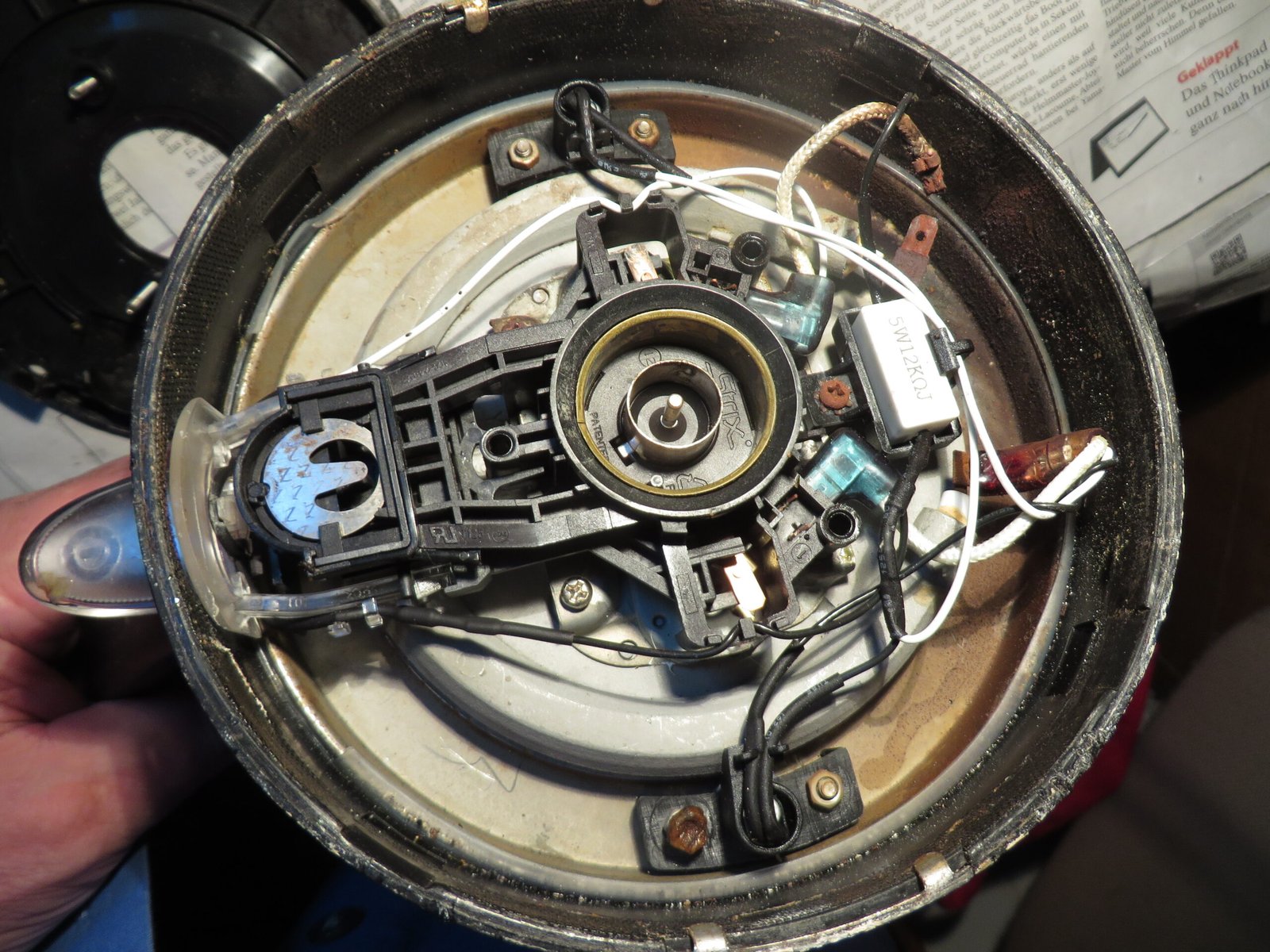
Photo: L.Willms via Wikimedia Commons (CC BY-SA 4.0).
When people ask are electric kettles safe, these features are the real answer. When you shop, look for them. Together, they address the most common hazards.
1. Automatic Shut-Off
To begin with, auto shut-off turns the kettle off once the water boils. Most kettles use a steam-activated bimetallic switch: steam reaches a small metal disc, the disc snaps, and the power cuts. Digital models use an electronic sensor instead. Either way, this feature keeps the kettle from boiling endlessly.
2. Boil-Dry Protection
Next, boil-dry protection shuts the heater off if the kettle is switched on empty or boils dry. Without it, the heating plate can overheat and damage the kettle. Many quality kettles list both auto shut-off and boil-dry protection.
3. Cool-Touch or Double-Wall Body
In addition, single-wall stainless steel and glass kettles get hot on the outside. Double-wall kettles keep the exterior cooler, which matters in homes with kids. Our guide to the best electric kettle points out which models have cool-touch bodies.
4. Secure Lid and Slow Steam Release
Also, a lid that opens slowly releases steam gradually instead of in a sudden burst. A lid that locks firmly also reduces spills when pouring.
5. Sturdy Handle
As the ZWILLING recall shows, the handle is a critical safety part. Choose a kettle with a solid, firmly attached handle, and stop using it if the handle ever feels loose.
6. Safety Certification
Finally, look for a mark from a Nationally Recognized Testing Laboratory, such as UL, ETL (Intertek), or CSA, on the base or packaging. These marks show the product was tested to recognized U.S. safety standards.
Video: 3D Casual Learning shows how an electric kettle’s automatic shut-off works.
Electrical Safety: Watts, Amps, and Outlets
Part of the answer to are electric kettles safe is electrical. Electric kettles are among the most power-hungry small appliances in a kitchen. Most U.S. kitchen outlets run on 120-volt, 15-amp circuits, which can supply up to 1,800 watts. We calculated the current each common kettle size draws using a simple formula: amps equal watts divided by volts.
| Kettle Wattage | Current at 120 V | Share of a 15-Amp Circuit |
|---|---|---|
| 1,000 W | About 8.3 A | About 56% |
| 1,200 W | 10 A | About 67% |
| 1,500 W | 12.5 A | About 83% |
| 1,800 W | 15 A | 100% |
As a result, running a 1,500-watt kettle and a toaster on the same circuit can easily exceed 15 amps and trip the breaker. Our guides on how many watts a toaster uses and how many watts a coffee maker uses show how quickly those loads add up.
For electrical safety, follow these rules:
- Plug directly into a wall outlet. In general, avoid extension cords and power strips for high-wattage appliances.
- Keep the base dry. Also, never fill the kettle while it sits on the base.
- Check the cord. In addition, stop using a kettle with a cracked, frayed, or scorched cord.
- Use GFCI outlets near sinks. Finally, most building codes require ground-fault protection for kitchen countertop outlets, which adds another layer of shock protection.
Burn Safety Tips
Scalds are the most common kettle-related injury, so placement and handling matter most. In other words, are electric kettles safe depends partly on how you use them.
- Place the kettle away from the counter edge. First, keep it at the back of the counter, out of reach of children and pets.
- Tuck the cord away. Then make sure no cord hangs over the edge where someone can pull it.
- Do not overfill. Next, stay below the max line, because boiling water can spit from the spout.
- Open the lid away from your face. After that, let steam escape before you lean in.
- Pour slowly. Also, hold the handle firmly and pour with the spout pointed away from your body.
- Let it cool before cleaning. Finally, wait until the kettle is cool before you descale or wipe it.
Where you place appliances makes a difference too. For layout ideas, our guide on where to put a coffee maker in the kitchen applies equally well to kettles.
Photo: zeevveez via Flickr (CC BY 2.0).
Are Electric Kettles Safer Than Stovetop Kettles?
In most ways, yes. Electric kettles have no open flame, they shut off automatically, and they do not leave a hot burner behind. In contrast, a stovetop kettle can boil dry if you forget it, and a gas flame adds a fire risk. On the other hand, a stovetop kettle has no electrical parts to fail. Therefore, both can be safe, but electric models remove the most common forgetfulness risks. If you still prefer the stove, our guide on how to make tea in a pot on the stove covers safe stovetop brewing.
Safety Checklist Before You Buy
If you are shopping now and wondering are electric kettles safe enough for your home, use this quick checklist. A kettle that checks every box is a strong choice.
| Feature | Why It Matters | Where to Check |
|---|---|---|
| Safety certification mark | Shows independent testing | Base label or box |
| Auto shut-off | Stops endless boiling | Product listing or manual |
| Boil-dry protection | Prevents overheating when empty | Product listing or manual |
| Cool-touch handle | Reduces hand burns | Listing photos and reviews |
| Double-wall body | Keeps outside cooler | Listing specs |
| Slow-open or locking lid | Limits steam bursts and spills | Listing specs |
| Known brand and seller | Easier recalls and support | Seller details |
Extra Caution for Travel and Mini Kettles
Small travel kettles deserve special attention. For example, the Sekaer kettles in the 2026 CPSC warning ranged from 330 to 500 mL and were sold mainly through online marketplaces. Because these tiny kettles heat a small volume quickly, a faulty lid or valve can build pressure fast. Therefore, buy travel kettles only from brands you can contact, check for a certification mark, and never seal or block the lid. In addition, do not use a home kettle in a car or RV unless it is designed for that power source.
Safety for Homes with Children and Older Adults
Households with young kids or older adults should take a few extra steps. First, choose a double-wall model so an accidental touch is less likely to burn. Second, pick a lightweight kettle with a comfortable handle, since a full 1.7-liter kettle weighs about 4 pounds of water alone. Third, consider a smaller fill or a 1-liter kettle for anyone with limited grip strength. Finally, keep the kettle and its cord well back from the edge of the counter at all times.
Material Safety: Plastic, Glass, and Steel
Some shoppers also ask whether the kettle’s materials are safe. In general, stainless steel and borosilicate glass are the most common choices for people who want to limit plastic contact with hot water. Many plastic kettles are labeled BPA-free, but that does not mean plastic-free. For a broader look at kitchen materials, read our guide to the safest cookware for your health.
How to Check If Your Kettle Has Been Recalled
- Find the model number. First, look on the bottom of the kettle or the base.
- Search CPSC.gov. Then search the brand name in the CPSC recalls database.
- Check the brand website. In addition, many brands post recall pages with model lists.
- Register your product. Finally, registering a new kettle helps the maker contact you about future recalls.
If your kettle is recalled, stop using it right away and follow the remedy instructions, which often include a refund or replacement.
Signs Your Kettle Is No Longer Safe
- A loose or wobbly handle. In fact, this was the defect in the 2026 ZWILLING recall.
- No automatic shut-off. If the kettle keeps boiling, unplug it and stop using it.
- Burning smell or smoke. Also, any electrical odor is a reason to stop immediately.
- Leaks from the base or seams. Meanwhile, water near electrical parts is a shock risk.
- Cracks in glass or plastic. Finally, damaged bodies can fail under heat.
When any of these appear, replacing the kettle is the safest choice.
FAQ
Are electric kettles safe to leave plugged in?
Many people leave the base plugged in, and in fact quality kettles are designed for it. Still, unplugging when you leave home for long periods adds an extra layer of safety.
Can an electric kettle catch fire?
It is rare with certified kettles. However, damaged cords, overheating, or defects can cause fires. Boil-dry protection and regular inspections lower the risk.
Are cheap electric kettles safe?
Some are, but check for a recognized safety certification mark and a reputable seller. The 2026 Sekaer warning shows that unknown marketplace brands can carry serious risks.
Is it safe to boil water twice in an electric kettle?
Reboiling tap water is generally considered safe for most people. However, fresh water tastes better, and emptying the kettle reduces scale.
Are electric kettles safe for kids to use?
Generally, young children should not use kettles. Older kids can learn with supervision, ideally using a cool-touch, double-wall model.
Are electric kettles safe on wooden or granite countertops?
Yes, in general, because the base keeps the hot kettle off the surface. However, avoid placing it under cabinets where steam can damage wood, and wipe up spills quickly.
How long do electric kettles last safely?
Many kettles last several years with regular descaling. Still, replace yours sooner if the handle loosens, the auto shut-off fails, or the cord shows damage.
Should I buy a kettle with a warranty?
Yes, because a warranty and an easy-to-reach brand make it simpler to get help if something goes wrong. In addition, registered products make recall notices easier to receive.
Final Thoughts
So, are electric kettles safe? Yes, for most homes, provided you choose a certified kettle with auto shut-off, boil-dry protection, and a sturdy handle. In addition, keep it away from counter edges, avoid overloaded circuits, and check for recalls by model number. Recent CPSC actions are a useful reminder that defects happen, but they also show that the system works when you stay informed. With these habits, your kettle can be one of the safest appliances in your kitchen.

Hey, My name is MAMON. I am a SEO content creator and affiliate marketer with over 8 years of experience. I create honest product reviews, in-depth buying guides, and practical how-to articles to help readers make informed decisions. My mission is to provide trustworthy, research-backed content that delivers real value.
Leave a Reply