Bamboo boards are everywhere, from Amazon best-seller lists to grocery store aisles. They are cheap, light, and marketed as eco-friendly. But many shoppers still ask: are bamboo cutting boards safe to use every day? The short answer is yes, a well-made solid bamboo board is safe for food prep. The longer answer depends on the glue, how the board is made, and how you care for it.
This guide covers the real concerns behind bamboo boards: formaldehyde-based glues, bacteria, knife wear, and cheap “bamboo fiber” products that are not what they seem. You will also learn how to pick safe bamboo cutting boards for kitchen use and how to keep them in good shape.
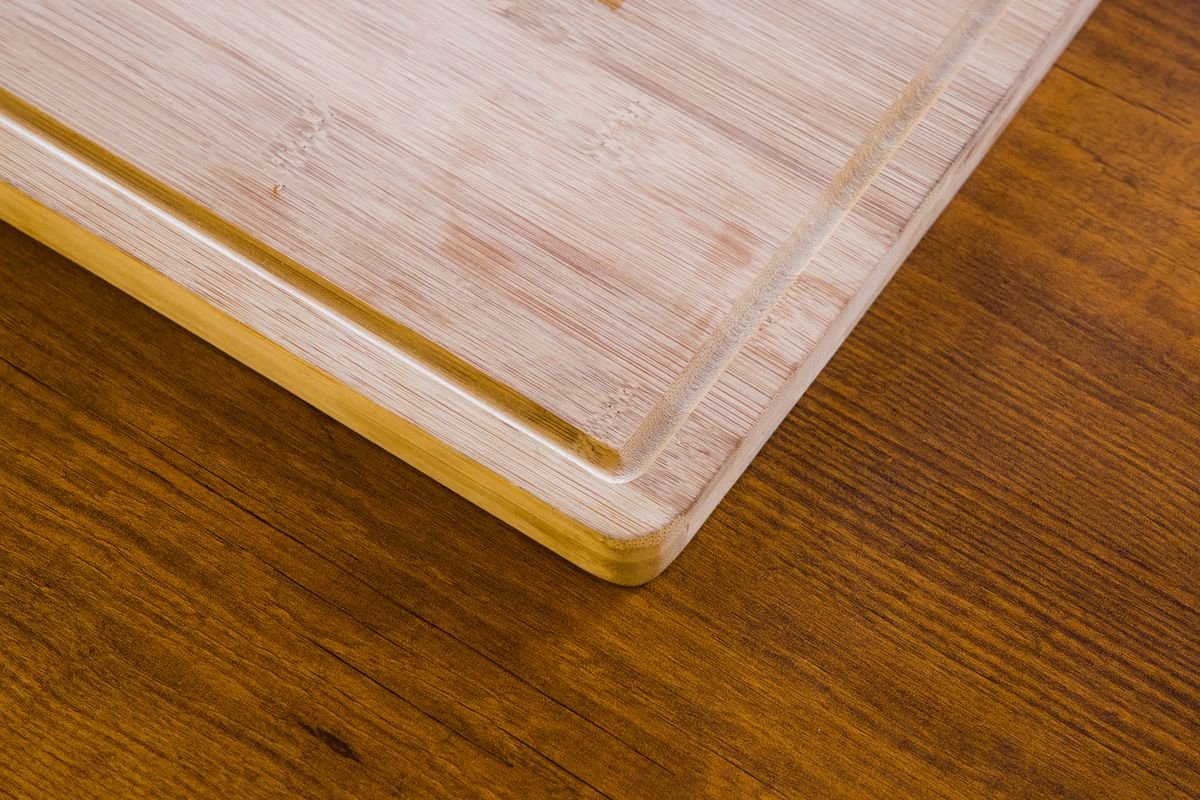
A solid bamboo cutting board. Photo: Engin Akyurt via Pexels.
Key Takeaways
- Solid bamboo boards are generally safe for food prep when they are well made and properly cared for.
- Bamboo strips are held together with adhesive, and some makers use formaldehyde-based resins. Choose brands that disclose a food-safe or formaldehyde-free glue.
- “Bamboo fiber” or “bamboo melamine” products are a different material. German regulators have warned that they can release formaldehyde and melamine when hot.
- Bamboo is hard and less porous than many woods, so it resists knife scarring and absorbs little moisture.
- Bamboo can dull knives faster than softer hardwoods such as walnut or cherry.
- Handwash, dry upright, oil regularly, and replace boards that crack or split.
Quick Answer: Are Bamboo Cutting Boards Safe?
Here is a summary of each common concern and how much it should worry you.
| Concern | Risk Level | What to Do |
|---|---|---|
| Formaldehyde glue | Low to moderate | Buy brands that disclose their adhesive; avoid heat |
| “Bamboo fiber” melamine boards | Moderate with heat | Choose solid strip bamboo instead |
| Bacteria | Low when cared for | Wash, dry, and sanitize after raw meat |
| Knife wear | Moderate | Hone more often; use softer wood for fine knives |
| Cracking and split seams | Moderate if neglected | Never soak; oil regularly |
| Chemical preservatives | Low but real | Buy from reputable brands; skip strong-smelling boards |
What Is a Bamboo Cutting Board Made Of?
Bamboo is not a tree. It is a fast-growing grass with hollow stalks, called culms. To turn it into a cutting board, manufacturers cut the stalks into thin strips, dry them, and press them together with adhesive under heat and pressure.
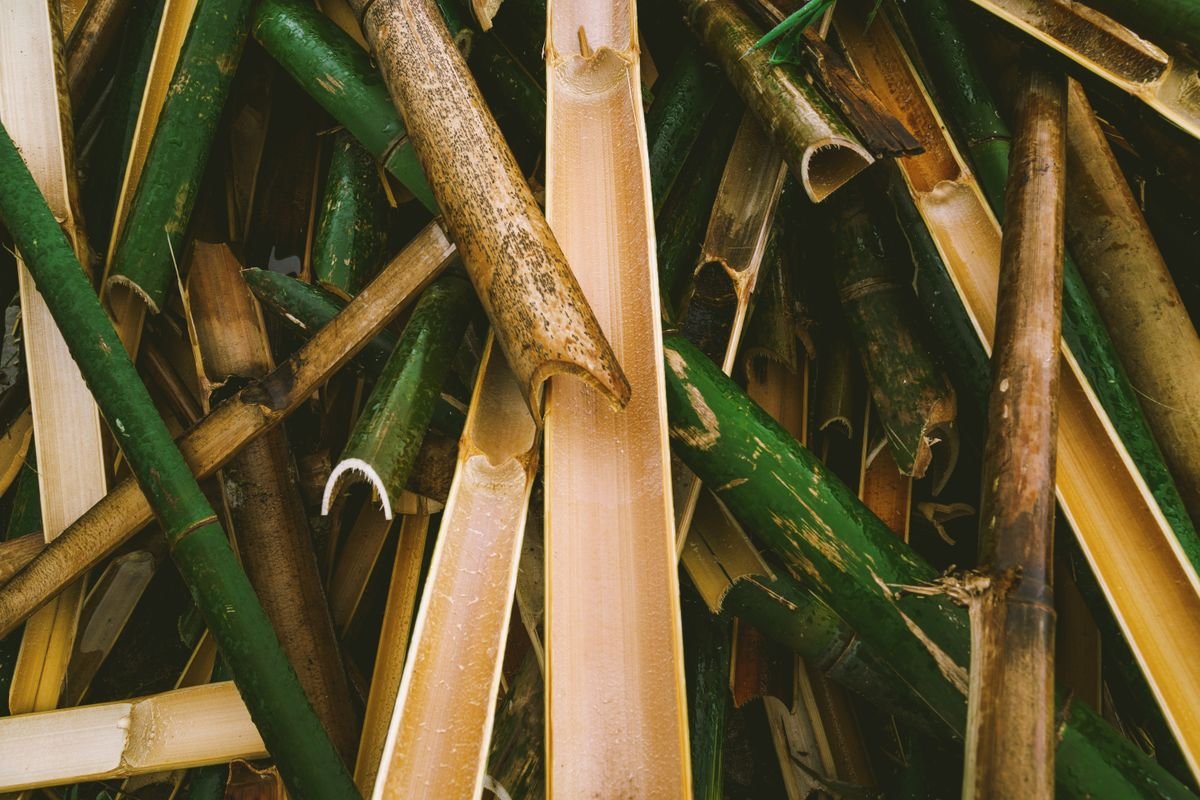
Bamboo is a grass, so boards are built from many glued strips. Photo: Twiggy Jia via Pexels.
That construction is the key to the safety question. A solid wood board can be a single plank. A bamboo board is always a laminate of many strips, which means glue is always part of the cutting surface.
You will usually see three styles:
- Flat-grain: Wide strips laid flat. Common in thin, budget boards.
- Vertical or edge-grain: Narrow strips set on their edges. Sturdier and more common in thicker boards.
- End-grain: Short blocks with the fiber ends facing up. Gentler on knives, but less common in bamboo.
Many boards are also “carbonized,” meaning the bamboo is heat-treated to a darker caramel color. Carbonizing slightly softens the material. Natural bamboo rates around 1,380 lbf on the Janka hardness scale, while carbonized bamboo is closer to 1,180 lbf, according to typical published charts.
The Glue Question: Formaldehyde in Bamboo Boards
The biggest worry when people ask whether bamboo cutting boards are safe is the glue. Some bamboo products are bonded with urea-formaldehyde or melamine-formaldehyde resins. These are common industrial adhesives because they are cheap and strong.
How Much of a Risk Is It?
Once these resins fully cure, they release much less formaldehyde than fresh glue. In a solid bamboo board, the adhesive also makes up a small part of the surface. The risk is higher with poorly made boards, very cheap products with uncured glue, and any board exposed to heat.
So are bamboo cutting boards safe when it comes to glue? Usually, yes, but the challenge for U.S. shoppers is transparency. Most bamboo boards do not state which adhesive they use. Reputable brands increasingly advertise “formaldehyde-free” or “food-safe” adhesives, and that disclosure is worth paying a little more for.
“Bamboo Fiber” Is Not the Same as Solid Bamboo
Be careful with products labeled “bamboo fiber,” “bamboo composite,” or “bamboo melamine.” These are usually melamine-formaldehyde plastic with ground bamboo added as a filler. They look natural, but they behave like plastic.
Germany’s Federal Institute for Risk Assessment (BfR) has studied this material closely. In a 2019 statement, the BfR advised against using “bamboo ware” for hot drinks and meals. Its testing of more than 200 bamboo-based cups and bowls found that some released formaldehyde at levels far above its tolerable daily intake when exposed to hot liquids. Bamboo ware often released more formaldehyde and melamine than conventional melamine dishes.
That warning targeted cups and tableware, not solid bamboo boards. Still, it is a good reason to choose solid strip bamboo for cutting boards, and to keep any bamboo product away from heat.
Chemical Preservatives
Glue is not the only possible additive. A 2025 study published in PLOS ONE tested 75 commercial bamboo and wooden cutting boards for sodium pentachlorophenate, a toxic wood preservative. Researchers detected it in 5 of the 75 boards, or about 6.7%, at levels from 1.3 to 416 mg/kg. The study did not single out bamboo, but it shows why buying from reputable brands matters for any board.
Are Bamboo Boards Good at Resisting Bacteria?
Bamboo actually has a solid hygiene profile. According to N.C. Cooperative Extension, bamboo boards can be a good choice because they are harder, resist knife scarring, and are less porous than many woods. That means they absorb less water and are more resistant to bacteria than other woods.
Fewer deep knife grooves means fewer places for food and moisture to hide. Low water absorption also helps the board dry faster after washing.
The weak points are the seams. If glue lines crack or strips start to separate, food and moisture can get trapped in the gaps. A split bamboo board is no longer easy to clean and should be replaced. The USDA advises replacing any cutting board that becomes excessively worn or develops hard-to-clean grooves.
As with every material, keep raw meat separate when possible. Many cooks use a dishwasher-safe plastic board for raw proteins and a bamboo board for produce, bread, and cooked foods. Our guide to the safest and healthiest cutting boards explains how to set up that system.
Do Bamboo Cutting Boards Dull Knives?
Yes, more than many hardwoods. N.C. Cooperative Extension notes that bamboo is a hard material and can dull knives faster than softer wood or plastic boards.
On paper, natural bamboo’s hardness is close to hard maple (about 1,450 lbf). In practice, bamboo also contains silica, a natural mineral that is tough on fine edges. The many glue lines add more hard spots across the surface.
| Material | Typical Janka Hardness | Knife Wear |
|---|---|---|
| Black cherry | 950 lbf | Very low |
| Black walnut | 1,010 lbf | Very low |
| Carbonized bamboo | About 1,180 lbf | Moderate |
| Natural bamboo | About 1,380 lbf | Moderate |
| Hard maple | 1,450 lbf | Low |
If you own expensive Japanese or German knives, you may prefer walnut, cherry, or maple. See our full comparison of the best wood for cutting boards. If you stick with bamboo, hone your knives often and sharpen them as needed. Our guide on what grit whetstone to use for kitchen knives can help.
Bamboo vs. Wood vs. Plastic Cutting Boards
How does bamboo compare with the two most common alternatives? This table sums up the trade-offs.
| Factor | Bamboo | Hardwood (Maple, Walnut) | Plastic |
|---|---|---|---|
| Price | Low | Medium to high | Low |
| Water absorption | Low | Low to moderate | None |
| Knife friendliness | Moderate | High | High |
| Dishwasher-safe | No | No | Usually |
| Adhesive or additive concerns | Glue in every board | Only in glued boards | Microplastic shedding |
| Sustainability | Fast-growing grass | Slow-growing trees | Petroleum-based |
| Best for | Produce, bread, serving | Everyday prep | Raw meat |
Bamboo Cutting Board Myths vs. Facts
Marketing claims can make it hard to know whether bamboo cutting boards are safe or simply trendy. Here is what holds up.
| Myth | Fact |
|---|---|
| Bamboo is naturally antibacterial, so it never needs sanitizing. | Bamboo resists moisture, but it still needs washing and sanitizing after raw meat. |
| All bamboo boards are toxic because of the glue. | Well-made boards with cured or formaldehyde-free adhesives are considered safe for food prep. |
| “Bamboo fiber” boards are the same as solid bamboo. | Most are melamine plastic with bamboo filler, a different material entirely. |
| Bamboo is gentle on knives because it is natural. | Its hardness and natural silica can dull edges faster than walnut or cherry. |
| Bamboo boards last forever. | Glue lines can fail over time, especially with soaking or dishwasher use. |
Is Bamboo Really an Eco-Friendly Choice?
Sustainability is a big reason people buy bamboo. As a grass, bamboo grows much faster than hardwood trees and regrows from its roots after harvest. That makes it a renewable material compared with slow-growing maple or walnut.
The picture is not perfect, though. Most bamboo boards sold in the U.S. are imported, which adds shipping emissions. The adhesives also mean a bamboo board is not fully natural or easily compostable. Look for FSC-certified bamboo if responsible sourcing matters to you, and choose a thicker board that will last longer.
How to Choose Safe Bamboo Cutting Boards for Kitchen Use
Not all bamboo boards are equal. Use this checklist when shopping for bamboo cutting boards for kitchen use:
- Choose solid strip bamboo. Skip anything labeled “bamboo fiber,” “bamboo composite,” or “melamine.”
- Look for adhesive disclosure. Brands that name a food-safe or formaldehyde-free glue are more transparent.
- Check for certifications. FSC certification shows responsible sourcing, though it does not test the glue.
- Do a smell test. A strong chemical or sharp odor out of the box is a red flag. Return it.
- Inspect the seams. Tight, even glue lines with no gaps signal better construction.
- Prefer thicker boards. Boards around 3/4 inch thick or more resist warping better than thin ones.
- Buy from established brands. Reputable sellers are more likely to control materials and preservatives.
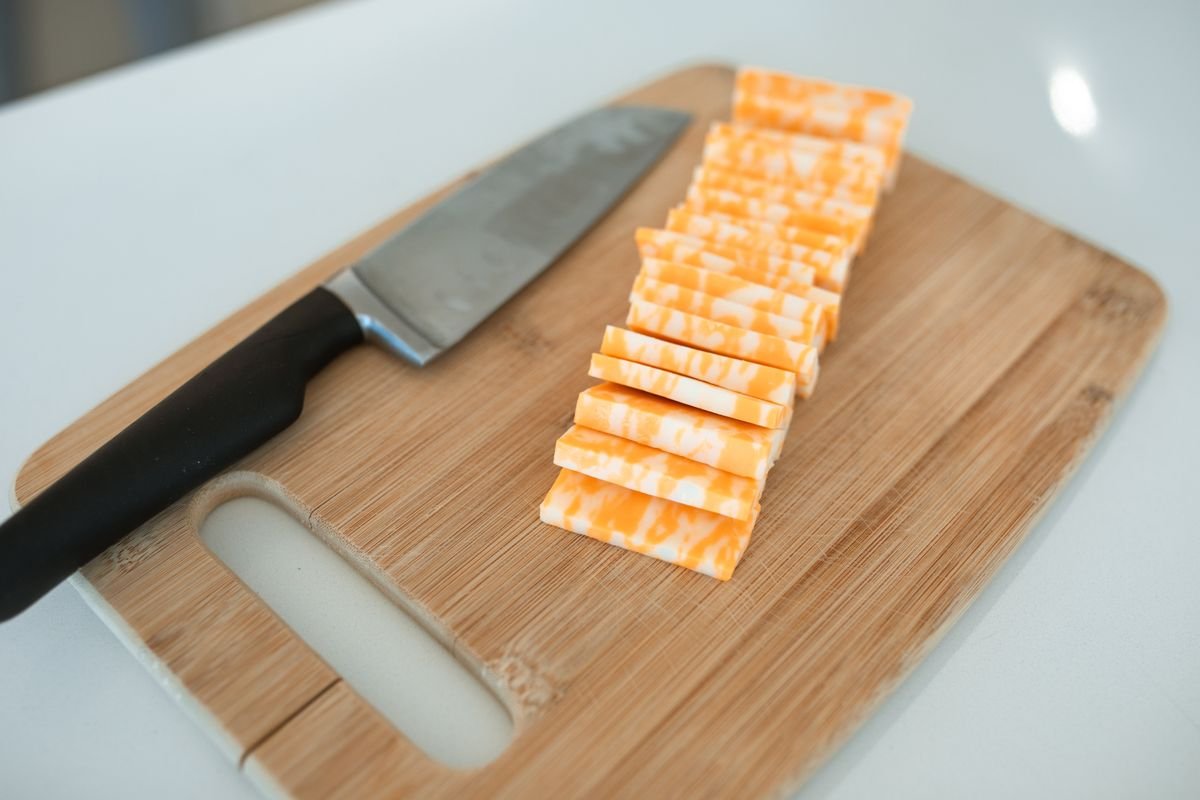
Bamboo boards work well for cheese, bread, and produce. Photo: RDNE Stock project via Pexels.
How to Use and Care for a Bamboo Board Safely
Good habits keep a bamboo board safe and extend its life. Follow these steps:
- Handwash right after use with warm water and mild dish soap.
- Never soak it or put it in the dishwasher. Heat and long wet cycles can weaken the glue and split the seams.
- Towel-dry and stand it upright so air reaches both sides.
- Sanitize after raw meat with 1 tablespoon of unscented chlorine bleach per gallon of water, then rinse and dry.
- Oil it every one to two months with food-grade mineral oil to prevent cracking.
- Keep it away from heat. Do not use it as a trivet for hot pots or place it near the stove.
For a full routine, read our guide on how to take care of a wooden cutting board, which includes a section on bamboo. After sanitizing, also clean your sponge and towels, as covered in our guide on how to disinfect kitchen cloths after wiping raw meat.
When to Replace a Bamboo Cutting Board
Replace your bamboo board if you notice any of these signs:
- Strips separating or glue lines cracking
- Deep grooves you cannot clean
- Warping that makes the board rock on the counter
- Black spots of mold that return after cleaning
- A lingering chemical or sour smell
Because bamboo boards are inexpensive, replacing them every few years is a small price for peace of mind.
Frequently Asked Questions
How long do bamboo cutting boards last?
With good care, a quality bamboo board can last several years. Cheap, thin boards may crack or split much sooner, especially if they are soaked or dishwashed. Replace any board once its seams start to separate.
Are bamboo cutting boards safe for raw meat?
They can be used for raw meat if you wash and sanitize them right away. However, a dishwasher-safe plastic board is easier to sanitize, so many cooks reserve bamboo for produce, bread, and cooked foods.
Do bamboo cutting boards contain formaldehyde?
Some do. Bamboo strips are glued together, and some adhesives are formaldehyde-based. Once cured, these glues release far less formaldehyde. To reduce risk, choose brands that disclose a formaldehyde-free or food-safe adhesive.
Are bamboo cutting boards better than wood?
Bamboo is cheaper, lighter, and absorbs less water. Hardwoods like maple and walnut are gentler on knives and are not built from many glued strips. Both are safe when well made and cared for.
Can bamboo cutting boards go in the dishwasher?
No. Dishwasher heat and long wet cycles can warp the board and weaken the glue between strips. Always handwash bamboo.
Are bamboo fiber cutting boards safe?
“Bamboo fiber” boards are usually melamine plastic with bamboo filler. Regulators in Germany have warned that this material can release formaldehyde and melamine when heated. Solid strip bamboo is a safer choice.
Final Thoughts: Are Bamboo Cutting Boards Safe?
So, are bamboo cutting boards safe? For most U.S. home kitchens, yes. A well-made solid bamboo board is hard, low in moisture absorption, and resistant to knife scarring. Its main drawbacks are glue quality, faster knife wear, and the risk of split seams if it is soaked or neglected.
Choose solid strip bamboo from a brand that discloses its adhesive, avoid “bamboo fiber” products, and keep the board away from heat and the dishwasher. With those steps, bamboo makes a safe, affordable, and eco-friendly addition to your kitchen.

Hey, My name is MAMON. I am a SEO content creator and affiliate marketer with over 8 years of experience. I create honest product reviews, in-depth buying guides, and practical how-to articles to help readers make informed decisions. My mission is to provide trustworthy, research-backed content that delivers real value.
Leave a Reply