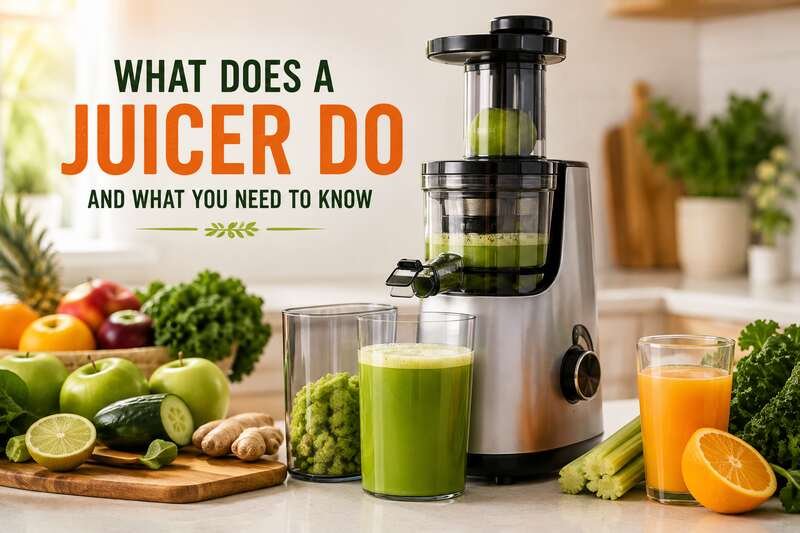
A juicer is a kitchen appliance that separates liquid from the fibrous pulp of fruits and vegetables, giving you a concentrated drink packed with the produce’s vitamins, minerals, and plant compounds. Depending on the machine, it does this by spinning produce against a mesh screen at high speed, or by slowly crushing and pressing it – the same way you’d squeeze water from a sponge.
Juicers have become a staple in health-focused U.S. kitchens because they make it easier to get several servings of produce into a single glass. But not every juicer works the same way, and the type you choose affects everything from nutrient retention to how long your juice stays fresh in the fridge. Here’s what a juicer actually does, how the main types compare, and what the research says about whether juicing is worth the counter space.
Key Takeaways
- A juicer separates juice from pulp and fiber using either high-speed spinning (centrifugal) or slow crushing (masticating, or cold-press).
- Masticating and twin-gear juicers extract more juice and preserve more nutrients than centrifugal models, but they cost more and work slower.
- Homemade juice isn’t pasteurized, so the FDA recommends refrigerating it right away and drinking it within a few days.
- Juicing isn’t automatically healthier than eating whole produce – the Mayo Clinic notes that most juicing methods strip out the fiber whole fruits and vegetables provide.
- A masticating juicer typically runs $200-$750 and can last over a decade with proper care, while centrifugal models run $75-$300.
What Does a Juicer Do?
A juicer’s job is straightforward: it breaks down the cell walls of fruits and vegetables to release the liquid trapped inside, then separates that liquid from the solid pulp and fiber. What’s left is a drink concentrated with the produce’s water-soluble vitamins, like vitamin C and the B vitamins, along with minerals and plant antioxidants.
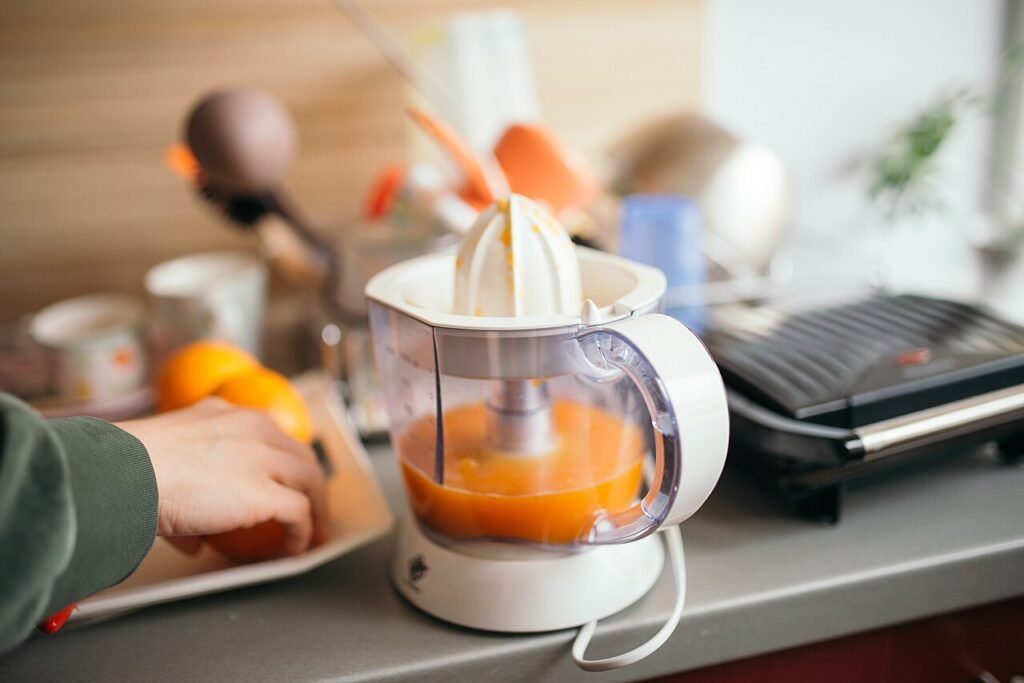
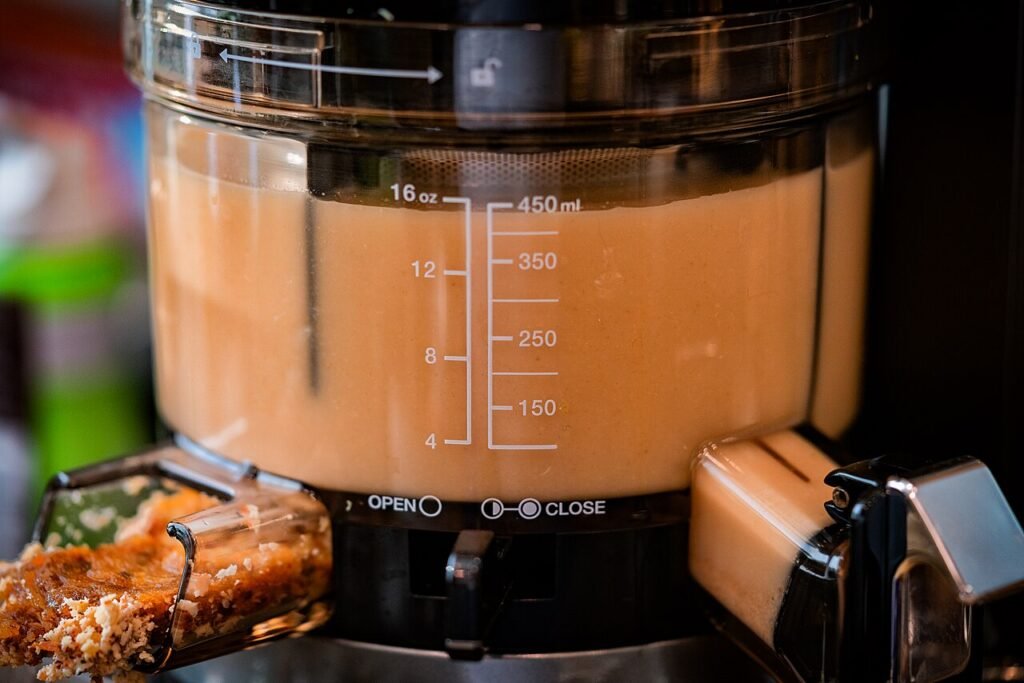
How a juicer does this depends on its design. Centrifugal juicers use a fast-spinning, blade-lined basket that shreds produce and flings the juice outward through a mesh filter, similar to how a salad spinner flings water off lettuce. Masticating juicers use a single slow-turning auger to crush and press produce, closer to how an olive press extracts oil than to blending. Twin-gear juicers use two interlocking gears to grind produce even more thoroughly, which is why they can handle fibrous ingredients like wheatgrass and leafy greens that trip up other juicer types.
The extraction method matters because it affects oxidation, the process that breaks nutrients down once they’re exposed to air. Fast spinning whips extra air into the juice, so a centrifugal juicer’s output starts losing vitamins and separating within hours. Slow crushing introduces far less air, which is why cold-press juice keeps its color, flavor, and nutrient content longer.
One thing a juicer does not do is preserve fiber. Unlike a blender, which purees the whole fruit or vegetable, a juicer physically discards the pulp, so the drink you end up with is lower in fiber than the produce you started with, even if it’s rich in everything else.
The Main Types of Juicers
Most juicers sold in the U.S. fall into three categories, and each is suited to a different kind of kitchen and budget.
Centrifugal Juicers: Speed and Convenience
Centrifugal juicers are the most common type on the market, and popular models from brands like Breville and Cuisinart are built around speed. They can turn a full countertop of produce into a glass of juice in under a minute, and they’re generally the most affordable option and the easiest to clean, since most parts are dishwasher-safe. The tradeoff is oxidation: because the blade spins at high speed, more air mixes into the juice, so it separates and loses nutrients faster than juice from a slower machine. Plan on drinking centrifugal juice within about 24 hours for the best flavor and nutrition.
Masticating (Cold-Press) Juicers
Masticating juicers, often marketed as “cold-press” or “slow” juicers, run between 40 and 100 RPM, crushing and pressing produce with a single auger instead of a spinning blade. That gentler process extracts more juice per pound of produce, keeps more nutrients and enzymes intact, and produces juice that holds up in the refrigerator for up to 72 hours. They’re noticeably quieter than centrifugal models and handle leafy greens and wheatgrass far better. The downsides are cost and time: masticating juicers take longer to process the same amount of produce, and they typically cost two to three times what a basic centrifugal model does. For a closer look at how these machines work internally, see our guide to how masticating juicers work.
Twin-Gear Juicers: The Professional Option
Twin-gear juicers use two interlocking gears to grind produce in multiple stages, which squeezes out the most juice and the most nutrients of any juicer type on the market. They’re the go-to choice for juicing wheatgrass and other tough, fibrous greens that would jam a centrifugal machine. That performance comes at a price: twin-gear machines are usually the most expensive option and the slowest to use, so they tend to appeal to serious juicing enthusiasts and small juice businesses rather than casual, once-a-week users.
Centrifugal vs. Masticating: Which One Fits Your Kitchen?
| Juicer Type | Extraction Method | Nutrient Retention | Juice Shelf Life | Noise Level | Price Range (USD) |
|---|---|---|---|---|---|
| Centrifugal | High-speed spinning blade | Moderate | Up to 24 hours | Moderate-High | $75-$300 |
| Masticating | Slow single-auger crush | High | Up to 72 hours | Low | $200-$750 |
| Twin-Gear | Dual interlocking gears | Highest | Up to 72 hours | Low | $300-$1,000+ |
If you want juice fast and don’t mind drinking it right away, a centrifugal juicer is the practical choice, and it’s easier on your wallet up front. If you care more about juice quality, shelf life, and being able to juice leafy greens, a masticating juicer is worth the extra cost and cleanup time. Noise is worth factoring in too: centrifugal juicers run loud enough to wake up a household early in the morning, while masticating models run at a quieter hum. Our complete juicer buying guide walks through how to match a machine to your budget and how often you actually plan to juice.
Is Juicing Actually Healthier Than Eating Whole Produce?
This is the question most people actually want answered, and the research is more nuanced than juice bar marketing suggests.
According to the Mayo Clinic, juicing isn’t necessarily healthier than eating fruits and vegetables whole. Juice keeps most of the vitamins and minerals from produce, but most juicing methods remove the fiber, and Mayo Clinic notes there’s no strong evidence that the body absorbs nutrients better from juice than from whole food. Fiber matters because it slows down how quickly sugar hits your bloodstream, so juice without it can spike blood sugar faster than the same fruit eaten whole. That’s worth keeping in mind if you’re managing diabetes or simply watching your sugar intake, since dietitians at the Cleveland Clinic point out that a 12-ounce glass of apple juice can carry roughly the same calories and sugar as three small apples, with almost none of the fiber that would normally slow that sugar down.
“Juice is going to be a healthier choice than drinking, say, a soda. But it’s not as healthy as eating fruits and veggies in their natural form.” – Natalie Romito, RD, LD, Cleveland Clinic
That doesn’t mean juicing has no place in a healthy diet. It’s a genuinely convenient way to work more produce into your day, especially vegetables you might not otherwise eat much of, like celery, beets, or leafy greens. The Mayo Clinic’s practical advice is to treat juice as an addition to whole fruits and vegetables rather than a replacement for them, drink it soon after making it, and choose pasteurized juice when buying it at the store to avoid bacterial contamination. If preserving fiber matters more to you than convenience, a blender is worth considering instead of a juicer, since it purees the whole produce rather than separating out the pulp.
Best Fruits and Vegetables for Juicing
Not every fruit or vegetable is worth running through a juicer. The best candidates are high in water content and hold onto their flavor and nutrients well through extraction:
- Carrots, for their natural sweetness and beta-carotene content
- Beets, high in nitrates and antioxidants, and a favorite in pre-workout juice blends
- Celery, mostly water, which makes it a mild, refreshing base for other juices
- Ginger, adds warmth and works well in small amounts
- Spinach and kale, packed with vitamin C, folate, and iron
- Cucumber, hydrating and mild enough to balance out stronger flavors
- Apples, a natural sweetener that balances out bitter greens
A few produce items are better left out of the juicer. Bananas and avocados contain too little liquid and tend to clog the machine; they belong in a blender instead. Watermelon and other very high-water produce dilute the juice without adding much flavor or nutrition. And anything bitter on its own, like raw kale juiced in large amounts, is easier to drink when mixed with something sweeter like apple or carrot.
How Long Does Fresh Juice Last? Storage and Food Safety
Homemade juice isn’t pasteurized, meaning it hasn’t been heat-treated to kill harmful bacteria the way most store-bought juice has. According to the FDA, untreated juice can carry bacteria that cause serious illness, and children, older adults, pregnant people, and anyone with a weakened immune system face the highest risk. The agency’s guidance is straightforward: keep homemade juice refrigerated at all times and drink it soon after making it, rather than leaving it out on the counter.
| Storage Method | Shelf Life |
|---|---|
| Refrigerated – centrifugal juicer juice | Up to 24 hours |
| Refrigerated – masticating/twin-gear juicer juice | Up to 72 hours |
| Frozen (airtight container) | 2-3 months |
A couple of habits make a real difference here. Fill your storage container all the way to the top before sealing it, since less air trapped inside means slower oxidation. And refrigerate juice immediately after making it rather than letting it sit out, even briefly, since bacteria multiply fastest at room temperature. For a deeper breakdown of shelf life by juicer type and storage method, see our full guide to how long masticated juice lasts.

Choosing, Costing, and Maintaining Your Juicer
Centrifugal juicers typically run $75 to $300, making them the cheapest way to get started, though budget models may need replacing after a few years of regular use. Masticating juicers cost more, usually $200 to $750 – a model like the Omega JC2022GY11 is a common pick in this range – but many come with warranties of 10 to 15 years, which can make them the better long-term value if you juice several times a week. Twin-gear machines sit at the top of the price range and make the most sense for people who juice daily or run a small juice business. Our juicer cost breakdown goes into more detail on picking a model that fits your budget, and our roundup of the best masticating juicers is a good starting point if you’ve decided slow juicing is the way to go.
Whichever type you choose, a few habits keep it running longer. Rinse the parts right after each use so pulp doesn’t dry and harden onto the mesh or auger, avoid overloading the feed chute with more produce than the manual recommends, and follow the manufacturer’s assembly instructions exactly, since juicers are more sensitive to improper reassembly than most kitchen appliances. Our step-by-step cleaning guide covers the process for both centrifugal and masticating models in detail.
Frequently Asked Questions
Is juicing worth it if I could just eat the fruit?
Juicing is a convenient way to consume more produce, especially vegetables, but it isn’t automatically healthier than eating whole fruits and vegetables. That’s mainly because most juicers remove the fiber along with the pulp.
Can I use a blender instead of a juicer?
Yes. A blender purees the whole fruit or vegetable, including the fiber, so you end up with a smoothie rather than a juice. The Mayo Clinic actually recommends blending over juicing for this reason, since it keeps more of the produce’s original nutrition intact.
How much juice does one pound of produce make?
It varies by produce and juicer type, but as a rough rule of thumb, expect 6 to 8 ounces of juice per pound of fruits or vegetables from a masticating juicer, and somewhat less from a centrifugal model, since it extracts juice less efficiently.
Do I need to peel fruits and vegetables before juicing?
Not usually. Most juicers can handle skins and peels, and leaving them on keeps more nutrients in the mix before they end up in the discarded pulp. Wash produce thoroughly first, and only remove peels on citrus, mangoes, and other produce with thick or waxy skins that won’t break down well.
Is it safe to give homemade juice to kids?
Homemade juice is unpasteurized, and the FDA specifically flags children as a higher-risk group for illness from untreated juice. If you’re juicing for kids, make small batches, refrigerate immediately, and serve it the same day rather than storing it.

Hey, My name is MAMON. I am a SEO content creator and affiliate marketer with over 8 years of experience. I create honest product reviews, in-depth buying guides, and practical how-to articles to help readers make informed decisions. My mission is to provide trustworthy, research-backed content that delivers real value.
Leave a Reply