A perfect soft-boiled egg has a fully set white and a warm, golden yolk that flows when you dip a piece of toast into it. Getting there comes down to one number: the soft boiled egg cook time. For large eggs lowered into simmering water, Eggland’s Best recommends 5 minutes for a very runny yolk and up to 7 minutes for a barely set yolk. In this guide, we break down the timing minute by minute, explain why it works, and show you how to adjust for egg size, altitude, and different cooking tools.
Key Takeaways
- Cook large eggs for 5 minutes in simmering water for a very runny yolk, or up to 7 minutes for a barely set yolk.
- Start with cold eggs straight from the refrigerator and lower them into water that is already simmering.
- Move the eggs to an ice bath right away, since carryover heat keeps cooking the yolk.
- Egg whites set at about 144 to 149°F, while yolks set at about 149 to 158°F, according to the American Egg Board.
- At 5,000 feet, water boils at about 203°F, so soft-boiled eggs need a little longer.
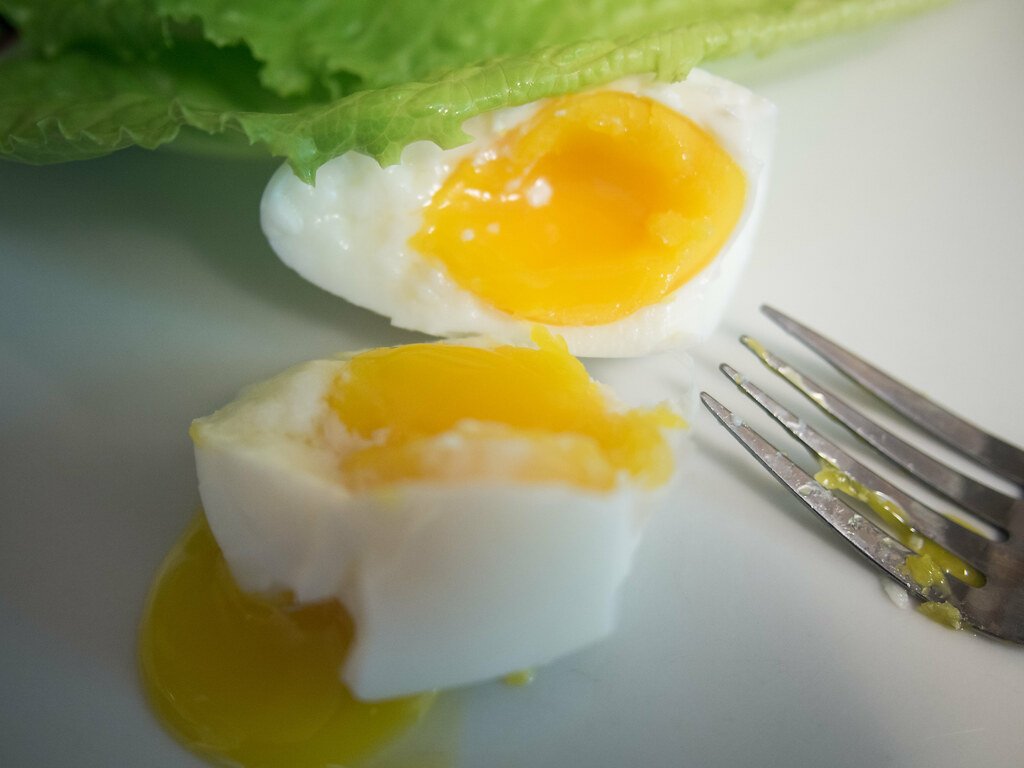
Photo: Edsel L via Flickr (CC BY-SA 2.0).
Soft Boiled Egg Cook Time Chart
The chart below assumes large eggs taken straight from the refrigerator and lowered into water that is already at a rapid simmer. Start your timer the moment the eggs go in.
| Cook Time | White | Yolk | Best For |
|---|---|---|---|
| 5 minutes | Just set | Very runny | Egg cups and toast soldiers |
| 6 minutes* | Fully set | Runny with a thicker edge | Avocado toast, salads |
| 7 minutes | Firm | Barely set, jammy center | Ramen, grain bowls |
Source: The 5- and 7-minute times come from Eggland’s Best. *The 6-minute row is our midpoint estimate, so test one egg first.
For comparison, Eggland’s Best lists 12 minutes for a fully hard-cooked large egg. So, the soft-boiled window is short, and even 30 seconds makes a visible difference.
How to Soft Boil an Egg: Step by Step
- Bring water to a boil: First, fill a saucepan with enough water to cover the eggs by about an inch and bring it to a boil. To save time, heat the water in an electric kettle first; our guide to the best electric kettle covers fast models.
- Lower to a rapid simmer: Next, reduce the heat slightly so the eggs do not bounce and crack.
- Add cold eggs gently: Then lower the eggs into the water with a slotted spoon.
- Start the timer: After that, set a timer for 5 to 7 minutes, depending on how runny you like the yolk.
- Prepare an ice bath: Meanwhile, fill a bowl with ice and cold water.
- Shock the eggs: When the timer goes off, move the eggs straight into the ice bath for about 1 to 2 minutes.
- Serve: Finally, set the egg in an egg cup, tap off the top, and dig in, or peel it gently for salads and bowls.
Why the Timing Works
The reason soft-boiled eggs are possible comes down to chemistry. According to the American Egg Board’s coagulation guide, egg whites coagulate at about 144 to 149°F, while yolks set at about 149 to 158°F. Because heat travels from the outside in, the white reaches its setting point first. Then, if you stop cooking at the right moment, the yolk stays below its setting range and remains liquid.
That is also why carryover heat matters. Even after you remove the egg from the water, heat keeps moving toward the center. Therefore, an egg that looks perfect at 6 minutes can be closer to 7 by the time you eat it unless you chill it.
Video: Cooking With Ehsan compares eggs boiled from 4 to 10 minutes.
Adjusting the Soft Boiled Egg Cook Time
For Egg Size
Most timing charts assume large eggs. However, size makes a real difference. Under USDA grading rules, a dozen large eggs must weigh at least 24 ounces, while a dozen extra-large eggs must weigh at least 27 ounces. So, for extra-large or jumbo eggs, add about 30 to 60 seconds. For medium eggs, subtract about 30 seconds.
For Egg Temperature
The times above assume cold eggs from the refrigerator. Room-temperature eggs cook faster, so reduce the soft boiled egg cook time by about 30 seconds if your eggs have been sitting out. That said, U.S. eggs should be stored in the refrigerator, so starting cold is the most consistent approach.
For Altitude
Water boils at a lower temperature as elevation rises. According to Colorado State University Extension, water boils at about 203°F at 5,000 feet and about 198°F at 7,500 feet, compared with 212°F at sea level. As a result, eggs cook more slowly. If you live at elevation, add about 1 minute and test.
For Batch Size
Adding many cold eggs at once can drop the water temperature. Therefore, use plenty of water, cook no more than a single layer, and let the water return to a simmer quickly.
Soft Boiled Egg Cook Time by Method
| Method | How to Time It | Notes |
|---|---|---|
| Stovetop, boiling start | 5 to 7 minutes | Most precise method |
| Steaming | About 6 to 7 minutes (estimate) | Easier peeling |
| Electric egg cooker | Fill to the soft line | Water level sets the time |
| Cold-water start | Not ideal for soft eggs | Harder to control |
If you use an electric egg cooker, the measuring cup replaces the timer. Fill it to the soft line, and the unit shuts off when the water has evaporated. Likewise, a rice cooker with a steam tray can work; see our guide on how to steam using a rice cooker.
Where Soft-Boiled Fits on the Full Egg Timeline
It helps to see the soft boiled egg cook time in context. Here is how it compares with medium and hard-cooked eggs, using published times for large eggs.
| Style | Method | Time | Source |
|---|---|---|---|
| Very soft | Boiling start | 5 minutes | Eggland’s Best |
| Barely set | Boiling start | Up to 7 minutes | Eggland’s Best |
| Hard | Boiling start | 12 minutes | Eggland’s Best |
| Hard | Cold start, then covered stand | About 12 minutes | American Egg Board |
As you can see, the soft range is only a couple of minutes wide. In contrast, hard-cooked eggs are more forgiving, since an extra minute only makes the yolk slightly drier.
Troubleshooting by Yolk Result
| What You Got | What to Change Next Time |
|---|---|
| White still clear near the yolk | Add 30 to 60 seconds |
| Yolk firmer than you wanted | Cut 30 seconds and chill faster |
| Yolk perfect but white rubbery | Lower the heat to a gentler simmer |
| Results vary each time | Use the same pot, water amount, and egg size |
How to Serve Soft-Boiled Eggs
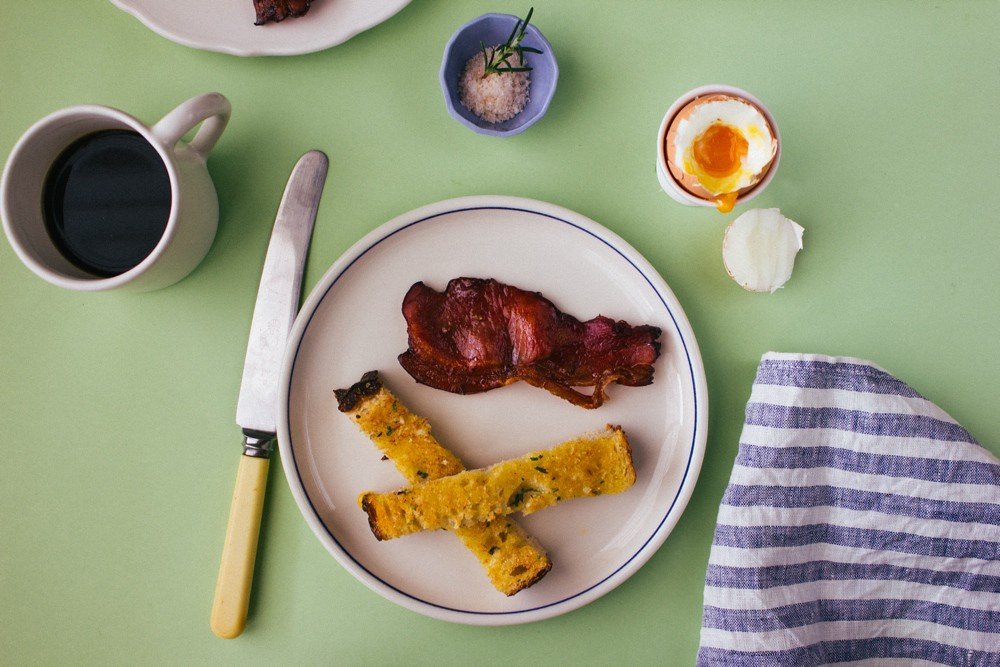
Photo: simpleprovisions via Flickr (CC BY 2.0).
- Egg cups and soldiers: First, stand the egg in a cup, slice off the top, and dip strips of buttered toast into the yolk. If you are toasting bread alongside, our guide on how many watts a toaster uses explains how to avoid tripping a breaker.
- Ramen and noodle bowls: Next, halve a 7-minute egg and add it to hot broth.
- Avocado toast: Also, peel a 6-minute egg and set it on smashed avocado.
- Salads: In addition, a soft yolk works like a warm dressing on greens.
- Asparagus: Finally, dip steamed asparagus spears into a runny yolk.
What Is the Difference Between Soft-Boiled and Coddled Eggs?
Both have tender whites and soft yolks, but they are cooked differently. A soft-boiled egg cooks in its shell in simmering water for 5 to 7 minutes. By contrast, a coddled egg is cracked into a small covered cup, which is then set in hot water until the white just sets. As a result, coddled eggs are even more delicate, while soft-boiled eggs are easier to make in batches.
How to Peel Soft-Boiled Eggs
Soft-boiled eggs are more delicate than hard-boiled ones, so peeling takes care. Start by chilling the egg in ice water for a minute or two. Then tap the wide end, where the air pocket sits, and peel under a thin stream of cold water. According to the American Egg Board, very fresh eggs are harder to peel, so eggs that are 7 to 10 days old work best.
If peeling feels fussy, serve the egg in its shell in an egg cup instead. That way, there is nothing to tear.
Common Mistakes
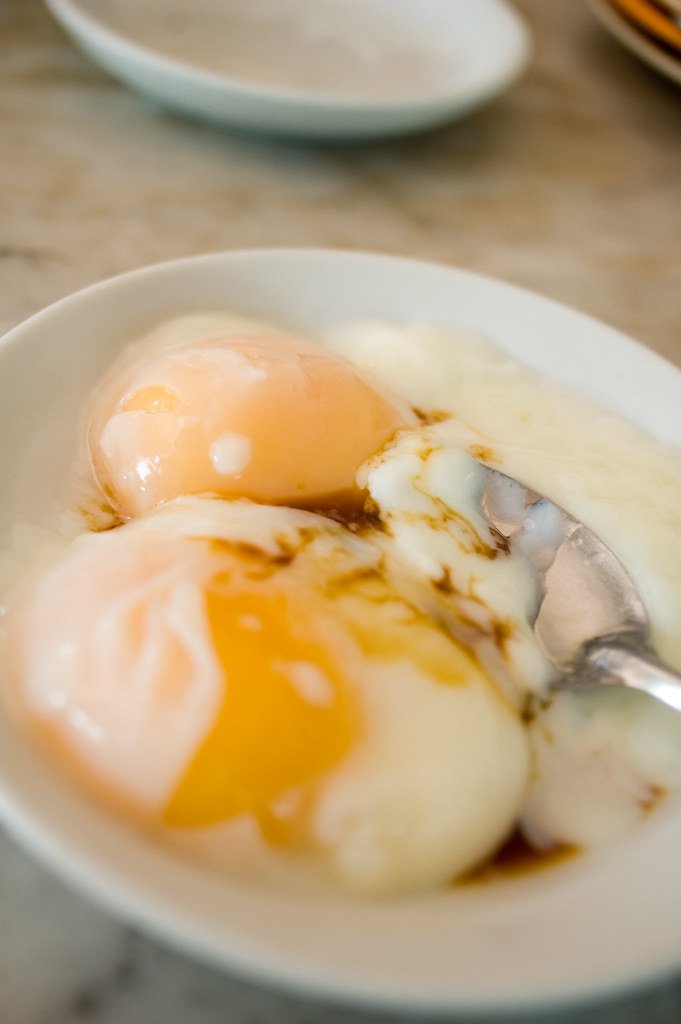
Photo: jonolist via Flickr (CC BY-SA 2.0).
| Mistake | Result | Fix |
|---|---|---|
| Starting in cold water | Unpredictable yolks | Use a boiling-water start |
| Skipping the ice bath | Yolk keeps cooking | Chill for 1 to 2 minutes |
| Dropping eggs in | Cracked shells | Lower gently with a spoon |
| Rolling boil | Eggs bounce and crack | Keep a rapid simmer |
| Guessing the time | Inconsistent results | Use a timer every time |
Helpful Tools for Soft-Boiled Eggs
- Kitchen timer: First, a simple timer is the most important tool, since seconds matter.
- Slotted spoon: Next, use it to lower and lift eggs without cracking them.
- Egg cups: Also, cups hold the egg upright so you can eat it from the shell.
- Egg topper: In addition, a topper or a sharp knife removes the cap cleanly.
- Electric egg cooker: Finally, a cooker with a soft line removes the timing guesswork entirely.
If you prefer your eggs fried instead, our guide on cooking eggs in a cast iron skillet without sticking walks through every step. For a quick vegetable side, such as asparagus or broccoli for dipping, see our guide on how to use a microwave steamer.
Soft-Boiled Eggs in an Egg Cooker: Step by Step
If you own an electric egg cooker, the soft boiled egg cook time is controlled by water instead of a clock. Here is the general process:
- First, fill the measuring cup with cold water to the soft line.
- Next, pour the water onto the heating plate.
- Then pierce the large end of each egg with the pin on the cup.
- After that, place the eggs in the tray, cover, and switch the unit on.
- Finally, when the alarm sounds, move the eggs to ice water right away.
Because each brand calibrates its cup differently, your first batch is a test. If the yolks are firmer than you like, use slightly less water next time.
Soft-Boiling for a Crowd
Cooking soft-boiled eggs for several people takes a little planning. Use a wide pot with plenty of water, so the temperature does not drop too much when you add the eggs. Also, lower the eggs in quickly with a spider or slotted spoon so they all start at the same time. Then remove them together and chill them in a large ice bath. In short, more water and a fast start keep every egg on the same timeline.
Soft-Boiled Eggs Around the World
Many cuisines have a favorite way to enjoy a soft yolk. For example, a British breakfast often features a soft-boiled egg in a cup with buttered toast soldiers. In Japan, ramen shops serve halved soft eggs with jammy centers. Meanwhile, in Singapore and Malaysia, soft-cooked eggs are often served with soy sauce and white pepper alongside sweet kaya toast. Each style uses a slightly different time, but all rely on stopping the cooking before the yolk sets.
Are Soft-Boiled Eggs Safe?
A runny yolk has not been heated enough to fully set. The Egg Safety Center notes that cooking eggs until the white and yolk are firm helps destroy bacteria. For most healthy adults, soft-boiled eggs are a personal choice. However, for young children, older adults, pregnant people, and anyone with a weakened immune system, serve firm yolks or use pasteurized eggs. Also, eat soft-boiled eggs right away rather than storing them.
Quick Tips for a Perfect Soft-Boiled Egg
- Keep the timer handy: First, start it the instant the eggs touch the water.
- Use consistent eggs: Next, buy the same size each time, so your timing stays reliable.
- Watch the simmer: Then keep the water at a steady, rapid simmer rather than a rolling boil.
- Chill fast: After that, plunge eggs into ice water the moment the timer ends.
- Write it down: Finally, note the time that gives your favorite yolk and repeat it.
Follow these habits, and your soft boiled egg cook time will give the same result morning after morning.
Frequently Asked Questions
What is the soft boiled egg cook time for a runny yolk?
For large eggs lowered into simmering water, cook for 5 minutes for a very runny yolk, according to Eggland’s Best.
How long for a jammy egg?
Up to 7 minutes gives a barely set, jammy yolk. Then chill it in ice water to stop the cooking.
Should I start soft-boiled eggs in cold water?
Generally, no. Starting in simmering water gives more precise timing, which matters for a soft yolk.
Do I need an ice bath?
Yes. Otherwise, carryover heat keeps cooking the yolk, and it can firm up before you eat it.
Can I make soft-boiled eggs ahead?
They are best fresh. If you must, chill them quickly, keep them refrigerated, and rewarm them briefly in hot water just before serving.
Does the size of the pot matter?
Yes. A small pot with little water cools down more when you add cold eggs, which lengthens the soft boiled egg cook time. So, use enough water to cover the eggs by about an inch.
Why did my soft-boiled egg crack?
Usually, the egg was dropped into hard-boiling water. So, lower eggs gently into a rapid simmer instead.
Final Thoughts
The ideal soft boiled egg cook time for large eggs is 5 minutes for a very runny yolk and up to 7 minutes for a barely set yolk. Start with cold eggs, lower them into simmering water, use a timer, and chill them right away. Then adjust for egg size and altitude, and you will enjoy a perfect soft-boiled egg every time.

Hey, My name is MAMON. I am a SEO content creator and affiliate marketer with over 8 years of experience. I create honest product reviews, in-depth buying guides, and practical how-to articles to help readers make informed decisions. My mission is to provide trustworthy, research-backed content that delivers real value.
Leave a Reply