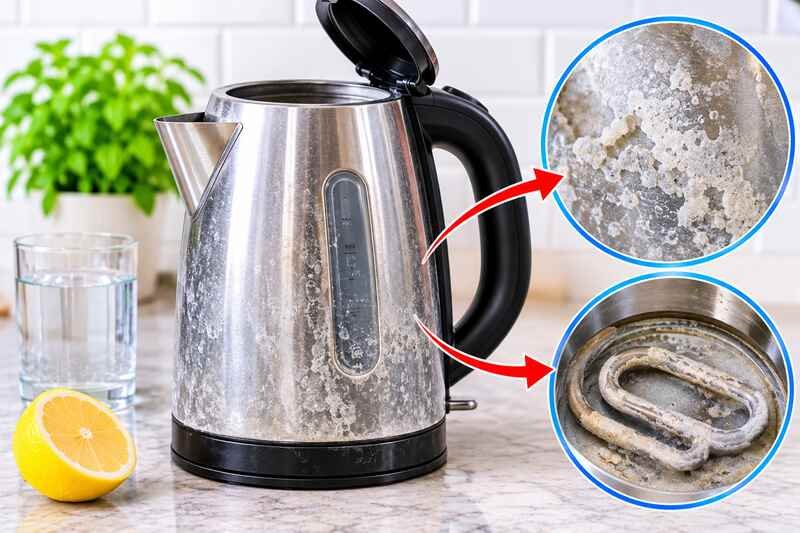
If you have ever lifted the lid of your kettle and found a chalky white crust, you have probably asked yourself what is limescale and whether it is safe. Limescale is the hard mineral deposit that hard water leaves behind, mostly on surfaces that get hot, such as kettle heating plates, coffee makers, and faucets. In this guide, we explain what limescale is made of, why it forms, whether it is bad for you, and how it affects your appliances. In addition, we share U.S. water hardness data and simple ways to remove and prevent it.
Key Takeaways
- Limescale is mostly calcium carbonate, the same mineral found in chalk, limestone, and seashells.
- It forms when hard water is heated or evaporates, so kettles, coffee makers, and shower heads collect it first.
- Australia’s national drinking water guidelines set no health-based limit for hardness, and they say data linking hard water to heart health are not strong enough to show cause.
- However, limescale does affect taste and appliances, and it builds up faster above about 200 mg/L of hardness.
- Finally, mild acids such as vinegar and citric acid dissolve it easily.
What Is Limescale?
So, what is limescale exactly, and why does it matter? In simple terms, it is a hard, off-white deposit made mainly of calcium carbonate. It can also contain magnesium compounds and small amounts of other minerals, depending on your local water. In kettles, it often looks like a rough, chalky crust on the heating plate, white flakes floating in the water, or a cloudy film on glass.
Limescale is chemically similar to limestone and chalk, which is where the name comes from. In fact, the same mineral builds dramatic natural formations around hot springs. For example, the terraces at Mammoth Hot Springs in Yellowstone National Park are made of calcium carbonate deposited by mineral-rich water.
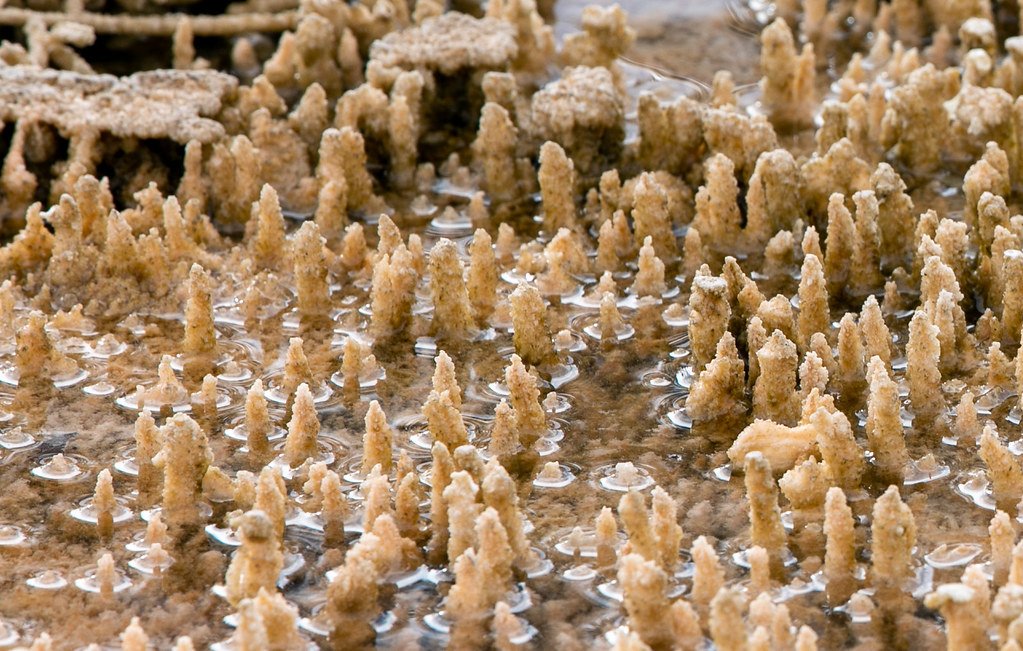
Photo: Yellowstone National Park via Flickr (Public Domain).
Your kettle simply does the same thing on a much smaller scale. Each time you boil hard water, a tiny amount of mineral settles out. Over weeks and months, those tiny amounts add up to a visible layer.
What Causes Limescale?
To understand what is limescale, start with hard water. As rainwater soaks through soil and rock, especially limestone and chalk, it dissolves calcium and magnesium. That mineral-rich water then flows into wells, reservoirs, and eventually your tap.
Heat is what turns those dissolved minerals into solid scale. Much of the calcium in hard water is carried as calcium bicarbonate. When you heat the water, the bicarbonate breaks down, releasing carbon dioxide and leaving behind solid calcium carbonate. In addition, calcium carbonate becomes less soluble as water gets hotter, which is unusual, since most substances dissolve better in hot water. As a result, the hottest surfaces collect the most scale.
Evaporation also plays a role. When water dries on a faucet or shower glass, it leaves its minerals behind as white spots. That is why scale appears both inside appliances and on fixtures around the house.
| Cause | Where You See It | Why It Happens |
|---|---|---|
| Heating | Kettles, coffee makers, water heaters | Bicarbonate breaks down and calcium carbonate settles out |
| Evaporation | Faucets, shower doors, dishes | Water dries and leaves minerals behind |
| Standing water | Kettles left full, humidifiers | Slow evaporation concentrates minerals |
| Very hard water | Every water-using appliance | More minerals per liter means faster buildup |
How Hard Is U.S. Water?
Water hardness varies a lot across the United States. The U.S. Geological Survey classifies water by its calcium carbonate content, according to its water hardness FAQ:
| USGS Classification | Hardness (mg/L as calcium carbonate) | Limescale Risk |
|---|---|---|
| Soft | 0–60 | Low |
| Moderately hard | 61–120 | Moderate |
| Hard | 121–180 | High |
| Very hard | More than 180 | Very high |
The risk column is our interpretation, based on how quickly scale builds. To find your own number, check your water utility’s annual Consumer Confidence Report, which most U.S. utilities publish each year. If you use a private well, a simple test kit or a lab test will tell you.
To put the numbers in perspective, we did a quick calculation. Very hard water at 180 mg/L carries 180 milligrams of mineral per liter. If you boil 1.5 liters a day, that is up to about 8 grams of potential scale per month, roughly the weight of two U.S. nickels. Not all of it settles in the kettle, but it explains why scale returns so quickly in hard-water areas.
Is Limescale Bad for You?
After learning what is limescale, this is the question most people really care about. Based on current evidence, limescale is not considered harmful to drink. It is made of calcium and magnesium, which are minerals your body already uses. In fact, Australia’s National Health and Medical Research Council sets a hardness guideline of 200 mg/L based on scaling and soap lather, not on health. Its drinking water guideline for hardness also notes that some studies suggest hard water may benefit heart health, but the data are not strong enough to show a causal link.
The mineral content is also modest. Calcium makes up about 40% of calcium carbonate by weight. Therefore, water at 200 mg/L hardness, if all of it came from calcium, would carry about 80 mg of calcium per liter. By comparison, the National Institutes of Health lists 1,000 mg per day as the recommended calcium intake for most adults aged 19 to 50. In other words, even very hard water supplies only a small share of daily calcium.
What About Limescale Flakes in Tea?
Swallowing a few white flakes is not known to be harmful. However, they can make tea look cloudy and taste flat or chalky. They can also form a film on top of black tea. For that reason, most people descale simply for better taste.
When to Be Cautious
Scale itself is not the concern, but what grows on it can be. A rough layer of scale in a kettle that sits full of water can trap residue and, over time, encourage mold or biofilm. Therefore, empty your kettle after use and clean it regularly. If you have a medical condition that requires limiting minerals, ask your doctor whether hard water matters for you.
How Limescale Affects Your Kettle and Appliances
While limescale is not a health threat, it is tough on appliances. In fact, knowing what is limescale helps explain why kettles wear out sooner in hard-water homes. The mineral layer sits between the heating element and the water, so the heater has to work through a crust. Over time, that can slow heating, raise operating temperatures, and shorten the life of parts.
- Kettles: First, scale makes boiling louder, slower, and less pleasant. Flakes also end up in your cup.
- Coffee makers: Also, scale narrows the tubes, which slows brewing and can lower brew temperature.
- Water heaters: In addition, sediment builds up in tanks and around heating elements.
- Dishwashers: Meanwhile, scale coats the heating element and leaves spots on glasses.
- Faucets and shower heads: Finally, mineral deposits clog aerators and reduce water flow.
If your dishwasher shows white residue, our guide on how to clean hard water from a dishwasher covers the fix. Similarly, our guide on cleaning a dishwasher heating element explains how scale affects heating parts.
Video: Answer The Home explains what limescale is and how to remove and prevent it.
Where Limescale Shows Up Around the Home
Once you know what is limescale, you start seeing it everywhere hard water goes. However, some spots collect it much faster than others, mainly because of heat and evaporation.
| Location | What It Looks Like | How Often to Clean |
|---|---|---|
| Electric kettle | Chalky crust and flakes | Every 2–8 weeks, by hardness |
| Coffee maker | Slow brewing, white film | Every 1–3 months |
| Faucets and aerators | White crust, weak flow | Monthly wipe, deep clean as needed |
| Shower heads | Clogged nozzles | Every few months |
| Dishwasher | Cloudy glasses, white film | Monthly cleaning cycle |
| Water heater | Sediment, popping sounds | Flush per manufacturer guidance |
The cleaning column is our general suggestion, so follow each manual where it differs. In general, the harder your water, the shorter the interval you need.
Why Limescale Builds Faster in Some Homes
Two homes on the same street can have very different scale problems. For example, a home on a private well may have much harder water than one on city water. In addition, households that boil water many times a day simply move more minerals through the kettle. Water temperature matters too, since hotter settings on water heaters speed up scale formation. Therefore, if you notice heavy buildup, check your hardness number, your daily usage, and your appliance settings before blaming the kettle itself.
How to Tell If You Have Limescale
Limescale is easy to spot once you know what to look for. Check these common signs around your kitchen:
- White crust in the kettle: First, look for a chalky layer on the heating plate or along the water line.
- Floating flakes: Next, small white specks in boiled water are a clear sign.
- Spots on glasses: In addition, cloudy rings after the dishwasher point to hard water.
- Crusty faucets: Also, white or green-tinged buildup around faucet tips and aerators is common.
- Soap that will not lather: Finally, hard water makes soap and shampoo harder to rinse.
A simple test is to put a drop of vinegar on the deposit. If it fizzes, it is almost certainly calcium carbonate limescale, because the acid releases carbon dioxide as it dissolves the mineral.
How to Remove Limescale
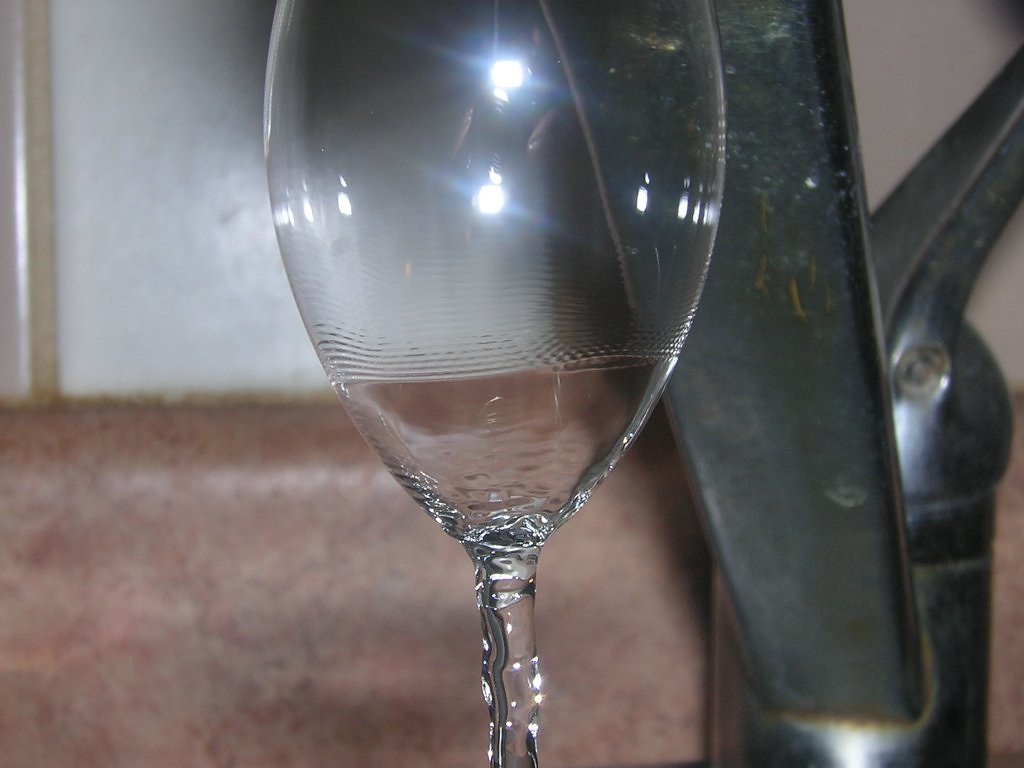
Photo: id via Flickr (CC BY 2.0).
Because limescale is a carbonate mineral, acids dissolve it. In other words, what is limescale chemically also tells you how to remove it. Fortunately, the most effective options are cheap household items.
| Option | How to Use It in a Kettle | Best For |
|---|---|---|
| White vinegar | Half vinegar, half water; boil and soak 30–60 minutes | Moderate to heavy scale |
| Citric acid powder | 1–2 tablespoons per liter; boil and soak 15–30 minutes | All levels, no smell |
| Lemon juice | Juice of 2–3 lemons in water; boil and soak 1 hour | Light scale |
| Commercial descaler | Follow the label | Heavy scale, espresso machines |
After any method, rinse the kettle several times and boil plain water once or twice before you use it again. In contrast, baking soda does not dissolve limescale, because it is alkaline rather than acidic. It is still useful for odors and gentle scrubbing, though.
For faucets, wrap a cloth soaked in vinegar around the tip for 30 minutes, then scrub with an old toothbrush. If your faucet aerator is clogged, our guide on how to clean a Delta kitchen faucet head walks through the steps.
How to Prevent Limescale
You cannot change your water’s hardness without treatment, but you can slow the buildup.
- Empty the kettle after each use. Standing water leaves more minerals as it evaporates.
- Boil only what you need. As a result, less water sits and less scale forms.
- Use filtered water. Some pitcher filters reduce hardness minerals, so check the product’s specs.
- Descale regularly. In fact, thin scale removes in minutes, while thick crust takes hours.
- Dry fixtures after use. Similarly, wiping faucets and shower glass prevents spots.
- Consider whole-home treatment. Finally, a water softener or descaler can protect every appliance.
If you are weighing whole-home options, our comparison of water descaler vs. water softener explains how each works. And if you already have a softener, our guide on how to clean a water softener resin tank helps keep it working well.
Limescale vs. Other White Deposits
Not every white residue is limescale, so it helps to know what is limescale and what is not. Here is how to tell the difference:
| Deposit | Appearance | Fizzes with Vinegar? | Typical Cause |
|---|---|---|---|
| Limescale | Hard, chalky, white or tan | Yes | Hard water and heat |
| Soap scum | Greasy, gray-white film | Little or no | Soap reacting with minerals |
| Silica deposits | Glassy, very hard spots | No | Silica-rich water |
| Mold or biofilm | Slimy, black, pink, or green | No | Standing water and residue |
If a deposit does not respond to vinegar, it may be something other than limescale. In that case, try dish soap for soap scum, or a thorough cleaning routine for mold.
FAQ
What is limescale made of?
Limescale is made mostly of calcium carbonate, with smaller amounts of magnesium compounds and other minerals from hard water.
Is limescale in a kettle harmful?
Current evidence does not show that limescale is harmful to drink. However, it affects taste, and a dirty, scaled kettle can harbor residue, so regular cleaning is a good idea.
Why does limescale form faster in kettles?
Heat breaks down dissolved calcium bicarbonate into solid calcium carbonate. In addition, calcium carbonate is less soluble in hot water, so kettles collect scale quickly.
Does boiling water remove limescale?
No. Boiling actually creates more scale by pulling minerals out of the water. To remove it, you need a mild acid such as vinegar or citric acid.
Can a water filter stop limescale?
Some filters reduce hardness minerals, which slows scale. Still, check the product’s specifications, because many basic filters mainly target chlorine and taste.
Final Thoughts
Now you know what is limescale: a calcium carbonate deposit that hard water leaves behind, especially when heated. In short, it is not known to be harmful to drink, but it affects taste and wears down kettles, coffee makers, and water heaters. Fortunately, vinegar or citric acid removes it quickly, and a few simple habits slow it down. If your kettle is too far gone, our guide to the best electric kettle can help you pick a replacement that is easy to keep clean.

Hey, My name is MAMON. I am a SEO content creator and affiliate marketer with over 8 years of experience. I create honest product reviews, in-depth buying guides, and practical how-to articles to help readers make informed decisions. My mission is to provide trustworthy, research-backed content that delivers real value.
Leave a Reply