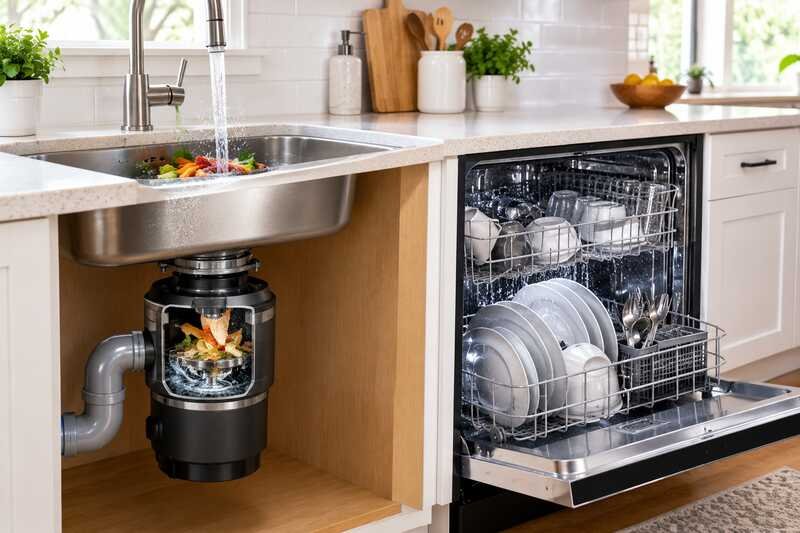
Yes, you can run a garbage disposal while the dishwasher is running in most U.S. kitchens. Your garbage disposal and dishwasher usually share the same drain line under the sink, and that line is built to carry water from both. Problems only show up when the disposal is clogged, the drain hose is installed wrong, or both machines share an overloaded electrical circuit. This guide explains how the two are connected, when running them together causes trouble, and the simple habit that prevents most backups.
Key Takeaways
- Running both at once is generally safe: the dishwasher pumps into the disposal’s side inlet, and the water leaves through the same drain.
- Run the disposal first: clearing the grinding chamber before you start the dishwasher keeps its drain path open.
- A clogged disposal is the real risk: dirty dishwasher water can back up into the sink or the dishwasher tub.
- You do not need a disposal to have a dishwasher: the dishwasher can drain into a branch tailpiece on the sink instead.
- Air gap or high loop is required: which one depends on the plumbing code your city or state follows.
Can You Run a Garbage Disposal While the Dishwasher Is Running?
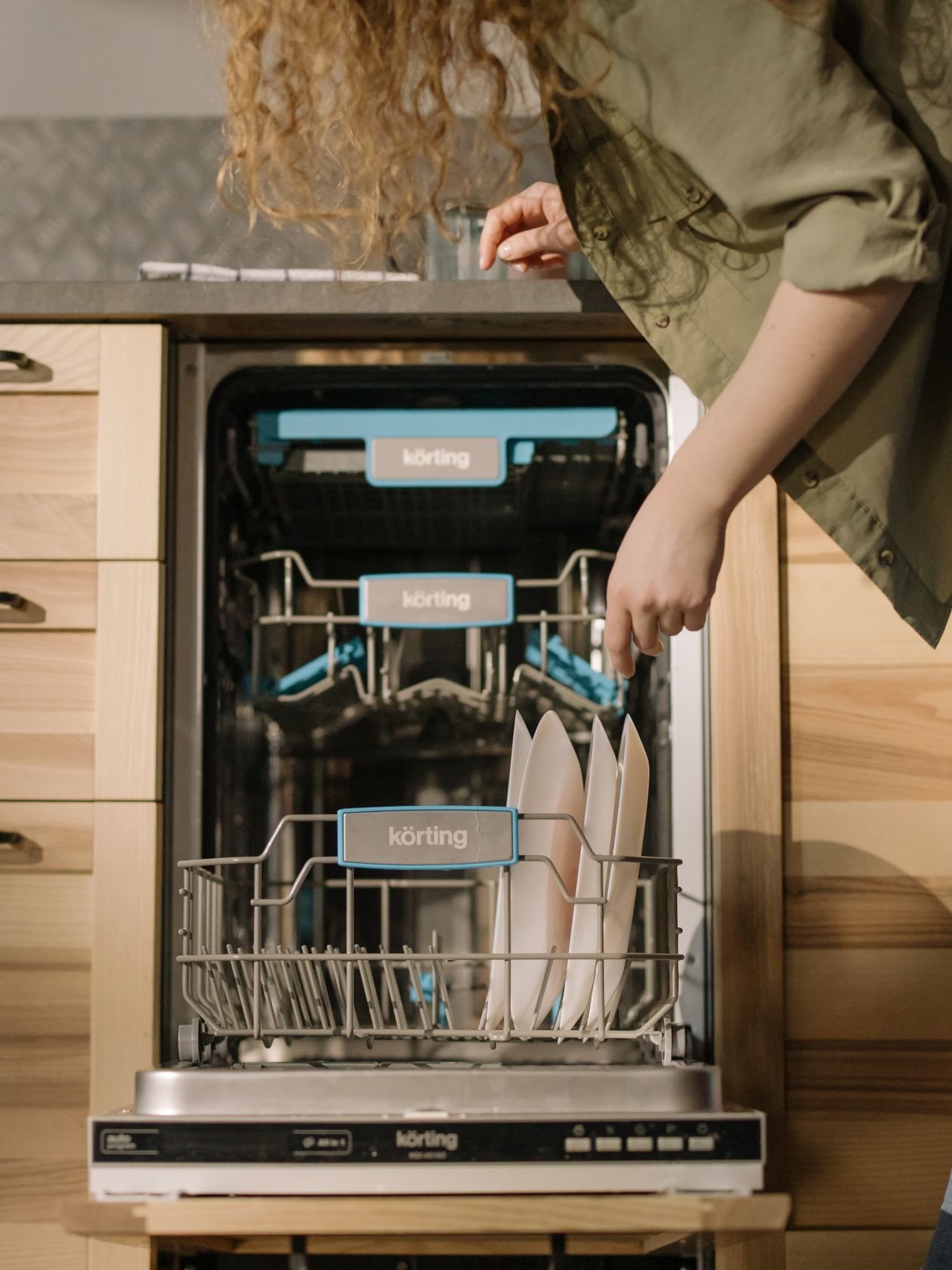
For a properly installed system, the answer is yes. A dishwasher does not drain all at once. It pumps water out several times per cycle, after the pre-wash, the main wash and each rinse. Between those drain events, the drain line is mostly empty, so a few seconds of disposal use rarely competes with the dishwasher at all.
Even when both drain at the same moment, the flow is modest. The dishwasher pump pushes water through a small hose, and the disposal sends ground food and tap water down the same pipe. A clear drain handles both without trouble.
When Running Them Together Causes Problems
The trouble starts when something in the shared path is already partly blocked. Watch for these situations:
- The disposal is jammed or full of food. The dishwasher’s water enters the disposal’s grinding chamber. If that chamber is packed with peels or rice, the water has nowhere to go.
- The drain below the disposal is slow. A partial clog in the trap or branch line can push water back up into the sink or into the dishwasher tub.
- The drain hose sits too low. Without an air gap or high loop, sink water can flow backward into the dishwasher.
- Both machines share one overloaded circuit. If the breaker trips when you run them together, the wiring needs attention (more on that below).
If none of these apply, you can use the disposal whenever you need it, even mid-cycle.
How a Garbage Disposal and Dishwasher Are Connected
Understanding the setup makes troubleshooting much easier. In a typical U.S. kitchen, the water takes this path:
- The dishwasher’s drain pump pushes water into a flexible drain hose.
- The hose rises to an air gap on the countertop or to a high loop fastened under the counter.
- From there, it drops down and connects to the dishwasher inlet on the side of the disposal.
- The water enters the disposal’s grinding chamber and exits through the disposal’s outlet pipe.
- It passes through the sink trap and into your home’s drain line.
Because the dishwasher empties into the disposal, the garbage disposal and dishwasher act as one system. The condition of the disposal directly affects how well the dishwasher drains. For a full walkthrough of the pipe layout, see our guide on how to plumb a kitchen sink with a disposal and dishwasher.
The Knockout Plug on a New Disposal
New disposals ship with a plastic knockout plug sealing the dishwasher inlet. It must be removed before you connect the drain hose. The usual method is to tap it out with a screwdriver and hammer, then reach into the grinding chamber and take the loose plug out. If you skip this step, the dishwasher will not drain at all. That is the most common reason a dishwasher stops draining right after a new disposal goes in.
Air Gap vs. High Loop: What Code Requires
Both devices stop dirty sink water from flowing backward into your clean dishes. Which one you need depends on your local plumbing code:
| Code | What it requires | Where you see it |
|---|---|---|
| Uniform Plumbing Code (UPC) | A listed air gap fitting before the dishwasher connects to a drain or disposal | California and several Western states |
| International Residential Code (IRC) | A drain hose that rises to the underside of the counter and is fastened there (high loop) | Many other states, subject to local amendments |
Home inspectors often flag this detail. Structure Tech Home Inspections notes that the UPC wording says no domestic dishwasher shall connect to a drainage system or food waste disposer without an approved air gap fitting. Local rules vary, so check with your city’s building department before you change the drain.
Best Practice: Run the Disposal Before the Dishwasher
The easiest way to avoid backups is to clear the disposal before you press start. This takes less than a minute:
- Scrape large food scraps into the trash, not the sink.
- Turn on a steady stream of cold water.
- Run the disposal until the grinding sound turns smooth.
- Turn the disposal off and let the water run a few more seconds to flush the pipe.
- Start the dishwasher.
This matches InSinkErator’s own guidance. The manufacturer advises you to run cool water before turning the disposal on and to let it run briefly afterward to flush the drain. The company also warns never to put fats, oils or grease down a disposal. That warning matters more when a dishwasher shares the line, because hot dishwasher water can carry melted grease downstream, where it cools and hardens.
Do You Need a Garbage Disposal With a Dishwasher?
No. A dishwasher works fine without a disposal. Instead of draining into the disposal’s side inlet, the hose connects to a dishwasher branch tailpiece. This is a short pipe under the sink drain with a small side port for the hose. The same air gap or high loop rules still apply.
Here is how the two setups compare:
| Factor | Dishwasher drains into disposal | Dishwasher drains into branch tailpiece |
|---|---|---|
| Food scraps from dishwasher | Ground up again by the disposal | Go straight to the trap, so the dishwasher filter matters more |
| Main clog risk | A jammed or packed disposal | A greasy or blocked sink trap |
| Installation | Remove the knockout plug and attach the hose | Replace the tailpiece with a branch version |
| Cost | Requires buying and wiring a disposal | A branch tailpiece is an inexpensive part |
If you have a septic system, ask your septic professional before adding a disposal, since ground food adds solids to the tank. Without a disposal, clean your dishwasher filter regularly. Our guide on how to change a dishwasher filter covers the steps.
Signs Your Garbage Disposal and Dishwasher Setup Has a Problem
Use this quick table to match a symptom to its likely cause:
| Symptom | Likely cause | What to do |
|---|---|---|
| Dishwasher will not drain after a new disposal was installed | Knockout plug still in place | Disconnect the hose, knock out the plug and remove it from the chamber |
| Dirty water backs up into the sink when the dishwasher drains | Clogged disposal or slow trap | Run the disposal with cold water, then clear the trap if needed |
| Standing water in the bottom of the dishwasher | Kinked or clogged drain hose, or full disposal | Clear the disposal and inspect the hose |
| Water leaking from the countertop air gap | Debris inside the air gap or a blocked hose to the disposal | Pull off the cap and clean the air gap |
| Sour smell from the dishwasher | Food residue in the hose or filter | Clean the filter and flush the drain hose |
| Breaker trips when both run | Shared or overloaded circuit | Have a licensed electrician check the wiring |
For hose problems, follow our step-by-step guide on how to clean a dishwasher drain hose. If the smell keeps coming back, read how to keep the dishwasher from smelling between washes.
Can a Garbage Disposal and Dishwasher Share a Circuit?
The plumbing may be shared, but the wiring deserves a separate look. Both appliances draw real power. The disposal motor pulls a surge when it starts, and the dishwasher heats water and runs a pump. Whether they can share one circuit depends on their ratings and your local electrical code.
A simple test tells you a lot. If the breaker trips only when both run together, the circuit is likely overloaded. Stop using them at the same time and call a licensed electrician. Do not swap in a bigger breaker yourself, since the wire size must match the breaker rating.
Maintenance Tips to Keep Both Draining Smoothly
A few habits keep your garbage disposal and dishwasher working well together:
- Feed the disposal small amounts: add scraps gradually with cold water running.
- Keep grease out: pour cooled fat into a can and throw it away.
- Avoid fibrous and starchy scraps: celery strings, potato peels and coffee grounds can pack the chamber.
- Clean the dishwasher filter monthly: check it more often if you rarely pre-rinse dishes.
- Clean the air gap cap: pop it off every few months and rinse out any debris.
- Freshen the sink drain: see our tips on getting rid of kitchen sink smells.
If you notice water pooling under the cabinet, act quickly. Our guide to what causes a dishwasher to leak walks through the most common fixes.
When to Call a Plumber
Many drain issues are easy DIY fixes. Some are not. Call a licensed plumber if:
- Water backs up into the sink even after you clear the disposal and trap.
- More than one drain in the house is slow at the same time.
- You need to add an air gap or move the drain hose to meet local code.
- The disposal hums but will not turn, even after you reset it.
A plumber can check the whole garbage disposal and dishwasher drain path in one visit. That includes the branch line inside the wall, which is hard to reach on your own.
Frequently Asked Questions
Is it bad to run the garbage disposal while the dishwasher is draining?
Not if the drain is clear. The shared pipe can carry both flows. If you hear gurgling or see water rising in the sink, stop the disposal and let the dishwasher finish draining.
Why does dishwasher water come out of my garbage disposal?
The dishwasher drains through the disposal. If the disposal outlet or trap is clogged, the water comes up through the disposal opening into the sink. Clearing the disposal usually fixes it.
Why won’t my dishwasher drain after installing a new garbage disposal?
In most cases, the knockout plug was never removed from the dishwasher inlet. Disconnect the hose, knock the plug out and fish it out of the grinding chamber.
Can a dishwasher drain into a disposal without an air gap?
In areas that follow the IRC, a high loop fastened under the counter is usually accepted. In areas that follow the UPC, such as California, a listed air gap is required. Check your local code.
Should I run hot or cold water with the disposal?
Use cold water. It keeps fats solid so the disposal can grind them and move them along, rather than letting them melt and coat the pipes.
Final Thoughts
Running a garbage disposal while the dishwasher is running is fine in a well-installed kitchen. The two share a drain by design. Most problems trace back to a packed disposal, a missing knockout plug, a low drain hose or a shared electrical circuit. Get in the habit of running the disposal before you start the dishwasher, keep grease out of the sink and clean the filter regularly. Those three steps keep your garbage disposal and dishwasher draining smoothly for years.
Setting up a new dishwasher too? Our guide on how to connect a dishwasher to the water supply covers the other half of the installation.

Hey, My name is MAMON. I am a SEO content creator and affiliate marketer with over 8 years of experience. I create honest product reviews, in-depth buying guides, and practical how-to articles to help readers make informed decisions. My mission is to provide trustworthy, research-backed content that delivers real value.
Leave a Reply