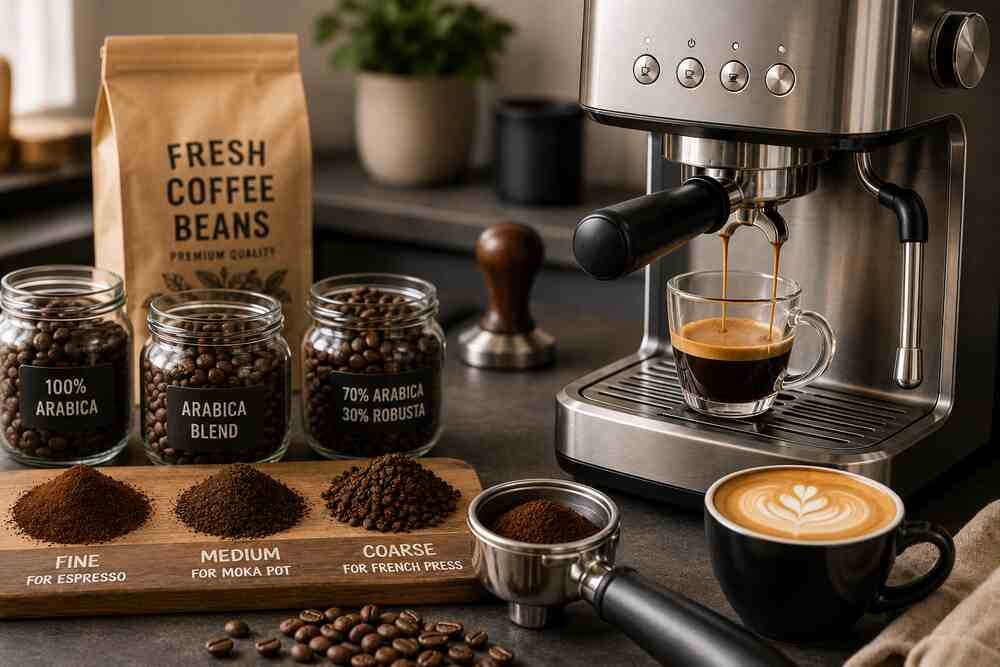
As a coffee enthusiast, nothing beats the aroma of freshly pulled espresso in the morning. Yet with so many options on the shelf, picking the right bean can feel overwhelming. Knowing what coffee to use for espresso machine brewing comes down to a handful of factors: roast level, bean species, freshness, and how finely you grind.
This guide breaks down the bean types, roast levels, and buying factors that matter most, plus the dose and water science behind a balanced shot.
Key Takeaways
- Dark-roasted, finely ground Arabica, Robusta, or Colombian beans generally work best for espresso.
- Robusta contains roughly 2.7% caffeine compared to Arabica’s 1.5%, nearly double the strength, per Lavazza’s bean comparison.
- The Specialty Coffee Association defines a double espresso shot as 14-18 grams of coffee yielding 1.7-2.4 ounces in 20-30 seconds.
- Water chemistry affects flavor as much as the beans do. The SCA recommends a total dissolved solids target of 150 mg/L.
Different Types of Coffee Beans for the Best Espresso Shot
The type of coffee you use while making espresso is crucial to getting a flavorful, balanced shot. Espresso is more concentrated than drip coffee, so bean type, roast level, and grind size all have to work together.
To find out what coffee to use for espresso machine brewing, check out the comparison table below:
| Type of coffee bean | Features | Flavor profile |
| Arabica | Mild, less acidic | Sweet, fruity flavor |
| Robusta | Higher caffeine, bitter | Woody, nutty flavor |
| Colombian | Moderate acidity, sweet | Nutty, caramel flavor |
| Ethiopian | Mild, fruity, floral | Citrusy, wine-like flavor |
| Brazilian | Smooth, nutty, low acidity | Chocolate flavor |
| Costa Rican | Sweet, brighter acidity | Fruity, citrus flavor |
| Jamaican Blue Mountain | Mild, silky | Chocolate, nutty flavor |
Arabica Coffee Beans
Arabica beans are a popular choice for espresso thanks to their mild flavor and comparatively low acidity. These beans carry higher levels of sugars and lipids than most other varieties, compounds that shape flavor and aroma directly in the cup.
They also carry less caffeine than Robusta, so you get a full-flavored espresso without quite as much of a jolt. That balance is part of why Arabica dominates specialty coffee menus across the U.S.
Robusta Coffee Beans
Prefer a shot with thicker crema, a stronger and more bitter flavor, and more caffeine? Robusta is worth trying. Crema is the reddish-brown foam layer on top of a shot, prized by espresso drinkers for its dense, creamy texture.
Robusta beans contain roughly 2.7% caffeine by weight, compared to about 1.5% for Arabica. That’s according to Lavazza’s comparison of the two species. Nearly double the caffeine means Robusta-heavy blends hit harder even in a small shot.
Colombian Coffee Beans
Colombian coffee is known for a silky, rich flavor and shows up often in espresso blends. That richness traces back to where it’s grown: high altitude, plenty of rainfall, and fertile volcanic soil. Consistent quality harvest to harvest makes it a dependable choice for espresso.
Ethiopian Coffee Beans
Coffee was first cultivated in Ethiopia, home to one of the longest continuous coffee-growing traditions in the world. Ethiopian beans work well for espresso because of a diverse flavor profile. Floral and fruity undertones pair with bright acidity that cuts through milk in a latte or cappuccino.
Brazilian Coffee Beans
Brazil produces more coffee than any other country, grown across regions with widely different climates and soil types. The mellow, nutty flavor and low acidity of Brazilian coffee make it one of the most widely used beans in the world. It’s also frequently cheaper than other origins, a practical everyday option.
Stocking an automatic espresso machine and want something forgiving and consistent? Brazilian beans are a solid starting point.
Costa Rican Coffee Beans
Costa Rica is known for high-quality Arabica production. Its beans suit drinkers who want an espresso that’s flavorful and well balanced, with hints of citrus and chocolate.
Jamaican Blue Mountain
Jamaican Blue Mountain should be your first pick for a premium, high-end coffee. The distinctive flavor profile is well known: a mild, smooth taste with hints of chocolate and nuts, without the harsh bitterness some drinkers associate with darker roasts.
This coffee grows only in the Blue Mountains of Jamaica, a region famous for its cool climate and fertile soil, ideal conditions for slow-maturing, flavorful cherries.

What Coffee to Use for Espresso Machine Brewing: Factors That Matter
When deciding what coffee to use for espresso machine brewing, a few variables deserve attention before you even think about brand names.
Roast level
Flavor depends heavily on how dark the beans are roasted. Lighter roasts lean subtle and delicate. Darker roasts bring a bolder, more intense flavor that many drinkers associate with classic espresso.
Bean species
Arabica and Robusta carry different flavor profiles and acidity levels. Weigh your taste preferences against how you’ll actually use the espresso, whether that’s straight shots or milk-based drinks that can handle a stronger, more bitter base.
Freshness
Freshly roasted coffee produces noticeably better espresso. The aromatic oils and gases that carry flavor start breaking down soon after roasting. Buy beans roasted within the last two to three weeks, and use them within a month for the best crema and flavor.
Grind size
Grind size affects flavor and extraction more than almost any other variable you control at home. Espresso needs a fine, consistent grind, closer to table salt than sand. Uneven particle sizes create channeling, where water rushes through gaps in the coffee bed instead of flowing evenly. A 2024 study in the journal Scientific Reports found that the share of ultra-fine grind particles measurably affects flow rate and extraction yield. That’s why a quality burr grinder matters as much as the beans themselves.
Price
Coffee beans range widely in price, and a higher price tag doesn’t guarantee better quality. Set a realistic budget and expect to try a few bags before settling on a favorite.
Single origin or blend
A single-origin bean has a more distinctive, traceable flavor. A blend combines beans from multiple regions for a more complex cup. Neither is objectively better; it’s a matter of taste.
Country of origin
Beans from different regions carry different flavor traits. South American beans typically lean nutty and chocolatey, while many African beans lean sweeter and more floral.
Which Roast Level Is Best Suited for Espresso?
Roast level is one of the biggest factors shaping the final flavor of your espresso. There are three basic roast levels, light, medium, and dark, each with a distinct profile. The table below breaks down color, flavor, and best use case for each.
| Level of Roast | Color | Flavor | Best For |
| Light | Pale brown | Higher acidity, fruity or floral notes, lighter body | Drinkers who want mild sweetness and lighter texture |
| Medium | Medium brown | Balanced acidity, blend of sweetness and gentle bitterness | A balanced profile with more body than light roasts |
| Dark | Dark brown, slightly oily | Lower acidity, bold, smoky-sweet bitterness | Drinkers who want a robust, powerful shot |
Dose, Ratio, and Time: The Science Behind a Balanced Shot
Bean choice only gets you halfway there. Dose and brew time matter just as much. The Specialty Coffee Association defines a standard double shot as 14-18 grams of ground coffee producing roughly 1.7-2.4 ounces (50-70ml) of espresso in 20-30 seconds. That’s per the SCA’s own definition of espresso. A single shot uses about half that: 7-9 grams in, 25-35ml out.
A shot pulling faster than 20 seconds usually means the grind is too coarse or the dose too light, giving a thin, sour cup. Running past 30 seconds often signals too fine a grind, pushing the shot toward bitter. A scale and timer take the guesswork out of dialing in whatever beans you’re using.
Water Quality: The Overlooked Ingredient
Water makes up roughly 98% of every espresso shot, so mineral content matters more than most home baristas realize. The SCA’s water guidance targets 150 mg/L total dissolved solids, with an acceptable range of 75-250 mg/L, and effectively zero chlorine, since even trace amounts create off flavors.
If your tap water tastes off on its own, it will affect your espresso no matter how good the beans are. A basic carbon filter pitcher solves this for most households.
Recommended Coffee Brands for Espresso Machines: Top Picks
A satisfying cup of espresso starts with the right beans. These are a few top-rated options among U.S. buyers:
- Blue Bottle Coffee Bella Donovan: Silky, smooth texture with a strongly chocolaty flavor, made from beans sourced from Brazil, Guatemala, and Ethiopia.
- Lavazza Super Crema Espresso: A blend of Arabica and Robusta beans, smooth and creamy, with notes of honey and almond.
- Intelligentsia Black Cat Espresso: A dark, refined blend with berry and dark chocolate undertones, made from African and Latin American beans.
Common Mistakes When Choosing Coffee for Your Espresso Machine
The most common mistake is buying pre-ground coffee labeled “espresso roast” without checking the roast date. Pre-ground coffee loses its aromatic compounds within days. A second mistake is using the same grind size across every bag instead of adjusting for freshness. Skipping a scale is a third misstep; eyeballing your dose makes a shot hard to repeat.
Watch: How to Choose the Right Espresso Beans
This walkthrough covers roast level and freshness cues in more visual detail than text alone. Once you’ve settled on beans, dialing in your machine’s settings is the next step. Our guide on how to work an espresso machine covers the brewing process itself, from dosing to pulling the shot.
Storing Beans for Peak Freshness
How you store beans matters almost as much as the beans themselves. Keep them in a cool, dark cabinet inside an airtight, opaque container, away from heat, light, and moisture. Buy smaller quantities you’ll use within two to four weeks. Skip the freezer for daily use, since temperature swings introduce condensation that dulls flavor.
Still shopping for a machine to pair with your beans? Our buying guide on what to look for in an espresso machine covers the specs worth prioritizing.
Frequently Asked Questions About What Coffee to Use for Espresso Machine Brewing
How should I store my coffee beans?
Keep beans in a cool, dark spot inside an airtight, opaque container. This keeps flavor and freshness intact far longer than a bag left on the counter.
What size grind should I use for my espresso machine?
Espresso machines work best with a fine, consistent grind, similar in texture to table salt. This helps draw out flavor and aroma evenly for a rich, creamy shot.
Is it necessary to use freshly roasted coffee beans?
Yes. Beans roasted within the last two to three weeks produce noticeably better crema and flavor than stale beans. For maximum freshness, consider a home roaster paired with the best espresso machine you can afford.
Can I use regular drip coffee beans in my espresso machine?
You can, but results are usually underwhelming. Espresso needs a much finer grind and typically benefits from a darker roast, so a bag not intended for espresso often produces a thin, sour shot.
Does the type of coffee bean affect crema?
Yes. Robusta beans and darker roasts generally produce thicker, longer-lasting crema than lighter-roasted Arabica, thanks to differences in oil content and how the beans behave under pressure.
Final Words
Picking the right beans is essential for getting the best shot out of your espresso machine. Knowing what coffee to use for espresso machine brewing can make a real difference in the taste and quality of every cup you pull.
Start producing great espresso at home like a pro by understanding the characteristics of different beans, alongside the dose, grind, and water variables that shape extraction. Freshness and grind size matter just as much as the bean itself.
Next time you’re shopping, factor in roast level, bean species, and roast date. For more on matching equipment to your beans, see our guide to espresso machine pricing.

Hey, My name is MAMON. I am a SEO content creator and affiliate marketer with over 8 years of experience. I create honest product reviews, in-depth buying guides, and practical how-to articles to help readers make informed decisions. My mission is to provide trustworthy, research-backed content that delivers real value.
Leave a Reply