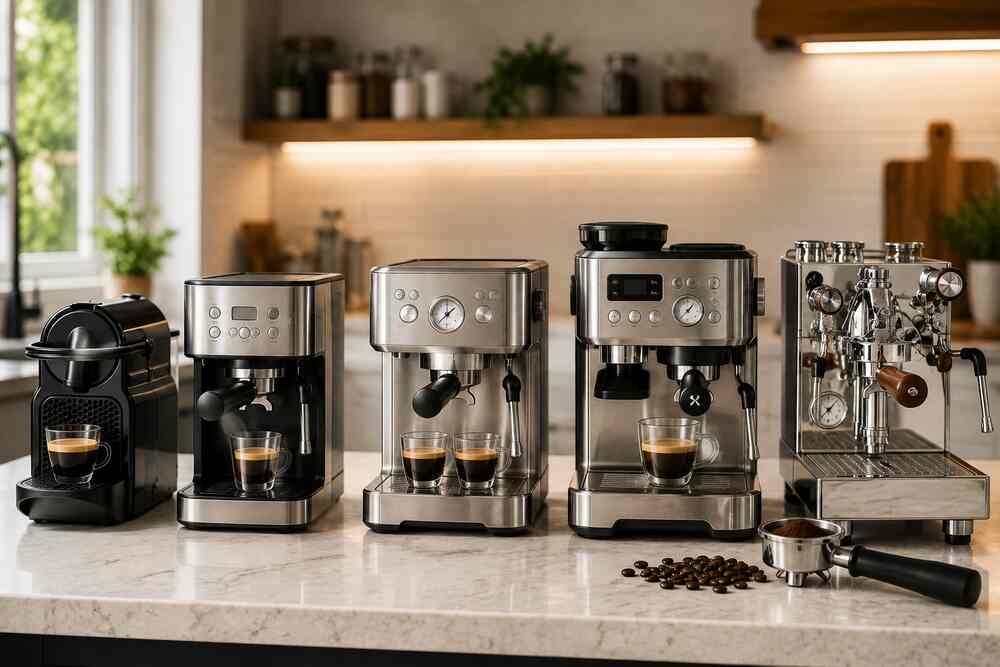
Buying an espresso machine will let you brew a cup exactly the way you like it, any time you want, without a coffee shop line. But the question everyone asks before buying is simple: how much does an espresso machine cost? There isn’t one number. Price depends heavily on the machine’s boiler type, build quality, and whether you’re buying for home or commercial use. Generally, a home espresso machine runs $150 to $3,000-plus, while commercial machines run $500 to $10,000 or more.
This guide breaks that range down by tier, so you know roughly what you’re getting at each price point. It also covers the specific factors that push a machine’s price up or down.
Key Takeaways
- Home espresso machines span roughly $150 to $3,000-plus. The $300-$700 range is the sweet spot for most serious home users.
- Commercial machines start around $500 for a basic single-group unit and reach $9,000-10,000+ for multi-group café setups.
- Boiler type matters more than almost any other spec: single boiler, heat exchanger, and dual boiler machines each sit at a different price tier.
- Budgeting 25-40% of your machine’s cost toward a quality grinder makes a bigger difference in cup quality than most people expect.
How Much Does an Espresso Machine Cost? (Quick Answer)
Espresso machine cost varies depending on the boiler type, size, materials, brand, and included features. Generally, home espresso machines range from about $150 to $3,000 or more. Commercial machines used in cafés and restaurants range from roughly $500 to $10,000-plus. Where you land in that range depends mostly on two things: how serious you are about the hobby, and how much daily volume the machine needs to handle.
Home Espresso Machine Price Tiers
Home machines break down into a handful of fairly consistent price bands, each with real tradeoffs in build quality and consistency.
- Under $300 (entry-level). Basic semi-automatics or simple super-automatics. Expect compromises on temperature stability and steam power, and a shorter lifespan than pricier options.
- $300-$700 (prosumer sweet spot). Solid semi-automatics with a PID temperature controller, a decent steam wand, and rebuildable internal parts. This tier is where most home users committed to the craft land.
- $700-$1,500 (premium prosumer). Heat exchanger or entry dual-boiler machines with noticeably better shot consistency and stronger milk steaming.
- $1,500-$3,000 (high-end prosumer). Dual-boiler machines, top-tier super-automatics, and quality lever machines capable of café-level results with practice.
- $3,000-plus (commercial-grade home machines). Built for decades of daily use. Diminishing returns for casual drinkers, but real value for heavy users or aspiring baristas.
Still deciding what to buy? Our roundup of the best budget espresso machines covers specific models worth considering in the lower tiers.
Commercial Espresso Machine Costs
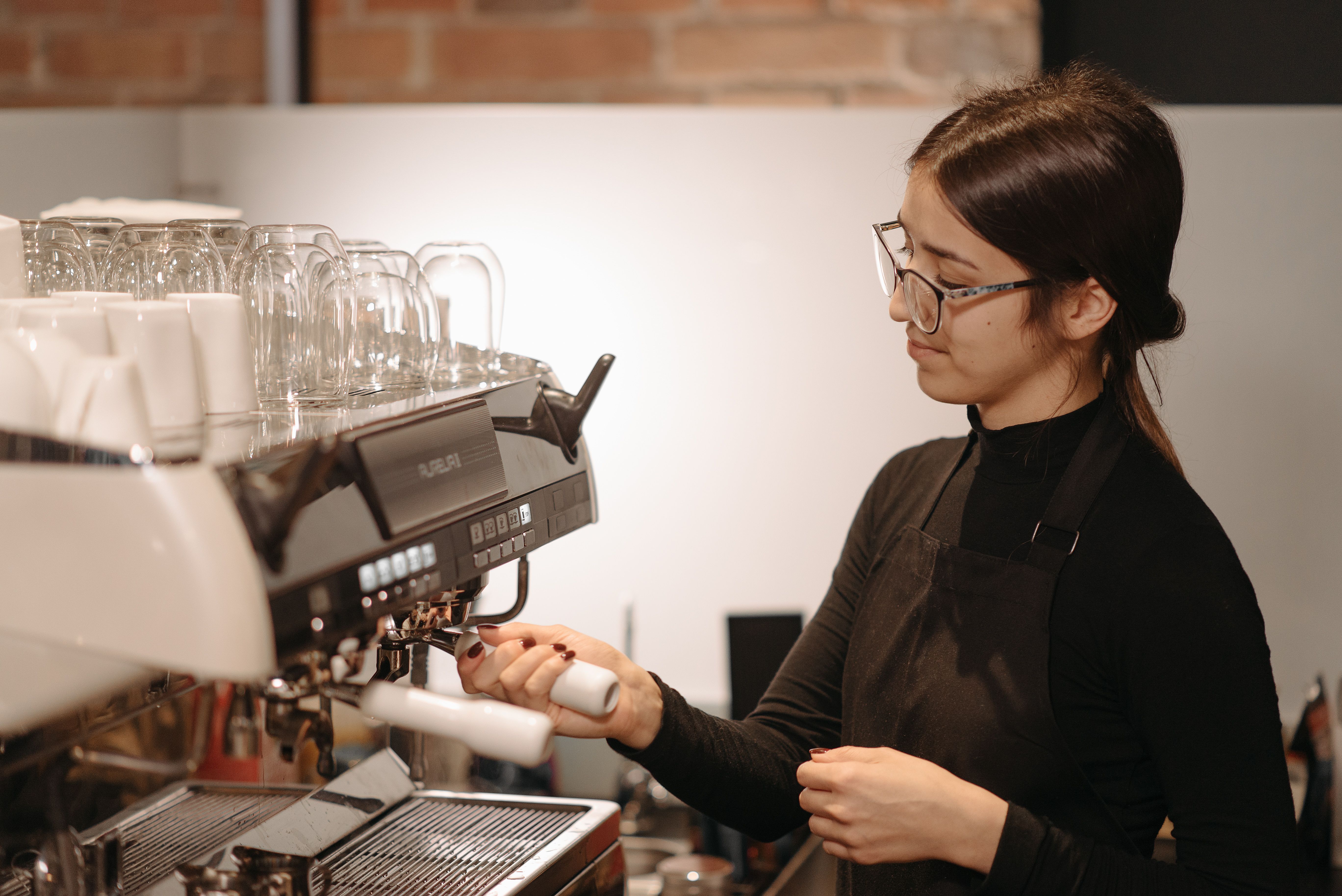
Commercial machines cost more across the board since they’re built to run all day, every day, without breaking down. A basic single-group commercial machine starts around $500-650. Mid-range two-group machines commonly run $2,000-3,000, and high-end multi-group setups for busy cafés can reach $9,000-10,000 or more, according to pricing data from Corner Coffee Store’s commercial pricing guide. Beyond group count, commercial pricing also climbs with electronic displays and direct plumbing hookups instead of a water reservoir. Higher-end steam wands built for constant milk steaming add to the total too.
Planning to open or equip a café?
What Actually Drives the Price of an Espresso Machine?
A handful of specific factors explain most of the price gap between a $200 machine and a $2,000 one. Understanding them helps explain how much does an espresso machine cost at each tier.
Boiler type
This is the single biggest price driver. Single-boiler machines are cheapest but can’t brew and steam milk at the same time. Heat exchanger machines use one larger boiler for both functions, trading some brew temperature precision for strong, simultaneous steaming power. Dual-boiler machines use separate boilers for brewing and steaming instead. That’s why premium models like the ECM Synchronika or La Marzocco Linea Mini can hold brew temperature within a degree of target, according to Clive Coffee’s boiler comparison. That precision comes at a real cost premium.
| Boiler Type | Brew + Steam Together? | Typical Price Impact |
|---|---|---|
| Single boiler | No, one at a time | Lowest cost |
| Heat exchanger | Yes, shared boiler | Moderate cost |
| Dual boiler | Yes, separate boilers | Highest cost |
Quality of construction
Materials used for the internal parts, frame, and outer casing matter a lot. Machines built with stainless steel internals typically cost more than those using cast aluminum or plastic components. They also resist corrosion and last considerably longer under daily use.
Machine type
Manual, semi-automatic, automatic, and super-automatic machines all sit at different price points. Manual machines demand skill but stay relatively affordable, since they rely on the user’s own arm strength instead of an internal pump. Semi-automatics split the difference, using a pump for pressure while leaving grind, dose, and tamp to the user. Super-automatics, which grind, tamp, and brew at the push of one button, usually carry the highest price tag for the added convenience.
Features and functionality
Digital displays, programmable shot memory, custom grind settings, and built-in milk frothers all add to the sticker price. A machine that only grinds, brews, and dispenses will always cost less. One that also stores your preferred shot profile or texture-adjusts steamed milk automatically costs more.
Warranty length
Longer warranty and guarantee periods generally correlate with a higher price tag, partly because manufacturers price in the expected cost of honoring that coverage on higher-quality components.
Additional Costs Beyond the Machine Itself
The sticker price on an espresso machine is rarely the full story. A quality burr grinder is the single most important add-on. Skimping there undercuts even an expensive machine, since inconsistent grounds produce inconsistent shots no matter how good the boiler is. Budget roughly 25-40% of your machine’s price for a grinder that can hit a consistently fine, even grind.
Beyond the grinder, plan for a few smaller recurring costs. Descaling solution every one to three months, a tamper if one isn’t included, a milk frothing pitcher, and a water filter if your tap water is hard all add up. Commercial buyers should also factor in installation. Machines that connect directly to a plumbing line instead of using a water reservoir often require a licensed plumber to hook up the water and drain lines. That adds a real, sometimes overlooked cost on top of the machine itself.
Buying New vs. Refurbished or Used
A certified refurbished or gently used machine from a reputable specialty retailer can cut 20-40% off the price of buying new. That’s especially true in the $700-and-up prosumer tiers, where components are built to be rebuilt rather than replaced. The tradeoff is a shorter or nonexistent warranty compared to a new unit, and no guarantee of prior maintenance history unless the seller documents it. For a first machine, buying new with a full warranty is usually the safer call. Once you know what you’re looking for, a refurbished upgrade from an established seller can be a smart way to get into a higher tier for less.
Home vs. Commercial: Which Do You Actually Need?
Most people shopping at home don’t need a commercial machine, even if the idea of café-grade equipment sounds appealing. A well-built $400-800 prosumer machine paired with a decent grinder outperforms a cheap commercial unit for typical household volume. Commercial machines make sense once you’re pulling dozens of shots a day, not just one or two each morning. Still getting comfortable with the basics? Our guide on how to work an espresso machine is a good next stop before you spend more on equipment.
Watch: How Much Should You Spend on an Espresso Machine?
This comparison walks through real machines at three different price points. It helps put the tiers above into a more concrete, visual context.
Frequently Asked Questions About How Much Does an Espresso Machine Cost
What is a reasonable price for a first espresso machine?
Somewhere in the $300-$700 range gets you a solid semi-automatic with a PID and a usable steam wand. It’s enough machine to learn proper technique without immediately outgrowing it.
Why are commercial espresso machines so much more expensive than home models?
Commercial machines are built for continuous daily use, often for years without a break. That’s why they use heavier-duty components, larger boilers, and multiple brew groups. That durability and volume capacity costs significantly more to manufacture.
Is a more expensive espresso machine always better?
Not necessarily for casual drinkers. Spending above $3,000 shows diminishing returns unless you’re pulling many shots a day or planning to develop serious barista skills. A well-chosen $500-800 machine covers most home needs.
Do I need to spend a lot on a grinder too?
Yes, more than most beginners expect. A good rule of thumb is budgeting 25-40% of your machine’s cost toward the grinder, since grind consistency affects shot quality as much as the machine itself.
What’s the cheapest way to get into espresso at home?
A manual lever machine or a basic semi-automatic under $300 is the lowest entry point. Both require more hands-on skill to get consistent results, but they keep the upfront cost down significantly.
Does a higher price always mean a bigger boiler?
Not always. Boiler size matters, but boiler type (single, heat exchanger, or dual) typically has a bigger impact on price. Dual-boiler designs require more components and more precise engineering than size alone would suggest.
How much does it cost to install a commercial espresso machine?
Beyond the machine’s purchase price, professional plumbing installation for a direct-connect commercial unit commonly adds several hundred dollars. The exact amount depends on how far the machine sits from existing water and drain lines. Reservoir-fed models skip this cost entirely.
Are refurbished espresso machines worth buying?
Often, yes, if you buy from a reputable specialty retailer that tests and documents the refurbishment. It’s a practical way to reach a higher performance tier for less money, though you should expect a shorter warranty than a new machine.
Does buying a bundle with a grinder save money?
Sometimes. Manufacturer bundles can shave a modest amount off buying the two pieces separately, but the included grinder is often a step below what a dedicated standalone grinder at the same price would offer. Compare the bundle’s grinder specs against a top standalone option before assuming the bundle is the better deal.
Conclusion
So, how much does an espresso machine cost? For most home users, expect to spend somewhere between $300 and $1,500 for a machine that delivers consistent, café-quality shots for years. Commercial buyers should budget at least $2,000 for anything built to handle daily café volume. Whatever tier you land in, matching the machine to how often you’ll actually use it matters more. That beats chasing the highest spec sheet you can afford.
Hey, My name is MAMON. I am a SEO content creator and affiliate marketer with over 8 years of experience. I create honest product reviews, in-depth buying guides, and practical how-to articles to help readers make informed decisions. My mission is to provide trustworthy, research-backed content that delivers real value.
Leave a Reply