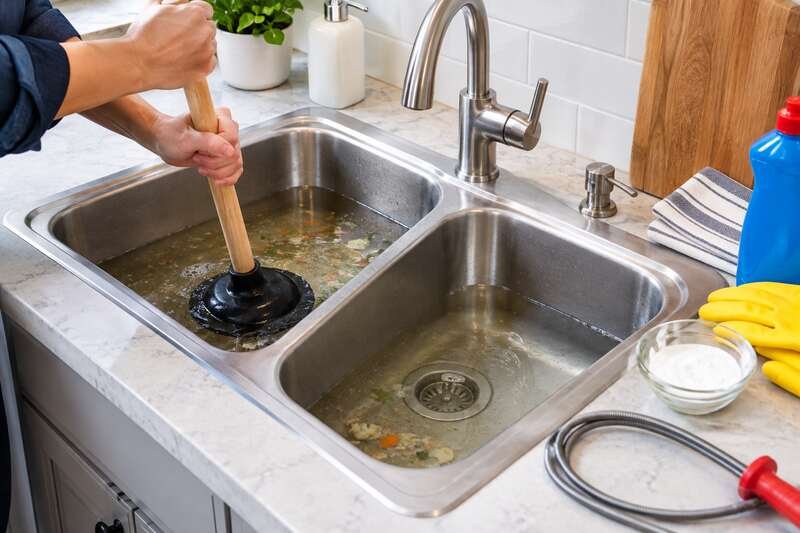
You turn on the faucet, glance down, and both sides of your double kitchen sink are sitting there full of gray, greasy standing water. It’s one of the more frustrating kitchen problems, because a double sink often clogs in a way a single sink never does: fix one side, and the water just backs up through the other. Knowing how to unclog a double kitchen sink means understanding why both bowls are connected in the first place, then working through methods in the right order so you don’t make the clog worse.
Key Takeaways
- Most double kitchen sinks share a single drain line and trap, so a clog anywhere in that shared line can send water backing up into both basins at once.
- Start with the gentlest fix first: a kettle of near-boiling water and dish soap clears many grease clogs without tools.
- When you plunge a double sink, you must seal off the other drain first, or you’ll just push air and water back and forth without building any pressure.
- Never pour fats, oils, or grease down the drain. Clemson Cooperative Extension notes that hot water and soap won’t stop grease from re-solidifying deeper in the pipe.

Why a Double Kitchen Sink Clogs on Both Sides
A double kitchen sink usually has two separate drain openings that merge into one shared trap and drain line underneath the cabinet. That’s the detail that trips people up: if the clog sits in that shared section, water backing up has nowhere to go but up into whichever basin isn’t in use, even if that side’s own drain is perfectly clear.
A few things typically cause the blockage in the first place:
Grease and Cooking Fat
Fats, oils, and grease look liquid when they go down the drain hot, but they cool and solidify inside the pipe. Over time that buildup narrows the pipe until even a small amount of food debris is enough to block it completely.
Food Scraps and Coffee Grounds
Rice, pasta, vegetable peels, and coffee grounds don’t break down in a drain line the way they do in a garbage disposal. They tend to settle at bends in the pipe, especially in the P-trap under the sink.
Soap Scum and Mineral Buildup
Dish soap residue combines with minerals in hard water to form a waxy film on the inside of pipes. It rarely clogs a drain on its own, but it narrows the passage enough that other debris catches on it.
A Blocked or Poorly Vented Drain Line
Every drain system relies on a vent pipe to let air in so water can flow out smoothly. If that vent is blocked or the line was installed without proper venting, water can gurgle and back up into the opposite sink even when there’s no solid clog at all.
A Damaged or Misaligned Pipe
Older galvanized steel pipes can corrode and narrow from the inside, and shifted or improperly sloped PVC sections can trap standing water permanently. If your clogs keep coming back no matter what you try, this is worth ruling out.
Figuring Out Which Side Is Actually Clogged
Before you start working through fixes, run a quick test on each side separately. Fill one basin about a third full and let it drain by itself, then repeat on the other side. If both sides drain slowly or back up into each other, the blockage is almost certainly in the shared trap or drain line rather than in either sink’s individual drain. If only one side is slow while the other drains fine, the clog is more likely isolated to that basin’s own connection before it joins the shared line, which usually means a quicker fix.
Before You Start: What Not to Do
A few habits make double sink clogs worse instead of better.
- Don’t reach for a chemical drain cleaner if you have a garbage disposal on either side. The caustic chemicals can pit and corrode the disposal’s metal components over time.
- Don’t run a metal drain snake into a disposal unit. It’s easy to damage the impellers.
- Don’t layer multiple chemical cleaners on top of each other if the first one doesn’t work. Mixing certain drain cleaner formulas can produce dangerous fumes.
- Don’t skip bailing out standing water before you plunge. A sink that’s too full just splashes instead of building pressure.
How to Unclog a Double Kitchen Sink: Step-by-Step Methods
Work through these in order, starting with the least invasive option. Most double sink clogs clear in the first two or three steps.
1. Bail Out the Standing Water
Before trying anything else, scoop out as much standing water as you can with a cup or small bowl into a bucket. Every method below works better once the water level is down to just what’s sitting in the trap.
2. Try Boiling Water and Dish Soap
This is the gentlest fix for how to unclog a double kitchen sink and it works on a surprising number of grease-based clogs.
- Squeeze a generous amount of dish soap directly into the drain.
- Bring a full kettle of water to a near boil, not a rolling boil, which can crack some older pipes, and pour it slowly down the drain in two or three stages, giving it a minute to work between pours.
- Run the hot tap for a minute to check whether the water is draining freely again.
3. Use Baking Soda and Vinegar
If hot water alone doesn’t clear it, this combination can help loosen grease and soap scum without harsh chemicals.
- Pour about half a cup of baking soda into the drain.
- Follow with half a cup of white vinegar and cover the drain opening. The mixture will fizz.
- Let it sit for 15-20 minutes, then flush with hot water.
4. Plunge the Sink Correctly
This is the step people get wrong most often when learning how to unclog a double kitchen sink. Because both basins share a drain line, plunging one side without sealing the other just pushes air and water back and forth instead of building real pressure.
- Use a wet rag or a wet cloth to plug the drain opening on the side you’re not plunging. Press it in firmly so it seals.
- Fill the clogged side with a few inches of water so the plunger’s rubber cup stays fully submerged.
- Center the plunger over the drain and push down slowly to force out the air first, then plunge with firm, quick strokes for about 15-20 seconds.
- Pull the plunger away and check whether water drains. Repeat two or three times if needed before moving on.
5. Clean Out the P-Trap
If plunging doesn’t clear it, the clog is likely sitting in the trap itself, and this step usually resolves how to unclog a double kitchen sink for good.
- Place a bucket under the P-trap, the U-shaped pipe beneath the sink, to catch water and debris.
- Loosen the slip nuts on either end of the trap by hand or with channel-lock pliers, then remove the trap.
- Empty the trap into the bucket and check for clogs, then rinse it out and inspect both openings it connects to.
- Reattach the trap, hand-tightening the slip nuts, then run water to check for leaks and drainage.
6. Snake the Drain Line
For a clog further down the line, a hand-crank drain auger (sometimes called a plumber’s snake) can reach further than a plunger.
- Feed the cable into the drain opening, cranking the handle to advance it.
- When you feel resistance, crank gently to work the tip through or around the blockage rather than forcing it.
- Once resistance eases, pull the cable back slowly and run hot water to flush any loosened debris through.
7. Try a Commercial Drain Cleaner as a Last Resort
Enzyme-based or gel drain cleaners can help with lighter grease clogs. Follow the product’s directions exactly, don’t exceed the recommended amount, and skip this step entirely if you have a garbage disposal on either side or a septic system, unless the label specifically says it’s safe for both.
When to Call a Professional Plumber
Some double sink clogs are beyond a DIY fix. Call a licensed plumber if:
- Water backs up into both sinks no matter which drain you use, which often points to a clog further down the main line rather than in either sink’s own trap.
- You’ve tried plunging, snaking, and cleaning the trap and the clog keeps coming back within a few days.
- You notice gurgling sounds from other drains in the house, which can indicate a venting problem rather than a simple clog.
- You suspect the pipe itself is damaged, corroded, or improperly sloped.
A professional has access to motorized drain augers and video inspection cameras that can find and clear blockages a household snake can’t reach.
How to Prevent Future Double Kitchen Sink Clogs
- Never pour fats, oils, or grease down the drain. Clemson Cooperative Extension notes that hot water and soap won’t stop grease from re-solidifying deeper in the pipe, so let it cool and scrape it into the trash or a sealed container instead.
- Install and regularly clean a mesh drain strainer to catch food scraps before they reach the trap.
- Run hot water for 15-20 seconds after every dishwashing session to help flush grease before it has a chance to cool and stick to the pipe walls.
- Avoid rinsing starchy foods like rice, pasta, and oatmeal down the drain since they expand and turn gummy inside pipes.
- Pour a kettle of hot water with a squeeze of dish soap down the drain once a week as routine maintenance.
If your setup includes a disposal, our guide on how to plumb a kitchen sink with disposal and dishwasher is a useful reference for understanding how the drain lines connect. And if standing water has left your sink smelling less than fresh even after it drains, see our tips on how to get rid of smell in a kitchen sink.
Watch: How to Clear a Stubborn Kitchen Sink Clog
According to Family Handyman, working through methods from gentlest to most aggressive, rather than jumping straight to chemicals or heavy tools, is the safest way to avoid damaging your pipes while you troubleshoot.
Frequently Asked Questions
Why does my double kitchen sink back up on both sides even though I only use one?
Most double sinks share a single trap and drain line beneath the cabinet. A clog anywhere in that shared section blocks water from either side, so it backs up into whichever basin isn’t currently draining.
Is it safe to use a chemical drain cleaner in a double kitchen sink?
It can be, but only if neither side has a garbage disposal and you follow the product’s directions exactly. Chemical cleaners can corrode disposal components and are not recommended for septic systems unless the label states otherwise.
How do I plunge a double sink if I don’t have a helper to hold the other drain shut?
Press a wet rag firmly into the unused drain opening, then set something heavy like a full pot or a can of food on top of it to hold it in place while you plunge the clogged side.
What’s the fastest way to clear standing water in a double kitchen sink?
For a mild clog, dish soap followed by near-boiling water clears many grease-based blockages within a few minutes without any tools. For a full clog, bail the standing water first, then move to plunging.
How often should a double kitchen sink be cleaned to prevent clogs?
A weekly flush of hot water and dish soap, along with never pouring grease down the drain, prevents most buildup. If your household cooks with a lot of oil, cleaning out the P-trap every few months is a good habit.
Can a clogged double kitchen sink cause damage if I leave it too long?
Yes. Standing water sitting in the basin or trap for days can put pressure on the slip-nut seals and lead to slow leaks under the cabinet, and grease left to harden makes the eventual clog more stubborn to clear. It’s worth addressing standing water within a day or two rather than letting it sit.
Conclusion
A double kitchen sink clog with standing water is annoying, but it’s rarely a mystery once you understand that both basins usually share one drain line. Start gentle with hot water and dish soap, move on to a properly sealed plunge, and work your way down to the P-trap and drain snake if needed. If the clog keeps returning or spreads to other drains in the house, that’s your sign to call a licensed plumber before a simple clog turns into a bigger repair.

Hey, My name is MAMON. I am a SEO content creator and affiliate marketer with over 8 years of experience. I create honest product reviews, in-depth buying guides, and practical how-to articles to help readers make informed decisions. My mission is to provide trustworthy, research-backed content that delivers real value.
Leave a Reply