If you’re weighing a water distiller against other ways to purify your tap water, electricity is usually the first cost question that comes up. Unlike a carbon filter or reverse osmosis membrane, a distiller has to boil water to purify it, and boiling takes real power. So how much electricity does a water distiller use? For a typical countertop unit, expect around 3.2 kWh to make one gallon, which works out to roughly 55-60 cents at current U.S. electricity rates. Below, we break down exactly where that number comes from, what changes it, and how it stacks up against other appliances and purification methods.
Key Takeaways
- A popular countertop water distiller (580 watts, 5.5 hours per gallon) uses about 3.19 kWh to produce one gallon of distilled water.
- At the current U.S. average residential electricity rate of 18.44 cents per kWh, that’s roughly $0.59 per gallon, or about $215 a year if you distill a gallon daily.
- Most home countertop distillers draw between 300 and 800 watts; larger or faster models run higher.
- You can calculate any distiller’s exact cost using the same formula the U.S. Department of Energy recommends for any appliance: watts × hours ÷ 1000 × your electricity rate.
- Distillation uses more electricity than reverse osmosis or carbon filtration, but no electricity at all compared to bottled water delivery and production.
How Much Electricity Does a Water Distiller Use?
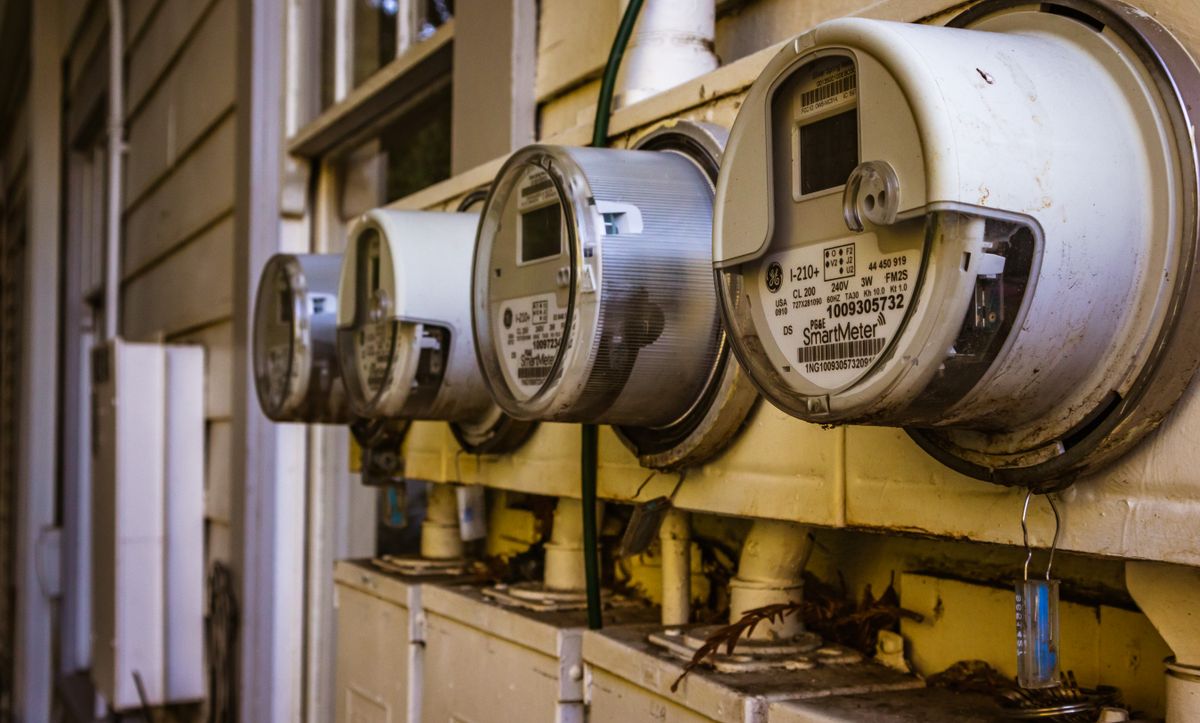
Most countertop water distillers sold in the U.S. use a heating element rated between 300 and 800 watts. One of the most popular models on the market, the Megahome countertop distiller, is rated at 580 watts and takes about 5.5 hours to distill one gallon of water. Multiplying those numbers gives the electricity used per batch:
580 watts × 5.5 hours ÷ 1,000 = 3.19 kWh per gallon.
Automatic or whole-house distillation systems that produce water continuously draw similar wattage but run for more total hours per day, so their cumulative electricity use scales up with output rather than per-gallon efficiency changing much.
How to Calculate Your Own Distiller’s Cost
The Department of Energy recommends the same basic formula for any appliance, distillers included: multiply the appliance’s wattage by the number of hours it runs, divide by 1,000 to convert to kilowatt-hours, then multiply by your local electricity rate. You can find your distiller’s wattage on its rating label or spec sheet, and your rate on a recent utility bill.
As of May 2026, the average U.S. residential electricity rate is 18.44 cents per kWh, according to the U.S. Energy Information Administration. Applying that rate to the Megahome’s 3.19 kWh per gallon gives:
3.19 kWh × $0.1844 = about $0.59 per gallon, or roughly 16 cents per liter.
Your own cost will vary with your local rate. Rates range from about 12 cents per kWh in North Dakota to over 46 cents per kWh in Hawaii, so the same distiller can cost nearly four times as much to run depending on where you live.
What Affects a Water Distiller’s Power Draw
Several factors push a distiller’s electricity use up or down:
- Heating element wattage. A higher-wattage element boils water faster but draws more power while it runs; a lower-wattage element runs longer but pulls less at any given moment. The two often roughly cancel out in total energy used.
- Batch size. Distilling a full gallon takes longer than distilling a liter, but the energy per unit of water is fairly consistent for a given machine.
- Starting water temperature. Cold tap water takes more energy to bring to a boil than water that’s already at room temperature.
- Insulation and build quality. Better-insulated boiling chambers lose less heat to the surrounding air, which can shave a modest amount off total energy use.
- Ambient temperature. Running a distiller in a cold garage or basement makes it work slightly harder than running it in a warm kitchen.
Real-World Cost Example
Here’s what a single 580-watt countertop distiller costs to run at different usage levels, using the current EIA national average rate:
| Usage | Energy Used | Estimated Cost |
|---|---|---|
| One gallon (one cycle) | 3.19 kWh | $0.59 |
| One gallon per day, for a month | ~95.7 kWh | ~$17.65 |
| One gallon per day, for a year | ~1,164 kWh | ~$214.70 |
For comparison, a single-person household distilling half a gallon a day would land closer to $107 a year, while a larger family running the distiller around the clock to keep up with demand could see costs climb toward $300-400 annually. The math scales linearly with however much water you actually distill.
How Your Cost Changes by State
Because the formula is watts × hours × rate, your state’s electricity price has as much impact on your annual cost as the distiller itself. Here’s how the same 580-watt distiller, run once daily for a gallon, plays out in a few representative states based on current EIA rate data:
| State | Rate per kWh | Annual Cost (1 gallon/day) |
|---|---|---|
| North Dakota (lowest average) | ~12.4 cents | ~$144 |
| U.S. national average | ~18.4 cents | ~$215 |
| Hawaii (highest average) | ~46.6 cents | ~$544 |
If you’re not sure what you pay, your utility bill lists your rate directly, usually in cents per kWh. Plugging that number into the same formula gives you a cost specific to your home rather than a national estimate.
Standby and Phantom Power
Most countertop distillers draw little to no power when they’re plugged in but not actively running a cycle, since the heating element only activates once you start the machine. That’s different from appliances with digital displays, Wi-Fi connectivity, or hot/cold dispensing features, which can draw a small amount of standby power around the clock. If your distiller includes extra electronics like a display panel or smart controls, unplugging it between uses, or plugging it into a switched power strip, avoids paying for power it draws while idle.
580 to 800 watts puts a water distiller in the same general range as a microwave oven or a small space heater on low, though the distiller runs for hours instead of minutes. A box fan or a few LED bulbs use a fraction of that wattage, while a hair dryer or toaster oven can briefly draw more. What sets a distiller apart isn’t how much power it pulls in a given moment, it’s how long it stays on: several hours per batch adds up to more total kWh than most appliances you run for just a few minutes at a time.
Water Distillers vs. Other Purification Methods
Distillation isn’t the most electricity-efficient way to purify water at home. Reverse osmosis systems use line water pressure rather than a heating element, so they draw little to no electricity beyond an optional booster pump. Carbon filtration, like the setups covered in our drinking water filtration system reviews, uses no electricity at all. What distillation offers in exchange for that extra energy cost is the broadest contaminant removal of any single home method, which we cover in detail in how a water distiller actually works.
Watch: Megahome Water Distiller Demo and Results
This walkthrough shows a full distillation cycle from start to finish, including how long a batch actually takes to run.
Tips to Reduce Your Distiller’s Electricity Use
- Start with warm water when possible. Less energy is needed to reach boiling if the water isn’t ice cold.
- Run full batches. A distiller uses close to the same wattage whether it’s making a liter or a full gallon, so distilling in full batches gets you more water per kWh spent.
- Keep it clean. Mineral scale on the heating element and boiling chamber forces the unit to work harder and run longer to reach the same temperature.
- Choose the right size for your household. An oversized unit running mostly empty batches wastes energy relative to a model sized for your actual daily water needs.
- Run it during off-peak hours if your utility offers time-of-use pricing, since the electricity used stays the same but the cost per kWh can be lower.
Is the Electricity Cost Worth It?
At roughly 59 cents a gallon, a water distiller costs more per gallon than a basic carbon filter pitcher and less than most bottled water. Where distillation earns its keep is contaminant removal: it’s one of the few home methods effective against heavy metals, fluoride, and biological contaminants in one pass, without ongoing filter cartridges to replace. For most households, the electricity cost is a small, predictable line item compared to what you’d spend buying the equivalent volume of bottled or delivered water.
Frequently Asked Questions
How many watts does a typical home water distiller use?
Most countertop models use between 300 and 800 watts, with 580 watts being common among popular consumer units like the Megahome.
Does a water distiller use more electricity than a refrigerator?
A refrigerator uses less wattage at any given moment but runs continuously, 24/7, all year. A distiller uses more power while it’s on but only runs for a few hours per batch, so total annual electricity use is usually much lower for the distiller.
Can I reduce how much electricity my distiller uses without buying a new one?
Yes. Descaling regularly, starting with warmer water, and running full batches instead of small partial ones all reduce the energy needed per gallon produced.
Is an automatic water distiller more expensive to run than a countertop model?
Automatic systems draw similar wattage to countertop units but often run more total hours per day to keep up with continuous demand, so their overall electricity cost tends to be higher in households that use a lot of distilled water.
How do I find my own electricity rate to calculate my cost?
Check a recent electric bill for your rate in cents per kWh, or look it up through your utility provider’s website. National averages vary significantly by state.
Does the size of the distillation batch change the cost per gallon?
Not much. Since wattage stays roughly constant throughout a cycle, the energy cost per gallon is fairly consistent whether you’re distilling one gallon or several batches back to back; you’re mainly paying for total run time.
Conclusion
So, how much electricity does a water distiller use? For a common 580-watt countertop model, about 3.19 kWh per gallon, or roughly 59 cents at current U.S. electricity rates. That’s more than reverse osmosis or carbon filtration but still a modest household expense, especially compared to what you’d spend on bottled water for the same volume. Knowing your distiller’s wattage and your local electricity rate lets you calculate your exact cost in seconds, and a few simple habits, like running full batches and descaling regularly, can keep that number as low as possible.

Hey, My name is MAMON. I am a SEO content creator and affiliate marketer with over 8 years of experience. I create honest product reviews, in-depth buying guides, and practical how-to articles to help readers make informed decisions. My mission is to provide trustworthy, research-backed content that delivers real value.
Leave a Reply