
Tap water in the U.S. meets federal safety standards, but “safe” and “contaminant-free” aren’t the same thing. Aging pipes, agricultural runoff, and naturally occurring minerals can all still show up in a glass of water, which is why more households are turning to distillation. So how does a water distiller work, exactly? In short: it boils water into steam, leaves contaminants behind, then cools the steam back into pure liquid water. Below, we break down the full process, the science behind it, the types available, and how to pick the right one.
Key Takeaways
- A water distiller boils water, captures the steam, and condenses it back into liquid, leaving heavy metals, salts, and most microbes behind in the boiling chamber.
- Distillation is one of the few home water treatments effective against arsenic, lead, fluoride, nitrates, and biological contaminants, per the U.S. EPA.
- Countertop units suit renters and small households; whole-house/automatic systems suit families who want distilled water at every tap.
- Distillation removes beneficial minerals along with contaminants, so it’s worth knowing the trade-offs before you switch.
What is a Water Distiller?
A water distiller is an appliance that purifies water by simulating a miniature version of Earth’s own water cycle. Regardless of brand, size, or price, every distiller relies on the same core method: heat water until it turns to vapor, then cool that vapor back into liquid, leaving contaminants behind. Some models are small enough for a kitchen counter; others are plumbed directly into your home’s water line.
How Does a Water Distiller Work? Step by Step
The distillation process happens in four stages inside the unit:
- Boiling. The distiller heats water in a stainless steel boiling chamber until it reaches a rolling boil.
- Evaporation. As the water boils, it converts to steam. Because most contaminants (heavy metals, salts, most bacteria) have a much higher boiling point than water, they can’t evaporate with it and stay behind in the chamber.
- Condensation. The steam travels up through a vent and into a condensing coil, where it cools and turns back into liquid water.
- Post-filtration. Most residential distillers pass the condensed water through an activated carbon filter as a final step. This catches any volatile organic compounds (VOCs) that evaporated along with the water and can trap odors before the water drips into a clean collection container.
What’s left in the collection jug is water that’s been separated from nearly everything else that was in it. The National Sanitation Foundation notes that NSF/ANSI 62-certified distillation systems heat water to the boiling point and collect the vapor as it condenses, leaving contaminants like heavy metals behind, which is the same certification standard reputable countertop and whole-house distillers are tested against.
The Science: Water Distillers Imitate Nature
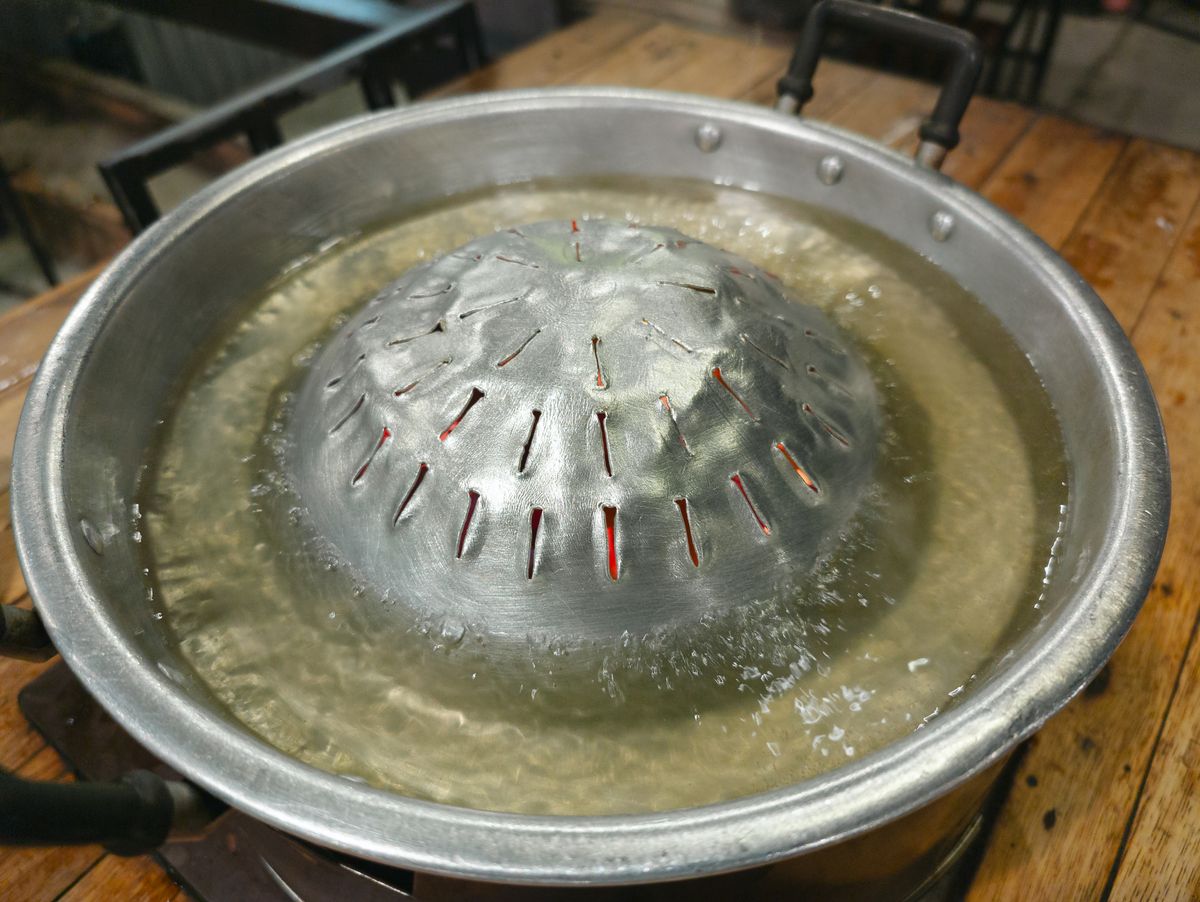
A water distiller doesn’t invent a new process, it borrows one nature has run for billions of years. When the sun heats the surface of oceans, lakes, and rivers, water evaporates and rises as vapor. As that vapor climbs into cooler air, it condenses into clouds, and eventually falls back to earth as rain, snow, or hail; pure, because the salts, sediment, and pollutants left on the ground never evaporated with it. A distiller compresses that entire cycle into a countertop appliance you can run in a few hours instead of a few days.
Distilling is an Ancient Process
There’s nothing new about the underlying science. Distillation has been used since antiquity to purify water and separate liquids, and it was refined further by alchemists and early chemists over the centuries that followed. What’s changed is the equipment: modern electric distillers turned a slow manual process into an appliance that runs unattended and shuts itself off. Most of us have unknowingly made distilled water at home before, condensation on a cold pot lid while boiling water is technically distilled water, though it’s nowhere near as pure or as high-volume as what a dedicated distiller produces.
Types of Water Distillers
Most residential distillers fall into one of two categories:
Countertop Water Distillers
These are self-contained units you fill manually with tap water. They typically produce one to six gallons per cycle, run on a standard outlet, and shut off automatically once the batch is finished. They’re the most common choice for renters, apartments, and anyone who doesn’t want to modify their home’s plumbing.
Automatic (Whole-House) Water Distillers
These are plumbed directly into your home’s water supply and refill themselves, producing distilled water continuously or on a schedule without manual intervention. They cost more upfront and typically require professional installation, but they’re worth it for larger households or anyone who wants distilled water at more than one tap.
What Contaminants Does Distillation Remove?
Because distillation works by phase change rather than physical filtration, it catches a broader range of contaminants than most carbon or sediment filters. According to the EPA, non-conventional treatments like distillation are effective at removing chloride, total dissolved solids, and other inorganic substances that many standard filters pass through. In practice, that includes:
- Heavy metals: arsenic, lead, mercury
- Inorganic salts and dissolved solids
- Fluoride and nitrates
- Biological contaminants: bacteria, viruses, and fungi
- Some VOCs, when paired with the carbon post-filter
What distillation typically won’t remove on its own is compounds with a boiling point close to or below that of water, which is why the activated carbon post-filter step matters. If your household is also managing hard water minerals or chlorine taste, pairing a distiller with something like a countertop water filter or checking your existing setup, like when to replace a Zero Water filter, can round out your water treatment.
Distillation vs. Filtration vs. Reverse Osmosis
These three methods often get lumped together, but they work differently:
- Distillation uses heat and phase change, removing the widest range of contaminants but also stripping beneficial minerals.
- Reverse osmosis (RO) forces water through a semi-permeable membrane under pressure, removing most of the same contaminants as distillation but faster and without boiling.
- Carbon filtration (like the setup in our drinking water filtration system guide) is best at improving taste and odor and reducing chlorine, but it’s not as effective against dissolved minerals or heavy metals.
If you want the deepest level of purification and don’t mind the slower batch process, distillation is generally the strongest single-method option.
Advantages and Drawbacks of Distilled Water
Advantages
- Removes the broadest range of contaminants of any single home treatment method
- No filters to replace on most models, just periodic descaling of the boiling chamber
- Cuts down on bottled water purchases and plastic waste
- Useful for CPAP machines, steam irons, and aquariums, where mineral buildup is a problem
Drawbacks
- Removes beneficial minerals like calcium and magnesium along with contaminants
- Slower than filtration; a batch can take two to six hours depending on volume
- Uses electricity to run the heating element
- Countertop units require manual refilling and cleaning
How Much Does It Cost to Run a Water Distiller?
Running costs come down to two things: electricity and maintenance. A typical countertop distiller draws around 500 to 800 watts and takes four to six hours to process a gallon, which usually works out to a few cents worth of electricity per gallon at average U.S. residential rates. Compare that to the cost of bottled water, and most households recoup the price of a countertop unit within the first several months of use.
Maintenance costs are modest too. You’ll need to replace the activated carbon post-filter every one to two months depending on use, and descale the boiling chamber periodically to clear mineral buildup left behind from the water you’ve distilled. Whole-house systems have similar upkeep, just on a larger scale, and may benefit from an annual professional check if they’re plumbed into your main line.
How to Maintain a Water Distiller
Distillers are low-maintenance compared to filter-based systems, but skipping upkeep shortens their lifespan. A few habits keep a unit running efficiently:
- Descale regularly. Minerals left behind during boiling coat the chamber over time. A vinegar or citric acid rinse every few weeks (more often in hard water areas) keeps the heating element working efficiently.
- Replace the carbon filter on schedule. A saturated filter stops catching VOCs, which defeats one of the main benefits of the post-filtration step.
- Clean the collection container. Since distilled water has no minerals or chlorine to resist bacterial growth, rinse the storage jug between batches.
- Check the fan and condenser coil. On automatic models especially, dust and debris on cooling components can slow condensation and reduce output.
Watch: How a Water Distiller Works
In this demonstration, Al Meder of Pure & Secure, LLC shows contaminated water going in and pure, clear water coming out the other end of a working distiller.
What is the Best Water Distiller?
A few things matter more than brand name when you’re comparing units:
- Capacity per cycle: Match it to your household size, one to two gallons per cycle is plenty for one or two people.
- NSF/ANSI 62 certification: Confirms the unit is tested for distillation performance and material safety.
- Boiling chamber material: Stainless steel resists scaling better than glass or plastic over time.
- Included carbon post-filter: Essential for catching VOCs, don’t skip a model without one.
- Noise and run time: Countertop units run for hours at a time; check reviews if you’re sensitive to appliance noise.
Our top pick for a countertop option remains the Megahome Water Distiller with Glass Jug. It’s simple to operate, built with a stainless steel boiling chamber, and shuts off automatically once a batch is complete.
Frequently Asked Questions
Is distilled water safe to drink every day?
Yes, for most healthy adults. Because it lacks minerals, some people prefer to mix in a mineral supplement or alternate with mineralized water, but there’s no established health risk to daily use.
How long does it take to distill a gallon of water?
Most countertop units take roughly four to six hours to distill one gallon, depending on wattage and altitude.
Does distilled water go bad?
Distilled water itself doesn’t spoil, but it can pick up contaminants from an unsealed or dirty storage container over time, so store it in a clean, sealed jug.
Can I drink distilled water long-term without a mineral supplement?
Most people get the bulk of their calcium, magnesium, and other minerals from food, not tap water, so drinking distilled water long-term isn’t inherently harmful for a healthy adult on a balanced diet. If you’re concerned about mineral intake, a few drops of a trace-mineral supplement or an occasional glass of mineralized water can offset it.
Is a water distiller better than bottled water?
For most households, yes. A countertop distiller typically costs only a few cents in electricity per gallon, produces water free of the same contaminants bottled water companies filter for, and eliminates the ongoing cost and plastic waste of buying bottles.
Conclusion
So, how does a water distiller work? It boils water into steam, leaves contaminants behind in the chamber, condenses that steam back into liquid, and polishes it with a carbon post-filter. It’s a slower process than filtration, but it’s hard to beat for the sheer range of contaminants it removes. Whether you go with a countertop model or a whole-house system, distillation is a straightforward, low-maintenance way to know exactly what’s, and isn’t, in your drinking water.

Hey, My name is MAMON. I am a SEO content creator and affiliate marketer with over 8 years of experience. I create honest product reviews, in-depth buying guides, and practical how-to articles to help readers make informed decisions. My mission is to provide trustworthy, research-backed content that delivers real value.
Leave a Reply