
Blender wattage shows up everywhere, on the box, in reviews, in the product title, but most people never quite figure out what the number actually means for them. So, how many watts does a blender use? Personal and single-serve blenders typically draw 200 to 600 watts, standard countertop blenders run 500 to 1,200 watts, and high-performance models like Vitamix or Blendtec can reach 1,400 to 2,400 watts. This guide breaks down what that range actually means for your kitchen’s electrical circuit, what it costs to run, and how to tell if you actually need a higher-wattage model, plus a plain-language explanation of watts, amps, and volts if those terms have always felt a little fuzzy.
Key Takeaways
- Blender wattage ranges from around 200 watts for personal blenders to over 2,000 watts for professional-grade models.
- The wattage printed on a blender is usually its peak draw, not what it pulls continuously during normal use, which is often noticeably lower.
- A standard 15-amp household circuit safely handles up to 1,440 watts of continuous load, and a 20-amp circuit up to 1,920 watts, under NEC’s 80% continuous-load guideline.
- Because blending sessions are short, even a high-wattage blender typically costs just a few dollars a year in electricity.
Watts, Amps, and Volts: The Basics
These three terms show up together constantly, and understanding how they relate makes the rest of this guide easier to apply to your own kitchen. Volts measure electrical pressure, essentially how hard electricity is being pushed through the circuit, and standard U.S. household outlets supply 120 volts. Amps measure the current, or how much electricity is actually flowing. Watts, the number printed on your blender, is the product of the two: watts equal volts multiplied by amps. So a blender pulling 10 amps on a 120-volt circuit is drawing 1,200 watts. This relationship is also how you can work backward from a blender’s wattage to figure out how many amps it draws, which matters if you’re checking whether it’ll overload a circuit shared with other appliances.
Average Blender Wattage by Type
| Blender type | Typical wattage | Best for |
|---|---|---|
| Personal/single-serve | 200-600 watts | Smoothies, protein shakes, soft fruit |
| Standard countertop | 500-1,200 watts | Everyday blending, sauces, soups |
| High-performance | 1,400-2,400 watts | Ice, nut butters, hot soup from raw vegetables |
These ranges overlap quite a bit because manufacturers report wattage differently, and a well-designed 700-watt motor can outperform a poorly designed 1,000-watt one. Wattage is a useful starting point when comparing blenders, but it isn’t the only factor that determines how well a blender actually performs.
You’ll also occasionally see blender power described in horsepower rather than watts, particularly on higher-end models. One horsepower equals 746 watts, so a blender advertised at 2 peak horsepower is working with roughly 1,492 watts at its absolute maximum. Manufacturers sometimes lean on the horsepower figure specifically because it sounds more impressive than the equivalent wattage number, so it’s worth converting back to watts if you’re comparing a horsepower-rated model against a wattage-rated one.
Peak Wattage vs. Running Wattage: An Important Distinction
The number printed on a blender’s box or base is almost always its peak wattage, the maximum draw during startup or under heavy load for a brief moment, not what it pulls during a typical minute of blending. Motors draw noticeably more current the instant they start spinning than they do once they’re up to speed and moving through a normal mixture. This is why a blender advertised at 1,200 watts might realistically pull several hundred watts less once it’s actually running. It’s worth knowing this distinction if you’re sizing a portable power station or generator for the blender specifically, since undersizing based on running wattage alone can leave you short during that startup surge.
How Much Does It Cost to Run a Blender?
Despite the wattage numbers looking substantial, blenders are cheap to operate because blending sessions are short. Here’s the math: watts divided by 1,000 gives you kilowatts, and multiplying that by the hours of use gives you kilowatt-hours (kWh), the unit your utility bills you for. A 1,000-watt blender run for one minute uses about 0.017 kWh. According to the U.S. Energy Information Administration, the average U.S. residential electricity rate was around 18 cents per kWh as of 2026, which puts that one-minute blend at roughly a third of a cent. Even blending for five minutes daily, every day, for a year, comes out to only a few dollars in electricity. Your blender is almost certainly not where your kitchen’s energy costs come from.
Blender Wattage and Your Home’s Electrical Circuit
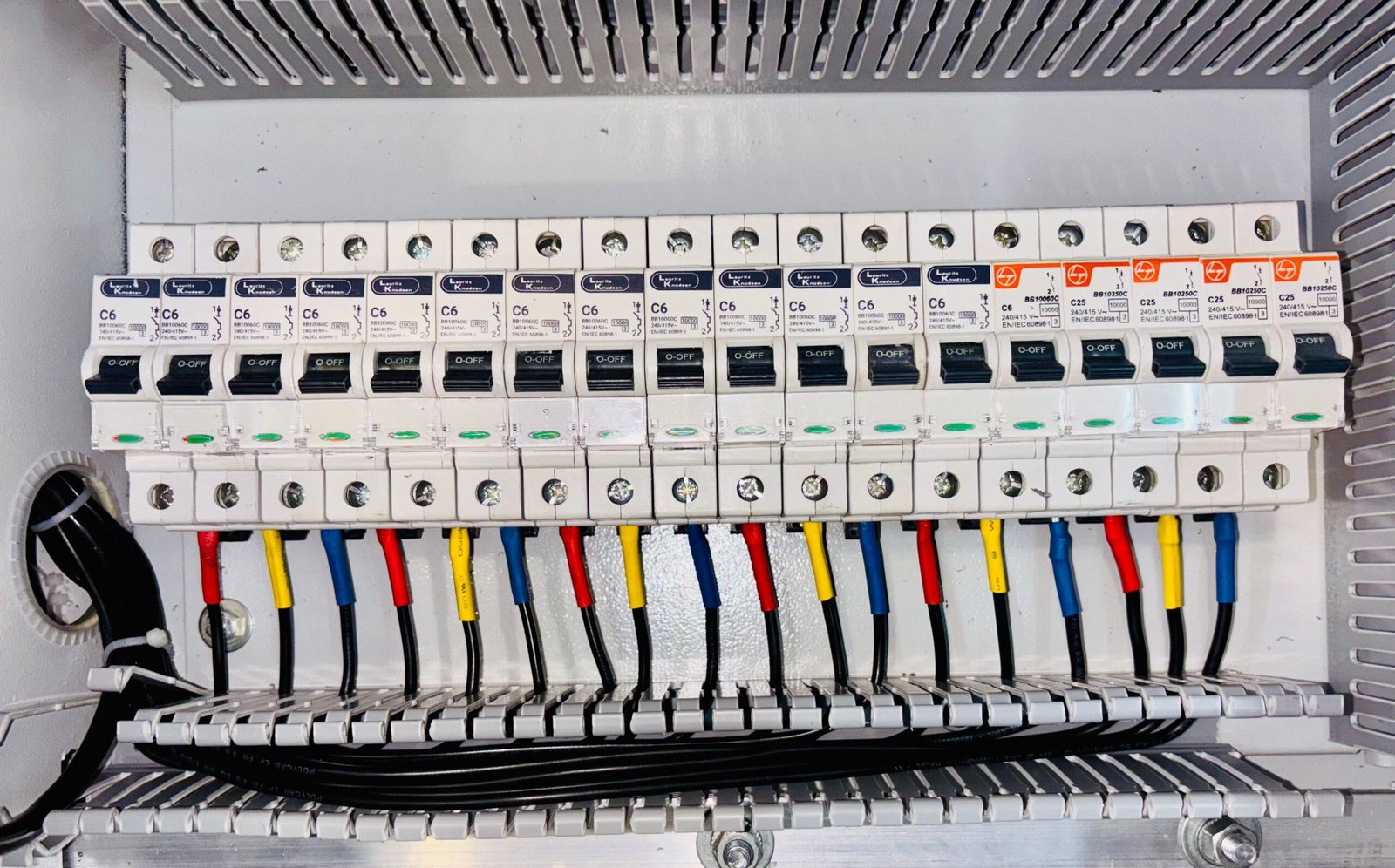
Standard household outlets in the U.S. run on either 15-amp or 20-amp circuits at 120 volts. A 15-amp circuit has a maximum capacity of 1,800 watts (15A × 120V), and a 20-amp circuit tops out at 2,400 watts. But the National Electrical Code recommends staying at or below 80% of a circuit’s rated capacity for any continuous load, which works out to 1,440 watts on a 15-amp circuit and 1,920 watts on a 20-amp circuit. This 80% guideline exists specifically for continuous loads, meaning anything running three hours or more, so it’s aimed at appliances like space heaters and window air conditioners rather than a blender that runs for well under a minute at a time. A single blender, even a high-performance model, rarely pushes a circuit anywhere close to that limit on its own. Where it becomes relevant is when a blender is running on the same circuit as other kitchen appliances, like a toaster, microwave, or coffee maker, all drawing power at once; that combined load is what typically trips a breaker, not the blender alone.
Do You Need a High-Wattage Blender?
More watts isn’t automatically better, it depends on what you’re actually blending. A 300 to 400-watt personal blender handles soft fruit, yogurt, and liquid-based smoothies just fine. Once you start regularly crushing ice, blending frozen fruit straight from the freezer, or making nut butters and thick doughs, a 700 to 1,000-watt countertop model gives the motor enough torque to avoid stalling or overheating. Reaching for 1,400 watts or more mostly makes sense if you’re processing raw vegetables into hot soup through friction alone, grinding whole grains into flour, or running a blender commercially where speed and consistency across dozens of daily uses matter. For most home kitchens, something in the 700 to 1,200-watt range covers nearly everything without paying for capability you’ll rarely use.
To put real numbers on this, entry-level personal blenders often sit around 300 to 700 watts, mainstream countertop models from major brands typically land between 1,000 and 1,500 watts, and the high-performance category, think Vitamix and Blendtec’s flagship models, ranges from roughly 1,400 watts up to 2,400 watts on the most powerful units. That top end is designed less for everyday smoothies and more for tasks that genuinely need sustained torque, like heating soup purely through blending friction.
How to Find Your Blender’s Exact Wattage
Check the sticker or nameplate on the underside or back of the base, which almost always lists the wattage alongside the voltage and amperage. If that’s worn off or missing, your owner’s manual will have it listed in the specifications section, and most manufacturers also publish it on the product page for your specific model. If you own a Ninja blender, wattage varies noticeably across their lineup, from compact personal cups in the 700-watt range up to their higher-end kitchen systems well over 1,000 watts, so check your specific model rather than assuming based on the brand alone. The same applies across brands: a Vitamix model number tells you far more about its actual wattage than the brand name does.
Tips to Reduce Blender Energy Use
- Use the lowest effective speed setting. Higher speeds draw more power, and many tasks don’t actually need the highest setting to get a smooth result.
- Pre-chop larger or harder ingredients. This reduces how long the motor has to work to reach the consistency you want.
- Avoid running the blender longer than needed. Once the mixture reaches your target consistency, stop rather than continuing to run it for good measure.
- Unplug between uses if you’re concerned about phantom draw. Blenders don’t typically pull meaningful standby power, but it’s a reasonable habit if you’re minimizing overall household energy use.
Frequently Asked Questions
Will a high-wattage blender blend faster?
Generally yes, since more power means more torque against resistance, which usually translates to a shorter blend time for tough ingredients like ice or frozen fruit. But motor design and blade shape matter too, so wattage alone doesn’t guarantee speed.
Can I run my blender on a portable power station or generator?
Yes, as long as the power station’s rated wattage exceeds your blender’s peak draw, not just its running wattage. Check the surge or peak wattage rating on your power station and compare it against your blender’s nameplate wattage with some margin to spare.
Does a higher-wattage blender use significantly more electricity overall?
Not as much as you’d expect, since higher-wattage blenders usually finish the same task faster, partially offsetting the higher draw with shorter run time. The difference in annual electricity cost between a 500-watt and a 1,500-watt blender used for typical home blending is usually just a few dollars.
Is it safe to plug a 1,500-watt blender into any kitchen outlet?
Yes, for the short bursts a blender actually runs. Continuous-load limits matter more for appliances that run for hours, like space heaters, not for a device that’s typically on for under a minute at a time.
Why do two blenders with the same wattage perform differently?
Wattage measures electrical power draw, not mechanical blending performance. Blade design, jar shape, and how efficiently the motor converts electricity into torque all affect real-world results just as much as the number on the label.
Does blending on a lower speed setting use fewer watts than the same time on high?
Yes. Lower speed settings draw less power than higher ones, since the motor isn’t working as hard to maintain a faster blade speed. The difference is small in absolute terms, but it’s real, and it’s part of why using the lowest speed that gets the job done is a reasonable habit.
Final Thoughts
Blender wattage ranges from around 200 watts for a compact personal model to well over 2,000 for a commercial-grade machine, but the number on the box is usually a peak figure rather than what the blender draws during a typical blend. For most home kitchens, 700 to 1,200 watts covers everyday smoothies, soups, and ice crushing without overspending on capacity you won’t use. And regardless of which wattage you land on, the electricity cost is genuinely one of the smallest line items in owning a blender, so let your actual blending needs, not the wattage number alone, guide the decision.

Hey, My name is MAMON. I am a SEO content creator and affiliate marketer with over 8 years of experience. I create honest product reviews, in-depth buying guides, and practical how-to articles to help readers make informed decisions. My mission is to provide trustworthy, research-backed content that delivers real value.
Leave a Reply