Cutting board sizes matter more than most people think. A board that is too small crowds your food, pushes your knife off the edge, and makes prep slower and less safe. On the other hand, a board that is too big may not fit your counter, sink, or cabinet. To help, this guide breaks down standard cutting board sizes, explains which size fits which task, and gives you a simple test to check whether your board matches your knife. We also include a size chart you can use before you buy.
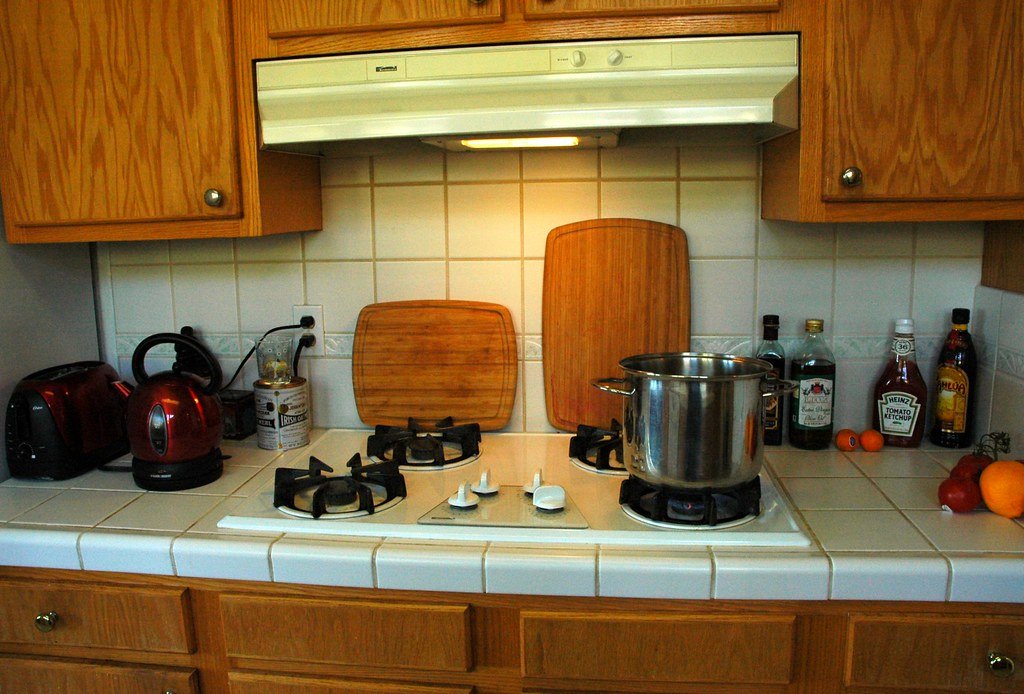
Photo: Wonderlane via Flickr (CC BY 2.0).
Key Takeaways
- In general, the most common home size is about 12 x 18 inches, which handles most daily prep.
- However, America’s Test Kitchen recommends a large board of at least 15 x 20 inches if your counter has room.
- For example, for an 8-inch chef’s knife, aim for a board with a diagonal of at least 15 to 17 inches.
- In addition, everyday boards should be about 1 to 1.5 inches thick for stability.
- Finally, most cooks are best served by two boards: one large for prep and one small for quick jobs.
Standard Cutting Board Sizes Chart
First, there is no official legal standard for board dimensions. However, manufacturers and restaurant suppliers use a handful of common sizes. According to the KaTom cutting board sizes guide, 12 x 18 inches is the most common size in both home kitchens and restaurants. Here is how the standard sizes compare:
| Size Name | Dimensions (inches) | Diagonal (inches) | Best For |
|---|---|---|---|
| Bar / mini | 6 x 8 to 8 x 10 | 10 to 12.8 | Limes, garlic, cheese, garnishes |
| Small | 10 x 14 | 17.2 | Quick tasks, fruit, small kitchens |
| Medium (standard) | 12 x 18 | 21.6 | Daily prep for 1 to 4 people |
| Large | 15 x 20 | 25.0 | Big batches, whole chickens, meal prep |
| Extra large | 18 x 24 | 30.0 | Roasts, turkeys, holiday cooking |
| Jumbo | 24 x 36 | 43.3 | Butchery, dough, commercial prep |
For reference, we calculated the diagonal for each size with the Pythagorean theorem. The diagonal matters because it tells you how long a knife the board can handle comfortably, as you will see below.
What Size Cutting Board Do You Need?
In short, the right size depends on three things: your knife, your counter, and what you cook most often. As a rule, bigger is better as long as it fits. America’s Test Kitchen recommends buying the biggest board your counter can comfortably fit, ideally one that measures at least 15 x 20 inches. Specifically, its editors explain that a large board gives you room for every task, from dicing an onion to breaking down a chicken.
Still, a large board is not always practical. For instance, if you live in an apartment, a 12 x 18-inch board is often the sweet spot. Meanwhile, a second small board handles quick snacks without dragging out the big one.
The Diagonal Knife Test
Fortunately, here is a quick way to check whether a board is big enough. First, lay your longest knife diagonally across the board, from one corner to the other. Then, according to Apartment Therapy, you want at least an inch of board on either end of the knife. If the knife hangs off the edges, the board is too small for that knife.
For example, an 8-inch chef’s knife is usually about 13 inches long, handle included. Therefore, it needs a board with a diagonal of roughly 15 inches or more. A 10 x 14-inch board (17.2-inch diagonal) passes, while a 6 x 8-inch bar board (10-inch diagonal) does not. Also, if you are shopping for a new knife, our guide to the best chef knife under $100 lists blade lengths for each pick.
Cutting Board Sizes by Task
Different jobs need different amounts of space. Use this table as a starting point:
| Task | Recommended Size | Why |
|---|---|---|
| Slicing a lemon or garlic | 8 x 10 or smaller | Quick, easy to wash |
| Cutting cheese or fruit for a snack | 10 x 14 | Fits next to the sink |
| Dicing onions and peppers for dinner | 12 x 18 | Room to push chopped food aside |
| Breaking down a whole chicken | 15 x 20 | Space for parts and trimming |
| Carving a turkey or brisket | 18 x 24 with juice groove | Holds the roast and its juices |
| Rolling dough | 18 x 24 or larger | Flat area for rolling |
In addition, think about how many people you cook for. For example, a single cook can often get by with a medium board. By contrast, a family of five that preps a lot of vegetables will feel cramped on anything smaller than 15 x 20 inches.
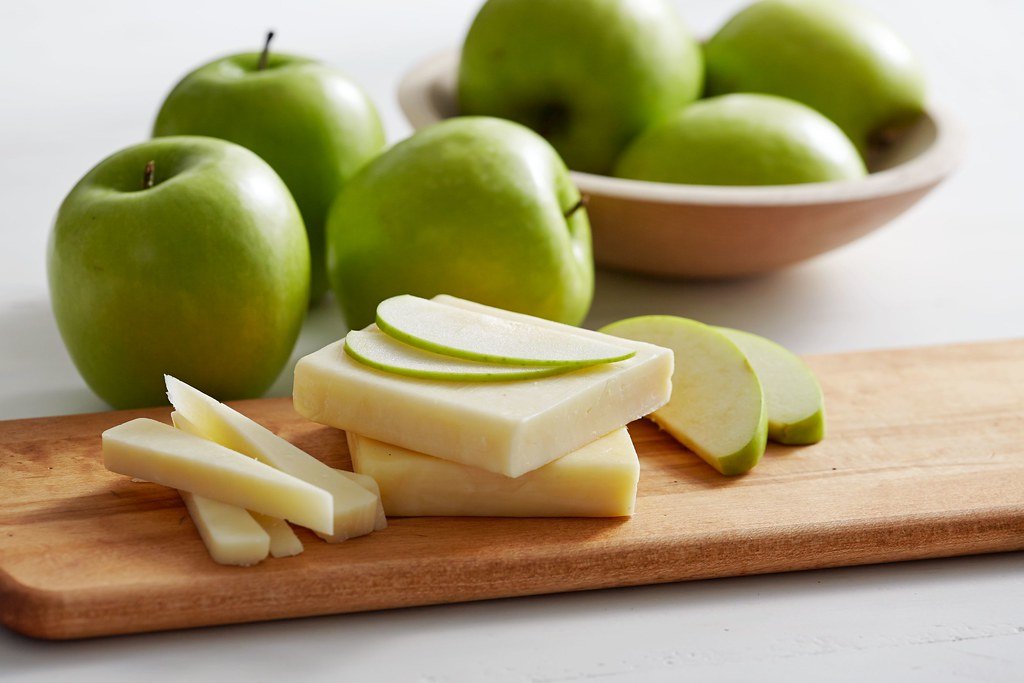
Photo: Berries.com via Flickr (CC BY 2.0).
Small Cutting Board Sizes
In general, small boards usually range from about 6 x 8 to 10 x 14 inches. Also, they are light, quick to wash, and easy to store. As a result, many cooks reach for them several times a day.
Small boards are ideal for:
- Slicing citrus for drinks
- Mincing garlic or herbs
- Cutting cheese and fruit for snacks
- Prepping baby food or small portions
- Kitchens with very little counter space
However, a small board should not be your only board. For example, chopping a full onion on a 6 x 8-inch surface sends pieces onto the counter. For our top picks, see our roundup of small cutting boards for kitchen use.
Medium Cutting Board Sizes
Medium boards, typically 12 x 16 to 12 x 18 inches, are the workhorses of most American kitchens. In fact, they are big enough for dinner prep, yet light enough to lift into the sink. Also, they fit on standard 25-inch-deep counters with room to spare.
So, if you only buy one board, make it a medium one. After all, it handles most weeknight recipes without taking over the counter.
Large and Extra-Large Cutting Board Sizes
Large boards start at about 15 x 20 inches, while extra-large boards reach 18 x 24 inches and beyond. As a result, they give you room to prep several ingredients at once and keep everything on one surface. Moreover, a large board with a juice groove is the best tool for carving roasts and holiday birds.
The trade-offs are weight and storage. A large wooden board can weigh 10 pounds or more, so washing it can be awkward. Before you buy, measure your sink and storage space. For details, our guide to the best large wooden cutting board options covers weights and dimensions for each pick.
Video: The Boardsmith explains how to choose the right size cutting board.
How Thick Should a Cutting Board Be?
Thickness affects stability, durability, and weight. According to KaTom, 1 to 1.5 inches is the best range for everyday use, while 2 inches or more suits heavy-duty work. Here is a simple breakdown:
| Thickness | Typical Use | Pros | Cons |
|---|---|---|---|
| Under 0.5 inch | Plastic and flexible boards | Light, dishwasher safe | Can slide or warp |
| 0.75 to 1 inch | Everyday wood or composite | Good balance | May need a damp towel underneath |
| 1 to 1.5 inches | Daily prep boards | Stable, resists warping | Heavier |
| 2 to 3 inches | Butcher blocks | Very stable, long-lasting | Heavy, hard to wash |
Notably, thick blocks are often built as end grain boards, which are gentler on knives. You can learn more in our guide to end grain cutting boards.
How Your Height Affects Board Choice
Size is not only about length and width. Board height changes your posture, too. America’s Test Kitchen notes that average-height cooks do well with simple reversible boards with no feet or small feet. Taller cooks, however, may prefer a thick board with large feet, because it raises the work surface and reduces hunching. So, if your back gets sore after prep, a thicker board is worth trying.
How to Measure Your Kitchen Before You Buy
Before ordering, take a few quick measurements. In fact, this step prevents the most common sizing mistakes.
- Measure your counter depth. Most U.S. counters are about 25 inches deep. Also, leave a few inches behind the board for the backsplash.
- Measure your sink. Check the length and width of the basin, so you know whether the board fits for washing.
- Check your storage. Measure the cabinet or drawer where the board will live, including the door opening.
- Note your knife length. Then use the diagonal test to confirm the board is big enough.
Similarly, if storage is tight, a cutting board organizer keeps several sizes upright in a small footprint.
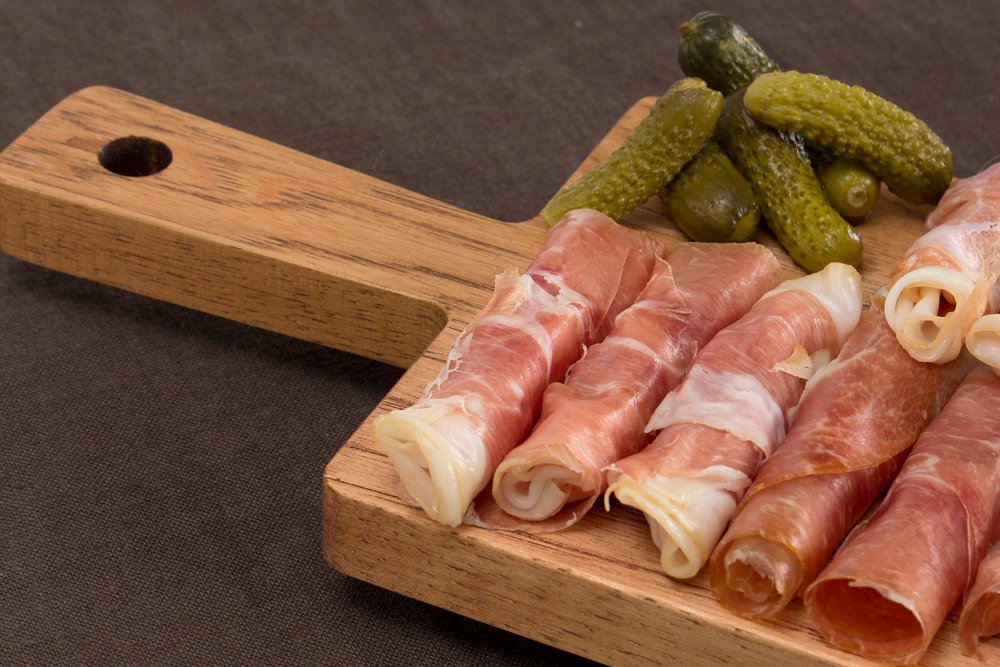
Photo: Didriks via Flickr (CC BY 2.0).
Do Cutting Board Sizes Differ by Material?
Yes, to some degree. Each material tends to come in certain sizes, so it helps to know what to expect:
- Plastic: Commonly sold in restaurant sizes such as 12 x 18, 15 x 20, and 18 x 24 inches. Even so, they are thin and light at large sizes.
- Wood: Available in nearly every size, but large wood boards get heavy fast. However, thick maple blocks often top out around 24 x 18 inches for home use.
- Bamboo: Usually, it is sold in small and medium sizes, often in sets of three. For more, read whether bamboo cutting boards are safe.
- Paddle and serving boards: Often long and narrow, around 15 x 7 inches. For these, our guide to the wooden cutting board with handle covers the details.
Also, keep in mind that listed sizes sometimes include handles. So, check the actual cutting area before you buy.
Cutting Board Sizes for Special Uses
Beyond everyday prep, a few special jobs call for specific board sizes. Here are the most common ones, along with the size we suggest for each.
- Over-the-sink boards. These span the sink so scraps fall straight into the basin. Measure the inside width of your sink first, since most models are built to fit roughly 16 to 22 inches.
- Stovetop covers. A board that covers a cooktop adds counter space in small kitchens. In that case, match the board to your range width, which is usually about 30 inches in the U.S.
- Camping and RV boards. Here, light weight matters most, so a thin 10 x 14-inch plastic board is a smart choice.
- Charcuterie and serving. For entertaining, long boards around 15 to 20 inches look generous on the table without crowding it.
- Bread boards. Similarly, a 12 x 18-inch board fits most loaves and catches crumbs well.
In other words, the “right” size depends on the job. That is why many cooks keep one specialty board alongside their main prep board.
Weight by Size: What to Expect
Weight rises quickly as boards get bigger and thicker. For example, America’s Test Kitchen notes that its favorite wood board weighs about 10 pounds, while its favorite plastic board weighs about 5 pounds. So, if you have wrist or shoulder issues, or you plan to move the board often, choose a plastic or composite board in larger sizes. On the other hand, if the board will stay on the counter, a heavy wood board is more stable and less likely to slide.
How Many Boards and Which Sizes?
In practice, most home cooks do best with a small set of boards in different sizes. Here is a simple setup for a typical household:
- First, a large board (15 x 20 inches) for main prep and carving
- Next, a medium plastic board (12 x 18 inches) reserved for raw meat, poultry, and seafood
- Finally, a small board (8 x 10 inches) for fruit, garlic, and quick jobs
Above all, keeping a separate board for raw meat helps prevent the spread of germs. Our guide on how to prevent cross contamination with cutting boards explains why.
Common Sizing Mistakes
- Buying a board that is too small. This is the most common mistake. As a result, food spills over, and your knife hits the edge.
- Ignoring the handle. For example, a “16-inch” board may have only 12 inches of usable surface.
- Forgetting the sink. Otherwise, if a board does not fit in your sink, cleaning it becomes a chore.
- Choosing thin boards for heavy chopping. In addition, thin boards slide and flex, which can be unsafe.
- Skipping a second board. Instead, one board for everything leads to cross-contamination and more washing.
Can You Make a Custom-Size Board?
Absolutely. If standard cutting board sizes do not fit your space, you can build one to your exact measurements. For example, a board for a narrow counter or a sink cover is a great beginner project. Our step-by-step guide on how to make a cutting board walks you through wood choice, glue-up, and finishing.
FAQ
What is the standard cutting board size?
The most common size is about 12 x 18 inches. In fact, it is used widely in both home kitchens and restaurants.
What size cutting board is best for a home kitchen?
If you have the space, a board of at least 15 x 20 inches is the most versatile. Otherwise, a 12 x 18-inch board handles most daily cooking.
What size board do I need for an 8-inch chef’s knife?
Look for a board with a diagonal of at least 15 inches. That way, the knife fits with about an inch to spare on each end.
How thick should a wooden cutting board be?
For everyday use, aim for 1 to 1.5 inches. By contrast, butcher blocks for heavy chopping are often 2 to 3 inches thick.
Is a bigger cutting board always better?
Not always. A bigger board gives you more room, but it must still fit your counter, sink, and storage.
What size cutting board fits in a standard sink?
Most single-bowl kitchen sinks are roughly 16 to 22 inches wide. Therefore, a 12 x 18-inch board usually fits, while an 18 x 24-inch board often does not.
How big should a carving board be for a turkey?
For a typical 12- to 16-pound turkey, choose a board of at least 18 x 24 inches with a juice groove. That way, the bird and its juices stay on the board.
Final Thoughts
Choosing between cutting board sizes comes down to your knife, your counter, and how you cook. For most kitchens, a 12 x 18-inch board is the everyday standard, while a 15 x 20-inch board gives you more freedom if you have the room. Then, pair your main board with a small one for quick jobs, and use the diagonal knife test to check the fit. Also, for more on choosing safe materials, read our guide to cutting boards that are the safest and healthiest.

Hey, My name is MAMON. I am a SEO content creator and affiliate marketer with over 8 years of experience. I create honest product reviews, in-depth buying guides, and practical how-to articles to help readers make informed decisions. My mission is to provide trustworthy, research-backed content that delivers real value.
Leave a Reply