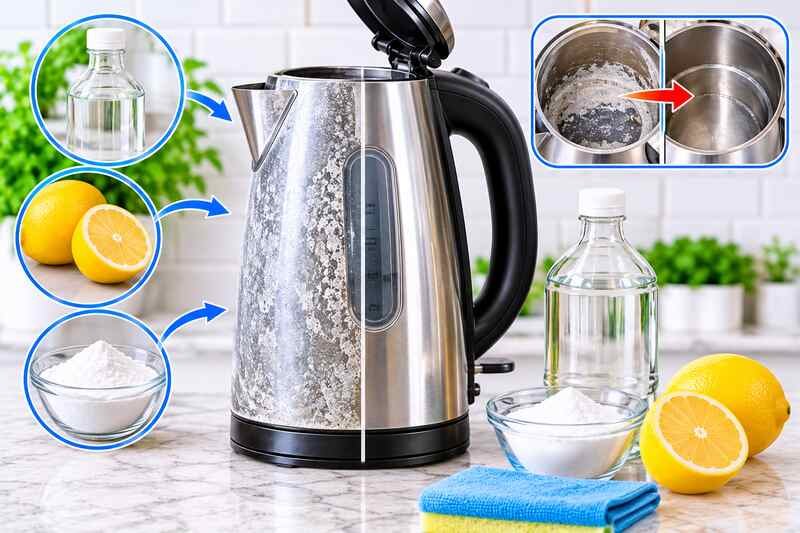
If you are staring at a crusty kettle or a clogged shower head, you probably want to know what dissolves limescale the fastest. The short answer is a strong acid, used hot, at the right concentration. However, the household options people reach for, such as vinegar, lemon, citric acid, and even cola, work at very different speeds. In this guide, we compare them using real acid data, explain the factors that control speed, and show you the quickest method for kettles, coffee makers, and fixtures in a U.S. home.
Key Takeaways
- For home use, hot citric acid at 2 to 3 tablespoons per liter or hot, undiluted white vinegar dissolves limescale the fastest.
- Heat matters a lot. As a chemistry rule of thumb, many reaction rates roughly double for every 10°C (18°F) increase.
- Cola is acidic, with a pH of about 2.37 for Coca-Cola Classic in a 2016 JADA study, but it contains far less total acid than vinegar.
- Fresh lemon juice holds about 48 grams of citric acid per liter, yet a squeeze or two diluted in a kettle is much weaker.
- Baking soda does not dissolve limescale at all, because it is alkaline.
What Dissolves Limescale the Fastest? The Quick Answer
To begin with, limescale is mostly calcium carbonate, and acids dissolve it. So, what dissolves limescale the fastest at home? In practice, the winners are concentrated citric acid and undiluted white vinegar, both used hot. Commercial descalers based on stronger acids can be even faster, but they cost more and need more care.
| Rank | Option | Typical Speed on Kettle Scale | Notes |
|---|---|---|---|
| 1 | Strong commercial descaler | Minutes | Follow the label; some are very strong acids |
| 2 | Hot citric acid, 2–3 tbsp per liter | 15–30 minutes | No smell, rinses cleanly |
| 3 | Hot undiluted white vinegar | 20–45 minutes | Strong odor |
| 4 | Hot 50/50 vinegar and water | 30–60 minutes | The most common method |
| 5 | Lemon juice in water | 1 hour or more | Low acid once diluted |
| 6 | Cola | Slow | Little total acid, leaves sugar |
| 7 | Baking soda | Does not dissolve scale | Alkaline, not acidic |
Keep in mind that these rankings are based on acid strength and concentration, not on our own lab tests. Real times depend on how thick the scale is and how hot the solution stays.
What Controls How Fast Limescale Dissolves?
Several factors decide what dissolves limescale the fastest in your home. Understanding them helps you speed up whichever method you choose.
1. Acid Strength
First, stronger acids attack scale faster. Chemists measure acid strength with a value called pKa, where lower means stronger. Citric acid has a first pKa of about 3.13, while acetic acid in vinegar sits at about 4.76. Therefore, citric acid usually works faster at the same concentration.
2. Concentration
Next, more acid per liter means more scale dissolved before the solution runs out. This is why undiluted vinegar beats diluted vinegar, and why a few tablespoons of citric acid powder beat the juice of one lemon.
3. Temperature
In addition, heat speeds up the reaction. As a general chemistry rule of thumb, many reaction rates roughly double for each 10°C (18°F) rise. That is why boiling the solution in the kettle and letting it soak while hot works much better than a cold soak.
4. Contact and Agitation
Also, the acid must touch the scale. Fill the kettle above the scale line, and swirl or gently brush partway through so fresh acid reaches the surface.
5. Scale Thickness
Finally, thick crust takes longer simply because there is more of it. Regular descaling keeps layers thin, so each session is fast.
The Data: How Much Acid Each Option Contains
To compare fairly, however, we calculated the acid content and the theoretical maximum scale each option could dissolve per liter. We used 5% acidity for vinegar, the common U.S. label strength. The FDA’s vinegar guidance sets a minimum of 4 grams of acetic acid per 100 mL. For lemon juice, we used about 48 grams of citric acid per liter, as measured in a 2008 Journal of Endourology study.
| Solution (per liter) | Acid Content | Max Scale Dissolved (theoretical) |
|---|---|---|
| Undiluted 5% white vinegar | About 50 g acetic acid | About 42 g |
| Fresh lemon juice, undiluted | About 48 g citric acid | About 37 g |
| Citric acid, 3 tbsp in water | About 36 g citric acid | About 28 g |
| 50/50 vinegar and water | About 25 g acetic acid | About 21 g |
| Citric acid, 2 tbsp in water | About 24 g citric acid | About 19 g |
| Juice of 1 lemon in 1 liter water | About 2 g citric acid | About 1.7 g |
| Baking soda in water | No acid | None |
Undiluted lemon juice looks strong on paper, but almost nobody fills a kettle with pure juice, since it would take more than 20 lemons per liter. In contrast, citric acid powder gives you that strength for the cost of a few spoonfuls. That is the main reason it ranks so high on our list of what dissolves limescale the fastest.
Video: Visual Chem Lab shows vinegar dissolving a limescale crust.
Does Vinegar Dissolve Limescale?
Yes. In fact, vinegar dissolves limescale reliably, which is why it is the most popular home method. Specifically, the acetic acid reacts with calcium carbonate to form calcium acetate, which is very soluble, plus water and carbon dioxide. As a result, you see fizzing.
However, vinegar is a fairly weak acid, so it works more slowly than citric acid. For the fastest vinegar results, use it undiluted, heat it, and soak for 20 to 45 minutes. The trade-off is the smell, which fills the kitchen and needs several rinse boils to remove.
Is Citric Acid Faster Than Vinegar?
Usually, yes, because citric acid is a stronger acid, and powder lets you mix a concentrated solution without the odor. For example, at 2 to 3 tablespoons per liter, heated in the kettle, it typically clears moderate scale in 15 to 30 minutes.
One caution: citric acid can form calcium citrate, which dissolves poorly. With very thick scale, a single strong batch may leave a slight white residue. Therefore, rinse well, and if needed, run a second short round with a fresh solution rather than one extra-strong batch.
Does Cola Really Dissolve Limescale?
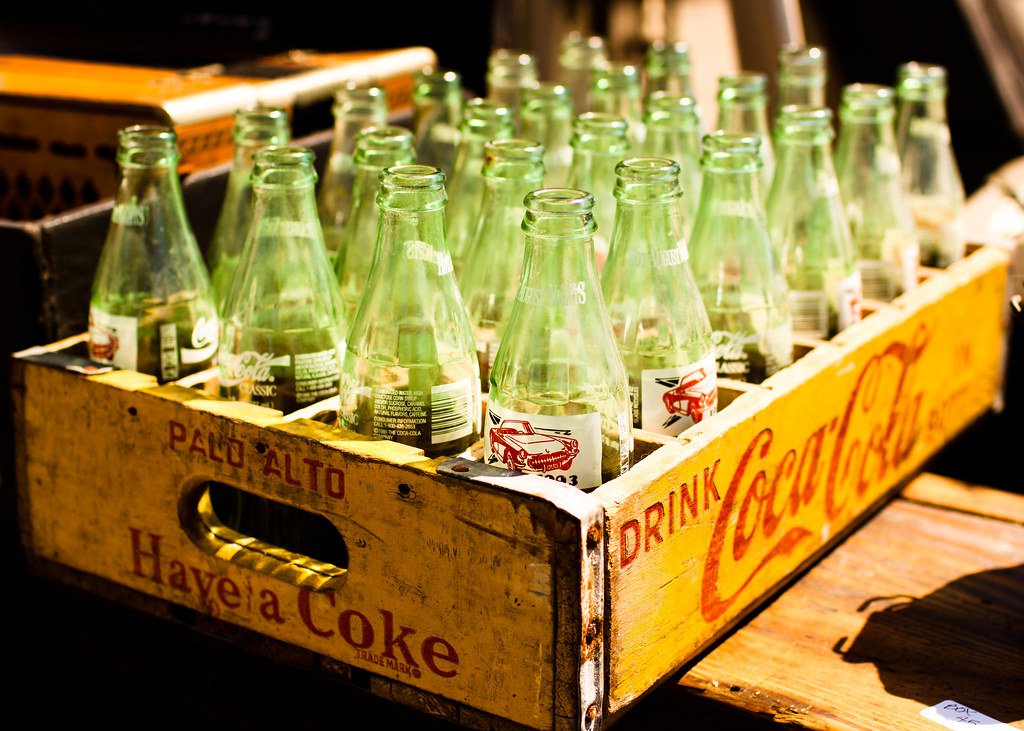
Photo: cielodlp via Flickr (CC BY 2.0).
Cola is a popular internet hack for toilets and kettles. Admittedly, it is acidic: a 2016 study in the Journal of the American Dental Association measured Coca-Cola Classic at a pH of about 2.37 and Pepsi at about 2.39. However, pH only tells you how acidic a liquid is right now, not how much total acid it holds. Moreover, cola contains a relatively small amount of acid, so it runs out quickly once it starts reacting with scale.
In addition, cola leaves sugar, color, and stickiness behind. In a kettle, that means more rinsing and a risk of residue on the heating plate. For these reasons, cola is a slow and messy choice. Plain vinegar or citric acid is faster, cheaper per use, and cleaner.
Does Lemon Dissolve Limescale?
Lemon juice contains citric acid, so it does dissolve limescale, although slowly. Interestingly, the same JADA study measured lemon juice at a pH of about 2.25, slightly more acidic than cola. However, the usual method of squeezing one or two lemons into a full kettle dilutes the acid heavily. As our table shows, one lemon in a liter of water carries only about 2 grams of citric acid. As a result, lemon works best for light scale and routine freshening rather than heavy crust.
What About Baking Soda?
Baking soda appears in many cleaning tips, but it does not dissolve limescale. After all, it is sodium bicarbonate, a mild base, and limescale is also alkaline. Therefore, there is no acid to break the scale down. Baking soda is still useful as a gentle scrub and odor absorber. Just do not mix it with vinegar in the kettle, because they neutralize each other and leave mostly salty water.
The Fastest Way to Descale a Kettle Step by Step
Putting it all together, here is the quickest home answer to what dissolves limescale the fastest in a kettle.
- Unplug and empty. First, pour out any old water.
- Mix a strong solution. Then add 2 to 3 tablespoons of citric acid per liter of water, or use undiluted white vinegar.
- Fill above the scale line. Next, make sure the solution covers all visible buildup, but stay below the max line.
- Bring to a boil. After that, heat the solution and switch the kettle off.
- Soak while hot. Let it sit for 15 to 30 minutes, and swirl it once halfway through.
- Brush and rinse. Use a soft brush on any loose spots, then rinse three times.
- Boil fresh water. Finally, boil and discard one or two kettles of plain water.
For heavy buildup, repeat with a fresh solution rather than leaving one batch overnight. As the chemistry suggests, a second hot round usually beats a long cold soak.
Fastest Methods for Other Surfaces
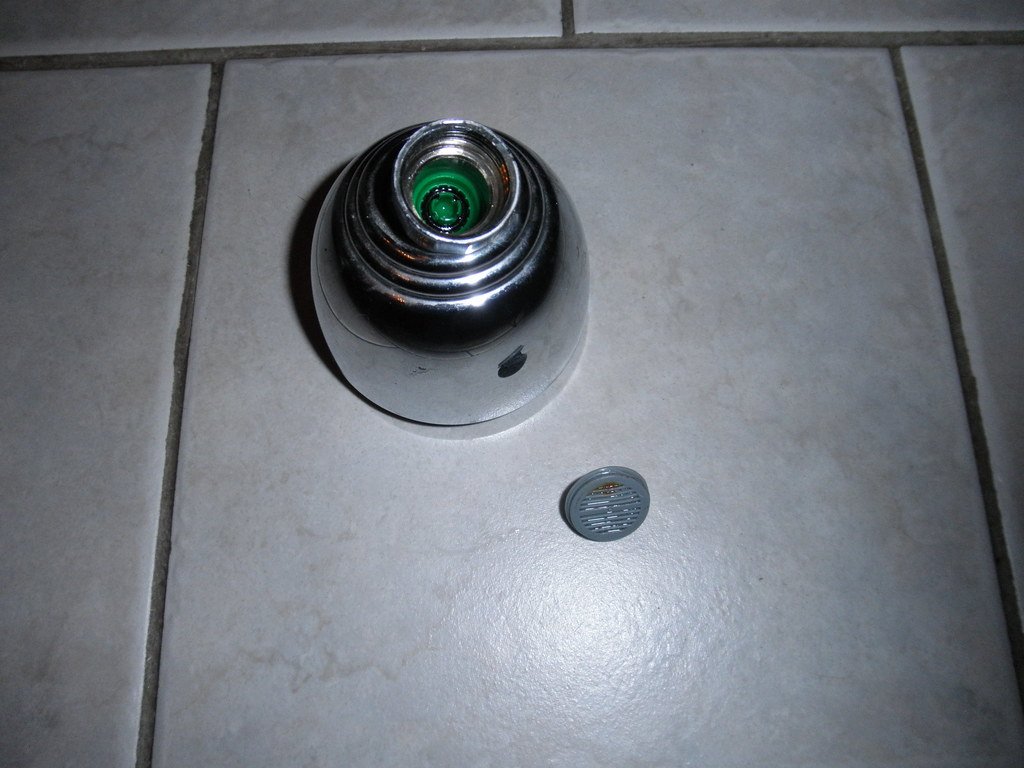
Photo: HomeSpot HQ via Flickr (CC BY 2.0).
What dissolves limescale the fastest also depends on the surface. Since you cannot boil a faucet, contact time and concentration matter more.
| Surface | Fastest Home Method | Caution |
|---|---|---|
| Electric kettle | Hot citric acid or undiluted vinegar | Rinse and boil fresh water after |
| Coffee maker | Citric acid solution run through a cycle | Check the manual first |
| Shower head | Soak in a bag of warm vinegar for 1 hour | Some finishes are acid-sensitive |
| Faucet tip | Vinegar-soaked cloth wrapped for 30 minutes | Test a hidden spot first |
| Dishwasher | Vinegar or citric acid on an empty hot cycle | Follow the manufacturer’s guidance |
| Natural stone | Do not use acids | Acids etch marble and limestone |
For dishwashers, our guide on how to clean hard water from a dishwasher covers the full routine. For faucet aerators, see our guide on how to clean a Delta kitchen faucet head.
Common Myths About Dissolving Limescale
Plenty of advice online sounds convincing but does not hold up. Here are the most common myths, along with what actually happens.
- Myth: Boiling water cleans scale away. In fact, boiling hard water creates more scale, because heat pulls minerals out of the water.
- Myth: Vinegar plus baking soda is stronger. Instead, the two neutralize each other, so the mix is weaker than vinegar alone.
- Myth: Cola is a powerful descaler. However, its low total acid means it stalls quickly on real buildup.
- Myth: Longer soaks always win. On the contrary, a second hot round with fresh acid usually beats one cold overnight soak.
- Myth: Scraping is faster. Similarly, metal tools can scratch the heating plate, so let the acid soften scale first.
In short, the answer to what dissolves limescale the fastest is not a trick or a hack. It is simply the right acid, at the right strength, used hot.
Cost Versus Speed
Speed is not the only factor, since cost and convenience matter too. For example, white vinegar is the cheapest per use but the smelliest. Meanwhile, citric acid powder costs a little more per session, yet it is odorless and fast. In contrast, commercial descalers are usually the most expensive per use, although they can be the quickest on very thick scale. As a result, many households keep citric acid for routine descaling and save commercial products for stubborn jobs or for machines whose manuals require them.
Safety Tips
- Never mix acids with bleach. In fact, the combination can release dangerous chlorine gas.
- Ventilate. Also, open a window when heating vinegar.
- Protect your eyes and skin. In addition, wear gloves with strong commercial products.
- Follow appliance manuals. Otherwise, you may void a warranty, since some brands specify their own descaler.
- Rinse well. Finally, boil or run fresh water before using an appliance for food or drinks.
How to Keep Limescale from Coming Back
Of course, the fastest descaling session is the one you never need. Therefore, empty your kettle after each use, boil only what you need, and descale on a schedule based on your water hardness. If scale appears on every faucet and appliance, whole-home treatment may help. Our comparison of water descaler vs. water softener systems explains the options.
FAQ
What dissolves limescale the fastest at home?
Hot citric acid at 2 to 3 tablespoons per liter, or hot undiluted white vinegar, dissolves limescale the fastest with common household products.
Does vinegar dissolve limescale overnight?
Yes, a long soak works, but it is slower than a hot soak. Heating the vinegar speeds the reaction considerably.
Is Coke better than vinegar for limescale?
No. Cola is acidic, but it holds far less total acid than vinegar and leaves sugar behind, so vinegar is faster and cleaner.
Can I use citric acid and vinegar together?
No, because there is no real benefit. Instead, use one at a time and rinse between methods.
What dissolves limescale the fastest on a shower head?
For shower heads, warm white vinegar works quickly. Simply fill a plastic bag with warm vinegar, tie it around the head so the nozzles are submerged, and wait about an hour. Then run hot water to flush loose scale, and scrub any remaining spots with an old toothbrush.
Why does my limescale leave a white film after descaling?
Usually, a thin film is leftover mineral or calcium citrate. A second short round and a good rinse typically remove it.
Final Thoughts
So, what dissolves limescale the fastest? For most U.S. homes, the answer is hot citric acid or hot undiluted vinegar, used before scale gets thick. In short, strong acid plus heat plus good contact equals speed. Meanwhile, lemon is a gentle option for light scale, cola is mostly a myth, and baking soda does not dissolve scale at all. If your kettle is too worn to save, our guide to the best electric kettle can help you choose a replacement.

Hey, My name is MAMON. I am a SEO content creator and affiliate marketer with over 8 years of experience. I create honest product reviews, in-depth buying guides, and practical how-to articles to help readers make informed decisions. My mission is to provide trustworthy, research-backed content that delivers real value.
Leave a Reply