If you are shopping for a new board, the type of wood matters more than the brand. The best wood for cutting boards is hard enough to resist deep knife scars, soft enough to protect your blades, and tight-grained enough to keep moisture and food out. For most U.S. home kitchens, that means hard maple, walnut, or cherry.
In this guide, we compare seven popular cutting board woods side by side. You will see hardness ratings, grain type, upkeep needs, and the best use for each one. We also cover which woods to avoid and what recent food-safety research says.
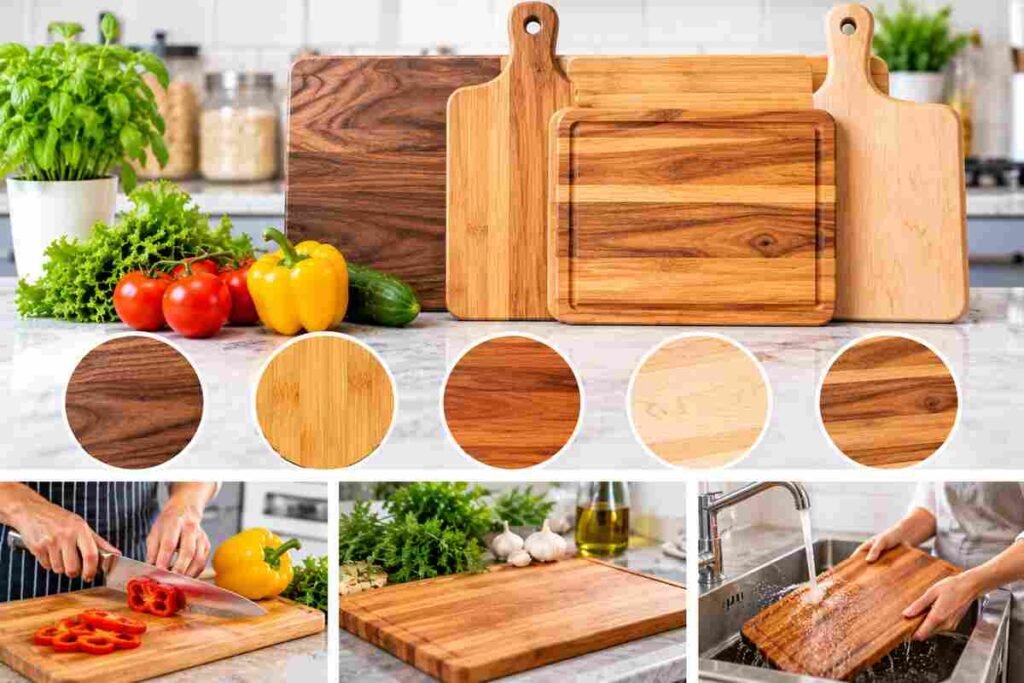
Key Takeaways
- Hard maple is the best all-around wood for cutting boards. It is durable, close-grained, and affordable.
- Walnut and cherry are slightly softer, so they are gentler on knife edges.
- The ideal hardness for a cutting board is roughly 900 to 1,500 lbf on the Janka scale.
- Closed-grain hardwoods resist moisture and bacteria better than open-grain woods.
- Avoid softwoods like pine, very hard exotics, and any wood with toxic or allergenic dust.
- End-grain boards are the most durable wood cutting board construction you can buy.
Quick Answer: The Best Wood for Cutting Boards at a Glance
Here is how the most common cutting board woods compare. Janka hardness measures the force needed to press a steel ball into the wood. A higher number means a harder, more dent-resistant surface.
| Wood | Janka Hardness | Grain | Price | Best For |
|---|---|---|---|---|
| Hard maple | 1,450 lbf | Closed | $$ | Best overall, daily prep |
| Black walnut | 1,010 lbf | Semi-closed | $$$ | Knife care and looks |
| Black cherry | 950 lbf | Closed | $$ | Gentle, attractive boards |
| European beech | About 1,300 lbf | Closed | $ | Budget everyday boards |
| Teak | About 1,155 lbf | Semi-closed, oily | $$$ | Moisture resistance |
| Acacia | 1,700–2,200 lbf | Semi-closed | $ | Affordable, durable boards |
| Olive | About 2,700 lbf | Closed | $$$ | Serving and small boards |
Janka values vary by species, growing region, and source, so treat them as typical figures rather than exact specs.
What Makes the Best Wood for a Cutting Board?
Four qualities separate a great board wood from a poor one. Keep them in mind as you compare options, because the best wood for cutting board use in your kitchen depends on all four.
1. The Right Hardness
A board that is too soft scars quickly, and deep grooves are hard to clean. A board that is too hard dulls your knife edge with every cut. Most woodworkers aim for a Janka rating of roughly 900 to 1,500 lbf. Maple, walnut, cherry, and beech all fall in that range.
2. Tight, Closed Grain
Grain describes the size of the pores in the wood. Closed-grain woods have tiny pores, so they absorb less water and give food particles fewer places to hide. Open-grain woods, such as red oak, have large visible pores that can wick up liquid.
3. Food Safety
The best board woods come from trees that produce edible fruit, nuts, or sap, such as maple, walnut, cherry, and olive. The FDA Food Code, which most U.S. states adopt for restaurants, allows hard maple or an equally hard, close-grained wood for cutting boards. That is a useful benchmark for home cooks too.
4. Stability and Upkeep
All wood moves as humidity changes. Stable species are less likely to warp or crack. Every wood board still needs regular oiling, which we cover in our guide on how to take care of a wooden cutting board.
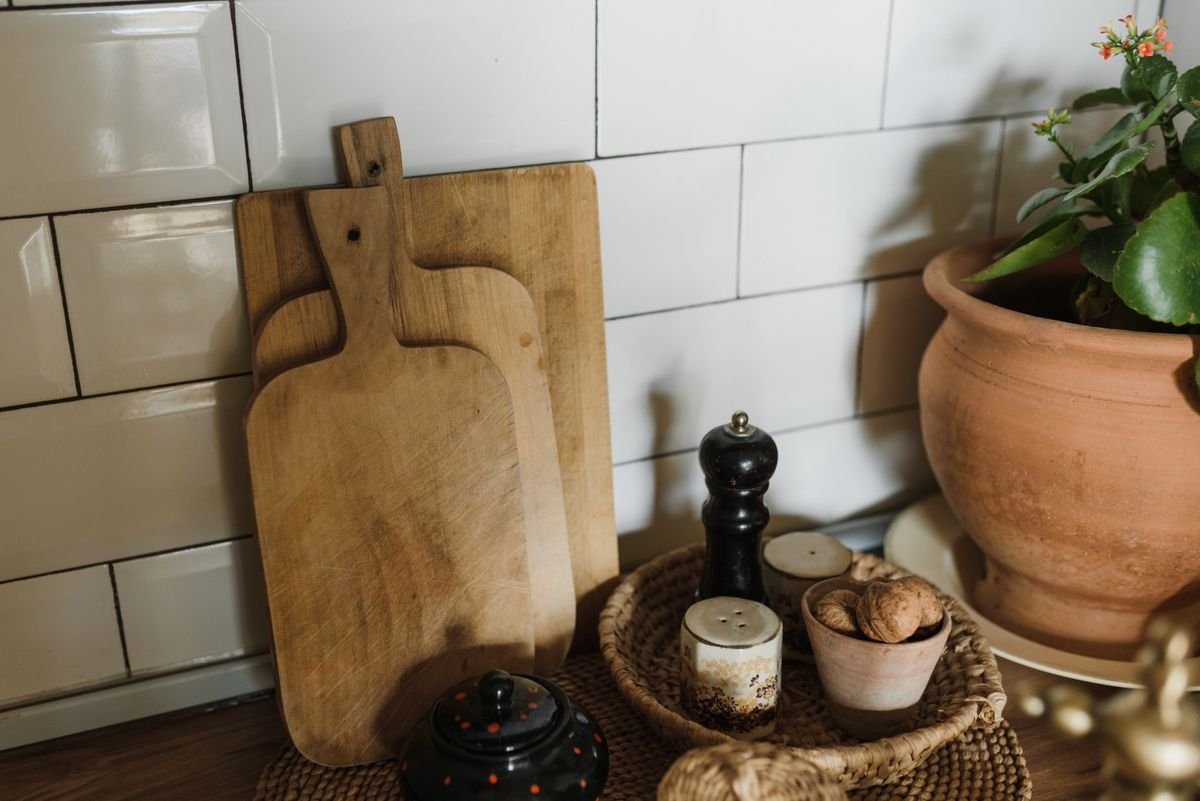
Hardwood boards in a home kitchen. Photo: Arina Krasnikova via Pexels.
The 7 Best Woods for Cutting Boards, Compared
Below, we break down each candidate for the best wood for cutting boards in detail. We list hardness, strengths, drawbacks, and who each one suits best.
1. Hard Maple: Best Overall Wood for Cutting Boards
Hard maple, also called sugar maple or rock maple, is the gold standard. It has been the classic butcher-block wood in American kitchens for generations. At 1,450 lbf, it resists deep knife marks without being harsh on blades.
Maple’s closed grain absorbs little moisture, and its light color makes stains and residue easy to spot. It is also grown widely in North America, so it costs less than walnut or teak. If you want one recommended wood for cutting board use in a busy kitchen, this is it.
- Pros: Durable, closed grain, affordable, food-safe track record
- Cons: Light color shows stains; needs regular oiling
- Best for: Everyday chopping, large prep boards, butcher blocks
2. Black Walnut: Best for Knife Care and Looks
Walnut is the premium choice for cooks who want a beautiful board that is easy on knives. At 1,010 lbf, it is noticeably softer than maple, so blades stay sharp longer. Its rich, dark brown color also hides stains well.
Walnut costs more than maple, and its grain is slightly more open. That makes regular oiling important. Some people with severe tree nut allergies choose another wood as a precaution, although walnut wood is widely used for food boards.
- Pros: Knife-friendly, stunning color, hides stains
- Cons: More expensive; shows scratches more than maple
- Best for: Premium knives, serving boards, gifts
3. Black Cherry: Best Gentle Hardwood
Cherry is one of the softest hardwoods that still works well for cutting boards. At about 950 lbf, it is very gentle on blades. It has a tight, smooth grain and a warm reddish color that deepens with age and light.
The trade-off is that cherry shows knife marks sooner than maple. It is a great choice for bread, fruit, and lighter prep, or as a second board alongside a maple workhorse.
- Pros: Very knife-friendly, tight grain, beautiful aging
- Cons: Scars more easily; color changes over time
- Best for: Light prep, bread, fruit, cheese
4. European Beech: Best Budget Hardwood
Beech is common in European-made boards and kitchen utensils. It is close-grained, hard (about 1,300 lbf), and usually less expensive than maple. It performed well in a 2023 Oregon State University study, which we discuss below.
Beech is less dimensionally stable than maple, so it can move more with humidity. Dry it carefully and oil it often.
- Pros: Affordable, close grain, good hardness
- Cons: More prone to movement and cracking if neglected
- Best for: Budget-friendly everyday boards
5. Teak: Best for Moisture Resistance
Teak is naturally oily, which helps it repel water. That makes it popular for boards that see a lot of washing. Its hardness, around 1,155 lbf, sits comfortably in the ideal range.
However, teak contains natural silica, which can dull knife edges faster than maple or walnut. Look for plantation-grown or FSC-certified teak to avoid sustainability concerns.
- Pros: Water-resistant, durable, low maintenance
- Cons: Silica can dull knives; often pricey
- Best for: Humid kitchens and large carving boards
6. Acacia: Best Affordable Option
Acacia is widely sold in budget and mid-range boards on Amazon and in big-box stores. It is hard (roughly 1,700 to 2,200 lbf, depending on species) and naturally water-resistant. Its varied grain gives each board a unique look.
Because acacia is harder than maple, it can be slightly tougher on knives. Quality also varies widely between brands, so check for solid construction and a food-safe finish.
- Pros: Low price, durable, attractive grain
- Cons: Harder on knives; inconsistent quality
- Best for: First wooden boards and serving trays
7. Olive Wood: Best for Serving Boards
Olive wood is dense, tight-grained, and strikingly patterned. At about 2,700 lbf, it is one of the hardest woods used for kitchen boards. Most olive boards are imported from the Mediterranean and are sold in smaller sizes.
Its hardness makes olive wood very durable but tough on knife edges. It shines as a serving, charcuterie, or bread board rather than a daily chopping surface.
- Pros: Extremely durable, beautiful grain, naturally dense
- Cons: Hard on knives; expensive; usually small
- Best for: Cheese boards, serving, gifts
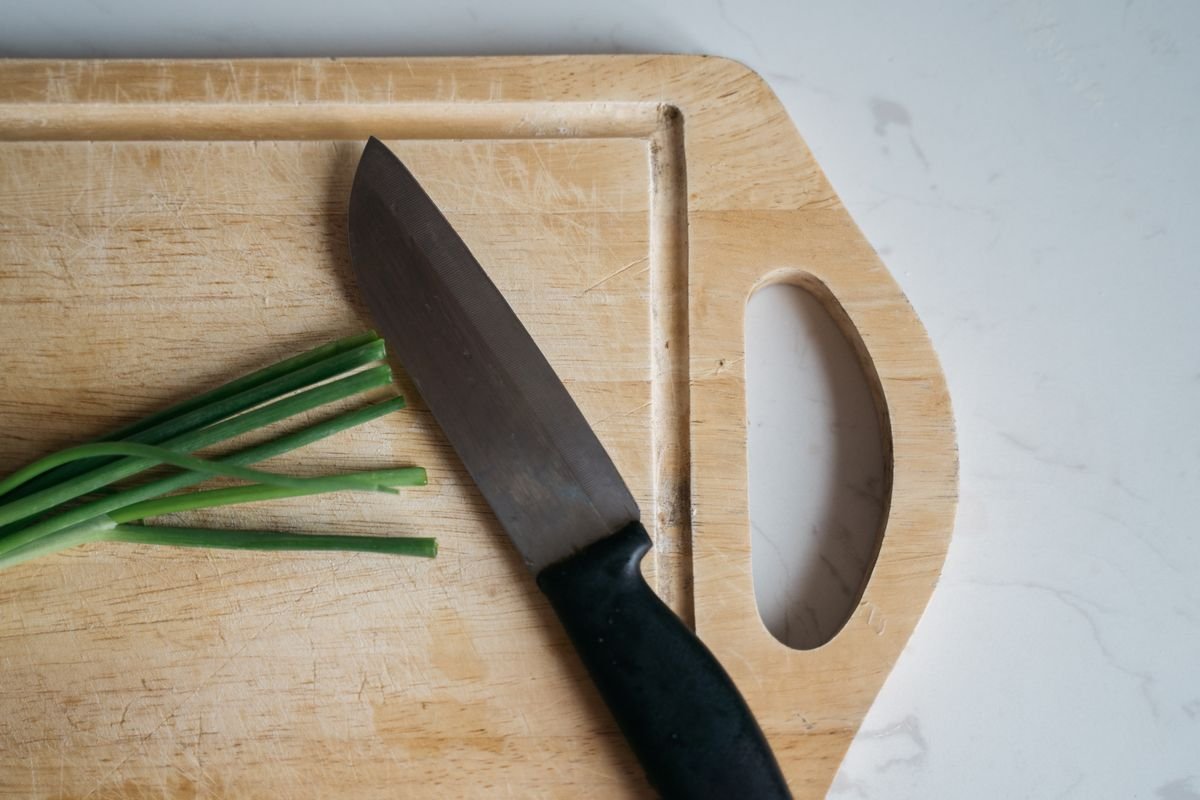
A knife-friendly hardwood keeps blades sharper for longer. Photo: Anna Tarazevich via Pexels.
The Most Durable Wood Cutting Board: Hardness vs. Construction
When people compare the best wood for cutting boards, many search for the most durable wood cutting board and assume the hardest wood wins. In practice, construction matters just as much as species.
End Grain vs. Edge Grain
- End-grain boards show the ends of the wood fibers, often in a checkerboard pattern. Knife edges slip between the fibers instead of slicing across them. The surface “self-heals,” hides knife marks, and is the gentlest on blades. These boards are thicker, heavier, and more expensive.
- Edge-grain boards show long strips of wood glued side by side. They are lighter, more affordable, and very durable, but they show knife marks sooner.
- Face-grain boards use wide, flat planks. They look attractive but scar and warp more easily, so they are best for serving.
An end-grain hard maple or walnut board is the most durable choice for heavy daily use. An edge-grain maple board is the best value.
Woods to Avoid for Cutting Boards
Not every wood belongs in the kitchen. Skip these types when you shop:
- Softwoods: Pine, cedar, fir, and spruce are too soft. They scar quickly, and some have strong resins that can taint food.
- Very open-grain woods: Red oak and ash have large pores that soak up liquid. Most board makers avoid red oak for this reason.
- Toxic or highly allergenic exotics: Some tropical woods, such as cocobolo, are known skin and respiratory sensitizers. They are better suited to knife handles than food surfaces.
- Extremely hard woods: Woods far above about 2,000 lbf can wear down knife edges quickly when used for daily chopping.
- Treated or reclaimed lumber: Pressure-treated wood and unknown reclaimed boards may contain chemicals. Never use them for food prep.
Best Hardwood for Cutting Boards by Need
The best hardwood for cutting boards depends on how you cook. Use this table to match a wood to your kitchen.
| Your Priority | Best Wood | Why |
|---|---|---|
| Best all-around board | Hard maple | Durable, closed grain, good value |
| Protecting expensive knives | Walnut or cherry (end grain) | Softer surface, self-healing fibers |
| Tight budget | Beech or acacia | Low cost, solid durability |
| Humid climate | Teak | Natural oils repel water |
| Serving and charcuterie | Olive or walnut | Striking grain and color |
| Heavy daily chopping | End-grain maple | Most durable construction |
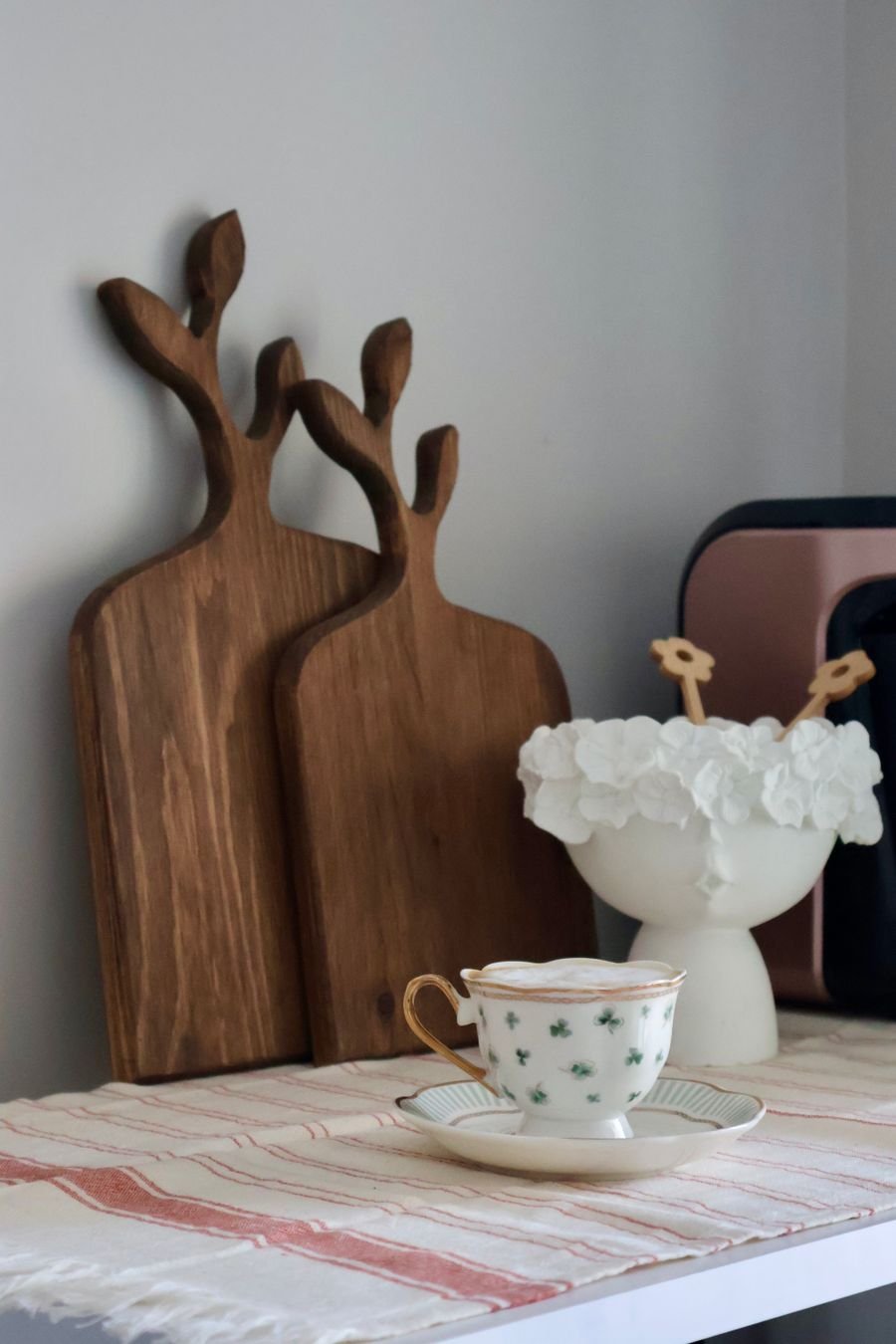
Different woods bring different colors and grain patterns. Photo: Derya Nur via Pexels.
What Does Research Say About Wood Species and Bacteria?
Wood’s reputation for food safety is backed by research, but the details are more nuanced than marketing suggests.
A 2023 Oregon State University study published in Coatings tested European beech, sugar maple, red oak, and white oak against surrogates for Listeria and Salmonella. Beech had the fewest surface bacteria for Salmonella, while the oaks did best against Listeria on uncoated wood. The researchers concluded there was “no one best wood.”
The same study found that boards coated with mineral or linseed oil kept more bacteria on the surface, at least in the short term, than bare wood. That does not mean you should stop oiling. Oil prevents cracking, and cracks are a bigger long-term hygiene risk. It does mean that washing and drying your board properly matters more than the wood species alone.
Earlier work at UC Davis by food-safety researcher Dean Cliver found that bacteria were harder to recover from hardwood boards than from plastic ones. For a broader look at wood vs. plastic, glass, and bamboo, see our guide to the safest and healthiest cutting boards.
How to Make Any Wooden Board Last
Even the best wood for cutting boards will fail without basic care. Follow these habits:
- Wash it by hand with warm, soapy water right after use.
- Never soak it or put it in the dishwasher.
- Towel-dry it and stand it upright to air-dry.
- Oil it with food-grade mineral oil about once a month, then add board wax.
- Use a separate plastic board for raw meat when possible.
A good board also deserves a good knife. Check our picks for the best chef knife under $100, and keep the edge sharp with our guide on what grit whetstone to use for kitchen knives.
Frequently Asked Questions
What is the best wood for a cutting board?
Hard maple is the best overall wood for a cutting board. It is durable, closed-grained, food-safe, and affordable. Walnut and cherry are excellent alternatives if you want a softer surface that is easier on knives.
What is the most durable wood cutting board?
An end-grain hard maple board is the most durable option for daily use. End-grain construction lets knife edges slip between fibers, so the surface resists deep scars.
Is walnut or maple better for a cutting board?
Maple is harder, more affordable, and more durable. Walnut is softer, kinder to knives, and hides stains better. Both are excellent choices.
Is acacia a good wood for cutting boards?
Yes, acacia is a good budget option. It is hard and water-resistant, but it can be slightly tougher on knives than maple, and quality varies by brand.
Are oak cutting boards safe?
White oak can work, but red oak is usually avoided because its large, open pores absorb liquid. Most board makers prefer closed-grain woods such as maple, walnut, and cherry.
Final Thoughts on the Best Wood for Cutting Boards
The best wood for cutting boards balances hardness, tight grain, and food safety. Hard maple wins for most U.S. kitchens because it is durable, affordable, and proven. Walnut and cherry are ideal if knife care is your priority, while beech and acacia stretch a tight budget.
Choose end-grain construction if you want the longest-lasting board, and avoid softwoods, open-grain red oak, and toxic exotics. Then care for it well, and your board can last for decades. For more on keeping food prep safe, read our guide on how to prevent cuts in the kitchen.

Hey, My name is MAMON. I am a SEO content creator and affiliate marketer with over 8 years of experience. I create honest product reviews, in-depth buying guides, and practical how-to articles to help readers make informed decisions. My mission is to provide trustworthy, research-backed content that delivers real value.
Leave a Reply