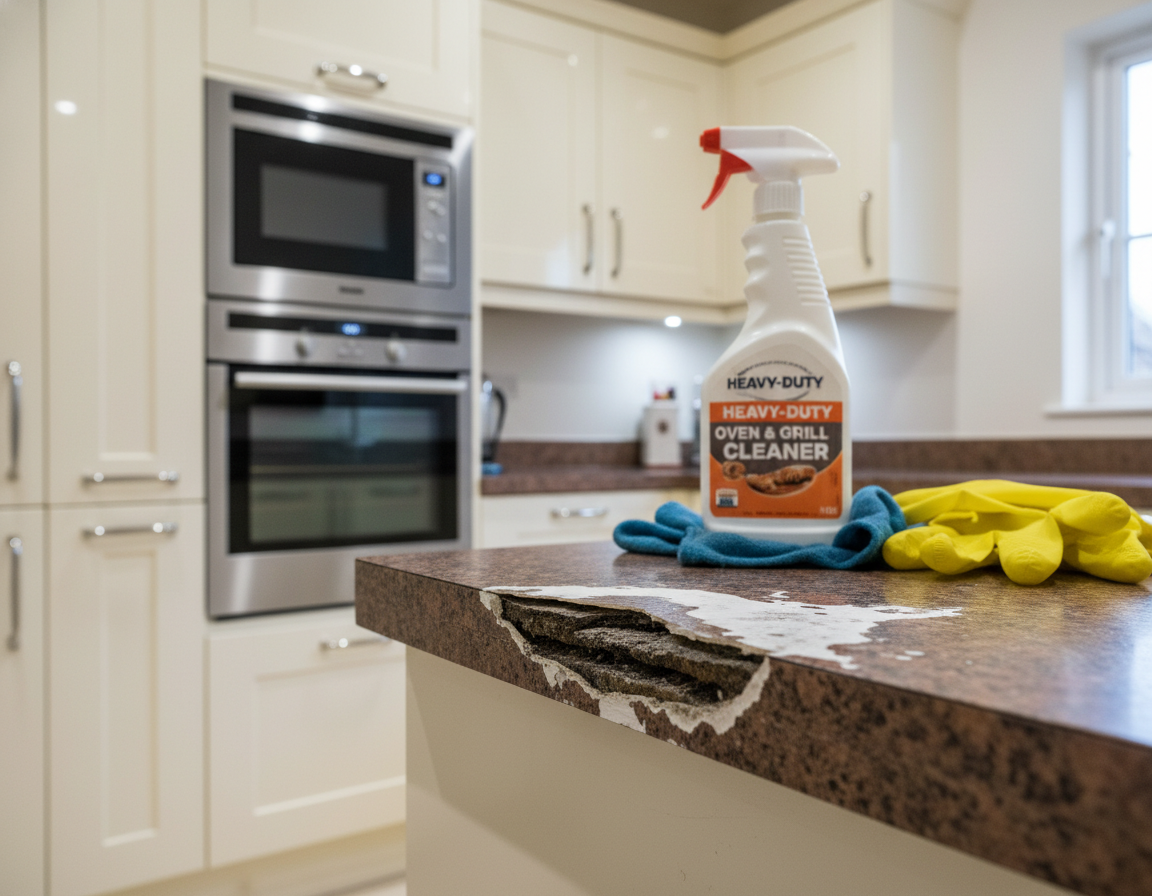
Your kitchen countertops are crucial in your home. You use them every day to prepare food. It’s important to keep them clean and in good shape. However, using oven cleaner on kitchen countertops or other wrong cleaning products can harm them a lot.
Oven cleaners have strong chemicals like sodium hydroxide, also known as lye. This chemical has a pH of 14, making it very corrosive. These products are good at removing tough, burned-on food from ovens. But, they can also damage your countertops.
Dan Deonarain from Galaxy Maids says oven cleaners are too strong for countertops. The harsh chemicals can cause permanent damage to different materials. Quartz, granite, marble, laminate, and tile all react badly to these cleaners.
Your countertops need gentle care with the right cleaning solutions. Knowing how harsh chemicals affect your surfaces helps you make better choices. This knowledge can help you avoid expensive repairs or replacements later on.
Key Takeaways
- Oven cleaners contain sodium hydroxide with a pH of 14, making them highly corrosive and caustic
- Using oven cleaner on kitchen countertops can cause permanent damage to various materials
- Different countertop materials react differently to harsh chemicals, requiring specific cleaning approaches
- The chemicals in oven cleaners are toxic and can pose health and safety risks to your family
- Safe alternatives exist for cleaning your countertops effectively without damage
- Understanding material-specific damage helps prevent costly repairs or replacements
Why You Should Never Use Oven Cleaner on Kitchen Countertops
Oven cleaners are strong for removing grease and food from ovens. But, they are too harsh for countertops. Countertops don’t have the same protection as ovens. This makes them vulnerable to damage.
It’s important to know why oven cleaners are bad for countertops. This helps protect your kitchen and your family’s health.
The Harsh Chemical Composition of Oven Cleaners
Oven cleaners have sodium hydroxide, a very strong chemical. It has a pH of 14. This chemical breaks down organic materials like grease and food.
But, it also contains turpentine and butane, which are harmful. Your oven’s stainless steel exterior with acrylic enamel coating protects it. Countertops don’t have this protection.
Health and Safety Risks of Using Oven Cleaners on Food Preparation Surfaces
Using oven cleaners on countertops is dangerous. They can cause chemical burns and harm your family. The National Capital Poison Center says they can burn skin, eyes, mouth, and airways.
Countertops are where you prepare food. Any leftover chemicals can contaminate your food. These fumes can also make your kitchen air worse. Children and pets are at high risk.
- Skin contact causes immediate burns and irritation
- Fumes damage airways and respiratory systems
- Residue contaminates food preparation areas
- Ingestion of residual chemicals harms the digestive tract
- Indoor air quality deteriorates from chemical vapors
“Oven cleaners are explicitly labeled as corrosive products for a reason. These warnings exist to protect you and your loved ones from serious injury.”
Companies like Goo Gone warn against using their products on certain surfaces. They know sodium hydroxide can damage more than just the intended area. Even a little bit can cause problems. It’s safer to use other cleaners for your countertops.
How Oven Cleaners Damage Different Countertop Materials
Oven cleaners have strong chemicals to remove tough oven residue. Using these products on countertops can harm the protective layers of various materials. Each countertop reacts differently to these chemicals. Knowing how they react helps protect your countertops.
Your countertops are a key part of your home. Keeping them safe from damage starts with knowing which products to avoid.
Effects on Quartz and Composite Countertops
Quartz and composite countertops have 7-30% polymer resins. These resins hold the stone together. When oven cleaners hit these surfaces, they break down the resins at a molecular level.
This damage exposes the porous stone underneath. This makes your countertops more likely to stain and discolor.
You might see white marks, blotches, and dull spots on your quartz countertops. These marks are more noticeable on light-colored quartz. Over time, the surface layer wears off, causing permanent fading and staining.
Composite countertops also suffer from this damage. Their protective coating wears off over time.
Impact on Natural Stone Surfaces Like Granite and Marble
Granite countertops have a naturally stain-resistant surface. But they also have a thin protective sealant layer. Oven cleaners remove this sealant, exposing the porous stone beneath.
Once exposed, granite absorbs liquids and develops stains or discoloration. These stains go deep into the stone.
Marble countertops face different risks. The sealant layer on marble prevents staining and gives it shine. Oven cleaners remove this layer, causing discoloration, dull spots, and an uneven appearance.
| Countertop Material | Primary Damage Type | Visibility of Damage | Reversibility |
|---|---|---|---|
| Quartz | Resin breakdown and exposed pores | White marks and blotches | Permanent |
| Granite | Sealant stripping | Deep staining | Requires resealing |
| Marble | Sealant wear and etching | Dull spots and discoloration | Permanent without refinishing |
| Laminate | Color fading and finish loss | Dulled appearance | Permanent |
| Tile | Glaze removal and grout decay | Rough texture | Requires regrouting |
| Stainless Steel | Surface staining and residue | Visible discoloration | Difficult to remove |
Damage to Laminate, Tile, and Stainless Steel Countertops
Laminate countertops like Formica are durable but can’t handle oven cleaners. Damage starts with color fading and finish loss. The surface becomes dull and may develop scratches.
Tile countertops need careful cleaning. Oven cleaners damage the glazed finish and grout lines. Over time, this creates rough patches and weakened grout.
Stainless steel countertop care is crucial. Oven cleaners can stain the surface. These products also leave harmful chemical residues that can get into food.
- Quartz and composite materials lose their protective resin coatings
- Granite sealants strip away, exposing porous stone
- Marble loses shine and develops permanent discoloration
- Laminate fades and loses its protective finish
- Tile glazing deteriorates and grout breaks down
- Stainless steel develops staining and chemical residue
Common Types of Damage Caused by Oven Cleaner Exposure
Oven cleaners have strong chemicals that can harm your kitchen countertops. When they touch your food surfaces, they cause damage that changes how they look and work. Knowing what kind of damage can happen helps you spot problems early and fix them.
There are several ways oven cleaners can damage your counters. Each type of damage affects different materials and surfaces in different ways.
- Countertop corrosion happens when harsh chemicals break down polymers and resins in engineered surfaces or protective sealants on natural stone, literally eating away at the material
- Countertop discoloration shows up as white marks, blotches, and dull spots when cleaner soaks into surfaces for just 3 to 10 minutes
- Streaking leaves behind residue patterns of grease and grime rather than cleaning them away
- Countertop fading occurs gradually as protective layers strip away, causing your surfaces to lose their original color intensity
- Surface etching countertops develops tiny scratches and pits that make surfaces rough and more likely to trap bacteria and future stains
- Sealant erosion breaks down protective coatings on natural stone, leaving porous surfaces exposed and vulnerable
- Countertop staining increases as surfaces become more porous and lose their protective barriers
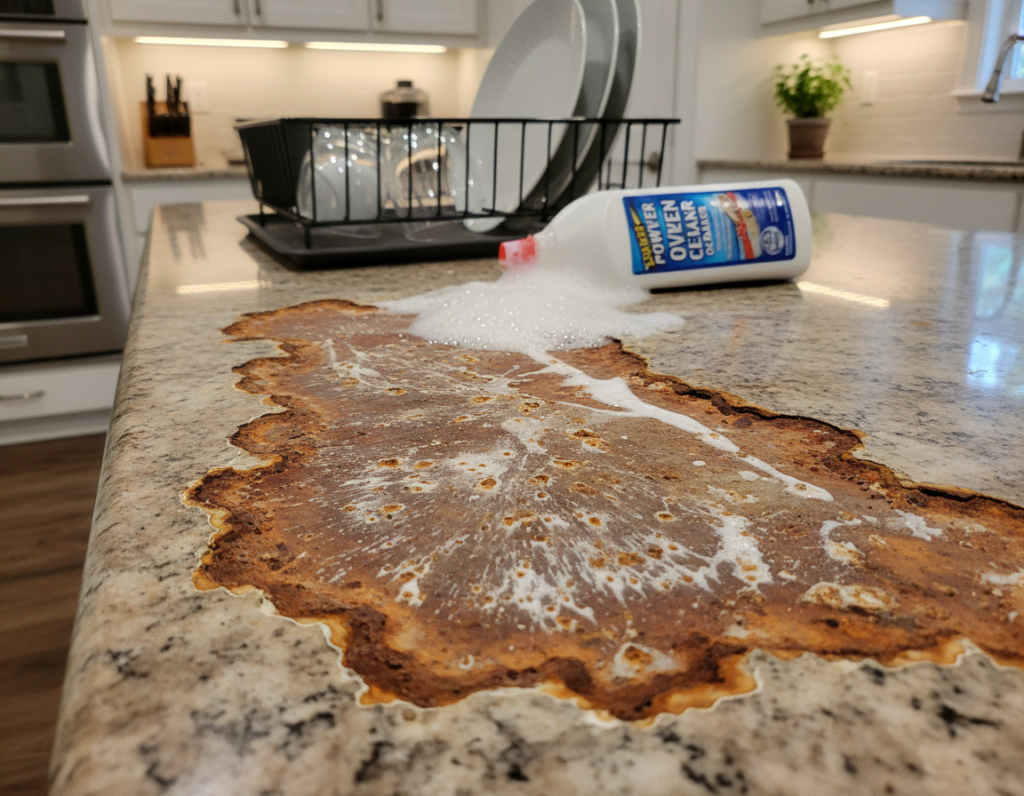
These damage types work together to create bigger problems. When sealants erode and surfaces become more porous, they become more prone to staining. This cycle of deterioration gets harder to reverse the longer it continues. The loss of shine that accompanies sealant damage makes your counters look dull and aged, even if they were newly installed.
Countertop discoloration and fading are the most visible and permanent damage. Light-colored countertops show these marks most clearly. Dark surfaces may hide initial damage, but the underlying degradation still occurs. Once chemical reactions penetrate the surface, removing these marks becomes nearly impossible without professional restoration or replacement.
Safe and Effective Alternatives for Cleaning Your Kitchen Countertops
You don’t need harsh chemicals to keep your counters clean and shiny. After learning about the dangers of oven cleaners, it’s time to explore better options. The safest and most effective countertop cleaning solutions are often simple and affordable. You’ll discover that everyday products work wonderfully when used correctly.
Best Cleaning Solutions for Each Countertop Material
The best safe countertop cleaners start with warm water mixed with mild dish soap. This combination is non-abrasive yet powerful enough to remove grease and daily mess. Dish soap countertops work well because soap is specially designed to break down grease without scratching surfaces.
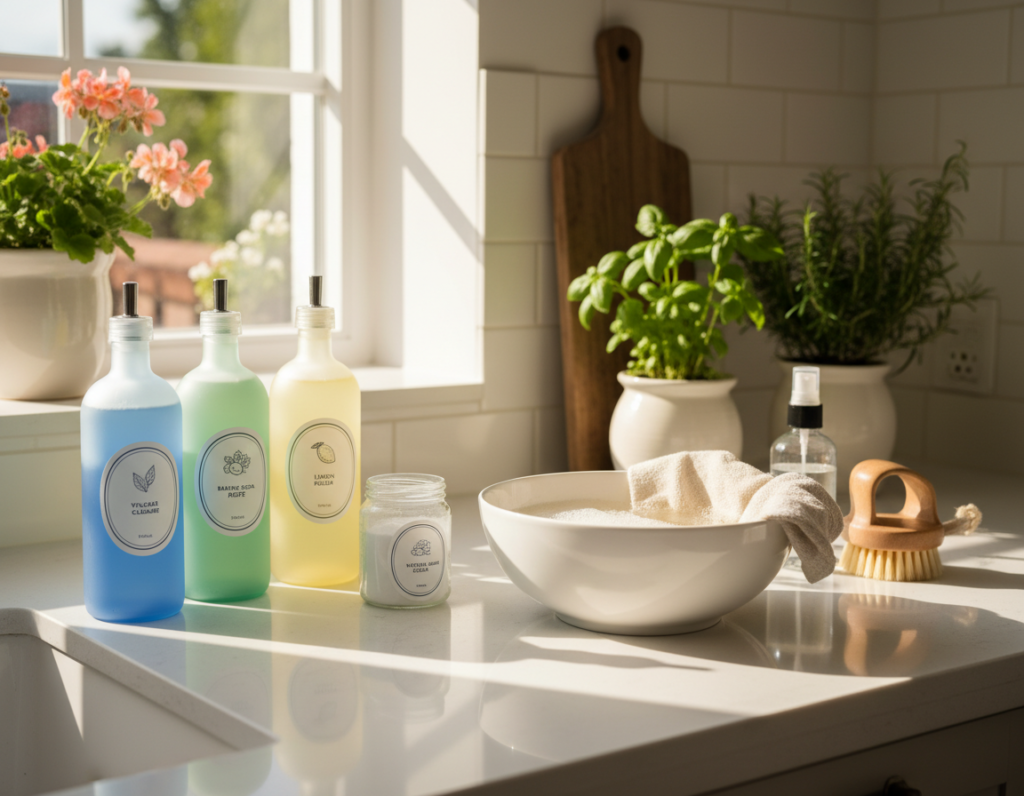
For natural stone cleaning on granite, marble, and quartz surfaces, mix warm water with a few drops of mild dish soap. Dry the surface with a microfiber towel to achieve a brilliant shine. Never use vinegar or lemon juice on these materials, as acidic cleaners can etch and damage the stone’s protective seal.
Tile countertops respond well to the same warm water and mild soap approach. Use a soft sponge or cloth for regular cleaning. For grout lines, use a specialized grout tool or a toothbrush to gently scrub without creating damage.
Stainless steel surfaces clean easily with warm water and dish soap. For stubborn stains, combine hot water with white vinegar, let it sit for a few minutes, then wipe clean with soapy water. Laminate countertops work with all-purpose kitchen cleaners or mild dish detergent mixed with warm water. For tough spots, Windex or Formula 409 provide extra cleaning power without the danger of oven cleaners.
| Countertop Material | Recommended Cleaner | Application Method | Drying Technique |
|---|---|---|---|
| Granite, Marble, Quartz | Warm water with mild dish soap | Soft cloth or sponge | Microfiber towel |
| Tile | Warm water with mild soap | Soft sponge for surface, toothbrush for grout | Dry with clean cloth |
| Stainless Steel | Dish soap and warm water; hot water with vinegar for stains | Soft cloth or sponge | Wipe dry immediately |
| Laminate | Mild dish detergent or all-purpose cleaner | Soft sponge or cloth | Dry with lint-free cloth |
Daily Maintenance Tips to Keep Your Counters Spotless
Daily countertop maintenance is your best defense against stains and damage. The most important habit is wiping up spills immediately before they set into the surface. Use soft sponges or microfiber cloths rather than abrasive scrubbers that could damage your counters.
Establish a simple routine for consistent care:
- Wipe down all counters each evening with warm water and non-abrasive cleaners
- Clean up spills right away to prevent staining
- Rinse thoroughly with a damp cloth after using any cleaner to remove soap residue
- Dry surfaces with a clean cloth to maintain shine
- Check with your manufacturer about approved countertop cleaning solutions for your specific material
Regular maintenance with gentle products beats occasional deep cleaning with harsh chemicals every time. When you use safe countertop cleaners consistently, your surfaces stay beautiful longer and remain safe for food preparation. This approach protects your investment and keeps your kitchen healthy for your family.
How to Repair Countertops Damaged by Oven Cleaner
If oven cleaner has damaged your kitchen countertops, acting quickly is key. The sooner you act, the better your chances of fixing the damage. Your first step should be to stop the damage from getting worse.
Begin by wiping away any leftover oven cleaner with a damp cloth. This stops the chemical reaction and prevents deeper damage. Use clean water and repeat the wiping process several times to remove all cleaning product.
For minor damage like light discoloration or dull spots, try a gentle method. Mix baking soda with water to make a paste, then apply it to the affected area. Let it sit for a few minutes before rinsing thoroughly. This method helps remove discoloration and neutralizes leftover chemicals.
Different materials need different care when fixing damaged countertops:
- Wood or laminate counters may benefit from light sanding using fine-grit sandpaper to smooth minor etching
- Granite or marble surfaces respond well to stone polishing compound, which can restore shine and reduce dull spots
- Sealed surfaces need extra caution to avoid damaging protective coatings
| Damage Level | Best Repair Option | Timeline |
|---|---|---|
| Light discoloration | Baking soda paste treatment | Same day |
| Dull spots on stone | Stone polishing compound application | 1-2 days |
| Severe etching or staining | Professional countertop resurfacing | 3-7 days |
| Deep structural damage | Complete replacement | 1-2 weeks |
When damage is severe, DIY solutions won’t work. Severe discoloration, extensive etching, or permanent staining needs professional help. Experts have the right tools and products that DIY solutions can’t match.
Professional countertop resurfacing is your best bet for serious damage. In extreme cases, where the countertop’s structure is badly damaged, replacement might be the only option. Experts can assess your situation and suggest the best course of action.
Prevention is always better than repair. Using safe, appropriate cleaning products from the start saves a lot of money compared to fixing damaged countertops later.
If you’re planning a bigger update, our guide to choosing countertop materials for a kitchen renovation covers the pros and cons of each option, and our guide on cleaning discolored stainless steel has more on caring for stainless surfaces safely.
Conclusion
Your kitchen countertops need better care than oven cleaner. These cleaners are great for ovens but harm every countertop material. They leave stains, corrosion, and discoloration on quartz, granite, marble, and more.
Safe cleaning means using products made for countertops, not ovens. This way, you avoid damage and keep your surfaces looking new.
Countertop care is easy. Warm water and mild dish soap clean most spills without harm. Wipe up spills fast to prevent stains. Always check your countertop’s care guidelines.
Gentle cleaning methods are best. Avoiding harsh products protects your countertops from damage. This saves money and keeps your family safe.
Good countertop care makes them last for years. Your choices protect your investment in a key home surface. Choose safe cleaners and keep your counters beautiful.
Protecting countertops is simpler with gentle care. Avoid oven cleaner and opt for safer options. Your counters will thank you.

Hey, My name is MAMON. I am a SEO content creator and affiliate marketer with over 8 years of experience. I create honest product reviews, in-depth buying guides, and practical how-to articles to help readers make informed decisions. My mission is to provide trustworthy, research-backed content that delivers real value.
Leave a Reply