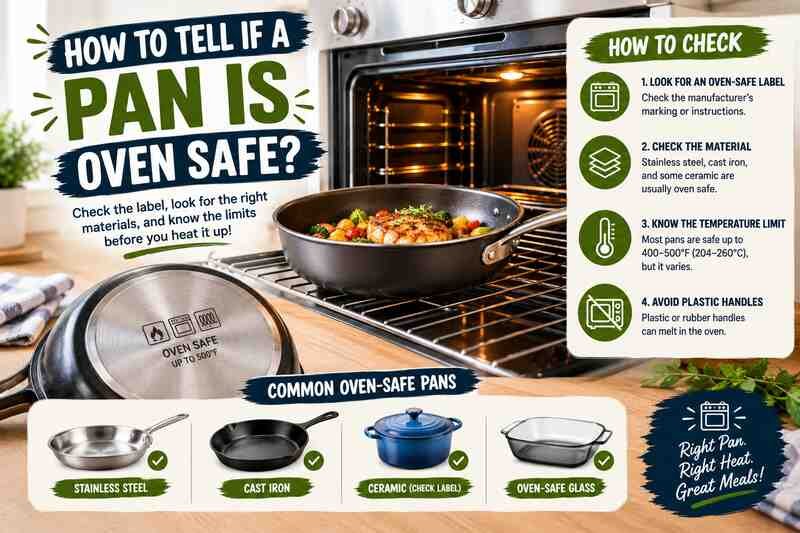
Oven-safe pans are key for cooking in many ways. They let you easily move from the stovetop to the oven. Knowing how to tell if pan is oven safe matters for keeping your food, and your cookware, in good shape. Look for symbols or care instructions from the maker, and check the pan’s material and handle before you slide it into a hot oven.
Most pans, like cast iron, stainless steel, and carbon steel, can go in the oven. But pans with plastic handles aren’t safe for the oven. Knowing which pans are safe is crucial for cooking more and avoiding kitchen accidents, and it only takes a minute once you know what to look for.
Key Takeaways
- Look for oven safety indicators in product descriptions and care instructions.
- Certain materials like cast iron, stainless steel, and carbon steel are generally oven-safe, though the exact temperature ceiling varies by brand.
- Avoid pans with plastic or mixed-material handles, as they may not withstand high oven temperatures.
- Always use heat-safe utensils like silicone, nylon, or wood when handling oven-safe cookware.
- Let oven-safe pans and dishes cool completely before handling or placing on surfaces.
Understanding Oven-Safe Cookware Basics
Having oven-safe cookware is key for cooking. It means the materials can handle oven heat without melting or getting damaged. These pans let you cook on the stovetop and then in the oven, making dishes like seared meat and keeping food warm. Before you buy new cookware or reach for an old hand-me-down pan, it helps to understand what actually determines whether something belongs in a hot oven in the first place.
Definition of Oven-Safe Cookware
Oven-safe cookware can handle oven heat better than regular cookware. It’s made to be durable and can handle high temperatures without warping, melting, or releasing fumes.
Why Oven-Safe Pans Matter in Cooking
Oven-safe pans are vital for many cooking techniques. They help you sear meat on the stovetop and then finish it in the oven. This ensures even cooking and a tasty crust. They also keep food warm until it’s time to serve, without needing to move it to another dish.
Temperature Limitations and Safety
Even though oven-safe cookware can handle high heat, always check the manufacturer’s guidelines. Going over the recommended temperature can damage the pan or be unsafe. Knowing your pan’s temperature limits is crucial for safe and successful cooking.
| Brand | Material | Oven-Safe Temperature |
|---|---|---|
| All-Clad | Stainless Steel | up to 600°F |
| Circulon | Nonstick | up to 400°F |
| Calphalon | Anodized Aluminum, Nonstick, Stainless Steel | 400°F to 500°F, depending on the line |
These figures come straight from each brand’s own care guide, and they’re a good illustration of why “oven-safe” isn’t one single number. Even within a single brand’s lineup, the safe temperature can shift by 100°F or more depending on the exact product. Always check your specific pan’s manual or the manufacturer’s website rather than assuming a figure from a similar-looking pan applies to yours.
How to Tell If Pan Is Oven Safe
Knowing how to tell if pan is oven safe is crucial for safety and great cooking. Here are the three things to check, in order:
- Manufacturer Symbols and Markings: Look for oven-safe symbols or markings stamped on the bottom of your pan or printed on its packaging. These usually show the pan’s maximum safe temperature.
- Material Composition: The pan’s material is key. Cast iron, stainless steel, and carbon steel are generally safe for high oven temperatures. But nonstick coatings and plastic handles may not handle heat as well.
- Handle Construction: Metal handles are usually safe for the oven. But plastic, silicone, or wooden handles might not be, even if the rest of the pan is oven-safe.
If you’re not sure if your pan is oven-safe after checking all three, it’s safer to look up your specific model on the manufacturer’s website or contact them directly. Knowing your cookware is oven-safe, rather than guessing, is what actually keeps your kitchen safe.
Understanding these points lets you use your pans safely in the oven. When in doubt, always default to the more cautious reading of the manufacturer’s instructions. A pan that passes all three checks, a clear symbol, a heat-tolerant material, and an all-metal handle, is about as safe a bet as you can make without calling the manufacturer directly.
Best Materials for Oven-Safe Cookware
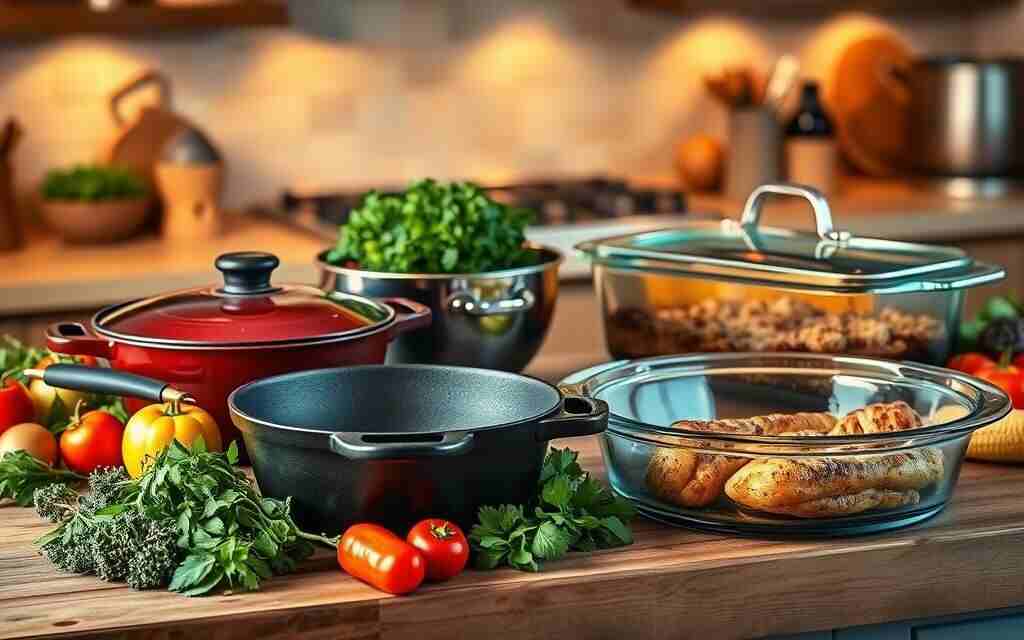
Some materials are better than others for oven-safe cookware. Cast iron, including enameled versions, is commonly rated for oven use up to around 600°F, making these pans great for many cooking tasks, like searing and roasting.
Cast Iron and Enameled Cast Iron
This cookware is known for keeping heat well. This ensures even cooking and browning. The durable construction of cast iron pans makes them a long-lasting choice. Enameled cast iron has a glossy, easy-to-clean surface, though its enamel coating means it’s usually rated a bit lower than bare cast iron; some brands, like All-Clad, rate their enameled cast iron up to 650°F, according to the brand’s own care and use guide, while others sit closer to 500°F.
Stainless Steel Construction
Stainless steel cookware is also a top pick for oven-safe cooking. Quality stainless steel pans, like All-Clad’s, are rated for up to 600°F per the manufacturer’s own guide. They distribute heat evenly and are very durable, lasting for many years.
Carbon Steel Benefits
Carbon steel combines the best of cast iron and stainless steel. It’s lightweight yet strong for oven-safe cooking, and it’s a favorite in professional kitchens for searing, roasting, and other high-heat cooking. Exact oven ratings vary quite a bit by brand and construction, so check your specific pan’s documentation rather than assuming a single number applies across the board.
Materials to Avoid in the Oven
Not all cookware is safe for the oven. Some can handle the oven’s heat, but others can’t. Knowing which materials to avoid is key for safety and keeping your pans in good shape.
Nonstick coatings are a big consideration. Most nonstick cookware shouldn’t go above about 450°F, per America’s Test Kitchen’s cookware guidelines. Putting a nonstick pan in a hotter oven than that can damage the coating and release fumes. If you cook with nonstick pans often, our guide on storing nonstick cookware properly also covers how to keep the coating in good shape between uses. You can always check the manufacturer’s guidelines for the exact maximum temperature rating of your specific nonstick cookware.
Plastic is another material to watch out for. Pans with plastic handles or parts should not go in the oven. The plastic can melt or warp at high temperatures, which is dangerous and can ruin your cookware.
Also, different cookware types have different temperature limitations, and that’s true even within the same material.
If you’re unsure, it’s safer to choose oven-safe cookware you’ve already confirmed. Options like cast iron, stainless steel, or enameled cast iron are good choices. They help prevent accidents and make cooking safer and more successful.
Understanding Pan Handle Materials
The material of a pan’s handle is key when it comes to oven-safe cookware. Knowing the good and bad of different materials helps you pick the best pan for you.
Metal Handles vs. Plastic Handles
Metal handles, often made of stainless steel, can handle high oven temperatures. They let you easily move your pan from the stovetop to the oven. This ensures your cooking stays consistent.
Plastic handles, though, can melt or warp at high oven heat. This makes them unsafe for oven use, even when the pan body itself is rated for high heat.
Silicone and Wood Handle Considerations
Silicone handles can handle moderate oven temperatures but may break down at high heat. Wood handles look nice but generally aren’t safe for the oven. They can burn or char in the oven’s heat.
For oven-safe cookware, choose pans with all-metal construction, including handles. This makes your cookware versatile and safe. It lets you easily switch between stovetop and oven, making a variety of oven dishes with confidence. If you’re also weighing what pan material is right for your health and cooking style more broadly, our guide on the safest cookware for your health covers that in more depth.
Temperature Limits for Different Pan Types
Knowing the temperature limits of your oven-safe cookware is key for safe cooking. The heat tolerance of your cookware depends on its material, and as covered above, the exact ceiling can vary by brand even within the same material.
| Cookware Material | Typical Temperature Limit |
|---|---|
| Cast Iron | Commonly up to 600°F |
| Carbon Steel | Varies by brand; check manufacturer |
| Stainless Steel | Up to 600°F for quality lines |
| Non-Stick | Up to about 450°F |
| Enameled Cast Iron | 500°F to 650°F, depending on brand |
Always check the manufacturer’s guidelines for the safe temperature of your specific pan to avoid damage, especially since coatings and enamel finishes can lower a pan’s ceiling well below what the base metal alone could handle.
Signs Your Pan Is Not Oven-Safe
When it comes to cookware, oven safety is key. Some pans can handle oven heat, but others might not. Here are signs your pan might not be safe for the oven:
Visual Indicators
- Pans with plastic handles or nonstick coatings rated for lower temperatures are usually not safe for a hot oven. They can melt or break down at high temperatures.
- Thin, lightweight pans can warp or bend in the oven. This can make them unsafe and damage their shape.
Manufacturer Markings
Look for any markings or symbols on your pan that show it’s oven-safe. If these are missing or hard to read, it’s safer to not use it in the oven.
Material Warning Signs
Be careful with pans made of mixed materials, like metal and non-metal parts. These can release strong smells, change color, or warp when heated.
If you’re not sure if a pan is oven-safe, it’s best to be cautious. Reach out to the manufacturer or skip using it in the oven. This helps avoid safety risks and keeps your cookware in good shape.
Safe Usage Practices and Precautions
Using oven-safe cookware safely is key. Always use heat-safe utensils and never forget oven mitts or pot holders. Even pans with stay-cool handles need protection. Never preheat empty pans to avoid damage.
Let pans cool down completely before washing. This prevents warping or damage from sudden temperature changes.
When moving pans from the stovetop to the oven, make sure the rack is in the right spot. This prevents accidents or spills. Always follow the manufacturer’s guidelines for temperature and usage. Ignoring these can lead to harmful fumes or damage to nonstick coatings.
Following these kitchen safety, oven handling, and heat protection tips ensures a safe cooking experience. Whether you’re cooking steaks or baking pastries, you’ll be safe and sound.
It’s also worth doing a quick visual check every so often, even on cookware you’ve used for years. Coatings wear down, handles loosen, and enamel can chip in ways that change a pan’s safety profile over time. A pan that was oven-safe when you bought it isn’t automatically still oven-safe five years and a thousand meals later, so knowing how to tell if pan is oven safe isn’t a one-time judgment call, it’s something worth rechecking now and then.
Conclusion
Figuring out how to tell if pan is oven safe really comes down to three quick checks: look for a maximum-temperature symbol or marking, confirm the pan’s body material can take the heat, and make sure the handle is metal rather than plastic, silicone, or wood. None of these checks take more than a minute, and skipping them is how pans get warped, coatings get damaged, or handles end up melted onto a hot rack.
The numbers you’ll see thrown around online, cast iron to 600°F, stainless steel to 600°F, nonstick capped around 450°F, vary meaningfully by brand and product line, so treat any single figure as a starting point rather than gospel. Your pan’s own manual or the manufacturer’s care page is always the final word. With those three checks and a quick look at your specific pan’s documentation, you can move confidently between stovetop and oven without guessing.

Hey, My name is MAMON. I am a SEO content creator and affiliate marketer with over 8 years of experience. I create honest product reviews, in-depth buying guides, and practical how-to articles to help readers make informed decisions. My mission is to provide trustworthy, research-backed content that delivers real value.
Leave a Reply