

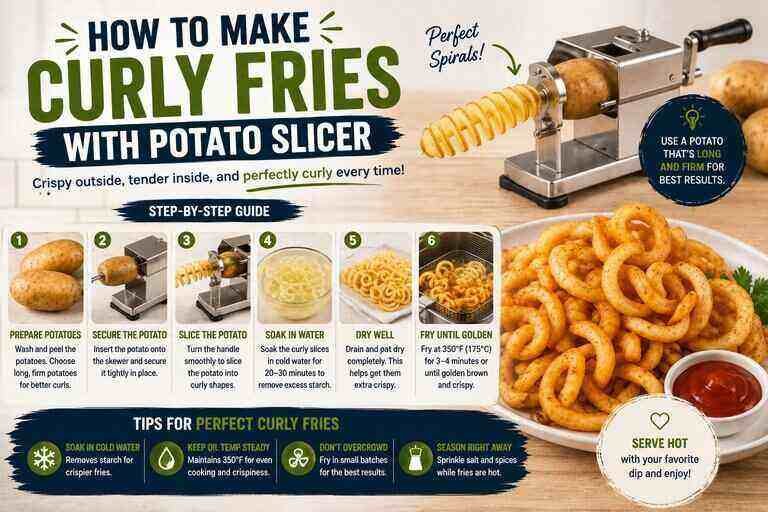

Knowing how to make curly fries with potato slicer tools starts with picking the right equipment. It’s the difference between a flat batch of straight-cut fries and the springy, extra-crispy spirals you’d get at a fast-food counter. The shape isn’t just for looks. Those tight curls pack more surface area per fry, and more surface area means more crispy edge and less soft middle.
Once you know how to make curly fries with potato slicer tools the right way, the process is genuinely simple: pick a starchy potato, run it through a spiral-blade slicer, and pay attention to oil temperature while it cooks. This guide covers picking the right potato and using a spiralizer safely. It also walks through seasoning, along with the frying, baking, and air-frying methods that get you a genuinely crunchy result.
Key Takeaways
- Learning how to make curly fries with potato slicer tools starts with a starchy potato and a spiral-blade slicer, not a regular cutter
- Russet or Idaho potatoes give the best texture; freshness and firmness matter more than size
- Soaking spiralized potatoes for 15-30 minutes removes surface starch for a crispier finish
- Deep frying at 375°F gives the crispiest result, but oven-baking at 450°F and air-frying both work well with less oil
- Season immediately after cooking, while the fries are still hot, so the seasoning actually sticks
What Are Curly Fries?
Curly fries are potatoes cut into long spirals rather than straight strips, then fried, baked, or air-fried until crisp. The spiral shape started showing up at U.S. fast-food chains decades ago and became a signature item at places like Arby’s. You don’t need a commercial kitchen to make them, though. A home spiralizer gets you the same shape, and once you understand how to make curly fries with potato slicer tools at home, the results hold up well next to the fast-food version. If straight-cut fries are more your speed, our guides to using a french fry cutter or cutting fries by hand cover those methods.
Why the Spiral Shape Works
A spiral cut has more exposed surface area than a straight-cut fry of the same volume. More surface area means more of each fry gets that crisp, browned edge. The continuous curl also cooks more evenly than an irregular hand-cut shape. That’s because the thickness stays consistent along the whole length, so there are no thick spots that stay soft while thin ones burn.


Choosing the Right Potatoes
The slicer matters, but the potato underneath it matters just as much.
Best Varieties for Curly Fries
Russet and other Idaho-grown potatoes are the standard choice. They’re high in starch and low in moisture, and that combination is what makes them crisp up on the outside while staying fluffy inside. It’s the same reason they’re the standard pick for straight-cut fries too. Waxy potatoes, like red or new potatoes, hold onto too much moisture and turn gummy instead of crisp, so they’re worth skipping for this recipe.
What to Look For
- Choose large, firm potatoes without blemishes or green spots. Bigger potatoes give a spiralizer more to work with and produce longer curls.
- Smooth-skinned potatoes peel and feed through a slicer more easily than knobby ones.
- Skip any potato that’s started sprouting; sprouting is a sign it’s past its prime and the texture will suffer.
Essential Tools for Making Curly Fries
A regular knife can’t make a curly fry; you need a tool with a spiral blade.
Types of Slicers That Work
- Tabletop spiralizers suction to the counter and turn a whole potato into a continuous spiral with a hand crank. The OXO Good Grips 3-Blade Tabletop Spiralizer is a well-known option, also sold through America’s Test Kitchen’s own shop.
- Handheld spiral slicers are cheaper and more compact, good for occasional use or small batches, though they take more arm effort per potato.
- Julienne peelers can approximate a curled shape in a pinch but won’t produce the same tight, continuous spiral as a dedicated spiralizer.
If you’re still deciding which slicer to buy, our potato slicer buying guide covers current options across price points.
Other Tools You’ll Need
- Deep fryer or a large heavy pot: for the crispiest, most classic result.
- Instant-read or clip-on thermometer: keeps the oil in the 350-375°F range, since guessing at oil temperature is the single biggest cause of soggy or greasy fries.
- Tongs or a spider strainer: for safely lowering and lifting fries out of hot oil.
Using a Spiralizer Safely
Make sure the spiralizer’s suction base is firmly locked to a clean, dry countertop before you start cranking. A slicer that shifts mid-cut is the main safety risk. Keep your guiding hand on the crank handle only, never near the blade housing. Unplug or disengage any electric model before clearing a jam. Once you’re done, our guide on cleaning a potato slicer safely covers how to take the blade assembly apart without cutting yourself.
Preparing the Potatoes
Good prep is what separates crispy curly fries from soggy ones.
Washing and Peeling
Scrub potatoes clean under running water. Peeling is optional; the skin holds up fine through spiralizing and adds a bit of texture if you leave it on.
Cutting Technique
Trim a flat base on one end of the potato so it seats securely in the spiralizer. Use a blade close to 1/4 inch for classic curly-fry thickness. Feed the potato through at a slow, steady pace rather than forcing it. That steady pace is what keeps the spiral from tearing apart mid-cut.
Soaking for Crispiness
Once spiralized, submerge the curls in cold water for 15-30 minutes. This rinses off surface starch that would otherwise make the fries gummy or cause the spirals to stick together in the fryer. Drain and pat them thoroughly dry before cooking. Wet potatoes cause dangerous oil splattering, so don’t skip this step.
How to Make Curly Fries with Potato Slicer Tools: Frying Methods
Once your curls are cut and soaked, you have three solid ways to cook them.
Deep Frying
Deep frying at 375°F is the classic route and gives the crispest result. Fry in small batches so you don’t crowd the oil or drop its temperature. Use your thermometer to keep it in range throughout the whole batch. Fill your pot or fryer with enough oil to fully submerge the curls, generally 3-4 inches deep in a heavy pot, and leave a few inches of headroom below the rim since the oil will bubble up once the fries go in. Choosing the right oil matters here too. According to WebstaurantStore’s cooking oil guide, refined peanut oil and sunflower oil both have smoke points around 450°F, and canola oil runs 400-475°F. All three stay comfortably clear of the 375°F target, which makes them more stable choices for deep frying than an oil with a lower smoke point.
Oven-Baking
Toss the curls in a thin coat of oil and roast at 450°F on a single layer, flipping halfway through. Baked curly fries won’t get quite as crisp as deep-fried ones, but they use a fraction of the oil. Spread them out in a single layer without overcrowding and they come out genuinely crunchy.
Air-Frying
An air fryer gets you close to deep-fried texture using hot circulating air instead of a pool of oil. Cook in batches rather than one crowded layer. Overcrowding is the most common reason air-fried curly fries come out limp instead of crisp. See our guide on cooking french fries in an air fryer for timing that applies to curly cuts too.

Seasoning Your Curly Fries
A Classic Blend
A mix of paprika, garlic powder, onion powder, salt, and black pepper gets you close to the seasoning on a well-known fast-food curly fry. It’s a simple five-ingredient blend anyone can keep on hand. Add cayenne or chili powder if you want heat.
Building Your Own Blend
- Start with equal parts salt and pepper, then build from there with dried oregano, rosemary, or thyme for an herbal direction.
- Smoked paprika, cumin, and a little lime zest make a bolder, smokier blend worth trying.
- Season immediately after frying or baking, while the fries are still hot. Seasoning added even a few minutes later won’t stick nearly as well.
Serving Suggestions
Dipping Sauces
Ketchup, ranch, and cheese sauce are the reliable defaults. For something different, try garlic aioli, spicy chipotle mayo, or a simple honey mustard.
Pairing Ideas
Curly fries work well alongside burgers, fried chicken, and sandwiches. They also hold their own next to steak or grilled chicken for a heartier plate.

Storing and Reheating Leftovers
Storage
Store leftover curly fries in an airtight container in the fridge and eat them within 3-4 days for the best texture.
Reheating Without the Sog
Skip the microwave; it turns crisp fries soft almost instantly. Instead, reheat in a 400°F oven for 5-10 minutes, or in an air fryer at 400°F for 4-6 minutes. Shake the basket halfway through either method. Spread the fries out rather than piling them up so the heat can actually crisp the surface back up.
Troubleshooting Common Issues
| Issue | Likely Cause | Fix |
|---|---|---|
| Soggy fries | Overcrowded oil/basket, or oil temperature too low | Fry or air-fry in smaller batches; keep oil at 350-375°F |
| Spirals fall apart while cutting | Potato fed through too fast, or blade dull | Feed the potato through slowly and steadily; replace a dull blade |
| Fries taste greasy | Oil too cool, so fries absorb it instead of frying | Verify oil temperature with a thermometer before adding fries |
Variations Worth Trying
Cheese-Stuffed Curly Fries
Wrap a spiralized strand around a small stick of cheddar or mozzarella before frying for a gooey, indulgent version.
Vegan and Gluten-Free
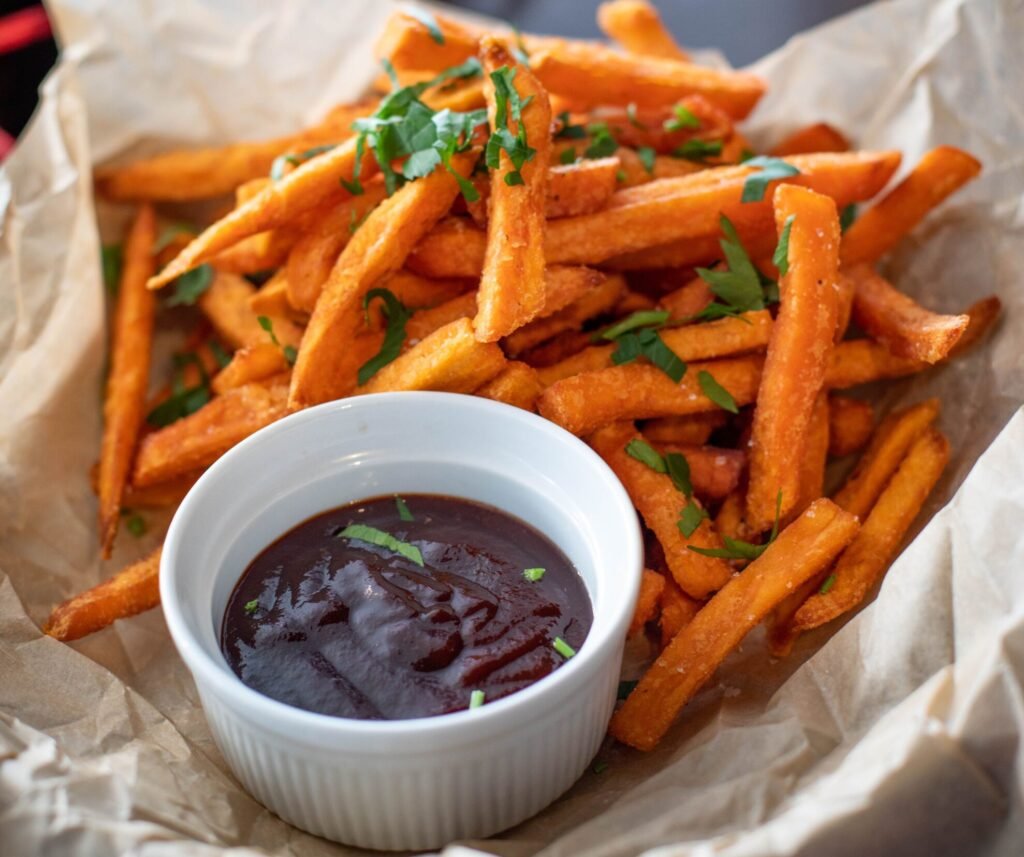
Swap in sweet potatoes and season with nutritional yeast for a dairy-free option with a savory edge. For gluten-free curly fries with a light batter, use rice flour instead of all-purpose.
Spicy Curly Fries
Cayenne, chili powder, or a drizzle of hot sauce turns a classic batch into something with real heat. None of it changes the cutting or cooking steps at all. If you want to branch into other cuts entirely, our guide to making wavy potato slices at home uses the same basic slicer setup for a different shape.
Frequently Asked Questions
Do I need a special tool to make curly fries?
Yes. A regular knife can’t produce a continuous spiral; you need a spiralizer or a spiral-blade slicer built for the job.
What’s the best potato for curly fries?
Russet and other Idaho-grown potatoes, thanks to their high starch and low moisture content, which crisps up better than waxy varieties.
Is soaking the spiralized potatoes necessary?
It’s not required, but it noticeably improves crispness by rinsing off surface starch that would otherwise make the fries gummy.
Can I make curly fries without deep frying?
Yes. Oven-baking at 450°F or air-frying both produce a genuinely crisp result with far less oil than deep frying.
Why do my curly fries fall apart when I cut them?
This usually means the potato was fed through the spiralizer too quickly. Slow, steady pressure keeps the spiral intact from end to end.
How much oil do I need to deep fry curly fries?
Use enough oil to fully submerge the curls, which usually means filling a heavy pot to about 3-4 inches deep. Leave a few inches of clearance below the rim so the oil doesn’t bubble over once the fries go in.
Can I use the same spiralizer for other vegetables?
Yes. Most spiral slicers handle carrots, zucchini, and sweet potatoes as easily as russets. The same tool you use to make curly fries with potato slicer attachments can double for spiralized vegetable sides.
Final Thoughts
Once you’ve got a good spiralizer and a starchy potato, knowing how to make curly fries with potato slicer tools comes down to three things: soaking, seasoning at the right moment, and picking a cooking method that fits how much oil you want to use. Start with the classic deep-fry method if crispness is the priority. Lean on the oven or air fryer instead for an easier weeknight version that still turns out crisp.


Hey, My name is MAMON. I am a SEO content creator and affiliate marketer with over 8 years of experience. I create honest product reviews, in-depth buying guides, and practical how-to articles to help readers make informed decisions. My mission is to provide trustworthy, research-backed content that delivers real value.