Ever had your salt grinder stop working right? Maybe it used to grind salt smoothly but now it’s slow or uneven. Salt buildup is usually the cause. But don’t worry, cleaning it can make your grinder work like new again.
Sarah, a passionate home cook, had this problem with her Peugeot salt grinder. After eight years, it wasn’t grinding salt as well as it used to. She decided to clean it to get back its original performance.
In this guide, we’ll show you how to clean salt buildup in grinder step by step, helping you extend its life and enjoy smooth grinding again. Let’s get started!
Key Takeaways
- Salt buildup can significantly impact the performance and functionality of your grinder.
- Regular cleaning is essential to maintain your grinder’s optimal condition and output.
- Proper cleaning techniques can restore your grinder’s performance, allowing you to achieve the desired seasoning texture.
- Preventative maintenance, such as using high-quality salt and keeping the grinder away from heat sources, can help minimize salt buildup.
- Identifying the signs of salt accumulation and addressing it promptly can extend the lifespan of your grinder.
Understanding Salt Buildup in Grinders
Salt buildup is a common problem in many grinders. It affects their performance and how well they work. This buildup comes from moisture and humidity in the air. It also happens when grinders are exposed to steam and heat from cooking.
What Causes Salt Buildup?
Moisture and salt are the main reasons for buildup in grinders. When salt meets humidity or steam, it dissolves and gets into the grinder. As it dries, the salt turns into a hard, crusty residue. This residue can block the grinder’s work.
Impact on Grinder Performance
Salt buildup can really slow down a grinder. It can block the grinding parts, making it hard to get the right amount of salt. This can mess up the taste of your food. It can also make the grinder wear out faster.
| Symptom | Impact on Grinder Performance |
|---|---|
| Clogged grinding mechanism | Reduced salt output and inconsistent grind textures |
| Accelerated wear and tear of internal components | Decreased grinder lifespan |
| Difficulty achieving desired seasoning or flavor | Compromised quality of dishes |
To keep your grinder working well, you need to clean it regularly. Knowing why salt buildup happens helps you take care of your grinder. This way, you can enjoy great seasoning in your dishes.
Tools and Supplies for Cleaning
Keeping your grinder clean is key for great taste and performance. You’ll need the right tools and supplies for a deep clean. Let’s look at the best cleaning materials and essential tools.
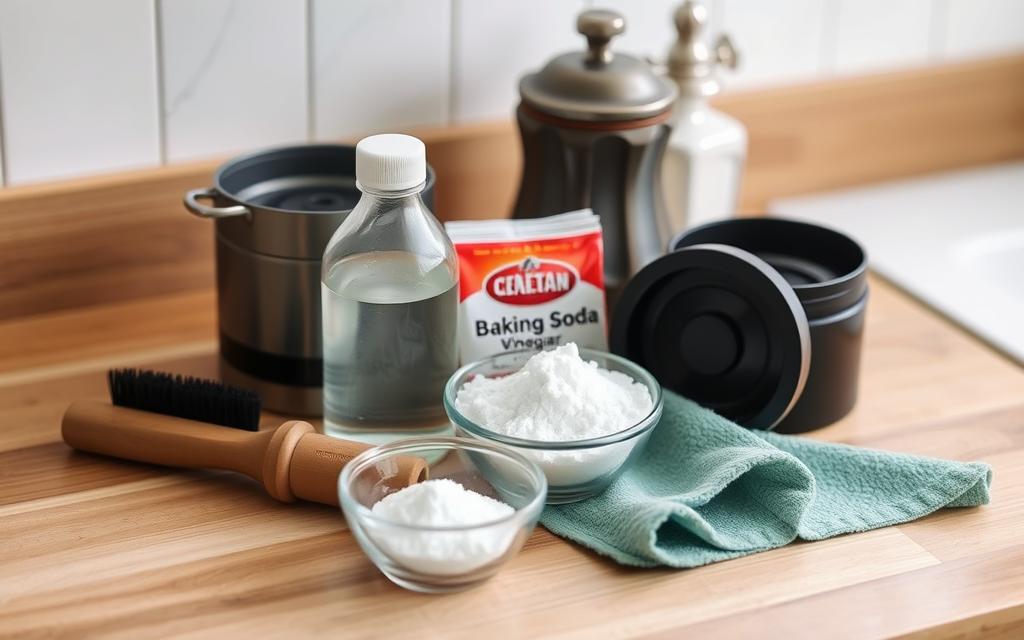
Recommended Cleaning Materials
For cleaning your grinder, avoid harsh chemicals. Instead, use gentle yet effective options. The best materials include:
- Isopropyl alcohol (90% or higher concentration)
- Warm, soapy water
- A small brush, such as a paint or pastry brush, for hard-to-reach areas
- A clean, soft cloth or paper towels
Don’t use vinegar or acidic cleaners. They can harm your grinder, mainly if it’s plastic or acrylic.
Essential Tools for the Job
You’ll also need some key tools for cleaning:
- A Phillips-head screwdriver for disassembling the grinder
- A mesh dish cloth or small, soft-bristle brush for scrubbing the grinder parts
- A toothpick or small tool for dislodging stubborn debris
With these tools and supplies, you’re ready to clean your grinder. This will make it work better than ever.
Step-by-Step Cleaning Process
Keeping your grinder clean is key for it to work well and last long. The grinder cleaning process is a detailed method. It involves taking it apart, cleaning each part, and putting it back together. Here’s a simple guide to keep your grinder in great shape.
Disassembling Your Grinder
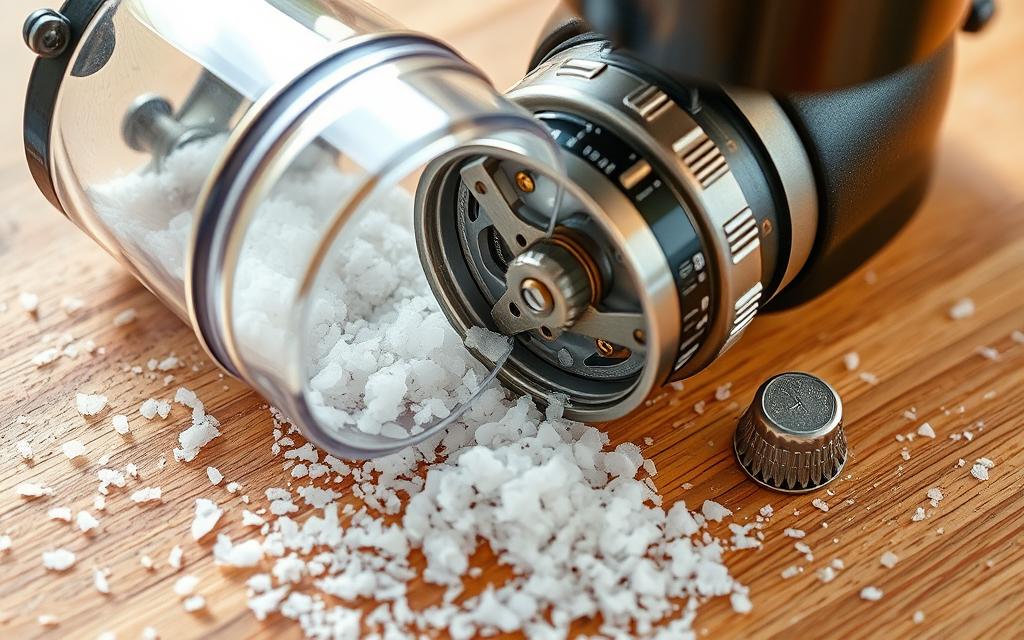
Start by unscrewing the top nut to open the grinder. This lets you get to the inside parts and clean them well. Make sure to empty out any leftover salt or debris from inside.
Cleaning the Grinder Parts
- Use a small brush or cloth to remove any stuck particles or buildup from the grinder cleaning process parts, like the grinding teeth and chamber.
- Quickly rinse the steel grinding parts under running water to get rid of any leftover residue.
- Scrub the acrylic body of the grinder with a mesh dish cloth to clean it well.
- Rinse each part well with warm water to get rid of any dirt, salt, or cleaning solution left behind.
Reassembling the Grinder
After cleaning and drying all parts, put the grinder back together in the reverse order you took it apart. Make sure everything fits right and is tightly secured to prevent problems while using it.
“Thorough rinsing under warm water is recommended post-cleaning to remove any alcohol, salt, or soap residue.”
By following this grinder cleaning process step-by-step, you can keep your grinder in top condition. This ensures a smooth and consistent grinding experience every time.
Using Vinegar to Remove Buildup
Vinegar is great for many cleaning tasks, but it’s not the best for salt buildup in grinders. Its acidity can harm the grinder’s parts, affecting how well it works. A warm, soapy water mix is usually enough to keep your salt grinder in good shape.
If you still want to use vinegar, make sure to dilute it well. Also, rinse the grinder well after. If vinegar is not fully rinsed out, it can make your salt taste bad. By doing things right, you can use vinegar safely and effectively.
Why Vinegar Works
Vinegar is full of acetic acid, making it a strong cleaner. It can dissolve salt buildup in your grinder. Its acidity helps break down tough mineral deposits and grime.
How to Use Vinegar Safely
- Dilute the vinegar with an equal amount of water to create a 50/50 solution.
- Disassemble the grinder completely, ensuring all parts are accessible.
- Soak the individual components in the vinegar-water mixture for 15-20 minutes.
- Use a soft-bristled brush or cloth to gently scrub the parts, removing any remaining buildup.
- Rinse the parts thoroughly under running water to remove all traces of the vinegar solution.
- Dry the components completely before reassembling the grinder.
By following these steps, you can clean your salt grinder with vinegar safely. Just remember, use vinegar in moderation.
Baking Soda: An Alternative Solution
Vinegar is often used to clean salt grinders, but baking soda is also a good choice. It’s gentle yet effective, making it perfect for cleaning grinders without harm. This is because baking soda is abrasive but not too harsh.
Benefits of Baking Soda for Cleaning
Baking soda is a natural cleaner that’s safe for your grinder. It’s mild but can remove tough salt deposits. Its alkaline nature also helps counteract the acid in salt, making it easier to clean.
Application Methods
To clean your salt grinder with baking soda, mix it with a bit of water to make a paste. Apply this paste to the salt buildup, let it sit for a few minutes, then scrub gently. Rinse well with warm water to get rid of any leftover baking soda and salt.
For a deeper clean, soak the parts of your grinder in a baking soda solution for 30 minutes to an hour. This will help dissolve the salt buildup. After soaking, rinse and dry the parts well before putting your grinder back together.
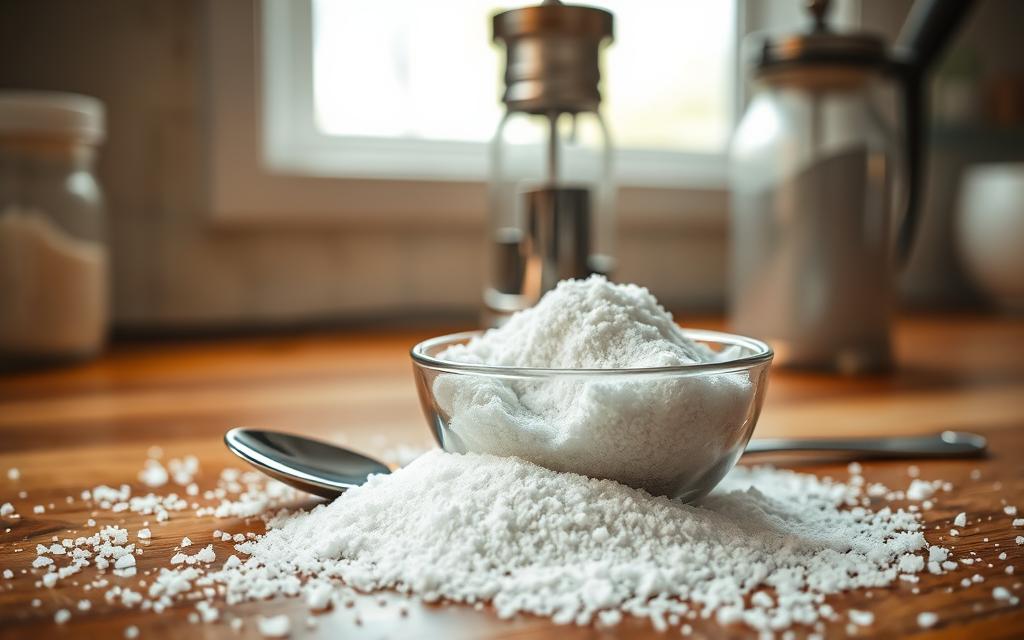
Baking soda is a great alternative for cleaning your salt grinder. It’s easy to use and won’t damage your grinder. Adding baking soda to your cleaning routine can help your grinder last longer and work better.
Regular Maintenance to Prevent Buildup
Keeping your grinder in good shape is crucial to avoid too much salt buildup. A regular cleaning routine helps your grinder work well and last longer.
Frequency of Cleaning
Experts say to clean your grinder every few months or when you add new salt. This keeps salt from building up and causing problems later.
Tips for Everyday Use
- Don’t keep your grinder near heat or in humid places, as it can lead to salt buildup.
- Use a dry cloth to wipe the outside of your grinder often to stop moisture buildup.
- Take apart and clean your grinder at least once a year, or more if you use it a lot.
By focusing on grinder maintenance and salt buildup prevention, your grinder will keep working great. It will give you consistent results for all your cooking needs.

How to Identify When Your Grinder Needs Cleaning
Keeping your coffee grinder clean is key to making great-tasting coffee. But, it can be hard to know when it needs cleaning. Paying attention to signs of salt buildup and changes in how it works helps keep your grinder in great shape.
Signs of Salt Accumulation
- Reduced salt output: If your grinder makes less salt than usual, it might be clogged with salt.
- Visible salt residue: Check the grinder’s parts for a white, grainy buildup. This means it’s time to clean.
- Inconsistent grinding: Salt buildup can mess with the grinder’s ability to grind salt evenly, affecting your coffee.
Performance Indicators
- Increased effort to grind: If grinding salt takes more effort, it’s a sign of blockages inside.
- Unpredictable texture: Changing the grind setting might not work as expected if the grinder’s not working right.
- Decreased grinding speed: If the grinder grinds slower than usual, it needs a good cleaning.
By watching for these signs, you can keep your coffee grinder working well. Regular cleaning is essential for great-tasting coffee.
| Indicator | Description |
|---|---|
| Reduced Salt Output | If your grinder is producing less salt than usual, despite consistent adjustments, it could be a sign of salt buildup. |
| Visible Salt Residue | Look closely at the grinder’s burrs, chute, and other internal components. If you see a white, grainy substance accumulating, it’s time for a cleaning. |
| Inconsistent Grinding | When salt builds up, it can interfere with the grinder’s ability to produce a uniform salt texture, leading to inconsistencies in your brew. |
| Increased Effort to Grind | If your grinder requires more effort to produce the same amount of salt, it’s a sign that the internal components are becoming obstructed. |
| Unpredictable Texture | Adjusting the grind setting may not produce the expected texture if the grinder is not operating at its optimal performance level. |
| Decreased Grinding Speed | A noticeable slowdown in the grinder’s speed can indicate the need for a thorough cleaning. |
Deep Cleaning Your Grinder
As your grinder gets used a lot, it’s key to do a deep clean to keep it working well. You should deep clean it at least once a year or when it starts to work less well.
When to Deep Clean
It’s best to deep clean your grinder every 6 months to stop too much buildup. But, if you see it grinding slower, or it’s harder to turn, it’s time for a clean.
Deep Cleaning Techniques
- Take apart the grinder completely, making sure to remove all parts you can.
- Soak the parts in warm soapy water, using a soft-bristled brush to clean off tough deep cleaning grinder buildup.
- For metal grinders, soaking parts in isopropyl alcohol can help with thorough salt removal.
- After rinsing well, make sure all parts are dry before putting the grinder back together.
By using these deep cleaning methods, you can get your grinder working like new again. This will make grinding your herbs smooth and easy.
Storing Your Grinder Properly
Storing your salt grinder right is key to keeping it working well for a long time. Whether it’s a classic salt mill or a modern electric one, the right storage helps avoid salt buildup. It also keeps your device in great shape.
Ideal Storage Conditions
For your salt grinder to stay in top condition, store it in a cool, dry spot. Keep it away from heat or moisture. Don’t put it near stoves, ovens, or humid places, as these can cause salt buildup.
Use a rotating spice rack or a special drawer to store it. This keeps it easy to reach and safe from harm.
Recommended Storage Practices
- Store your salt grinder in a cool, dry place, away from heat sources and moisture.
- Utilize a rotating spice rack or designated storage drawer to keep the grinder conveniently accessible.
- Ensure the grinder is thoroughly cleaned and dried before storing to prevent salt buildup.
- If possible, store the grinder with the mill mechanism in the “open” position to allow for air circulation and prevent caking.
- Avoid stacking heavy items on top of the grinder, as this can cause damage to the mechanism.
By following these easy storage tips, you can make your salt grinder last longer. Proper grinder storage and regular salt mill maintenance ensure a smooth and fun spice-grinding experience.
Common Mistakes to Avoid
Keeping your grinder clean is key for its best performance and life span. But, some common errors can undo all your efforts and even harm your grinder. Stay away from these mistakes to keep your grinder in great shape.
Incorrect Cleaning Techniques
Wrong cleaning ways can harm your grinder or not get rid of buildup well. Don’t use harsh abrasives like steel wool or sandpaper, as they can scratch parts. Also, never put your grinder back together while parts are still wet, as it can cause corrosion and problems.
Using Harmful Chemicals
Some cleaners have harsh chemicals that can damage your grinder’s materials. Stay away from bleach, ammonia, or other strong solvents, as they can weaken your grinder. Instead, use gentler, natural cleaners like vinegar or baking soda, which work well without harming your equipment.
| Cleaning Mistakes | Impact on Grinder |
|---|---|
| Using abrasive materials | Scratches and damage to components |
| Reassembling wet grinder parts | Corrosion and malfunction |
| Applying harsh chemicals | Degradation of materials and structural integrity |
Avoid these common grinder cleaning mistakes and use the right cleaning methods. This way, you can keep your grinder in top condition and enjoy its best performance for many years.
Troubleshooting After Cleaning
Keeping your grinder clean is key, but sometimes problems pop up even after cleaning. Don’t worry, we’ve got some top tips to fix your grinder.
Common Issues and Solutions
If your grinder isn’t working right after cleaning, check if it’s put back together correctly. Make sure all parts are in their right spots and tight. Also, tweaking the grind settings can help a lot.
At times, the grinding part might be broken, causing ongoing problems. If you’ve tried fixing it yourself and it still doesn’t work, get help from a pro. A skilled repair person can check your grinder and tell you what needs fixing or replacing.
When to Seek Professional Help
- Grinding mechanism appears damaged or worn
- Persistent performance issues despite proper cleaning and reassembly
- Unusual noises or vibrations during operation
- Inability to achieve desired grind consistency
If you’re facing grinder troubleshooting or post-cleaning issues, don’t wait. Contact the maker or a trusted repair service. They can find and fix the problem fast, making your grinder work like new again.
Conclusion
Keeping your salt grinder clean is key to its performance. It ensures you get a consistent, high-quality seasoning. By following the cleaning tips in this article, you can keep your grinder in great shape.
Recap of Key Cleaning Tips
Regular cleaning and the right tools are crucial for grinder maintenance. Always disassemble your grinder and soak parts in 91% isopropyl alcohol. Avoid harsh cleaners that can harm the metal.
Also, remember the cleaning needs for different materials. Use warm, soapy water for acrylic or plastic grinders.
Encouragement to Maintain Cleanliness
With a bit of effort and the right cleaning routine, your salt grinder will stay in top condition. This ensures a smooth seasoning experience for years. Regular maintenance not only keeps your herbs fresh but also extends your grinder’s life.
Leave a Reply