
Learning how to clean a gas grill with minimal effort comes down to timing, not scrubbing harder. Clean it while it’s still warm, right after cooking. Most of the grease comes off before it has a chance to bake on. Below is a full step-by-step routine, plus one common cleaning habit that’s actually a safety risk according to the CPSC.
Key Takeaways
- Clean grates while the grill is still warm. Grease scrapes off far easier than after it cools and hardens.
- The CPSC recommends nylon brushes or a ball of foil over wire brushes. Loose bristles can end up in food and cause injury.
- A quick after-use wipe-down plus a deeper monthly clean keeps grease from building up into a fire hazard.
Why Cleaning a Gas Grill Matters
A dirty grill isn’t just an eyesore. Grease buildup in the bottom tray and around the burners is a common cause of grill fires. It also hurts performance: clogged burner ports create uneven flames and hot spots. Old grease can add a bitter, burnt taste to fresh food. A few minutes of upkeep after each cook prevents most of this. That’s exactly why learning how to clean a gas grill with minimal effort pays off over a full season.
There’s also a hygiene angle that’s easy to overlook. Every time you place raw meat, poultry, or seafood on the grates, leftover grease and food particles are sitting right there. Regular cleaning keeps that residue from cross-contaminating your next cook, which matters as much as flavor and grill longevity.
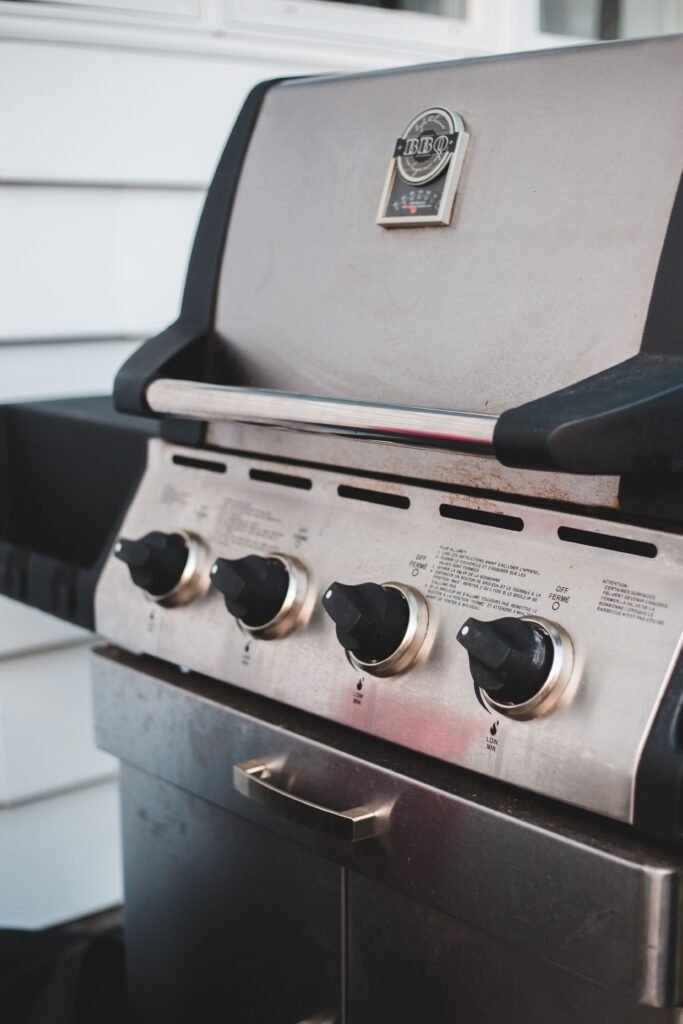
What You’ll Need
Before diving into how to clean a gas grill with minimal effort, gather these basics so you’re not stopping mid-task:
- A grill brush with nylon bristles, or a crumpled ball of heavy-duty foil and tongs
- Dish soap and warm water
- A plastic scraper or putty knife
- A few sponges or a microfiber cloth
- Rubber gloves
- A trash bag for scraped-off debris
Cleaning Different Grill Materials
Not every gas grill is built the same way. The right cleaning approach depends on what your grates and cookbox are made of:
- Porcelain-coated cast iron or steel grates: Stick to nylon brushes or soft scrubbers. Wire bristles and metal scrapers can chip the coating. That exposes bare metal, which will rust.
- Stainless steel grates: More forgiving than porcelain. Still avoid steel wool. A stainless-safe brush and cleaner keep the finish looking uniform.
- Cast iron grates (uncoated): After washing, dry thoroughly. Apply a light coat of cooking oil to prevent rust, the same way you’d re-season a skillet.
- Stainless steel or aluminum exteriors: Wipe in the direction of the grain to avoid streaking. Use a dedicated polish for a finished look.
Knowing your grill’s materials up front saves trial and error. It’s part of what makes a routine genuinely low-effort instead of one that damages the grill over time.
Step-by-Step: How to Clean a Gas Grill with Minimal Effort
The routine below breaks cleaning into eight manageable steps. None of them take more than a few minutes on their own, and together they cover everything from the grates to the exterior.
Step 1: Turn Off the Gas and Let It Cool Slightly
Shut off the burners. Disconnect the propane tank, or turn off the natural gas line at the source. Let the grill cool to warm, not cold. Grease scrapes off more easily while still soft than once it’s had time to harden.
Step 2: Burn Off Loose Residue First
Before you pick up a brush, relight the grill on high with the lid closed for 10 to 15 minutes, if it’s still connected. This reduces stuck-on food to light ash that mostly falls away on its own. Skip this step if you’ve already disconnected the gas.
Step 3: Clean the Grates
Remove the grates and scrub both sides with your brush. The CPSC specifically recommends aluminum foil or a nylon brush instead of a wire brush. Loose bristles can snap off and stick to the grates. From there they can end up in food, sometimes causing serious throat or gastrointestinal injury. For stuck-on grime, soak the grates in warm soapy water for 20 to 30 minutes first, then scrub and rinse.
Step 4: Clean the Burner Covers and Flavorizer Bars
Lift out the metal plates or flavorizer bars over the burners. Wipe them with a soapy sponge. Check the burner tubes for clogged ports; a straightened paper clip clears blockages without damaging the metal. Brush along the length of the tube rather than side to side. Pushing debris into the ports can affect gas flow.

Step 5: Empty and Wipe the Grease Tray
Slide out the grease or drip tray. Dump the contents into a trash bag. This tray is the single biggest factor in grill fires when neglected. Accumulated grease has nowhere to go but up toward the burners. Wipe the tray with a soapy sponge, rinse, and let it air dry before sliding it back in.
Step 6: Scrape the Bottom of the Cookbox
Use a plastic scraper or putty knife to remove charred debris from the floor of the cookbox. Avoid metal scrapers on porcelain-coated interiors. They can chip the coating and expose bare metal to rust.
Step 7: Wipe the Exterior
Clean the outside surfaces, handles, and lid with a soft sponge and soapy water. For stainless steel, wipe in the direction of the grain to avoid visible scratch marks. Rinse with clean water and dry with a microfiber cloth to prevent water spots.
Step 8: Reassemble and Burn Off Any Soap Residue
Put the grates, flavorizer bars, and grease tray back in place. Reconnect the gas. Run the grill on high for 10 to 15 minutes with the lid open. This dries any remaining moisture and burns off soap residue before your next cook.
Quick Clean vs. Deep Clean
You don’t need to do all eight steps every time you grill. A quick wipe of the grates and a burn-off after each use covers most of the maintenance load. Save the full routine for once a month during heavy grilling season. This is really the core of learning how to clean a gas grill with minimal effort long-term. It beats facing one big dreaded session at the end of summer.
Common Mistakes to Avoid
- Using a traditional wire brush. The CPSC has documented injuries from swallowed bristles; switch to nylon or a foil ball.
- Cleaning a fully cooled grill. Hardened grease takes far more scrubbing than grease that’s still warm and soft.
- Ignoring the grease tray. A full tray is one of the most preventable causes of flare-ups and grill fires.
- Using harsh abrasives on porcelain grates. Steel wool and metal scrapers can strip the coating and lead to rust.
- Skipping the burn-off after cleaning. Leftover soap residue can affect the flavor of your next cook if it isn’t burned off first.
Preparing Your Grill for Storage
If you’re putting the grill away for winter, a few extra steps prevent problems down the line. Run through the full deep-clean routine one last time. Disconnect and store the propane tank upright in a cool, dry spot away from the house, never indoors. Coat cast iron grates with a thin layer of oil before storing to guard against rust. Cover the grill with a breathable, waterproof cover. Checking hoses and connectors for cracks before the next season’s first cook is a quick habit that catches problems while they’re still minor.
How Often Should You Clean a Gas Grill?
Wipe the grates and do a quick burn-off after every use. Empty the grease tray every 3 to 5 cooks, or sooner if you grill fatty meats often. Plan a full deep clean once a month during grilling season, and again before winter storage. Grills that have used wood pellets for extra smoke flavor tend to build up residue faster. Lean toward the more frequent end of that schedule if you smoke often.
Grill Safety While Cleaning
The U.S. Consumer Product Safety Commission notes that grease buildup and damaged hoses commonly contribute to the roughly 600 gas grill fires and explosions reported each year. A few habits reduce that risk while you clean:
- Always disconnect the gas supply before disassembling any part of the grill.
- Check hoses and connections for cracks while everything is apart and easy to see.
- Never use water to put out a grease fire. Keep a Class K or ABC extinguisher nearby instead.
- Let the grill fully cool before storing it. Residual heat combined with trapped grease is a fire risk.
Watch: A Full Gas Grill Cleaning Walkthrough
This manufacturer video from Char-Broil walks through cleaning a gas grill, from the grates down to the grease tray. It’s a useful visual companion to the steps above.
Frequently Asked Questions
Is it safe to use a wire brush on my gas grill?
The CPSC recommends against it. Loose bristles can break off and stick to the grates, then transfer to food, where they’ve caused throat and gastrointestinal injuries. A nylon brush or a crumpled foil ball is a safer choice. Both clean just as effectively once you’re used to the motion.
How often should I clean my gas grill?
Wipe the grates and burn off residue after every use. Empty the grease tray every 3 to 5 cooks, and do a full deep clean, including the burners and cookbox interior, about once a month during grilling season.
Can I clean the grates in the dishwasher?
No. Grease and soot residue can produce smoke and permanent staining inside the dishwasher. Porcelain-coated grates aren’t designed for that kind of cycle either. Hand-washing in soapy water is the safer option.
What’s the fastest way to clean a gas grill after cooking?
Burn off residue on high heat for 10 to 15 minutes with the lid closed. Then brush the warm grates once the grill cools slightly. This two-minute routine is the closest thing to how to clean a gas grill with minimal effort on a weeknight. It handles most of the buildup before it hardens.
Why does my grill still smell like gas after cleaning?
A lingering gas smell after reassembly usually means a loose connection, not leftover cleaning product. Check that the hose and regulator are fully reattached. Test connections with a soapy water spray. Bubbles indicate a leak that needs attention before you light the grill again.
Bottom Line
Once you build the habit, you’ll find that how to clean a gas grill with minimal effort really comes down to timing. Scrape while it’s warm. Empty the grease tray before it overflows. Save the deep clean for once a month rather than once a season. Skip the wire brush in favor of nylon or foil, and your grill will stay safer, last longer, and cook more evenly all season. For more on getting the most out of your setup, see our guide on using wood pellets on a gas grill.

Hey, My name is MAMON. I am a SEO content creator and affiliate marketer with over 8 years of experience. I create honest product reviews, in-depth buying guides, and practical how-to articles to help readers make informed decisions. My mission is to provide trustworthy, research-backed content that delivers real value.
Leave a Reply