Pellet stoves mix the warmth of old wood stoves with today’s heating tech. They burn wood or biomass pellets, a cleaner option than older stoves. You can have them as standalone units or fireplace inserts. They offer extra heat or can be your main heating source.
Thanks to automated systems and thermostats, they work like modern furnaces. This means they burn clean and produce little ash or emissions.
Key Takeaways
- Pellet stoves are highly efficient and eco-friendly home heating solutions that burn compressed wood or biomass pellets.
- Automated feeding systems and thermostatic controls allow pellet stoves to operate like modern furnaces, providing consistent and regulated heat output.
- Pellet stoves can be freestanding or inserted into existing fireplaces, offering versatility in home heating options.
- Pellet stoves produce minimal ash and emissions compared to traditional wood-burning stoves, making them a cleaner heating alternative.
- Proper venting and installation are crucial for the safe and efficient operation of pellet stoves in the home.
Understanding Pellet Stove Basics
Pellet stoves are becoming a favorite for heating homes in the U.S. Over a million families choose them for their efficiency, eco-friendliness, and cost-effectiveness. These stoves are changing how we warm our homes.
What is a Pellet Stove?
A pellet stove uses compressed wood or biomass pellets for heat. These pellets come from recycled wood, making them a natural, renewable, and clean fuel. They also have low carbon emissions.
Key Components Overview
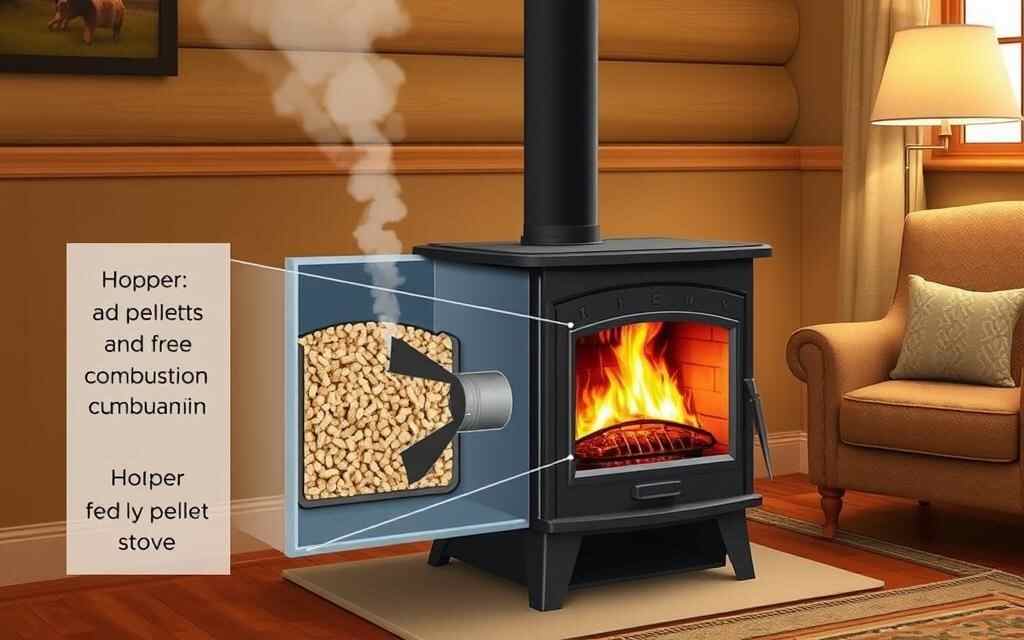
- Hopper: Stores the pellet fuel for continuous feeding into the stove.
- Burn Pot: Where the pellets are ignited and combusted to generate heat.
- Auger: Responsible for automatically feeding the pellets from the hopper to the burn pot.
- Heat Exchanger: Transfers the heat generated from the combustion process to the surrounding air.
- Convection Fan: Circulates the warm air throughout the room or home.
- Exhaust Fan: Removes the byproducts of combustion, ensuring proper ventilation.
- Ash Pan: Collects the minimal ash produced during the burning process.
- Control Board: Manages the stove’s functions, including ignition, temperature, and air-to-fuel ratio.
Benefits of Pellet Heating
Pellet stoves are cost-effective and eco-friendly. They are cheaper to run than electric or oil heaters, saving on bills. They are also the cleanest solid fuel heating option, with high efficiency ratings.
They are quiet and perfect for modern homes. Their green nature and efficiency make them a top choice.
Types of Pellet Stoves Available
There are two main types of pellet stoves for heating your home: freestanding and inserts. Each has its own benefits, helping you choose the right one for your space and needs.
Freestanding Pellet Stoves
Freestanding pellet stoves can go anywhere in your home. They’re great for big areas or open layouts. Models like the Harman XXV ($5,240) fit well in many spaces.
They can be placed close to walls, making them efficient and easy to use.
Pellet Stove Inserts
For homes with fireplaces, pellet stove inserts are a smart choice. They fit right into your fireplace, keeping the look you like while heating better. The Harman P35i model ($3,100) is a good example, matching your hearth with a metal surround.
| Feature | Freestanding Pellet Stoves | Pellet Stove Inserts |
|---|---|---|
| Placement Flexibility | Can be placed anywhere in the home | Fits into existing fireplace |
| Heating Capacity | Typically larger | Varies based on fireplace size |
| Installation | Relatively simple | May require some modification to the fireplace |
| Aesthetic Impact | Can be a focal point in the room | Blends with existing fireplace design |
Both freestanding and insert pellet stoves are good for heating your home. Think about your space, heating needs, and style to pick the best one for you.

How a Pellet Stove Works
Pellet stoves are a great way to heat your home. They work automatically, making your home cozy with little effort. Let’s explore how they work.
The Combustion Process
The core of a pellet stove is the combustion process. Pellets are fed into the burn chamber by an auger. A fan brings in air and lights the pellets, creating a flame.
The fan controls the flame’s size and heat. This heat then goes to the heat exchanger tubes.
Heat Distribution System
The heat is then spread throughout your home. A fan blows room air through the heat exchanger. This warms the air and sends it back into the room.
Some stoves have fans that can change speed. Others adjust automatically based on the heat setting.
Control Mechanisms
Pellet stoves have smart controls for safe and efficient use. A circuit board oversees everything, from pellet metering to fan control. You can set the temperature with a thermostat, and the stove will keep it there.
This system lets a pellet stove heat your home with little help from you. It provides steady and reliable warmth.

Essential Components and Their Functions
To get how a pellet stove works, we need to look at its key parts and what they do. The hopper is a big container that holds the fuel pellets. The auger, a motorized screw, moves the pellets from the hopper to the burn pot for burning.
The heat exchanger makes sure the heat goes to the air around it. The convection fan spreads this warm air everywhere. The exhaust fan brings in fresh air and gets rid of the gases from burning.
A smart control board keeps an eye on everything. It controls how fast the pellets are fed, how much air comes in, and the temperature. The ash pan catches the leftover ash, making cleaning easy.
All these parts work together to heat your home well. This is why pellet stoves are a favorite for those who want to heat their homes in a green way.
| Component | Function |
|---|---|
| Hopper | Stores the fuel pellets |
| Auger | Feeds the pellets from the hopper to the burn pot |
| Burn Pot | Where the combustion process takes place |
| Heat Exchanger | Transfers the generated heat to the surrounding air |
| Convection Fan | Circulates the warm air throughout the living space |
| Exhaust Fan | Draws fresh air into the stove and expels the resulting gases |
| Control Board | Regulates the feed rate, air intake, and temperature for optimal performance |
| Ash Pan | Collects the unburnt remnants, simplifying the cleaning process |
Knowing about the parts and their jobs helps us appreciate the tech and design in pellet stoves. This info helps you pick the right pellet stove parts for your home. It ensures your heating system fits your needs perfectly.

Fuel Requirements and Storage
Choosing the right pellet fuel for your stove is key. Pellets are made from compressed sawdust and wood waste, or sometimes from biofuels like nutshells and corn. Always use the type recommended by your stove’s maker. Storing pellets properly keeps them in good condition and ensures your stove works well.
Types of Pellets
Stoves are made to burn specific pellets. It’s important to use the right ones. Pellets can be made from wood, biomass, or even special blends for better performance.
- Wood-based pellets (softwood, hardwood, or a blend)
- Biomass pellets (made from agricultural waste like nutshells or corn)
- Specialty pellets (blended with additives for improved performance)
Storage Considerations
Storing pellets right is crucial. Keep them in a cool, dry spot to avoid moisture. This helps them burn better and more efficiently. Store them in a garage or shed, not outdoors or in damp places.
Consumption Rates
The amount of pellets your stove uses depends on your home size, outside temperature, and heat needs. A typical stove might use 1-3 tons of pellets each season. Plan to store enough for 40-pound bags, as some stoves can use a whole bag in a day.
Installation Requirements and Considerations
Installing a pellet stove needs careful attention to safety and local building codes. It’s often best to hire a professional. They make sure everything is set up right, from clearances to electrical connections.
Pellet stoves can be vented in different ways. You can vent them horizontally or vertically. Each method has its own rules, like using a chimney liner. You’ll also need a separate pipe for outside air.
The stove must sit on a fireproof hearth. This is to keep it safe from flammable materials. Always follow the manufacturer’s guidelines and local fire codes.
- Pellet stove installation costs usually range from $1,015 to $3,594 (according to Angi).
- Regular maintenance is key. This includes daily checks, weekly cleaning, and yearly inspections.
- A typical pellet stove uses 1-3 tons of pellets each heating season.
| Installation Requirement | Consideration |
|---|---|
| Clearance from Combustibles | Pellet stoves need only 3 inches from flammable surfaces, less than wood stoves. |
| Venting System | Pellet stoves can be vented in various ways, including through walls or roofs. |
| Electrical Connections | They need a standard 120-volt outlet to work. |
| Fireproof Hearth | The stove must be on a fireproof hearth, as recommended by the manufacturer and local codes. |
Proper installation is key for a safe and efficient pellet stove. Working with pros and following local rules will help you enjoy its benefits.

Efficiency and Heat Output Ratings
Pellet stoves are known for their efficiency and heat output. They range from 8,000 to 90,000 BTUs per hour. On average, they produce about 40,000 BTUs.
You’ll need about 5,000 BTUs for every 200 square feet of space. But, insulation, ceiling height, and climate also play a big role.
BTU Calculations and Energy Efficiency Factors
Pellet stoves burn fuel efficiently, from 70% to 83% efficient. This means they turn 70 to 83 units of energy into usable heat. This results in fewer harmful by-products.
The EPA requires pellet stoves to be at least 75% efficient for tax credits. This pushes for high-efficiency models, saving on heating bills over time.
Coverage Area Guidelines
- Small pellet stoves (up to 20,000 BTUs) are suitable for large rooms or small open-plan homes.
- Medium-sized stoves (20,000 to 60,000 BTUs) can effectively heat small to medium-sized homes.
- Large stoves (60,000+ BTUs) are capable of heating larger homes or serving as primary heat sources.
Choosing the right size is key for your pellet stove’s efficiency. An oversized stove may have trouble regulating temperature. An undersized one might not be as efficient. A qualified installer can help find the perfect fit for your home.
| Stove Size | BTU Range | Recommended Coverage Area |
|---|---|---|
| Small | Up to 20,000 BTUs | Large rooms or small open-plan homes |
| Medium | 20,000 – 60,000 BTUs | Small to medium-sized homes |
| Large | 60,000+ BTUs | Larger homes or primary heat sources |
“Wood pellet stoves are EPA-certified as the cleanest form of residential heating, offering an efficient, affordable, and sustainable heating option for homeowners.”
Maintenance and Cleaning Guidelines
Keeping your pellet stove in top shape is key. It’s all about daily, weekly, and yearly tasks. A good care plan keeps your stove running well for years.
Daily Maintenance
- Check the burn pot for any clinkers (fused ash chunks) and remove them to maintain efficient combustion.
Weekly Maintenance
- Empty the ash pan to prevent buildup.
- Clean the burn pot to remove any debris or ash accumulation.
Monthly Maintenance
- Clean the heat exchanger by brushing or vacuuming to ensure optimal heat transfer.
- Inspect the door gasket and replace it if necessary to maintain a proper seal.
Annual Maintenance
- Schedule a professional inspection and cleaning of the entire venting system, including the exhaust pipes.
- Clean the venting pipes with a specialized brush to remove any potential fire hazards.
Regular upkeep keeps your pellet stove running well. It also makes your home safer. By following these steps, your stove will last longer and work better.
| Maintenance Task | Recommended Frequency |
|---|---|
| Check burn pot for clinkers | Daily |
| Empty ash pan | Weekly or monthly, depending on usage |
| Clean burn pot | Weekly |
| Clean heat exchanger | Monthly |
| Inspect and replace door gasket | Monthly |
| Professional inspection and cleaning of venting system | Annually |
| Clean venting pipes | Annually |
The right maintenance schedule depends on your wood pellets and how much you use your stove. Stay on top of it to keep your pellet stove safe and efficient.
Safety Features and Considerations
Pellet stoves have many safety features to keep them running safely. The sealed combustion chamber stops sparks or flames from getting out. This reduces fire risks.
It’s important to have good ventilation when using a pellet stove. Venting systems must follow local building rules. All flue joints and openings need to be sealed with high-temperature cement or caulk to stop air leaks.
Built-in Safety Mechanisms
Pellet stoves come with safety features to protect users and their homes. They have automatic shut-off when the hopper is empty or if there’s overheating. Many stoves also have power outage backup systems, so they keep working even when the power goes out.
Proper Ventilation Requirements
Good ventilation is key for safe pellet stove use. You need proper venting systems like chimneys or direct-vent setups to remove combustion byproducts safely. It’s important to clean these pipes every year with special brushes to avoid fire risks.
Emergency Procedures
If there’s a power outage or emergency, know how to shut down your pellet stove. This usually means turning it off and waiting for it to cool down completely before touching it or turning off the power. It’s also wise to have a fire extinguisher, smoke detectors, and carbon monoxide alarms nearby for extra safety.
By knowing and using these safety tips, pellet stove owners can enjoy a safe and warm home.
Cost Analysis and Operating Expenses
Getting a pellet stove can save you money on heating your home. But, you need to know the costs upfront and ongoing. The price to install a pellet stove is usually between $1,500 and $3,500.
Fuel costs are also important. You’ll use 2 to 3 tons of pellets a year. Prices vary from $180 to $250 per ton. This means your yearly fuel cost could be up to $750.
| Cost Category | Estimated Range |
|---|---|
| Pellet Stove Installation | $1,500 – $3,500 |
| Annual Pellet Fuel Consumption | 2 – 3 tons ($180 – $250 per ton) |
| Annual Pellet Fuel Cost | Up to $750 |
Don’t forget the electricity for the stove’s fan and feeder. This uses about 100 kWh a month. At today’s rates, that’s around $9.
There are no federal rebates for pellet stoves. But, some states offer incentives for energy-saving heating. Keeping your stove well-maintained and running efficiently can save you money in the long run.
“Pellet stoves are considered equal to or better than other heating forms on a cost-per-BTU basis.”
Environmental Impact and Sustainability
Pellet stoves are seen as a green heating option. The U.S. Environmental Protection Agency (EPA) calls them the cleanest solid fuel heaters for homes. They burn renewable fuels like recycled wood and waste, helping us use less fossil fuels.
These stoves burn fuel very efficiently, making very little smoke and pollution. This means they release fewer harmful gases into the air. Homeowners who care about the planet find pellet stoves a great choice for eco-friendly heating.
Even though moving pellets can harm the environment, getting them from local sources helps. Keeping your pellet stove in good shape is also key. This ensures it works well and doesn’t waste fuel or make more pollution. Choosing pellet stoves helps make your home’s energy use more sustainable and cuts down on carbon emissions.
Leave a Reply