

A DIY descaling solution made with citric acid is one of the cheapest, most effective ways to remove limescale from an electric kettle, coffee maker, or faucet. It has no vinegar smell, it rinses cleanly, and a single bag of food-grade powder lasts for months. However, the ratio matters. Too little acid barely touches thick scale, while too much wastes powder and takes longer to rinse. In this guide, you will get exact citric acid ratios in both U.S. and metric units, step-by-step recipes for common appliances, and the simple chemistry that explains why the recipe works.

Key Takeaways
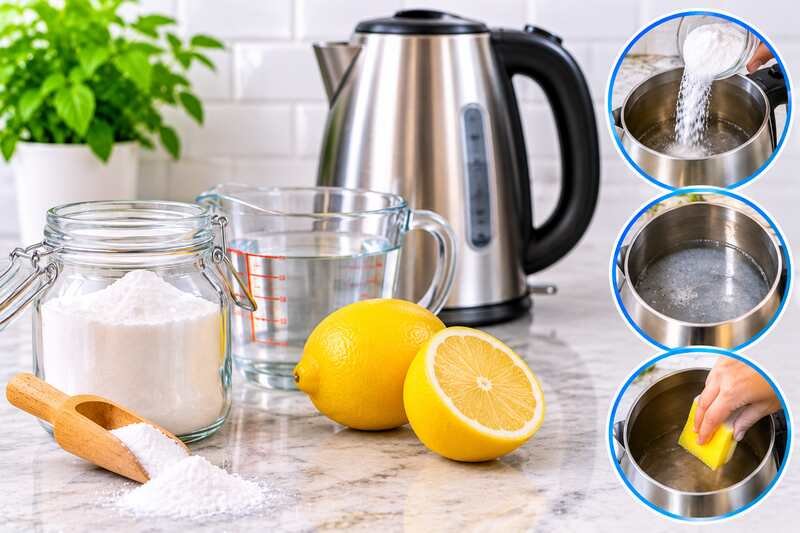
- For most kettles, use 1 to 2 tablespoons of citric acid per liter of water (about 1 quart). Use up to 3 tablespoons for heavy scale.
- One level tablespoon of citric acid weighs roughly 12 grams, which can dissolve about 9 grams of limescale in theory.
- Citric acid is listed as a food substance affirmed as generally recognized as safe (GRAS) under U.S. federal regulation 21 CFR 184.1033.
- Also, citric acid has no strong smell, so it is a popular alternative to vinegar.
- Finally, always rinse well and boil fresh water once or twice before using the appliance again.
Why Citric Acid Makes a Great DIY Descaler
To begin with, limescale is mostly calcium carbonate, and calcium carbonate dissolves in acid. Citric acid is a natural acid found in lemons and limes, and it is sold as a dry, white powder in grocery stores, canning aisles, and online. When you mix it with warm water, it reacts with scale and turns it into a dissolved salt that rinses away.
Compared with other options, citric acid hits a useful middle ground. It is stronger than the acetic acid in vinegar, with a first pKa of about 3.13 versus 4.76 for acetic acid, so it tends to work faster. In addition, it is odorless and inexpensive in bulk. It is also a common food ingredient: citric acid appears on the federal list of substances affirmed as GRAS in 21 CFR 184.1033.
| Descaler | Smell | Relative Speed | Cost per Use |
|---|---|---|---|
| Citric acid powder | None | Fast | Low |
| White vinegar | Strong | Moderate | Lowest |
| Lemon juice | Fresh | Slow (low concentration) | Higher |
| Commercial descaler | Mild | Fast | Highest |
In short, a DIY descaling solution with citric acid gives you most of the benefits of a commercial product at a fraction of the price.
The Best Citric Acid Ratio for Descaling
In general, the right ratio depends on how much scale you need to remove. Use this table as your starting point for a DIY descaling solution. Measurements are level spoonfuls, and 1 liter is about 1 quart, or a little over 4 cups.
| Scale Level | Citric Acid per Liter (1 Quart) | Approximate Weight | Approximate Strength |
|---|---|---|---|
| Light film (routine care) | 1 tablespoon | About 12 g | About 1.2% |
| Moderate buildup | 2 tablespoons | About 24 g | About 2.4% |
| Heavy crust | 3 tablespoons | About 36 g | About 3.6% |
Spoon weights vary with grain size, since fine powder packs more densely than coarse granules. Therefore, if you want precision, use a kitchen scale and measure by grams. For most homes, though, the spoon method works well. Start with the lower amount, and add more only if scale remains after the first round.
How Much Scale Can a DIY Descaling Solution Remove?
Now, here is where the numbers get interesting. Each molecule of citric acid can neutralize three acid groups, so a small amount goes a long way. Based on standard molecular weights, one gram of citric acid can dissolve up to about 0.78 grams of calcium carbonate in ideal conditions.
| Citric Acid Amount | Max Scale Dissolved (theoretical) |
|---|---|
| 1 tablespoon (about 12 g) | About 9 g |
| 2 tablespoons (about 24 g) | About 19 g |
| 3 tablespoons (about 36 g) | About 28 g |
To put that in context, however, we estimated how much scale a kettle might collect. The U.S. Geological Survey classifies water above 180 mg/L of calcium carbonate as very hard, according to its water hardness FAQ. If you boil 1.5 liters a day for a month, that is 45 liters of water. Even if every bit of hardness settled out, which it does not, 45 liters of very hard water would leave about 8 grams of scale.
In other words, a single tablespoon of citric acid can, in theory, handle a month of heavy kettle use in very hard water. Real results are lower, because scale also contains other minerals and some of the acid stays unreacted. Still, the math shows why a modest DIY descaling solution is usually enough when you descale regularly.
DIY Descaling Solution Recipe for an Electric Kettle

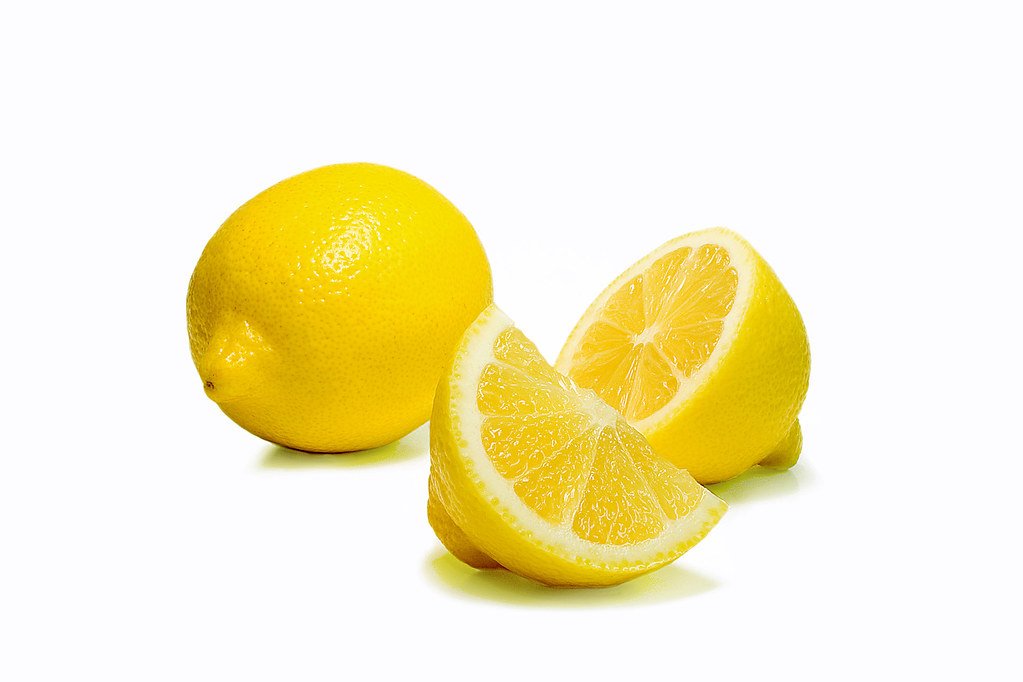
Photo: comingstobrazil via Flickr (CC BY 2.0).
By far, this is the most common use for a DIY descaling solution. It takes about 30 minutes, and most of that is hands-off.
You will need: 1 to 2 tablespoons of food-grade citric acid, 1 liter (about 1 quart) of water, and a soft brush.
- Unplug and empty. First, unplug the kettle and pour out any old water.
- Add water. Then fill the kettle with about 1 liter of fresh water, or about two-thirds full.
- Add citric acid. Next, stir in 1 tablespoon for light scale or 2 tablespoons for moderate buildup.
- Heat it. After that, bring the solution to a boil and switch the kettle off.
- Soak. Let it sit for 15 to 30 minutes. You may see small bubbles as the acid works.
- Scrub and rinse. Pour it out, brush any loose spots, and rinse three times.
- Boil fresh water. Finally, boil and discard one full kettle of plain water.
Some kettles foam briefly when citric acid meets heavy scale. For that reason, do not fill to the max line, and stay nearby during the first boil.

Video: Telegraph Recommended shows how to descale a kettle with citric acid.
DIY Descaling Solution Recipe for a Coffee Maker
Similarly, drip coffee makers collect scale in their heating tubes. However, always check the manual first, since some brands specify their own descaler. If citric acid is allowed, follow these steps.
- Mix the solution. First, dissolve 1 to 2 tablespoons of citric acid in a full reservoir of warm water.
- Run half a cycle. Then start a brew cycle without coffee, and turn it off halfway.
- Let it sit. Next, wait 20 to 30 minutes so the solution can work inside the tubes.
- Finish the cycle. After that, complete the brew cycle and discard the liquid.
- Rinse. Finally, run two or three full cycles of fresh water.
To learn more about the parts that collect scale, see our guide on how a coffee maker works.
DIY Descaling Spray for Faucets and Fixtures
A DIY descaling solution also works on chrome faucets, shower heads, and sink fixtures. However, test a small hidden spot first, because some finishes and natural stone can be damaged by acid.
- Mix: First, dissolve 1 tablespoon of citric acid in 2 cups of warm water.
- Fill a spray bottle: Then label it clearly as citric acid solution.
- Spray and wait: Next, spray the fixture and leave it for 5 to 10 minutes.
- Wipe and rinse: Finally, wipe with a soft cloth and rinse with plain water.
Never use citric acid on marble, travertine, or limestone, since acids etch these stones. For clogged faucet aerators, our guide on how to clean a Delta kitchen faucet head walks through the full process. In addition, hard water inside dishwashers responds to the same approach, as our guide on cleaning hard water from a dishwasher explains.
Citric Acid vs. Lemon Juice: Which Should You Use?

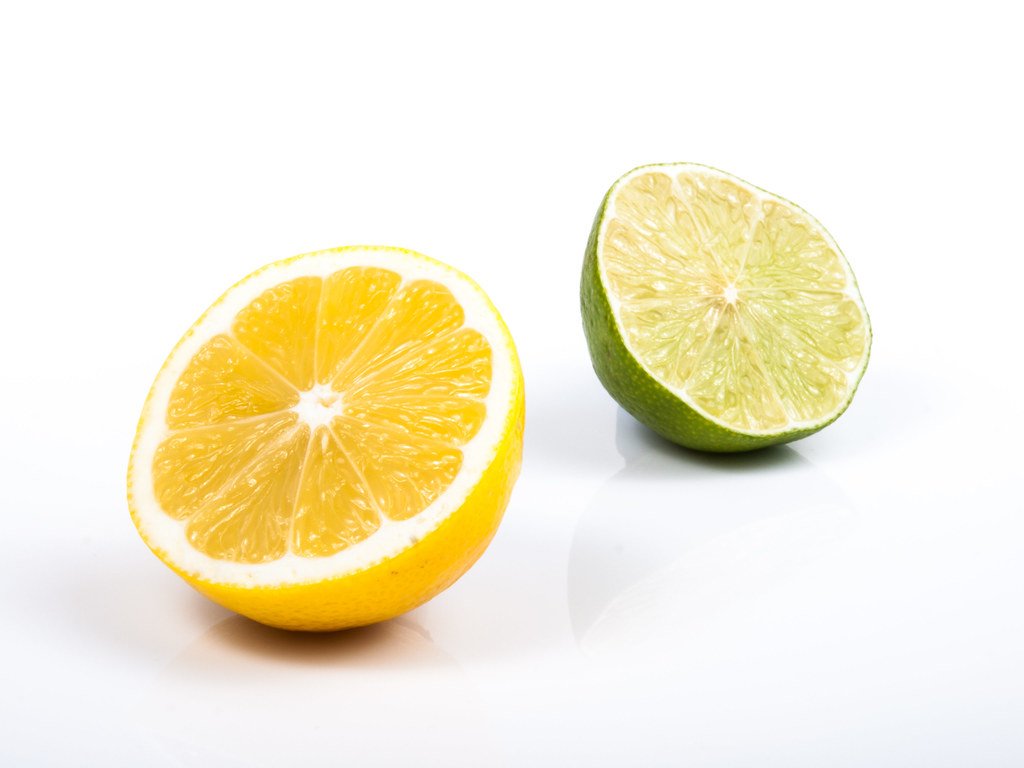
Photo: wwarby via Flickr (CC BY 2.0).
Interestingly, lemon juice and citric acid powder contain the same acid, but the concentration is very different. Fresh lemon juice holds about 48 grams of citric acid per liter. As a result, the juice of one lemon, about 45 ml, contains only around 2 grams of citric acid. By comparison, a single tablespoon of powder holds about 12 grams.
| Source | Citric Acid Content | Equal to 1 Tbsp of Powder |
|---|---|---|
| 1 tablespoon citric acid powder | About 12 g | 1 tablespoon |
| Juice of 1 lemon (about 45 ml) | About 2 g | About 6 lemons |
| 1 cup fresh lemon juice (about 237 ml) | About 11 g | About 1 cup of juice |
In other words, you would need roughly six lemons to match one tablespoon of powder. Lemons smell nicer, but powder is far more concentrated and cheaper per use. For light, regular cleaning, lemon is fine; for real scale, powder wins.
Other Appliances You Can Descale with Citric Acid
Beyond kettles and coffee makers, the same DIY descaling solution helps with several other hard-water problems around the kitchen. However, always check each manual first, since some appliances have parts that should not touch acid.
- Rice cookers: First, a mild solution of 1 tablespoon per liter can loosen white film on the inner pot and lid. For the full routine, see our guide on how to clean a rice cooker effectively.
- Glass carafes and pitchers: Also, a short soak clears cloudy mineral rings.
- Stainless steel pots: In addition, citric acid removes chalky white spots left after boiling pasta or eggs.
- Sink drains and stoppers: Similarly, a spray and a quick scrub remove crusty buildup around metal stoppers.
In each case, rinse thoroughly with plain water afterward. As a result, no sour taste or residue stays behind.
Safety Tips for Using Citric Acid
Although citric acid is a common food ingredient, concentrated powder still deserves some care.
- Protect your eyes. First, avoid getting powder or solution in your eyes, since it can sting and irritate.
- Wear gloves for long jobs. Also, prolonged contact can dry or irritate sensitive skin.
- Never mix with bleach. In fact, acids and bleach can release dangerous chlorine gas.
- Use food-grade powder. In addition, choose a product labeled food grade for kitchen appliances.
- Label stored solutions. Meanwhile, keep spray bottles clearly marked and away from children.
- Rinse appliances well. Finally, boil or run fresh water before using the appliance for food or drinks.
How to Store Citric Acid and Premixed Solution
Over time, dry citric acid powder absorbs moisture from the air and can clump. Therefore, store it in an airtight container in a cool, dry cupboard. Stored this way, a bag lasts a long time.
For best results, mix your DIY descaling solution fresh each time. A premixed spray bottle is handy for fixtures, but use it within a few weeks and discard it if it looks cloudy or smells off. Also, never store the solution in a food or drink container, since someone could mistake it for something drinkable.
Quick Recipe Card
If you just need the numbers, here is the short version of this DIY descaling solution. First, add 1 tablespoon of citric acid per liter of water for routine care, or 2 to 3 tablespoons for heavy scale. Then heat the solution to a boil, or use warm water for coffee makers and fixtures. Next, let it work for 15 to 30 minutes. Finally, rinse three times and boil or run fresh water once before use. As a result, you get a clean appliance with no vinegar smell and almost no cost.
How Often to Descale with Citric Acid
Above all, your water hardness sets the schedule. Use the table below as a guide, then adjust based on what you see.
| Water Hardness (mg/L) | USGS Category | Kettle Descaling Schedule |
|---|---|---|
| 0–60 | Soft | Every 2–3 months |
| 61–120 | Moderately hard | Every 1–2 months |
| 121–180 | Hard | Every 3–4 weeks |
| Over 180 | Very hard | Every 2 weeks |
The schedule column is our practical suggestion, not USGS guidance. If scale is a whole-home problem, our guide to water descaler vs. water softener compares long-term fixes. And if your kettle is beyond saving, our guide to the best electric kettle can help you pick a replacement.
Common Mistakes with a DIY Descaling Solution
- Using too little powder. For example, a pinch will not clear thick crust.
- Using far too much. Instead, increase in small steps and repeat rounds if needed.
- Overfilling the kettle. Otherwise, foaming can spill over the spout.
- Skipping the rinse. As a result, your next cup may taste sour.
- Using it on stone. Also, acid etches marble and limestone surfaces.
FAQ
How much citric acid do I use to descale a kettle?
Use 1 to 2 tablespoons of citric acid per liter (about 1 quart) of water. For heavy scale, you can go up to 3 tablespoons per liter.
Is citric acid better than vinegar for descaling?
Citric acid is a stronger acid, so it usually works faster, and it has no smell. However, vinegar is cheaper and still effective for light to moderate scale.
Can I use citric acid in a coffee maker?
Many coffee makers can be descaled with citric acid. Still, check your manual first, because some brands require their own descaler.
Where can I buy citric acid?
Look in the canning or baking aisle of U.S. grocery stores, in home-brewing shops, or online. Choose a food-grade product.
Is citric acid safe to use around food?
Yes, citric acid is a common food ingredient listed as GRAS by U.S. regulation. Even so, rinse appliances well after descaling, and keep the powder away from your eyes.
Can I reuse a citric acid descaling solution?
It is better not to. Once the acid reacts with scale, it becomes weaker, and the liquid carries dissolved minerals. Therefore, discard it after each use and mix a fresh batch next time.
Why does my kettle foam when I add citric acid?
Foaming happens when the acid reacts quickly with heavy scale and releases carbon dioxide gas. To prevent spills, fill the kettle only two-thirds full, and add the powder gradually if the buildup is thick.
Final Thoughts
A DIY descaling solution made with citric acid is simple, cheap, and odor-free. In short, use 1 tablespoon per liter for light scale, 2 for moderate buildup, and 3 for heavy crust. In addition, rinse well and boil fresh water afterward. Because one tablespoon can theoretically dissolve about 9 grams of scale, a single bag of powder can keep your kettle, coffee maker, and faucets clean for months.


Hey, My name is MAMON. I am a SEO content creator and affiliate marketer with over 8 years of experience. I create honest product reviews, in-depth buying guides, and practical how-to articles to help readers make informed decisions. My mission is to provide trustworthy, research-backed content that delivers real value.