

The descaling solution vs vinegar question comes up every time a kettle, coffee maker, or espresso machine starts to crust over. White vinegar is cheap and already in most U.S. pantries, while commercial descalers promise faster results with less smell. So, which one should you use? In this guide, we compare both options on chemistry, speed, smell, cost, and appliance safety. In addition, we explain which acids commercial descalers use, why some manufacturers warn against vinegar, and when each choice makes the most sense.

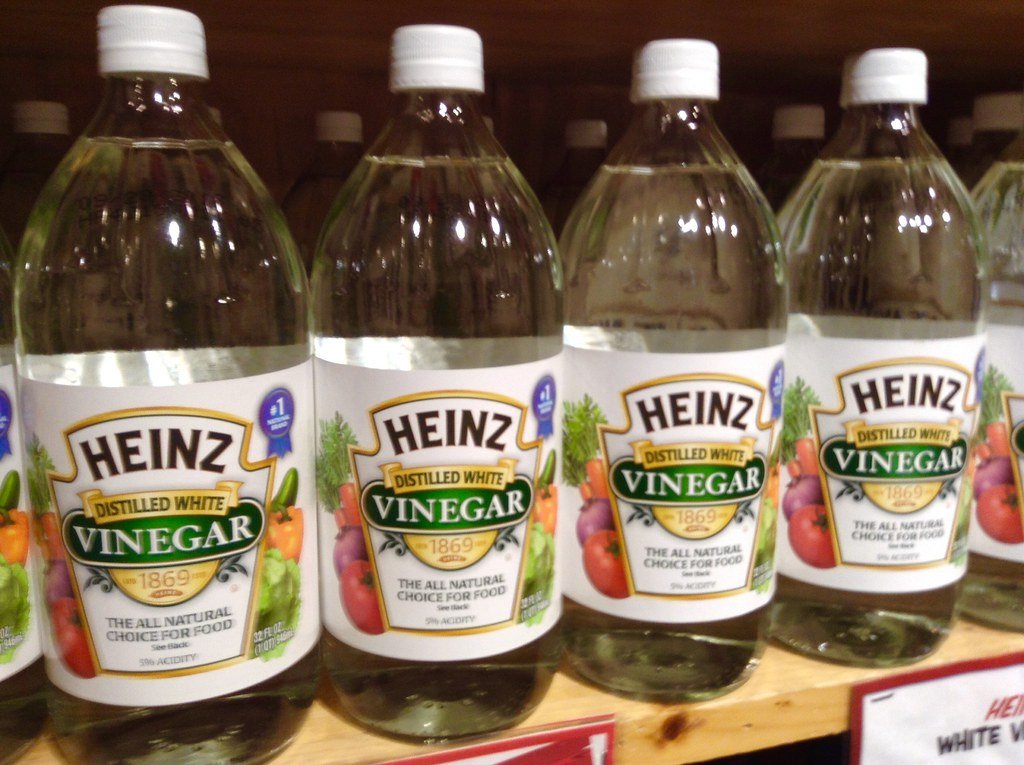
Photo: JeepersMedia via Flickr (CC BY 2.0).
Key Takeaways
- Vinegar works well for most electric kettles, since the FDA’s vinegar guidance sets a minimum strength of 4 grams of acetic acid per 100 mL.
- Commercial descalers usually rely on citric, lactic, or sulfamic acid, which are stronger acids than acetic acid and often work faster.
- Gram for gram, acetic acid can theoretically dissolve slightly more scale than citric acid, so vinegar is not “weak” in total capacity.
- However, vinegar’s smell and aftertaste are its biggest drawbacks, especially in coffee makers and espresso machines.
- Above all, follow your appliance manual, because some brands require their own descaler to protect seals and keep the warranty valid.
Descaling Solution vs Vinegar: Quick Comparison
Before we go deeper into descaling solution vs vinegar, here is a quick side-by-side look at how the two options compare for a typical electric kettle.
| Factor | White Vinegar | Commercial Descaling Solution |
|---|---|---|
| Main acid | Acetic acid, about 5% | Usually citric, lactic, or sulfamic acid |
| Speed on heavy scale | Moderate | Fast |
| Smell | Strong while hot | Mild or none |
| Aftertaste risk | Moderate, needs extra rinses | Low with proper rinsing |
| Cost per use | Very low | Higher |
| Availability | Every grocery store | Hardware stores, appliance brands, online |
| Best for | Kettles, light to moderate scale | Espresso machines, heavy scale, brand-required appliances |
In short, vinegar is the budget-friendly all-rounder, while a commercial descaler is the faster, more convenient choice for heavy buildup and sensitive machines.
How Vinegar Removes Scale
To begin with, limescale is mostly calcium carbonate, which dissolves in acid. When vinegar touches scale, the acetic acid reacts with it to form calcium acetate, water, and carbon dioxide. Calcium acetate dissolves easily in water, so it rinses away. That is why you see tiny bubbles during a vinegar soak.
In the U.S., the strength of vinegar is fairly consistent. According to the FDA’s Compliance Policy Guide on vinegar, vinegar should contain at least 4 grams of acetic acid per 100 mL. Most white distilled vinegar on store shelves is labeled 5% acidity. As a result, you get a predictable descaling strength from almost any brand.
Pros of Vinegar
- Cheap: First, a single bottle covers many descaling sessions.
- Available: Also, every U.S. grocery store sells it.
- Effective: In addition, it handles light to moderate scale in most kettles.
- Food-safe: Finally, it is a common kitchen ingredient, so any trace left behind is harmless.
Cons of Vinegar
- Strong smell: Hot vinegar fills the kitchen with a sharp odor.
- Lingering taste: Meanwhile, you need several rinse boils to remove it.
- Slower on thick crust: As a result, heavy scale may need overnight soaks or repeat rounds.
- Not approved by every brand: Some manuals advise against it for certain machines.
What Is in a Commercial Descaling Solution?

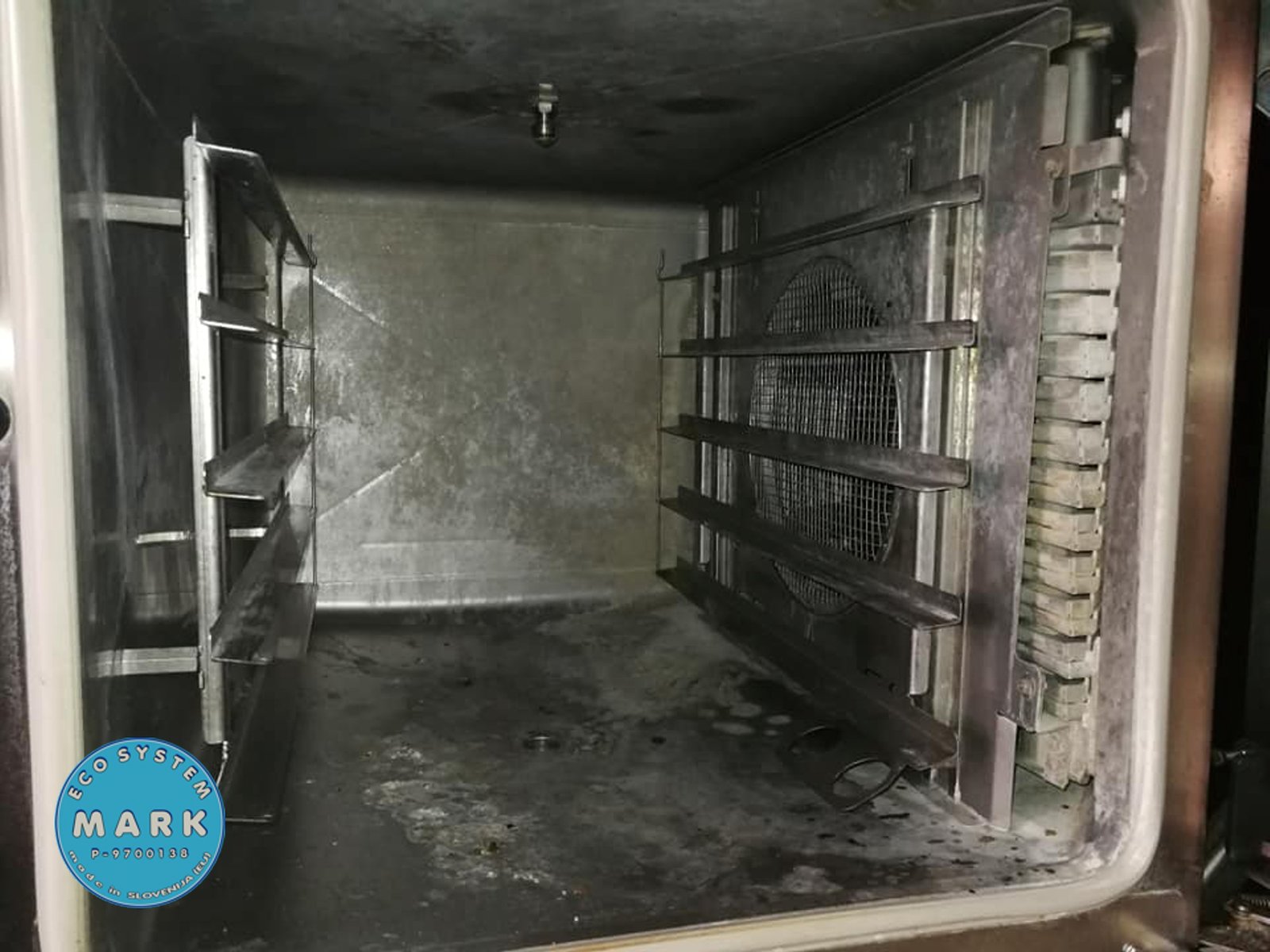
Photo: Gigasolarium via Wikimedia Commons (CC BY-SA 4.0).
In the descaling solution vs vinegar comparison, commercial descalers are designed for one job: dissolving scale quickly without harming the appliance. Most products use one of a few common acids, often combined with additives such as corrosion inhibitors or wetting agents. The exact formula varies by brand, so always read the label.
| Acid | Common In | Acid Strength (pKa) | Notes |
|---|---|---|---|
| Acetic acid | Vinegar | 4.76 | Weakest acid here, strong smell |
| Lactic acid | Some coffee machine descalers | 3.86 | Low odor, gentle on seals |
| Citric acid | Many kettle and coffee descalers | 3.13 (first step) | Odorless, widely available as powder |
| Sulfamic acid | Heavy-duty limescale removers | About 1.0 | Very strong, handle with care |
A lower pKa means a stronger acid, which generally attacks scale faster. For that reason, citric, lactic, and sulfamic acid descalers usually work more quickly than vinegar on thick buildup. Sulfamic acid is the most aggressive of the group, so products based on it often carry stronger safety warnings.
Which Removes More Scale? The Chemistry Data
Speed and capacity are not the same thing. A stronger acid works faster, but the total amount of scale an acid can dissolve depends on its weight and how many acid groups it carries. To compare fairly, we calculated how much calcium carbonate one gram of each acid can theoretically dissolve.
| Acid (1 gram) | Max Calcium Carbonate Dissolved | Calcium Salt Formed |
|---|---|---|
| Acetic acid | About 0.83 g | Calcium acetate (very soluble) |
| Citric acid | About 0.78 g | Calcium citrate (poorly soluble) |
| Lactic acid | About 0.56 g | Calcium lactate (soluble) |
| Sulfamic acid | About 0.52 g | Calcium sulfamate (very soluble) |
These are ideal values based on standard molecular weights, so real-world results are lower. Even so, the data reveals a surprising point in the descaling solution vs vinegar debate: gram for gram, acetic acid has slightly more total capacity than citric acid. In addition, one liter of 5% vinegar holds about 50 grams of acetic acid, enough to dissolve roughly 40 grams of scale in theory.
So why do commercial descalers feel more effective? Mainly because they are stronger acids, they act faster, and they do not leave a smell. Also, citric acid can form calcium citrate, which dissolves poorly, so citric-based products are often formulated to manage that. In other words, vinegar is not weak; it is just slower and smellier.

Video: Whole Latte Love explains the pros and cons of descaling with vinegar.
Why Some Manufacturers Warn Against Vinegar
You may have seen a manual that says “do not use vinegar.” There are several common reasons behind that advice.
- Odor and taste: First, vinegar can linger in tubing, boilers, and seals, especially in coffee and espresso machines.
- Seal compatibility: Some brands say repeated vinegar use may affect certain rubber or silicone parts over time.
- Incomplete descaling: In addition, vinegar may not fully clear scale inside narrow tubes and valves.
- Warranty terms: Finally, some warranties require the brand’s own descaler.
For a simple electric kettle, these concerns are usually minor, because the kettle is an open pot that rinses easily. However, for espresso machines and pod coffee makers with internal tubing, the manual’s advice matters much more. Therefore, always check before you choose.
Cost Comparison: Vinegar vs. Descaler

Photo: jiannis.georgiadis via Flickr (CC BY 2.0).
Cost is a big part of descaling solution vs vinegar. Prices change often, so check current listings. Still, the general pattern is clear. A large jug of store-brand white vinegar covers many kettle descaling sessions, so each use costs very little. In contrast, a bottle of branded descaler typically covers only a handful of uses, so the cost per session is several times higher.
Citric acid powder sits in between. It is usually sold in bulk bags, and one or two tablespoons handle a full kettle. As a result, many people use citric acid as a low-cost, low-odor middle ground between vinegar and commercial products.
| Option | Typical Dose per Kettle | Relative Cost per Use | Smell |
|---|---|---|---|
| White vinegar | About 2 cups mixed with water | Lowest | Strong |
| Citric acid powder | 1–2 tablespoons in water | Low | None |
| Commercial descaler | Per label, often a measured dose | Highest | Mild or none |
When to Use Vinegar
In the descaling solution vs vinegar matchup, vinegar is the right choice in many everyday situations.
- Simple electric kettles: First, open kettles rinse easily, so the smell is temporary.
- Light to moderate scale: Also, regular monthly descaling keeps buildup thin enough for vinegar.
- Budget-conscious homes: In addition, vinegar is the cheapest effective option.
- When the manual allows it: Finally, if your manual lists vinegar, you can use it with confidence.
If you go with vinegar, mix equal parts vinegar and water, boil, soak for 30 to 60 minutes, and rinse with two fresh boils. For other uses, our guide on cleaning gas burner covers with vinegar and baking soda shows another way to put vinegar to work.
When to Use a Commercial Descaling Solution
On the other hand, a commercial descaling solution beats vinegar in these cases.
- Espresso and pod machines: Internal tubing and boilers benefit from odorless, fast-rinsing formulas.
- Heavy, thick scale: Stronger acids clear crust faster than vinegar.
- Brand requirements: If your warranty or manual specifies a descaler, use it.
- Smell sensitivity: Similarly, people who dislike vinegar’s odor prefer descalers.
- Very hard water: Homes above 180 mg/L hardness may descale often enough to value speed.
The U.S. Geological Survey classifies water above 180 mg/L of calcium carbonate as very hard, according to its water hardness FAQ. If your home falls in that range, you may also want to read our comparison of water descaler vs. water softener systems.
How to Use Each Option in an Electric Kettle
Whichever side of the descaling solution vs vinegar question you land on, the process in a kettle is similar. Here is how each one works.
Using Vinegar
- First, fill the kettle halfway with equal parts white vinegar and water.
- Then bring it to a boil and switch it off.
- Next, let it soak for 30 to 60 minutes, or overnight for thick crust.
- After that, pour it out and scrub any loose spots with a soft brush.
- Finally, rinse three times and boil fresh water twice, discarding each batch.
Using a Commercial Descaling Solution
- First, read the label and measure the dose for your kettle size.
- Then mix it with the amount of water the label specifies.
- Next, heat or soak according to the directions, since some products work cold.
- After that, discard the solution and rinse well.
- Finally, boil fresh water once or twice before use.
In both cases, never leave a strong acid sitting in the kettle for days. Instead, finish the job, rinse, and dry the kettle with the lid open.
Descaling Solution vs Vinegar for Coffee Makers
The descaling solution vs vinegar decision matters even more for coffee makers than for kettles. A drip coffee maker pushes water through narrow tubes and a heating element, so any vinegar smell can linger in the next few pots. In addition, espresso machines have boilers, valves, and gaskets that are harder to rinse. For these machines, many owners prefer a commercial descaler, especially when the manual recommends one.
If your manual allows vinegar for a drip coffee maker, run several full cycles of fresh water afterward. If you want to learn more about how these machines heat water, our guide on how a coffee maker works explains the heating system.
Safety Tips for Both Options
Both vinegar and commercial descalers are acids, so a few precautions apply.
- Never mix with bleach. Acids and bleach can release dangerous chlorine gas.
- Do not combine products. Instead, use one descaler at a time and rinse between them.
- Ventilate the kitchen. Also, open a window or run the range hood while heating any acid.
- Protect your skin. In addition, wear gloves with strong commercial products, especially sulfamic acid formulas.
- Rinse thoroughly. Finally, boil and discard fresh water at least once or twice before you drink from the appliance.
Also, keep descalers in their original containers and away from children. Read every label, because concentration and contact time vary between products.
Our Verdict: Descaling Solution vs Vinegar
For most electric kettles, vinegar is good enough. It is cheap, effective, and safe, and the smell fades after a couple of rinse boils. In fact, our chemistry data shows vinegar has plenty of total descaling capacity. However, if you want speed, no odor, or you own an espresso machine or a brand that requires its own product, a commercial descaling solution is worth the extra cost.
If you want a middle ground, try citric acid powder. It is odorless, inexpensive, and strong enough for most kettles. Either way, descale regularly so the scale never gets thick. And if your kettle is too far gone, our guide to the best electric kettle can help you choose a replacement. For hard-water spots elsewhere, see our guide on how to clean hard water from a dishwasher.
FAQ
Is descaling solution better than vinegar?
It depends on the appliance. For simple kettles, vinegar works well and costs less. However, for espresso machines, heavy scale, or brand-required appliances, a commercial descaling solution is usually the better choice.
Can vinegar damage my kettle?
Occasional vinegar use is generally safe for most kettles. Still, some manufacturers advise against it, so check your manual first.
Will using vinegar void my warranty?
It can for some brands. If the manual or warranty specifies a particular descaler, use that product to stay covered.
Is citric acid the same as a descaling solution?
Many commercial descalers are citric acid based, so plain citric acid powder works in a similar way. However, branded products may add other ingredients to protect parts or improve rinsing.
How often should I descale?
With hard water, descale every 2 to 4 weeks. With soft water, every 2 to 3 months is usually enough.
Can I use vinegar and a descaling solution together?
No. Use one product at a time, because mixing acids or additives can produce unexpected reactions and makes rinsing harder. If you switch from vinegar to a commercial descaler, rinse the appliance well and boil fresh water first.
Does vinegar or descaling solution work faster?
In most cases, a commercial descaling solution works faster, because citric, lactic, and sulfamic acids are stronger than the acetic acid in vinegar. However, vinegar catches up with a longer soak, so the difference matters most on thick scale.
Final Thoughts
The descaling solution vs vinegar choice comes down to your appliance, your budget, and your tolerance for smell. In short, vinegar is the low-cost workhorse for kettles, while commercial descalers win on speed, odor, and compatibility with sensitive machines. Meanwhile, citric acid offers a practical middle path. Whichever you choose, follow the manual, rinse well, and descale on a regular schedule.


Hey, My name is MAMON. I am a SEO content creator and affiliate marketer with over 8 years of experience. I create honest product reviews, in-depth buying guides, and practical how-to articles to help readers make informed decisions. My mission is to provide trustworthy, research-backed content that delivers real value.