Learning how to use a griddle is one of the fastest ways to upgrade your home cooking, whether you own a countertop electric model or an outdoor propane flat top. A griddle’s large, flat surface lets you cook pancakes, eggs, bacon, burgers, and fried rice all at once, but it behaves differently from a frying pan. Heat zones, preheating, oil choice, and cleanup all matter. In this step-by-step guide, we explain how to use a griddle from first setup to storage, including a temperature chart, seasoning instructions for steel flat tops, and cleaning tips backed by manufacturer manuals and food-safety guidance.
Key Takeaways
- Preheat fully before cooking: electric griddles usually need several minutes, and Real Homes measured about 7 minutes on the Ninja Sizzle.
- Most foods cook best between 275°F and 400°F; Presto recommends 350–400°F for pancakes and 275–300°F for eggs.
- Steel flat tops need seasoning, and Blackstone recommends 3 thin coats of oil heated until the smoke stops.
- Coated electric griddles do not need seasoning, but they need soft utensils and gentle cleaning.
- Use a thermometer for meat: FoodSafety.gov lists 160°F for ground beef and 165°F for poultry.

Types of Griddles: Know What You Have
Before you learn how to use a griddle, identify which type you own, because care rules differ. There are three common types in U.S. kitchens:
| Type | Surface | Needs Seasoning? | Typical Max Heat |
|---|---|---|---|
| Electric countertop griddle | Ceramic or PTFE nonstick | No | About 400°F (500°F on high-heat models) |
| Outdoor propane flat top | Rolled steel | Yes | Higher than electric |
| Stovetop griddle pan | Cast iron, carbon steel, or nonstick | Cast iron and steel: yes | Depends on burner |
In short, coated electric griddles are ready to cook after a quick wash, while steel and cast iron surfaces need seasoning first. The rest of this guide covers both.
Step 1: Set Up Your Griddle Safely
Above all, placement comes first. For an electric griddle, set it on a flat, dry, heat-safe counter away from the edge, and plug it directly into a wall outlet rather than an extension cord. Most full-size models draw about 1,500 watts, or 12.5 amps at 120 volts, so avoid running a toaster or kettle on the same circuit. Under the National Electrical Code, kitchens should have at least two 20-amp small-appliance circuits.
For an outdoor propane flat top, by contrast, set it on level ground away from siding, railings, and overhangs. In addition, check the hose and connections for leaks before each season. Gas grills were involved in 76% of home grilling fires from 2020 to 2024, according to NFPA data, so the same caution applies to propane griddles.
Step 2: Clean and Season Before First Use
Initially, every new griddle needs preparation. For coated electric models, wash the plate with warm, soapy water and dry it. Some brands add a burn-in step; for example, Real Homes reports that Ninja suggests running the Sizzle at 400°F for 10 minutes before the first cook.
How to Season a Steel Flat Top
Steel and cast iron surfaces need seasoning to prevent rust and build a natural nonstick layer. According to Blackstone’s care guide, the process works like this:
- Wash once: First, wash the new griddle with soapy water to remove factory residue, then dry it completely.
- Heat high: Next, turn all burners to high until the surface starts to discolor, which takes about 10 to 15 minutes.
- Apply thin oil: Then, spread 2 to 3 tablespoons of oil in a thin layer over the whole surface, including the sides.
- Burn it in: In addition, keep the heat high until the oil smokes and the smoke stops.
- Repeat: Finally, apply 3 coats in total, then turn off the griddle and let it cool.
Blackstone lists canola, flax, vegetable oil, shortening, and olive oil as options, along with its own conditioner. For the science behind seasoning, our guide on seasoning cast iron explains how polymerized fat bonds to metal.
Step 3: Preheat and Learn Your Heat Zones
Preheating is the most important habit when learning how to use a griddle. Otherwise, cold plates cause sticking and pale browning. For instance, Real Homes found that eggs stuck on the Ninja Sizzle when added before it was fully preheated, and it measured about 7 minutes to preheat. Similarly, Blackstone’s E-Series manual recommends a 5- to 10-minute preheat.
Next, learn your heat zones. In general, large griddles almost always run cooler at the edges than in the center. In fact, Bob Vila’s testers measured about 375°F to 400°F across a Presto 22-inch griddle set to 400°F, while Reviewed found uneven heating on a similar model. Therefore, cook delicate foods in the center and use the edges as a warming zone.
For a quick check, a simple test helps: flick a few drops of water on the surface. If they sizzle and dance before evaporating, the griddle is hot enough for most foods.
Step 4: Use the Right Temperature for Each Food
The chart below combines settings from Presto’s griddle instructions with common flat-top practice. Start at the lower end, then adjust after the first batch.
| Food | Griddle Temperature | Approx. Time | Tip |
|---|---|---|---|
| Pancakes | 350–400°F | 2–3 min | Flip when bubbles set |
| French toast | 325–350°F | 4–6 min | Use butter for browning |
| Fried eggs | 275–300°F | 3–5 min | Low heat keeps whites tender |
| Bacon | 325–350°F | 5–8 min | Empty the grease tray as needed |
| Hamburgers (½ inch) | 325–375°F | 8–12 min | Cook to 160°F internal |
| Grilled sandwiches | 325–350°F | 5–10 min | Cover to melt cheese |
| Smash burgers | 400°F and up | 2–3 min per side | Press hard in the first 30 seconds |
| Fried rice | 375–400°F | 5–8 min | Use day-old rice |
For meat, confirm doneness with a thermometer rather than time alone. According to FoodSafety.gov, ground beef should reach 160°F, poultry 165°F, and whole cuts of beef or pork 145°F with a 3-minute rest.
Step 5: Choose the Right Oil and Tools
Naturally, oil choice matters when you learn how to use a griddle. For high-heat cooking, use an oil with a high smoke point, such as canola, vegetable, or avocado oil. For lower-heat foods such as eggs and pancakes, butter adds flavor, although it burns faster at high settings.
Likewise, tools matter too. On steel flat tops, metal spatulas and scrapers work well and help maintain the seasoning. On coated electric griddles, however, metal tools can scratch the surface, so use silicone, nylon, or wooden utensils. For example, Blackstone states that its E-Series electric units are not compatible with metal utensils. A useful starter kit includes two wide spatulas, a squeeze bottle for oil, a melting dome, and an instant-read thermometer.
Video: The Flat Top King walks through griddle cooking basics for beginners.
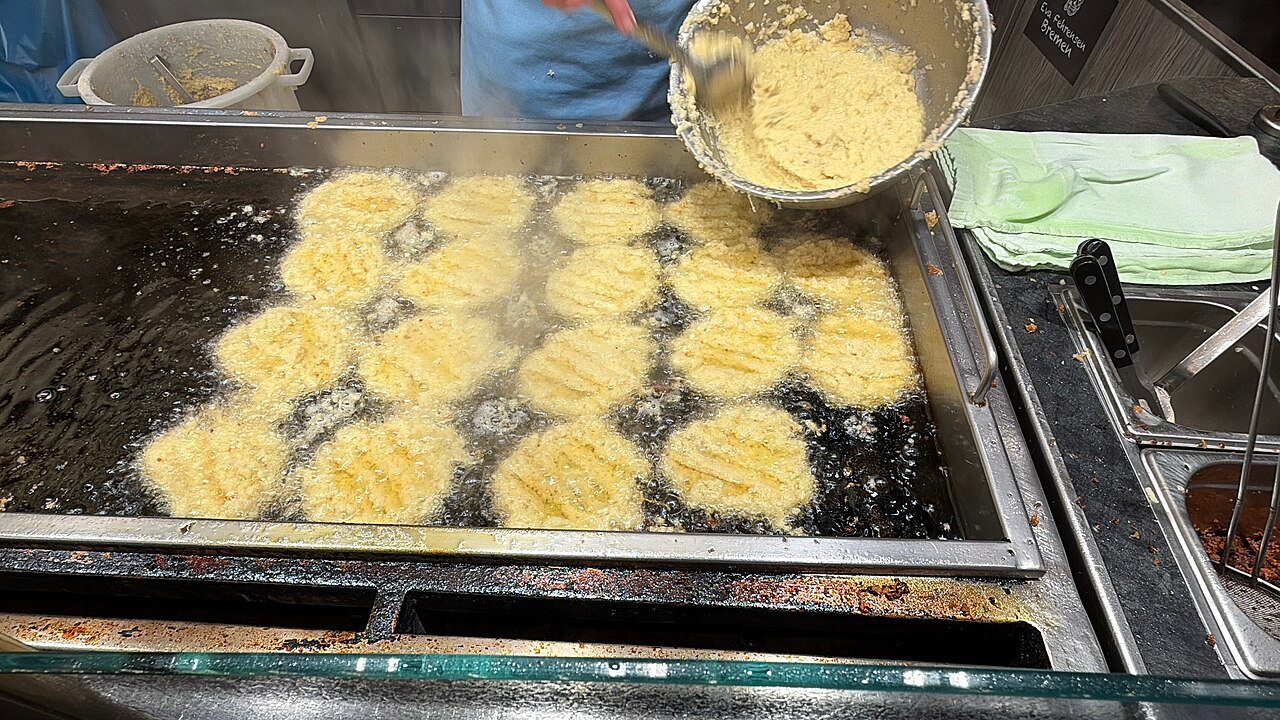
Photo: Asif Masimov via Wikimedia Commons (CC BY 4.0).
Step 6: Cook Like a Pro
Once you know how to use a griddle’s heat, a few techniques make the biggest difference:
- Cook in zones: First, keep a hot zone for searing and a cooler zone for holding finished food.
- Do not overcrowd: Next, leave space between items, because cold food drops the surface temperature and causes steaming.
- Use a dome: In addition, cover burgers or eggs with a melting dome to melt cheese or set yolks.
- Scrape as you go: Then, push debris toward the grease trap between batches.
- Rest meat: Finally, move cooked meat to the edge or a plate to rest before serving.
Timing also matters for multi-item meals. For a full breakfast, start bacon first, then hash browns, then pancakes, and finish with eggs, since eggs cook fastest and taste best hot.
Step 7: Clean Your Griddle After Each Use
However, cleaning depends on the surface. For a steel flat top, Blackstone recommends letting the griddle cool slightly, scraping it with a metal spatula, and wiping it with paper towels. Also, for stuck-on food, pour water on the warm surface and scrub. Then dry it and wipe on a thin coat of oil. Notably, Blackstone advises avoiding soap after the initial wash, because it can leave residue that affects taste.
For a coated electric griddle, the routine is different:
- Unplug and cool: First, remove the heat control and let the plate cool.
- Empty the drip tray: Next, pour cooled grease into a disposable container.
- Wash gently: Then, use warm, soapy water and a soft sponge; avoid steel wool and abrasive cleaners.
- Check the manual: Finally, follow your model’s rules; for example, Presto advises against putting the 07061 in the dishwasher and says soaking should not exceed two hours.
For stubborn residue on a coated plate, Dash’s manual suggests pouring on a little cooking oil, letting it sit 5 to 10 minutes, and scrubbing with a soft brush.
Step 8: Store It Properly
Similarly, proper storage protects your investment. For steel flat tops, Blackstone recommends a cool, dry spot, a heavy-duty cover, and a thin coat of oil after each use to prevent rust. If rust does appear, heat the griddle, scrape the corrosion, scrub with oil and a grill stone, and re-season.
For electric griddles, store the plate flat with nothing heavy on top, and keep the heat control in a dry drawer. Our tips on storing nonstick cookware explain how to protect coated surfaces from scratches.
How to Use a Griddle Indoors With Less Smoke
Indoor griddle cooking can fill a kitchen with smoke, but a few steps keep it under control. To begin with, turn on the range hood or open a window before you start, not after the smoke appears. In addition, choose a high-smoke-point oil and use only a thin layer. Moreover, trim excess fat from bacon and burgers, and empty the drip tray during long cooks so grease does not scorch. Finally, keep the temperature at the lowest setting that still browns the food; most breakfast items cook perfectly at 325°F to 375°F.
Likewise, coating care affects smoke. Overheated nonstick coatings can break down, so avoid preheating an empty coated griddle on the highest setting for long periods. If you want to understand the trade-offs between coating types, our breakdown of ceramic cookware pros and cons covers how ceramic and PTFE surfaces behave at high heat.
How to Use a Griddle for a Full Breakfast
A full breakfast is the best way to practice, because it uses every heat zone at once. Here is a simple timeline for a family of four on a 22-inch griddle:
| Time | Action | Zone |
|---|---|---|
| 0:00 | Preheat to 350°F | Whole surface |
| 0:08 | Add bacon | One end |
| 0:12 | Add hash browns | Center |
| 0:18 | Pour pancakes | Center after hash browns move |
| 0:24 | Move bacon and pancakes to the edge | Warming zone |
| 0:25 | Lower heat and crack eggs | Center |
| 0:30 | Serve | — |
Of course, timing varies by griddle and thickness. Still, this order keeps everything hot and finishes with the fastest-cooking food.
Griddle Safety Checklist
Safety deserves a quick routine every time you cook. First, keep children and pets at least 3 feet from the cooking area, as the American Burn Association recommends for hot food zones. Second, never leave a hot griddle unattended. Third, keep a lid or baking sheet nearby to smother a small grease fire, and never use water on burning oil. Fourth, let the grease tray cool before emptying it. Finally, unplug electric models and turn off propane at the tank when you finish.
A Reliable Griddle to Start With
If you are shopping for your first electric griddle, the Presto 07061 is a dependable starting point. It has removable handles for storage and a clear temperature chart in the manual.
If you prefer stovetop cooking, our guide on using a grill pan on a gas stove covers similar techniques, and our guide to cooking eggs without sticking applies directly to griddle breakfasts.
FAQ
How long should I preheat a griddle?
Most electric griddles need about 5 to 10 minutes. Real Homes measured about 7 minutes on the Ninja Sizzle, and Blackstone’s E-Series manual recommends 5 to 10 minutes.
Do I need to oil a nonstick griddle?
A light coat of oil or butter improves browning and release, even on nonstick surfaces. However, avoid aerosol sprays in large amounts, since residue can build up.
What temperature should a griddle be for pancakes?
Presto recommends 350°F to 400°F. Start at 350°F and adjust after the first pancake.
Can I use soap on my griddle?
On coated electric griddles, yes. On seasoned steel flat tops, Blackstone advises avoiding soap after the first wash.
How often should I season a steel griddle?
Season thoroughly before first use with about 3 coats, then wipe on a thin oil layer after each cook. Re-season fully if you see rust or dull, sticky spots.
Final Thoughts
To sum up, knowing how to use a griddle comes down to a few repeatable habits: set it up safely, season steel surfaces, preheat fully, match temperatures to each food, use the right tools, and clean and oil it after every cook. Master those steps, and you will turn out restaurant-style pancakes, smash burgers, and fried rice at home. Most importantly, keep a thermometer handy so every meal is as safe as it is delicious.

Hey, My name is MAMON. I am a SEO content creator and affiliate marketer with over 8 years of experience. I create honest product reviews, in-depth buying guides, and practical how-to articles to help readers make informed decisions. My mission is to provide trustworthy, research-backed content that delivers real value.
Leave a Reply