Knowing how to keep tea warm can turn a rushed cup into a slow, enjoyable ritual. Tea cools quickly in a thin cup, and reheating it often makes it taste flat or bitter. Fortunately, there are easy fixes, from preheating your teapot and using a cozy to choosing a tea mug warmer, a teapot warmer, or an insulated tumbler. In this guide, we combine brewing guidance from the Tea Association of the USA, burn and health research, and independent warmer test results to show you the best way to keep tea warm for your routine, without overheating it.
Key Takeaways
- First, the Tea Association of the USA recommends preheating the teapot and covering it with a cozy to retain heat.
- Brewing temperatures also vary by tea, which affects how warm your cup starts. For example, black tea brews at 212°F, while green tea brews at about 165°F to 185°F.
- However, you do not need to drink tea that hot. The World Health Organization’s cancer agency, IARC, classifies drinking beverages hotter than 65°C (149°F) as probably carcinogenic.
- A tea mug warmer slows cooling, but drinks run cooler than the plate. In CNN Underscored’s testing, several basic plates kept drinks at or below about 120°F to 130°F.
- Finally, insulated tumblers and self-heating mugs are the best options for keeping tea warm on the go.
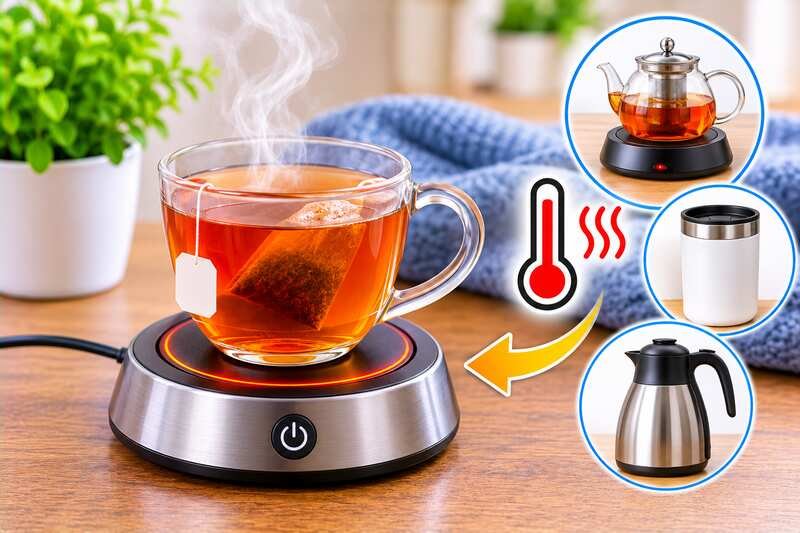
Why Tea Cools So Quickly
To understand how to keep tea warm, start with how it cools. Tea loses heat the same way coffee does. First, steam carries heat away from the surface. Second, a cold cup or teapot absorbs heat from the tea. Third, the outside of the cup passes heat to the air. Because many teacups are thin and wide, they lose heat even faster than a typical coffee mug.
In addition, tea is often brewed in smaller amounts, and small volumes cool faster than large ones. So, a delicate cup of green tea can go lukewarm in minutes. That is why learning how to keep tea warm is especially useful for slow sippers.
Ideal Brewing and Drinking Temperatures
Before you choose a method, it helps to separate two temperatures: the brewing temperature and the drinking temperature. Brewing water needs to be hot enough to extract flavor, but your cup does not need to stay that hot.
| Tea Type | Brewing Water | Steep Time |
|---|---|---|
| Black tea | 212°F (full boil) | 3–5 minutes |
| Green tea | 165–185°F | About 1 minute |
| Oolong | 180–190°F | 5–7 minutes |
| White tea | 180–190°F | 3–4 minutes |
Source: Tea Association of the USA. The association notes that times and amounts can be adjusted to taste, and it suggests letting boiled water sit about 10 minutes before brewing green tea.
For drinking, cooler is safer. According to the International Agency for Research on Cancer, drinking very hot beverages, defined as above 65°C (149°F), is probably carcinogenic to humans. In addition, a 2008 study in the journal Burns calculated an optimal drinking temperature for hot beverages of about 136°F to balance taste and scald risk. So, the goal is to keep tea comfortably warm, roughly 130°F to 145°F, rather than piping hot.
How to Keep Tea Warm: 8 Methods
1. Preheat Your Teapot and Cups
This is the simplest and most effective first step. The Tea Association of the USA recommends warming the teapot with a little hot water before brewing. Likewise, rinsing your cup with hot water keeps it from pulling heat out of the tea. An electric kettle makes this quick; see our guide to the best electric kettle, including models with temperature settings for green and white tea.
2. Use a Tea Cozy
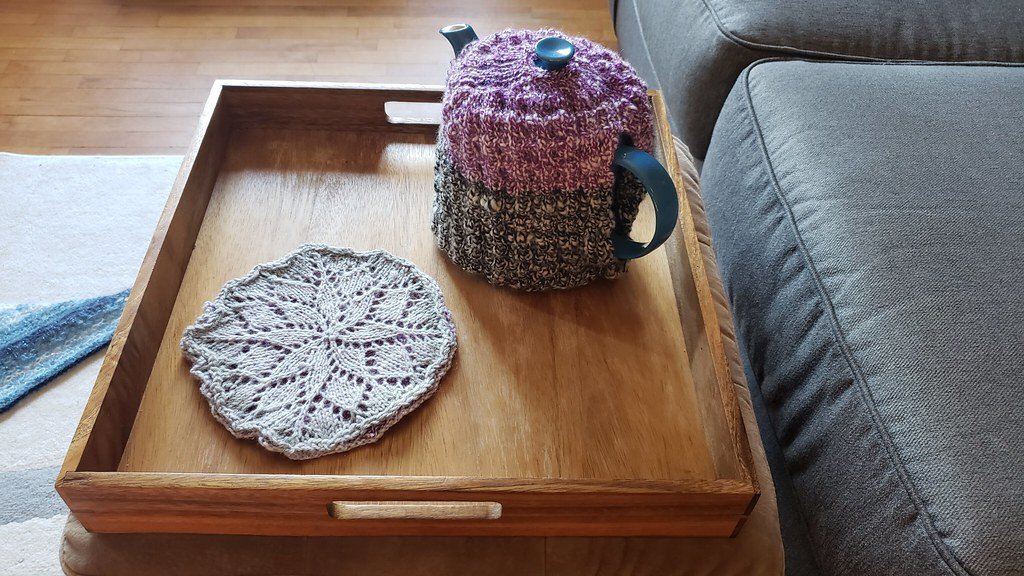
Photo: tachyondecay via Flickr (CC BY 2.0).
A tea cozy is a fabric or knit cover that insulates the teapot. The Tea Association of the USA specifically recommends covering the teapot with a cozy to retain heat during brewing. In addition, a cozy keeps the remaining tea warm between cups. Similarly, a knit mug sleeve slows heat loss from a single cup.
3. Cover Your Cup
An open cup loses a lot of heat through steam. So, a simple lid or saucer on top makes a noticeable difference. In fact, in CNN Underscored’s heated-mug tests, lids roughly doubled or tripled how long drinks stayed hot. Although those tests used heated mugs, the same principle applies to any cup of tea.
4. Brew Smaller Pots More Often
Brewing a large pot and letting it sit can lead to over-steeped, bitter tea. Instead, brew smaller amounts more often, or remove the leaves once the tea reaches the strength you like. As a result, each cup tastes fresher and starts hotter.
5. Use a Teapot Warmer
A teapot warmer keeps a full pot warm, usually with a tea light candle or an electric base. Candle warmers are popular because they are quiet and decorative. However, they are an open flame, so never leave them unattended, and keep them away from paper and fabric. Electric teapot warmers are safer for longer use, especially models with auto shut-off. Also, check that your teapot is designed for use on a warmer, since some glass and ceramic pots are not.
6. Use a Tea Mug Warmer
A tea mug warmer is a small heated plate that sits under your cup. Most plug-in plates use about 17 to 50 watts, and settings often range from about 104°F to 176°F, based on popular Amazon listings. Because many people drink tea slightly cooler than coffee, a tea mug warmer can be a good fit.
Still, set your expectations. A plate heats only the bottom of the cup, so the tea always runs cooler than the plate. In CNN Underscored’s testing, several basic plates kept drinks at or below about 120°F to 130°F. Therefore, use a thin, flat-bottomed mug and a lid for the best results.
7. Try a Self-Heating Mug
A self-heating mug measures and heats the drink directly. For example, Ember lets you set 120°F to 145°F in its app, and Nextmug offers presets of 130°F, 140°F, and 150°F. As a result, these mugs are ideal for delicate teas where temperature matters. However, they cost more and are usually hand wash only.
8. Pour Into an Insulated Tumbler or Thermos
For tea on the go, a vacuum-insulated tumbler or thermos is hard to beat. Because vacuum insulation blocks most heat transfer, tea stays warm for hours. Some tumblers even include a built-in infuser, so you can brew and carry in one container. Just remember to remove the leaves after steeping, or the tea will keep getting stronger.
Video: Lee Lee Reviews tests whether a tea light teapot warmer works.
How to Keep Tea Warm: Methods Compared
| Method | Cost | Best For |
|---|---|---|
| Preheating | Free | Every pot and cup |
| Tea cozy | Low | Teapots at home |
| Lid or saucer | Free to low | Single cups |
| Teapot warmer | Low to moderate | Serving guests |
| Tea mug warmer | Low to moderate | Desk sipping |
| Self-heating mug | High | Precise temperature |
| Insulated tumbler | Moderate | Commuting |
How to Keep Tea Warm Without Electricity
You do not need a gadget to enjoy warmer tea. In fact, the most reliable methods are free or nearly free. First, preheat the teapot and cups with hot water. Next, cover the teapot with a cozy, or wrap it in a clean kitchen towel if you do not own one. Then, pour smaller servings into a preheated cup and keep the rest in the covered pot. Finally, set a saucer on your cup between sips. Together, these steps slow every major path of heat loss.
For outings, a vacuum-insulated thermos is the best non-electric option. Because the vacuum layer blocks most heat transfer, it keeps tea warm far longer than any open cup. As a bonus, it also protects your tea from dust and spills.
How to Keep Tea Warm at Work
Workdays bring interruptions, so tea often sits forgotten. To handle that, use a lidded mug at your desk and set it on a tea mug warmer with auto shut-off. In addition, brew smaller cups, since a fresh small cup tastes better than a large one that has sat for an hour. If you have many meetings, a self-heating mug lets you carry tea with you at a steady temperature. Before plugging anything in, however, check your workplace rules, since some offices limit personal heating devices. And if your office kitchen is power-limited, our low wattage coffee maker guide covers efficient small appliances.
How to Keep Tea Warm for Guests
When serving a group, a full pot needs to stay warm through several rounds. Start by preheating the pot and cups. Then, brew the tea and remove the leaves when it reaches the right strength. After that, place the pot on an electric teapot warmer or under a cozy. Meanwhile, keep a kettle of hot water ready for refills; a variable-temperature kettle helps with green and white teas. In this way, every guest gets a warm cup without bitter, over-steeped tea.
Should You Reheat Tea?
You can reheat tea, but it rarely tastes as good as a fresh cup. Reheating can make some teas, especially green tea, taste more bitter. If you do reheat it, use low power in short bursts and stir between them. Better yet, brew a smaller fresh cup instead. To see what microwave reheating costs, check our guide on how much electricity a microwave uses.
Tea Food Safety Tips
Brewed tea is a drink you should handle with care. For example, the Tea Association of the USA advises against sun tea and cold-brewing methods that use water not hot enough to kill bacteria and keep tea at low temperatures for long periods. So, if you keep tea warm for hours, make it a fresh batch rather than leaving it out all day. In addition, refrigerate leftover tea you plan to drink later.
Common Mistakes When Keeping Tea Warm
- Leaving leaves in the pot. As a result, the tea over-steeps and turns bitter while it stays warm.
- Keeping tea too hot. Instead, aim below 149°F, the IARC threshold for very hot beverages.
- Using a footed cup on a warmer. In fact, only a small ring touches the plate, so little heat transfers.
- Leaving a candle warmer unattended. Otherwise, an open flame becomes a fire risk.
- Skipping the preheat. Similarly, a cold pot or cup steals heat right away.
Best Method by Situation
- Afternoon tea at home: First, preheat the pot, brew, and cover it with a cozy.
- Tea at your desk: Next, use a lidded mug on a tea mug warmer.
- Delicate green or white tea: Also, a self-heating mug lets you hold a precise, lower temperature.
- Guests or a long gathering: In addition, an electric teapot warmer keeps a full pot ready.
- Commuting: Finally, an insulated tumbler with an infuser is the most practical choice.
If you are setting up a low-power tea and coffee station, our guide on how many watts a coffee maker uses helps you compare power draw.
Frequently Asked Questions
What is the best way to keep tea warm?
For a teapot, preheat it and use a cozy. For a single cup, use a lid and a tea mug warmer, or a self-heating mug for precise control.
Does a mug warmer work for tea?
Yes. In fact, since many people drink tea slightly cooler than coffee, a mug warmer’s gentle heat suits tea well. Use a thin, flat-bottomed mug and a lid.
How hot should tea be when you drink it?
Comfortably warm, roughly 130°F to 145°F for most people. IARC classifies drinking beverages hotter than 149°F as probably carcinogenic.
Are tea light teapot warmers safe?
They can be, with care. Never leave the candle unattended, keep it away from flammable items, and use a teapot designed for a warmer.
Can I keep tea warm in a thermos?
Yes. A vacuum-insulated thermos keeps tea warm for hours. However, remove the leaves after steeping so the tea does not become bitter.
How do I keep tea warm without it getting bitter?
Remove the tea leaves or bags as soon as the tea reaches the strength you like. Then keep the brewed tea warm with a cozy, lid, or warmer. As a result, the tea stays warm without continuing to steep.
Does milk tea stay warm as long as plain tea?
Not usually, since cold milk lowers the temperature right away. To help, warm the milk first, and stir milk teas occasionally on a warmer to prevent a skin from forming.
Final Thoughts
Learning how to keep tea warm starts with simple habits: preheat your pot and cup, cover your tea, and brew smaller batches. From there, choose the right tool for your routine, whether that is a cozy at home, a tea mug warmer at your desk, a self-heating mug for precise temperatures, or an insulated tumbler for the commute. Finally, keep tea comfortably warm rather than piping hot, ideally below 149°F, for the best balance of flavor and safety.

Hey, My name is MAMON. I am a SEO content creator and affiliate marketer with over 8 years of experience. I create honest product reviews, in-depth buying guides, and practical how-to articles to help readers make informed decisions. My mission is to provide trustworthy, research-backed content that delivers real value.
Leave a Reply