Egg cookers have become one of the most popular small appliances on Amazon. The Dash Rapid alone has more than 127,000 ratings at 4.6 stars. Even so, many shoppers wonder whether a single-purpose gadget is really better than a pot of water. So, are egg cookers worth it? The honest answer depends on how often you eat eggs, how much counter space you have, and how much you value hands-off consistency. In this guide, we weigh the real costs and benefits with data on energy use, water, time, and egg consumption, so you can decide for yourself.
Key Takeaways
- Egg cookers are worth it for people who eat eggs several times a week and want consistent results without watching a pot.
- A 360-watt egg cooker running 15 minutes uses about 0.09 kWh, or roughly 1.6 cents at the average U.S. residential electricity price.
- Egg cookers steam eggs with a small cup of water instead of a full pot.
- The USDA projects about 22.9 dozen eggs per person in 2026, or roughly 5 eggs per person per week.
- They are less useful if you rarely eat eggs, need to cook two dozen at once, or have very little counter space.
What an Egg Cooker Actually Does
Before deciding whether egg cookers are worth it, it helps to know what they do. Essentially, an electric egg cooker is a small steamer with a built-in shut-off. First, you pour a measured amount of water onto a heating plate, place eggs in a tray above it, and switch it on. Next, the water turns to steam and cooks the eggs. Then, once the water has evaporated, a thermostat shuts the unit off and an alarm sounds on most models.
As a result, the water level replaces the kitchen timer. In addition, most models include a poaching tray and an omelet bowl, so one appliance can make boiled, poached, and omelet-style eggs.
Why Egg Cookers Are Worth It for Many Kitchens
1. Consistent Results
Above all, the biggest benefit is repeatability. On the stove, the right time depends on your burner, pot, and egg size. For example, the American Egg Board recommends a 12-minute stand for large eggs with the cold-water method, but your total time still varies with how fast the water boils. In contrast, an egg cooker uses a fixed amount of water, so once you find your favorite line, you get nearly the same result every time.
2. Hands-Off Cooking
Similarly, an egg cooker frees you from watching a pot. Because it shuts off on its own, you can shower, pack lunches, or make coffee while the eggs cook. In addition, there is no risk of a pot boiling dry if you get distracted.
3. Low Energy Use
Furthermore, egg cookers draw modest power. For example, Dash lists its Rapid model at 360 watts and its Deluxe at 500 watts. At the U.S. Energy Information Administration’s average residential electricity price of about 18 cents per kWh in August 2026, here is what a typical cycle costs:
| Appliance | Power | Energy in 15 Minutes | Approx. Cost |
|---|---|---|---|
| 7-egg cooker | 360 W | 0.09 kWh | About 1.6 cents |
| 12-egg cooker | 500 W | 0.125 kWh | About 2.3 cents |
In fact, even if you use one every day, that adds up to only a few dollars a year. Meanwhile, stovetop cooking can waste more heat. An ENERGY STAR fact sheet notes that induction cooktops are about 85 percent efficient, while gas cooktops transfer only about a third of their energy to the food. A small, enclosed steamer keeps most of its heat near the eggs.
4. Less Water
On the stove, boiling eggs usually means covering them with about 1 inch of water. By comparison, an egg cooker uses only what fits in its measuring cup. For example, one 8-egg model lists 140 ml, or a little more than half a cup, for 6 to 8 eggs. As a result, the water heats faster and wastes less energy.
5. Easier Peeling
Notably, egg cookers steam eggs rather than boil them. In Milk Street’s testing, steamed eggs peeled more easily, with shells that slipped right off, while boiled shells only cracked. Most cookers also include a pin for piercing the shell, which helps prevent cracks.
6. Extra Cooking Modes
Finally, most egg cookers poach eggs and make small omelets. Some steam vegetables, and a few make egg bites. Therefore, one compact appliance can cover several breakfast styles.
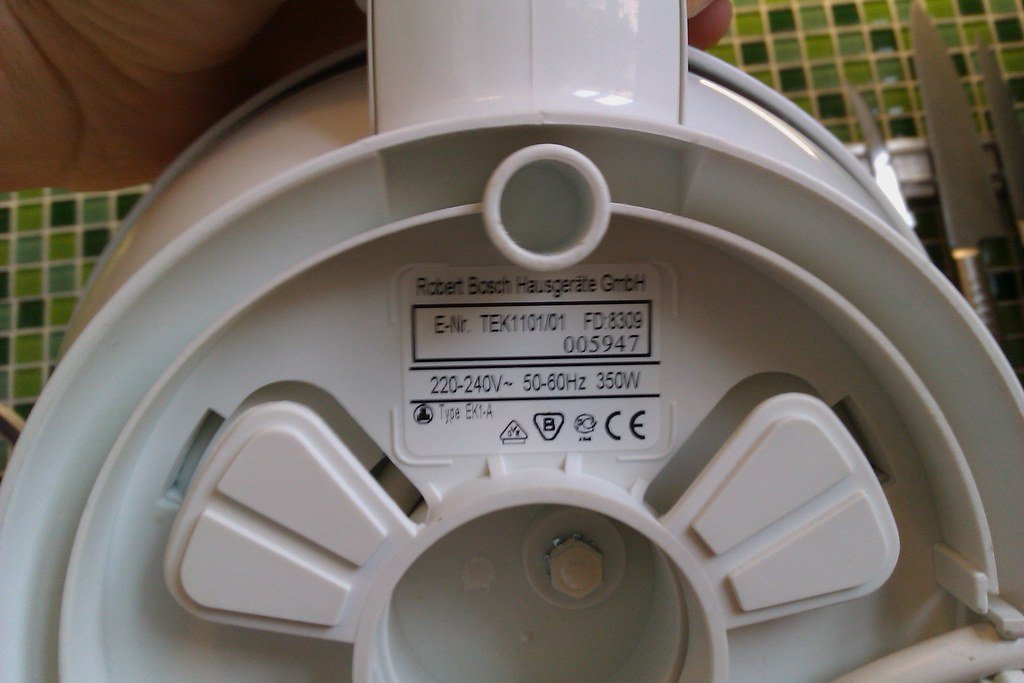
Photo: Espen Klem via Flickr (CC BY 2.0).
When Egg Cookers Are Not Worth It
1. Another Gadget to Store
Of course, an egg cooker takes cabinet or counter space. So, if your kitchen is already crowded, a pot you own may be the better choice.
2. Limited Capacity
Typically, single-tier models hold 6 or 7 eggs, and two-tier models hold 12 to 14. So, if you regularly need two dozen eggs for a party or Easter dyeing, a large pot is faster.
3. A Learning Curve
In addition, each brand uses its own measuring cup and chart. As a result, your first batch may come out softer or firmer than you expect. Usually, people dial it in within a few tries, but it is still a small adjustment.
4. Maintenance
Over time, mineral scale forms on the heating plate, especially with hard water. Fortunately, it is easy to clean. Dash, for example, recommends a mild solution of 10 parts water to 1 part vinegar.
5. Not for Fried or Scrambled Eggs
Finally, egg cookers steam eggs, so they cannot make crispy fried eggs or creamy stovetop scrambles. For those, you still need a skillet.
Video: Jeanelleats asks whether egg cookers are worth it.
Egg Cooker vs. Stovetop: Side-by-Side
| Factor | Egg Cooker | Stovetop Pot |
|---|---|---|
| Consistency | Very high once dialed in | Depends on timing |
| Attention needed | Almost none | Watch and time it |
| Water used | One measuring cup | Enough to cover eggs by 1 inch |
| Batch size | 6 to 14 eggs | As many as fit in one layer |
| Extras | Poach, omelet, steam | Boiling only |
| Storage | Needs its own space | Uses a pot you already own |
Are Egg Cookers Worth It? A Yearly Cost Breakdown
Running cost is one way to measure value. Using the same assumptions as above, a 360-watt cooker running 15 minutes per batch, at about 18 cents per kWh, here is what a year of use looks like:
| How Often You Use It | Batches per Year | Approx. Electricity Cost per Year |
|---|---|---|
| Once a week | 52 | About $0.85 |
| Three times a week | 156 | About $2.55 |
| Every day | 365 | About $5.95 |
Estimates: 0.09 kWh per batch x $0.1816 per kWh (EIA, August 2026). Actual run time varies with the water level.
In other words, electricity is a minor cost. Therefore, the real question is whether the convenience and consistency are worth the purchase price and the counter space. For comparison, our guide on how much electricity an air fryer uses shows how small an egg cooker draw really is.
Who Should Buy an Egg Cooker?
So, are egg cookers worth it for you? Based on the trade-offs above, an egg cooker is a smart buy for these groups:
- Daily egg eaters: The USDA Economic Research Service projects about 22.9 dozen eggs per person in 2026, or roughly 5 per week. If you eat more than that, the convenience pays off quickly.
- Meal preppers: A two-tier model cooks a dozen eggs in one batch for the week ahead.
- Busy mornings: Hands-off cooking lets you get ready while breakfast cooks.
- Dorms, offices, and RVs: A compact cooker works without a stovetop.
- Anyone who struggles with timing: The water-based system removes the guesswork.
Who Can Skip It?
- Occasional egg eaters: If you boil eggs once a month, a pot works fine.
- Small kitchens with no spare space: A single-purpose tool may not earn its spot.
- Fried-egg fans: If you mostly eat fried or scrambled eggs, a good skillet matters more.
- Party hosts: For two dozen or more at once, a large pot is faster.
Real-World Scenarios
The Busy Commuter
Imagine you eat two boiled eggs every weekday. With a pot, you wait for water to boil, set a timer, and watch the stove. By contrast, an egg cooker lets you load the eggs and get dressed while they cook. For this person, an egg cooker is clearly worth it.
The Weekend Brunch Host
Now picture someone who cooks eggs mainly on weekends for guests. A two-tier cooker that poaches several eggs at once can help. However, if brunch usually means fried eggs and bacon, a large skillet is more useful.
The Occasional Egg Eater
Finally, consider someone who boils eggs a few times a year for deviled eggs. In that case, a pot or a simple steamer basket is enough, so an egg cooker is probably not worth the space.
Common Complaints and Easy Fixes
| Complaint | Usual Cause | Fix |
|---|---|---|
| Inconsistent doneness | Water not measured exactly | Use the cup and cold water every time |
| Cracked shells | Eggs not pierced | Pierce the large end with the pin |
| Brown spots on the plate | Mineral residue | Wipe with diluted vinegar |
| Hard to peel | Very fresh eggs | Use eggs 7 to 10 days old |
| Worn cup markings | Repeated washing | Mark the lines or buy a replacement cup |
Notably, most complaints come from small setup mistakes rather than the appliance itself. Once those are fixed, owners usually get consistent results.
Alternatives to an Electric Egg Cooker
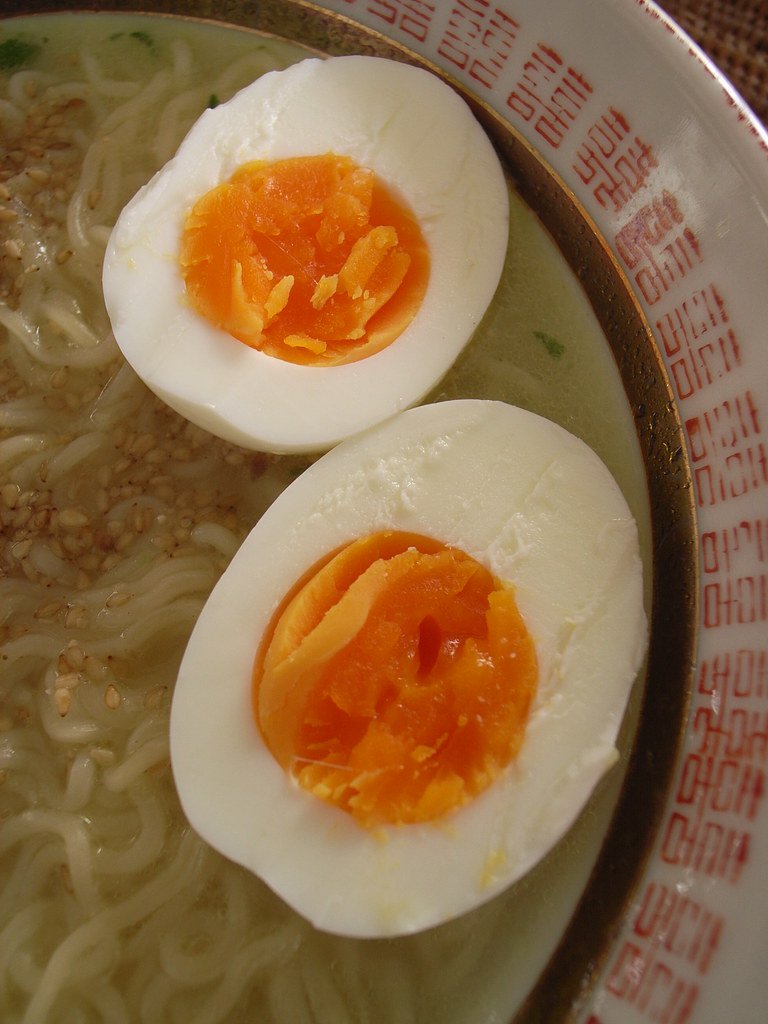
Photo: matsuyuki via Flickr (CC BY-SA 2.0).
However, if you decide an electric cooker is not for you, there are other ways to get similar benefits:
- Steamer basket: A basket in a saucepan gives you easy-peel steamed eggs for very little money.
- Electric kettle plus pot: Heating water in a kettle first speeds up stovetop boiling; see our guide to the best electric kettle.
- Microwave egg boiler: A dedicated microwave boiler cooks a few eggs without a countertop appliance. For running costs, see our guide on how much electricity a microwave uses.
- Toaster oven: Baked eggs need no special gadget; our guide on how to cook eggs in a toaster oven shows how.
- Rice cooker steam tray: Many rice cookers can steam eggs too; see our guide on how to steam using a rice cooker.
What to Look for If You Buy One
- Capacity: First, choose 6 to 7 eggs for one or two people, or 12 to 14 for families.
- Alerts: Next, a buzzer or chime tells you exactly when to pull the eggs.
- Accessories: Also, look for a poaching tray, omelet bowl, and a measuring cup with a piercing pin.
- Cleanup: Similarly, dishwasher-safe trays and lids save time.
- Ratings: Finally, models with thousands of ratings, such as the Dash Rapid, Elite Gourmet EGC115B, and Dash Deluxe, have proven track records.
Are Egg Cookers Worth It Compared With a Pressure Cooker or Microwave?
Many kitchens already have a multi-cooker or a microwave, so it is fair to compare. A pressure cooker can hard-cook a dozen or more eggs at once. However, it takes time to build and release pressure, so it is slower for one or two eggs. Meanwhile, a microwave egg boiler is compact and cheap, but it usually holds only a few eggs and needs careful timing.
By contrast, an egg cooker sits in the middle. It is faster than a pressure cooker for small batches and more consistent than a microwave. Therefore, egg cookers are worth it for people who want everyday eggs with almost no thought, while pressure cookers suit big weekly batches and microwaves suit dorms and offices.
How Long Until an Egg Cooker Pays Off?
Value is personal, but time savings add up. If an egg cooker saves you even a few minutes of pot-watching each time, and you use it three times a week, that is more than 150 batches a year with no timer to set. For many busy households, that convenience alone justifies the purchase.
Our Verdict
After weighing energy use, water, consistency, and convenience, our answer is clear. Are egg cookers worth it? For most households that eat eggs regularly, yes. They cost only a few dollars a year to run, use a fraction of the water, and deliver the same result every morning. However, if eggs are an occasional food in your home, a pot or steamer basket is the smarter, space-saving choice.
Frequently Asked Questions
Are egg cookers worth it for one person?
Yes, if you eat eggs several times a week. A compact 6- or 7-egg model is easy to store and makes breakfast nearly effortless.
Are egg cookers worth it for families?
Yes, especially two-tier models that cook 12 to 14 eggs at once. As a result, one batch can cover breakfasts or lunches for several days.
Do egg cookers save money?
Slightly. They use little energy, about 1.6 cents for 15 minutes at 360 watts, and very little water. However, the main benefit is convenience rather than cost savings.
Are egg cookers better than boiling?
For consistency and convenience, yes. Since they steam eggs, they also tend to give easier peeling. However, a pot is better for very large batches.
How long do egg cookers last?
With regular descaling and gentle cleaning, they can last for years. Many brands, including Dash, offer a 1-year warranty, extendable to 2 years with registration.
Are egg cookers safe?
Yes, when used as directed. Keep hands away from the steam vent, and never submerge the base in water.
Final Thoughts
So, are egg cookers worth it? For anyone who eats eggs several times a week, preps breakfasts ahead, or simply hates watching a pot, the answer is usually yes. They are consistent, hands-off, and cheap to run. On the other hand, if you rarely eat eggs, need very large batches, or have no spare space, a pot or steamer basket will serve you well. Consider how you cook, and the right choice becomes clear.

Hey, My name is MAMON. I am a SEO content creator and affiliate marketer with over 8 years of experience. I create honest product reviews, in-depth buying guides, and practical how-to articles to help readers make informed decisions. My mission is to provide trustworthy, research-backed content that delivers real value.
Leave a Reply