An electric egg cooker looks simple, but the first batch often comes out wrong because the instructions are easy to misread. The good news is that every major brand, from Dash and Elite Gourmet to Hamilton Beach and Cuisinart, works on the same basic principle. Once you understand it, learning how to use an egg cooker takes about five minutes. In this guide, we explain how egg cookers work, walk through boiled, poached, and omelet modes step by step, and cover cleaning, descaling, and troubleshooting for any brand.
Key Takeaways
- Egg cookers steam eggs, and the amount of water you add sets the cook time.
- When the water has evaporated, a thermostat shuts the unit off and an alarm sounds on most models.
- Pierce the large end of each egg with the pin on the measuring cup to help prevent cracks.
- Never place a poaching tray or omelet bowl directly on the heating plate; set it on the egg tray.
- Dash recommends cleaning mineral spots with a mild solution of 10 parts water to 1 part vinegar.
How an Egg Cooker Works
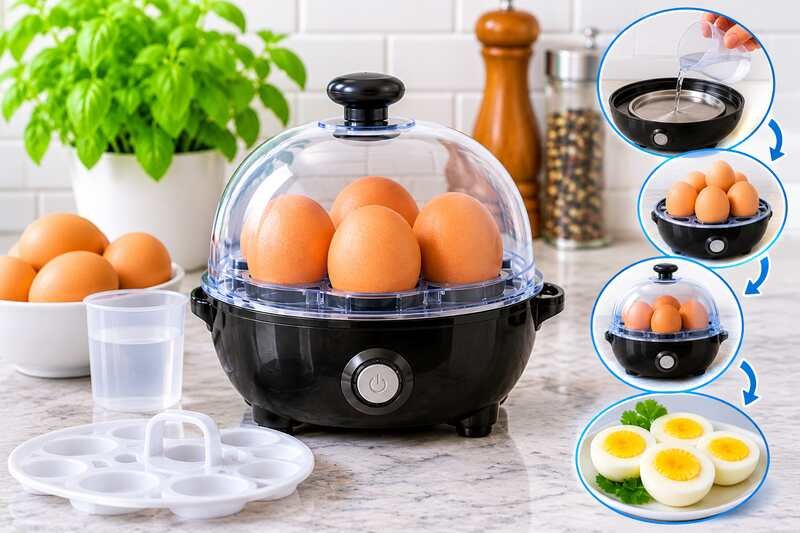
Before you learn how to use an egg cooker, it helps to understand what happens inside. Typically, an electric egg cooker has a small heating plate at the bottom, a tray that holds eggs above the plate, and a lid. First, you pour a measured amount of cold water onto the plate, then switch the unit on.
Then, as the water heats, it turns to steam and cooks the eggs. Once all of the water has evaporated, the plate gets hotter, and a thermostat senses the change and switches the unit off. Most models then sound a buzzer or chime. For example, the Dash Rapid listing describes a thermal sensor that shuts off and chimes when the water evaporates.
In other words, the water is the timer. Less water means less steam time and softer yolks. More water means more steam time and firmer, hard-boiled eggs.
Parts of a Typical Egg Cooker
| Part | Purpose |
|---|---|
| Base and heating plate | Holds water and creates steam |
| Egg tray | Holds whole eggs above the water |
| Measuring cup | Marked for soft, medium, and hard; often has a pin |
| Poaching tray | Holds cracked eggs for poaching |
| Omelet bowl | Cooks beaten eggs into a small omelet |
| Lid with steam vent | Traps steam and releases excess pressure |
Of course, some models add extras. For instance, Chefman includes a tray-lifting tool for moving hot eggs, while two-tier models such as the Dash Deluxe and Cuisinart CEC-10 add a second egg tray for larger batches.
First-Time Setup Checklist
Before your first batch, take a few minutes to prepare. This short routine prevents most first-time mistakes.
- Unpack and wash: First, wash every removable part in warm, soapy water and dry it.
- Read the chart: Next, find the water chart or time sheet in your manual and note which line gives which doneness.
- Find the pin: Then locate the piercing pin, which is usually on the bottom of the measuring cup.
- Pick a spot: After that, place the cooker on a flat, heat-safe surface away from cabinets, since steam vents from the lid.
- Run a test: Finally, cook two eggs on the medium line and adjust from there.
How to Use an Egg Cooker for Boiled Eggs
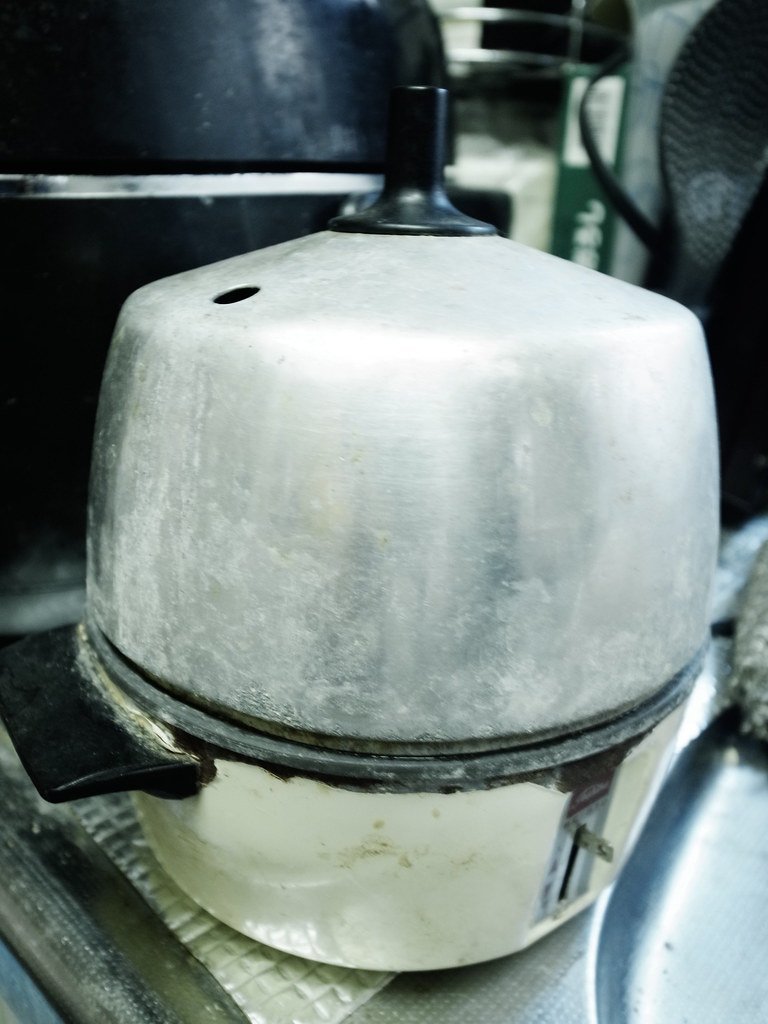
Photo: matsuyuki via Flickr (CC BY-SA 2.0).
These steps work for nearly every brand. They are based on the Dash Rapid manual, as reproduced on Manuals+, and on the instructions in major brands’ Amazon listings.
- Start unplugged: First, make sure the cooker is unplugged while you set it up.
- Measure cold water: Next, fill the measuring cup to the soft, medium, or hard line. Always use cold water.
- Pour it on the plate: Then pour the water directly onto the heating plate.
- Pierce the eggs: Use the pin on the bottom of the measuring cup to make a tiny hole in the large end of each egg.
- Load the tray: After that, set the egg tray on the base and place the eggs in it with the pierced end facing up.
- Cover and start: Put on the lid, plug in the cooker, and press the power button or switch.
- Wait for the alarm: When the water is gone, the unit turns off and signals that the eggs are done.
- Cool immediately: Finally, move the eggs to ice water or run them under cold water to stop the cooking.
For firmer eggs, the Dash manual suggests leaving eggs covered for an extra minute after the buzzer. Also, extra-large or jumbo eggs may need a little more water.
Video: Milk & Honey Nutrition demonstrates how to use an egg cooker.
How to Use an Egg Cooker for Poached Eggs
- First, fill the measuring cup to the poached line, which Dash labels “Omelette/Poached,” and pour the water onto the plate.
- Next, place the egg tray on the base.
- Then lightly spray the poaching tray with cooking spray.
- After that, set the poaching tray on top of the egg tray. Never put it directly on the heating plate.
- Now crack one egg into each poaching cup.
- Finally, cover, switch on, and remove the eggs when the alarm sounds.
To help nonstick poaching trays last, avoid metal utensils and store them carefully. Our guide on how to store nonstick cookware properly offers simple tips.
How to Use an Egg Cooker for Omelets
- First, fill the measuring cup to the omelet line and pour the water onto the plate.
- Next, spray the omelet bowl and set it on the egg tray.
- Then beat two or three eggs with your fillings and pour them into the bowl.
- Finally, cover, switch on, and remove the omelet when the alarm sounds.
According to the Dash manual, eggs puff up while cooking and shrink back when you open the lid, which is normal. If you prefer a drier omelet, leave it in for an extra two minutes. For a classic folded omelet, our guide on cooking eggs in a cast iron skillet without sticking covers the stovetop method.
Brand Differences to Know
Although the method is the same, a few details vary by brand. Based on each brand’s Amazon listing, here is what to look for:
| Brand and Model | Capacity | Notable Detail |
|---|---|---|
| Dash Rapid | 7 eggs | Chimes when water evaporates |
| Elite Gourmet EGC-007B | 7 eggs | Measuring cup with firmness markings; buzzer |
| Hamilton Beach 3-in-1 | 7 eggs | Beeps and indicator light turns off |
| Cuisinart CEC-10 | 10 eggs | 600-watt heater; audible alert |
| Chefman Egg-Maker | 6 eggs | Tray-lifting tool for hot eggs |
Because measuring cups are calibrated for each model, never swap cups between brands. Instead, always use the cup and chart that came with your cooker.
Using an Egg Cooker at High Altitude
Altitude changes how water behaves. According to Colorado State University Extension, water boils at about 203°F at 5,000 feet, compared with 212°F at sea level. As a result, the steam is cooler and eggs cook more slowly. So, if you live at elevation and your eggs come out soft, add a little more water than the chart suggests and test again.
How Many Eggs Should You Cook at Once?
Most single-tier egg cookers hold 6 or 7 eggs, while two-tier models hold 10 to 14. You can cook fewer eggs than the tray holds, but the water level, not the egg count, still controls the cook time. So, if your results change when you cook a small batch, adjust the water slightly and note what works. Over a few batches, you will learn the exact line for your favorite yolk.
Egg Cooker vs. Stovetop: When to Use Each
An egg cooker is not always the best tool. For daily eggs in small batches, it wins on convenience, because you do not have to watch a pot or set a timer. On the other hand, a large stockpot can handle two dozen eggs at once for a party, which most cookers cannot. Meanwhile, fried and scrambled eggs are still best in a skillet. In short, use the egg cooker for everyday boiled and poached eggs, and use the stove for very large batches or pan-cooked styles.
Meal Prep Ideas With Your Egg Cooker

Photo: Tim Pierce via Flickr (CC BY 2.0).
Once you know how to use an egg cooker, weekly meal prep gets much easier. For example, cook a full tray of hard eggs on Sunday, cool them, and store them in the carton. Then use them through the week for deviled eggs, egg salad, Cobb salads, and grab-and-go snacks. Because the American Egg Board says cooked eggs in the shell keep for up to one week, one batch can cover several days of lunches.
How to Clean an Egg Cooker
Fortunately, cleaning is quick, but a few rules protect the electrical base. According to the Dash manual:
- First, unplug the unit and let it cool completely.
- Next, wash the trays, bowl, cup, and lid in warm, soapy water, or in the dishwasher if your model allows it.
- Then wipe the base and heating plate with a damp cloth.
- Finally, dry every part before storing it.
Importantly, never submerge the base in water, and do not put it in the dishwasher.
How to Descale an Egg Cooker
Over time, white or brown spots form on the heating plate. According to the Dash manual, these may look like rust, but they are mineral residue from water. To remove them, wipe the cooled plate with a mild solution of 10 parts water to 1 part vinegar. Alternatively, gently scrub with a magic eraser-type sponge and a little warm water.
Notably, descaling matters because mineral buildup can change how quickly the water evaporates, which affects doneness. If you have hard water, our comparison of a water descaler vs water softener explains long-term fixes. The same scale builds up in kettles, as our best electric kettle guide explains.
Troubleshooting Common Problems
| Problem | Likely Cause | Fix |
|---|---|---|
| Eggs too soft | Too little water or large eggs | Add a little water or rest covered longer |
| Eggs too firm or green ring | Too much water or slow cooling | Use less water and chill right away |
| Cracked shells | Eggs not pierced | Pierce the large end first |
| Poached eggs stick | Tray not greased | Spray before each use |
| Spots on heating plate | Mineral residue | Clean with diluted vinegar |
| Hard to peel | Very fresh eggs | Use eggs 7 to 10 days old |
The University of Arkansas Cooperative Extension Service explains that the green ring forms when sulfur in the white reacts with iron in the yolk, usually from overcooking. Meanwhile, the American Egg Board notes that very fresh eggs are harder to peel.
Common Mistakes When Learning How to Use an Egg Cooker
- Using hot tap water: In fact, warm water shortens the steam time, so eggs come out softer than the chart suggests.
- Eyeballing the water: Instead, always use the measuring cup, since even a small difference changes doneness.
- Skipping the pin: As a result, shells crack more often and whites may leak.
- Leaving eggs in the cooker: Otherwise, residual heat keeps cooking them after the alarm.
- Setting trays on the plate: Remember, the poaching tray and omelet bowl must sit on the egg tray, not the heating plate.
- Ignoring mineral spots: Over time, scale changes how fast water evaporates and throws off your results.
Safety Tips
- Mind the steam: Keep hands and faces away from the steam vent while the unit runs.
- Let it finish: Do not unplug the cooker in the middle of a cycle.
- Stay nearby: Avoid leaving it unattended.
- Use proper outlets: Egg cookers draw modest power, but avoid overloading a circuit; our guide on how many watts a toaster uses explains why.
- Store eggs safely: The Egg Safety Center advises refrigerating hard-cooked eggs in their shells and using them within one week.
Frequently Asked Questions
How much water do I put in an egg cooker?
Use the measuring cup that came with your cooker and fill it to the line for your preferred doneness. Each model is calibrated differently.
Do I need to pierce eggs in an egg cooker?
Yes, most manuals recommend it. A tiny hole in the large end lets air escape and helps prevent cracking.
How long does an egg cooker take?
It depends on the water level and the number of eggs. The unit shuts off automatically when the water has evaporated.
Can I cook just one egg?
Yes. However, the water amount still controls doneness, so use the same line you would for a full tray, then adjust next time if needed.
Is it hard to learn how to use an egg cooker?
Not at all. Most people get good results on the first or second try. The key is to measure cold water carefully and adjust by a small amount until you find your favorite yolk.
Why does my egg cooker have brown spots?
According to the Dash manual, those spots are mineral residue, not rust. Clean them with diluted vinegar.
Final Thoughts
Learning how to use an egg cooker comes down to one idea: the water is the timer. Measure cold water to the right line, pierce the large end of each egg, and let the unit shut off on its own. Then chill the eggs right away for easy peeling. With regular descaling and a light spray on the poaching tray, any egg cooker will give you perfect boiled eggs, poached eggs, and omelets for years.

Hey, My name is MAMON. I am a SEO content creator and affiliate marketer with over 8 years of experience. I create honest product reviews, in-depth buying guides, and practical how-to articles to help readers make informed decisions. My mission is to provide trustworthy, research-backed content that delivers real value.
Leave a Reply