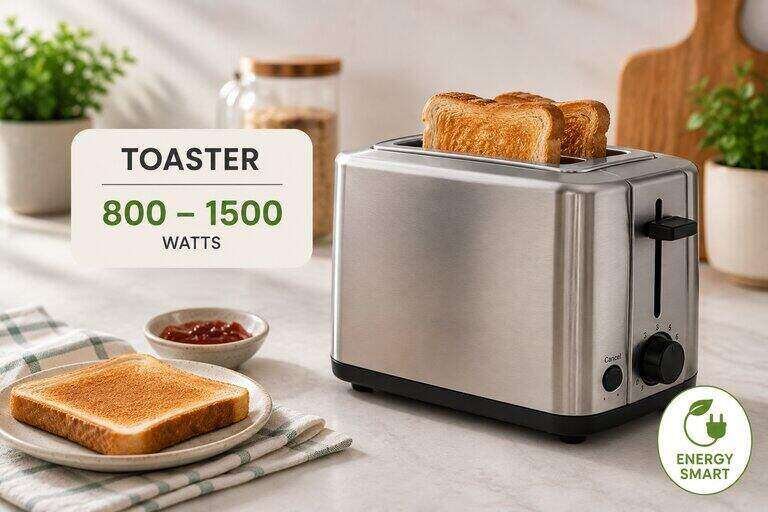
How many watts is a toaster? Most toasters use between 600 to 1800 watts. This article breaks down the different wattages and what they mean for your energy use. It also covers how to choose an efficient toaster.
Key Takeaways: How Many Watts Is a Toaster
- Toasters typically range from 600 to 1800 watts: two-slice models use less (600-1100 watts), four-slice models use more (1200-1800 watts)
- Heating elements, size, capacity, and extra features like LED indicators and defrost functions all affect a toaster’s wattage
- To save energy: use a lower wattage toaster, toast multiple slices at once, and unplug it when not in use
How Many Watts Is a Toaster? Typical Wattage Ranges
Toasters come in various shapes and sizes, but their wattage typically ranges from 600 to 1800 watts. That range covers different levels of toasting speed and consistency, matching different needs and preferences. Whether you’re using a basic model or a high-end toaster with advanced features, knowing the wattage helps you manage your energy use.
Toaster wattage falls into three rough tiers: low-power (600-1000 watts), mid-range (1000-1250 watts), and high-power (1250-1800 watts). Higher wattage models generally toast faster and more consistently. Here’s a closer look at two-slice and four-slice models.
Two-Slice Toasters
Two-slice toasters are a staple in most kitchens, especially smaller households or those who toast bread occasionally. These typically use between 600 and 1100 watts, making them an energy-efficient choice for everyday toasting. With their compact size, they fit small kitchens easily and handle:
- Bread
- English muffins
- Bagels
- Waffles
- Pastries
Despite their lower wattage, two-slice toasters are quite efficient. They toast both sides at once, producing even browning. And you’re not wasting energy heating a larger surface than you need.
Four-Slice Toasters
For larger households or anyone who regularly toasts multiple slices, four-slice toasters are the better option. These typically draw between 1200 and 1800 watts to toast several slices quickly and evenly. The extra wattage lets them heat up fast and hold a consistent temperature across a bigger batch.
Four-slice toasters do consume more power than two-slice models. But they save time by toasting everyone’s bread in one cycle instead of two. That can offset some of the extra draw if you’d otherwise run a two-slice toaster twice.
Factors Influencing Toaster Wattage
Several factors influence a toaster’s wattage, from the type of heating elements used to its size and capacity. Answering how many watts is a toaster for your specific model usually comes down to these same few variables. Understanding them helps you pick a toaster that meets your needs without wasting energy.
Heating elements are the biggest factor. The number and type of elements affect how quickly and evenly a toaster can heat up and toast bread. The size and capacity, including the number of slots, also impacts power usage. Extra features like LED indicators, wide slots, and dual controls can push wattage higher too.
Heating Elements
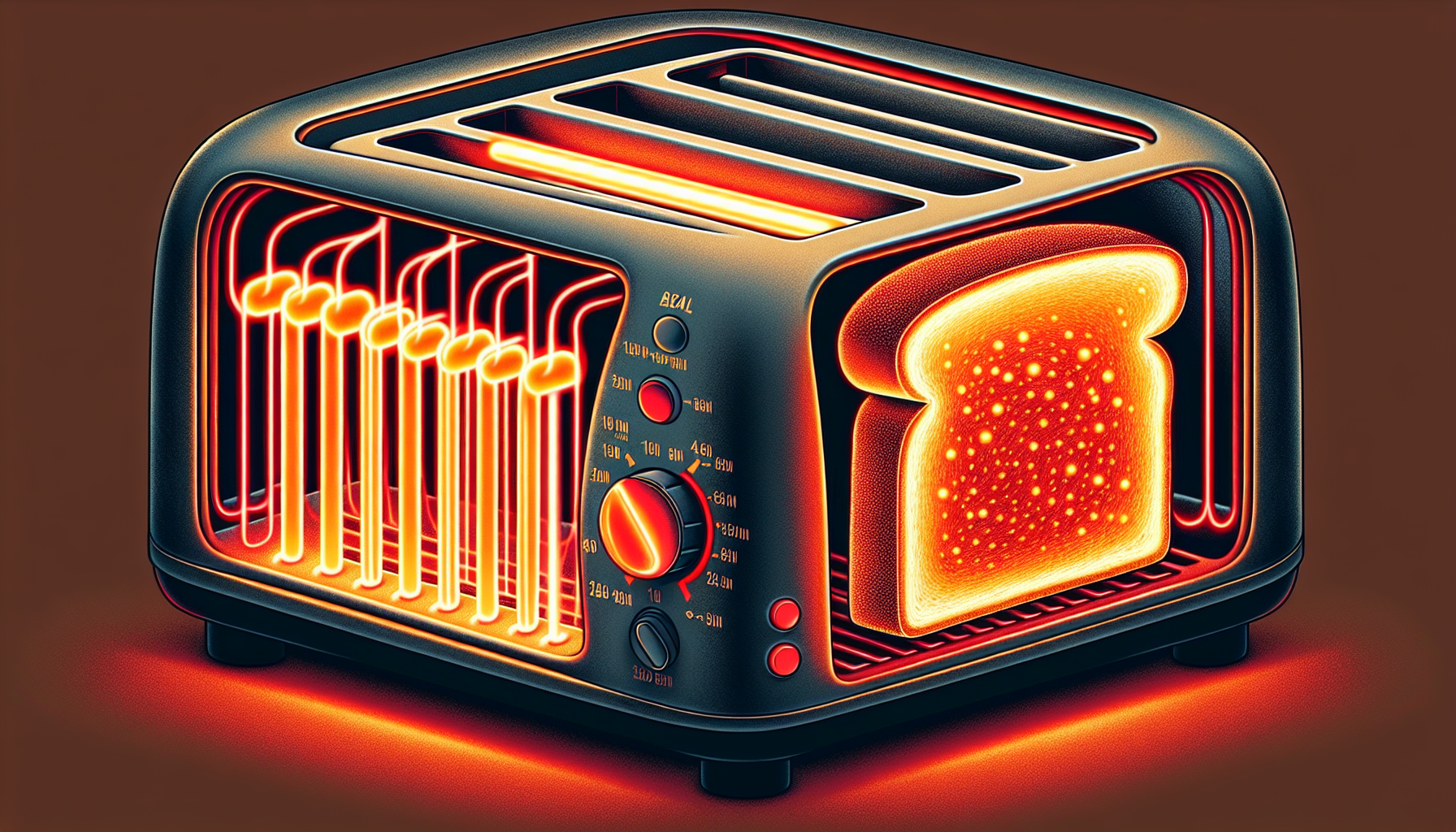
Heating elements are the heart of any toaster. They convert electrical energy into heat, cooking bread evenly on both sides. Most use a nickel-chromium alloy, since it holds up well to repeated heating and cooling without breaking down. Toasters with higher-powered elements heat faster and more consistently.
Running current through these resistive elements is what draws the power. The more efficient the elements, the less energy gets wasted as the toaster works. Higher-powered elements also cut toasting time. That can offset some of the higher wattage in total energy used per session.
Size and Capacity
Size and capacity play a big role in power usage. Larger toasters with more slots need more wattage to heat efficiently. A four-slice toaster needs more power than a two-slice model to reach the same toasting performance across a bigger surface.
Additional Features
Additional features that can influence wattage and energy use include:
- LED indicators
- Wide slots
- Dual controls
- Defrost function
These features add convenience but also add to a toaster’s power draw. A defrost function, for instance, toasts frozen items directly. That actually saves energy compared to defrosting in a microwave or oven first.
Toasters with advanced settings like bagel functions or digital displays tend to use more energy overall. They add real convenience, so it’s worth weighing that against the slightly higher wattage if efficiency is your main priority.
Energy Consumption and Costs
Higher wattage means higher energy consumption, and that shows up on your electricity bill. A typical toasting session at 600-1800 watts for a few minutes works out to roughly 0.02 to 0.15 kWh, depending on wattage and toasting time.
The U.S. Energy Information Administration put the average U.S. residential electricity rate at 16.48 cents per kWh in 2024. Rates range from around 11.5 cents in Nebraska to over 42 cents in Hawaii. At the national average, a single toasting session costs well under a penny, somewhere around $0.003 to $0.025 depending on your toaster’s wattage and run time.
Calculating Energy Usage
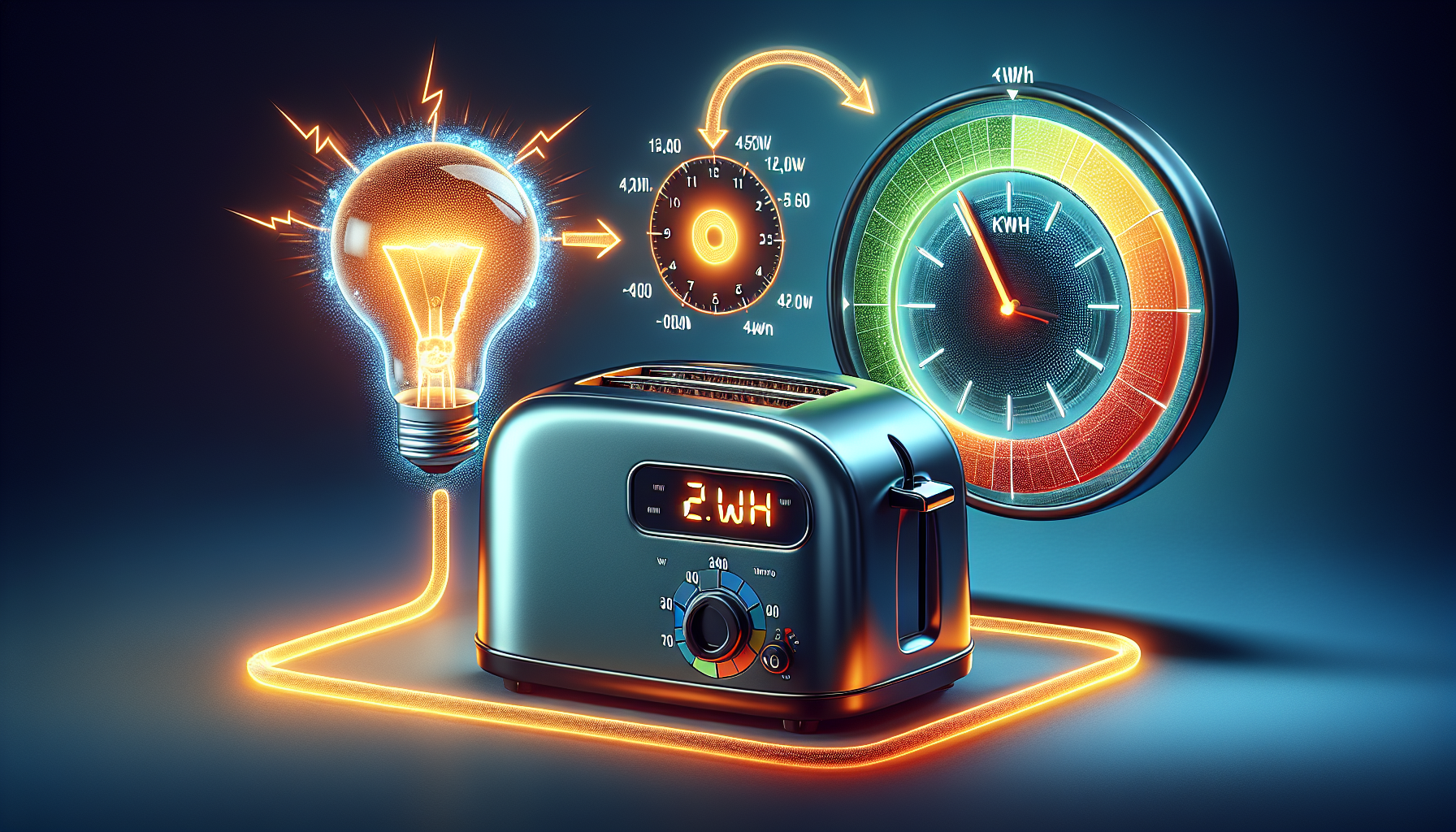
Calculating a toaster’s energy usage is straightforward: multiply the wattage by the toasting time in hours to get kilowatt-hours (kWh). A 1200-watt toaster used for 3 minutes, for example, uses about 0.06 kWh per session (1,200 watts x 0.05 hours ÷ 1,000).
Virginia Cooperative Extension’s energy guide uses this same wattage-times-hours-divided-by-1000 formula for any small appliance. It lists toasters in the 800-1400 watt range, in line with the figures above.
Understanding Electricity Bills
Once you have the kWh figure, multiply it by your local electricity rate to get the cost per use. A 1200-watt toaster run for 3 minutes at the national average rate costs about $0.0099, less than a penny.
Multiply that per-use cost by how often you toast, and a toaster still barely moves the needle on a typical bill, even used daily. It’s one of the smaller energy draws in most kitchens.
Toaster vs. Toaster Oven: Power Comparison
Standard toasters and toaster ovens differ in power consumption. Dedicated toasters generally draw less power for straightforward toasting. Toaster ovens run higher wattage because they’re built to do more.
Wattage and Efficiency
Toaster ovens typically range from 1000 to 1800+ watts, with convection models running closer to 1500-1800 watts. Standard toasters, per the Virginia Cooperative Extension figures above, generally fall in the 800-1400 watt range. Since a toaster is built for one job, it tends to use its wattage more efficiently for that task than a multi-function toaster oven does.
For small portions, a toaster oven can still beat a full-size conventional oven on efficiency. Conventional ovens typically draw 3,000 to 5,000 watts. That gap is large enough that reheating a slice of pizza in a toaster oven, instead of a full oven, is usually the better energy choice.
Versatility and Functionality
While toasters are more efficient for making toast specifically, toaster ovens offer more versatility. They function as mini-ovens that can bake, broil, and roast. For a lot of households, that makes the extra wattage worthwhile despite the higher power draw.
Tips for Choosing an Energy-Efficient Toaster
Once you know how many watts is a toaster you’re considering, a few other factors matter just as much: adjustable settings, lower wattage, and genuine energy-saving features. Getting these right can meaningfully cut your energy use and electricity costs over time.
Toasters with adjustable browning settings let you dial in exactly the toast you want with less wasted energy. Automatic shut-off features help too, cutting power the moment the cycle finishes instead of leaving elements idle.
Opt for Adjustable Settings
Multiple browning control options let you pick the doneness level you actually want. That prevents over-toasting, re-toasting, and the wasted energy that comes with both. Advanced heat and duration controls on higher-wattage toasters also tend to produce more precise, consistent results.
Toasters with sensors that adjust heat based on bread thickness toast efficiently on the first try instead of needing a second pass. That’s a real energy savings if you regularly toast a mix of bread types.
Consider Lower Wattage Models
Lower wattage toasters use less power but take a little longer to toast. That tradeoff is usually worth it if energy use matters more to you than shaving a few seconds off breakfast. A toaster in the 600-750 watt range can meaningfully cut energy use compared to a 1500-1800 watt model.
Lower wattage models aren’t for everyone. But they’re a solid pick if you don’t mind a few extra seconds per slice.
Look for Energy-Saving Features
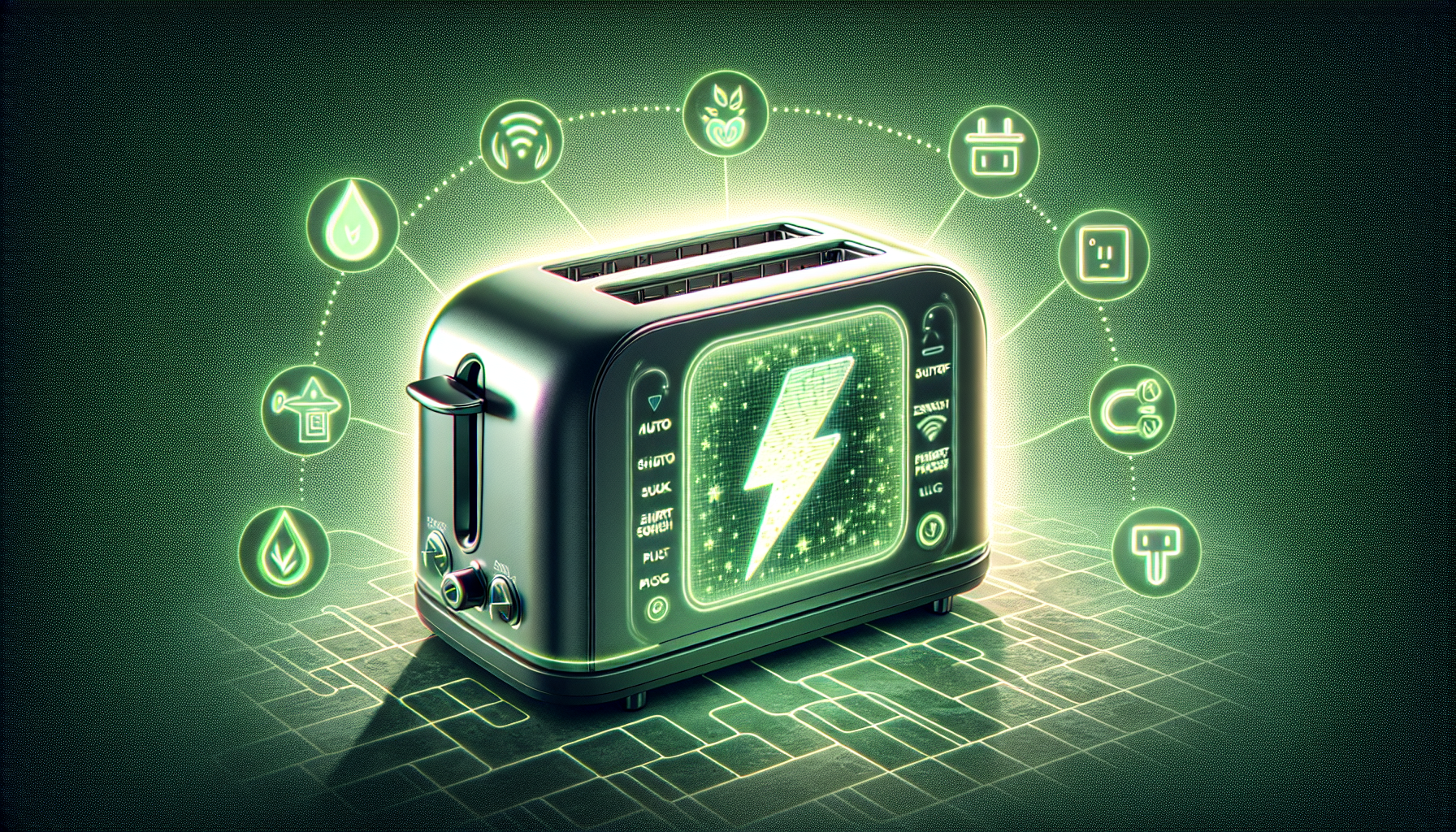
Look for real energy-saving features when shopping for a toaster, not just marketing language. Auto shutoff is the most useful one, since it stops the toaster from drawing power once the cycle ends.
An Express Finish mode that toasts bread within about 60 seconds saves time and energy by shortening the active heating window. A smart plug is worth considering too, if you want to track exactly how much your toaster draws.
How to Save Energy When Using a Toaster
Once you know how many watts is a toaster you own draws, a few simple habits go a long way toward cutting how much of that you actually use:
- Toast multiple slices at once instead of running the toaster twice
- Unplug the toaster when it’s not in use
- Use a lighter toasting setting when you don’t need dark toast, since lighter settings generally use less energy
Stopping the toasting cycle as soon as you’ve got the result you want also helps. Keeping the toaster free of crumbs and debris matters too, since built-up crumbs can interfere with even heating.
Toast Multiple Slices at Once
Toasting several slices at once makes better use of the heating elements per cycle. Running a full batch means the toaster warms up fewer times overall. That saves energy and gets everyone’s toast done faster.
If you often toast one slice at a time, try waiting until you have two or more ready to go. It’s a small habit that adds up over weeks of daily toasting.
Unplug When Not in Use
Unplugging your toaster when you’re not using it avoids standby power draw, sometimes called “vampire power.” Many appliances pull a small amount of electricity just from being plugged in, even switched off. Unplugging cuts that draw to zero.
It’s a small habit, but it adds up across a kitchen full of small appliances, not just your toaster. Between choosing a reasonable wattage in the first place and building in these habits, most households can trim their toaster’s contribution to the electricity bill without changing how they actually use it day to day.
Summary
Understanding how many watts is a toaster, and what drives that number up or down, helps you make better decisions about your kitchen appliances. This guide covers the typical ranges for two-slice and four-slice models, plus the role of heating elements, size, and extra features. It also compares toasters with toaster ovens, since the wattage gap between them explains a lot about when each one makes sense.
If you’re looking at your kitchen’s energy use more broadly, our guides on coffee maker wattage, blender wattage, and microwave electricity use are worth a look too. A toaster is usually one of the smaller draws on that list.
Choosing an energy-efficient toaster, and building in a few simple habits like toasting full batches and unplugging when done, adds up to real savings over time.
Frequently Asked Questions
How many watts is a toaster, on average?
Most household toasters fall somewhere between 600 and 1800 watts, with the majority of everyday two-slice models landing closer to 800-1000 watts.
How many watts does a typical two-slice toaster use?
A typical two-slice toaster uses between 600 and 1100 watts, making it an energy-efficient option for everyday toasting.
How can I calculate the energy usage of my toaster?
Multiply the wattage by the toasting time in hours. A 1200-watt toaster used for 3 minutes works out to about 0.06 kWh per session.
Are toaster ovens more energy-efficient than toasters?
Standard toasters are generally more efficient for making plain toast, since that’s the one job they’re built for. Toaster ovens use more power but offer far more versatility for cooking other foods.
What energy-saving features should I look for in a toaster?
Auto shutoff, adjustable browning settings, and an Express Finish or quick-toast mode are the features that actually make a measurable difference in energy use.
Can unplugging my toaster save energy?
Yes. Unplugging avoids standby power draw entirely, which adds up over time even though the amount per appliance is small.

Hey, My name is MAMON. I am a SEO content creator and affiliate marketer with over 8 years of experience. I create honest product reviews, in-depth buying guides, and practical how-to articles to help readers make informed decisions. My mission is to provide trustworthy, research-backed content that delivers real value.
Leave a Reply