

You see the label everywhere, on water bottles, food containers, blenders, and electric kettles. But what does BPA free mean, and does it actually make a product safer? In simple terms, “BPA-free” means the product was not made with bisphenol A, a chemical once common in hard, clear plastics and can linings. However, the label tells you less than many shoppers assume. In this guide, we explain what BPA is, where it is found, what the label does and does not promise, what U.S. and European regulators say, and how to read plastic labels with confidence.

Photo: Hteink.min via Wikimedia Commons (CC BY-SA 3.0).
Key Takeaways
- “BPA-free” means a product was not made with bisphenol A. It does not mean the product is plastic-free or free of all bisphenols.
- The FDA states that “BPA is safe at the current levels occurring in foods,” while Europe’s food safety agency set a far stricter intake limit in 2023.
- A 2015 review of 32 studies in Environmental Health Perspectives found that common BPA substitutes, BPS and BPF, have hormonal activity in the same range as BPA.
- Many plastics, such as polypropylene, never contained BPA, so their BPA-free label is true by design.
- Above all, if you want to limit plastic contact with hot food or drinks, choose stainless steel or glass.
What Is BPA?
Before answering what does BPA free mean, it helps to define BPA. BPA stands for bisphenol A. It is an industrial chemical used since the 1950s to make two main materials: polycarbonate plastic and epoxy resins. Specifically, polycarbonate is the hard, clear, shatter-resistant plastic once used in water bottles, food storage, and baby bottles. Meanwhile, epoxy resins form protective linings inside many food and drink cans.
Above all, the concern is that BPA can behave like the hormone estrogen in the body. In addition, small amounts can move from containers into food and drinks, especially with heat. As a result, BPA became one of the most studied food-contact chemicals in the world.
| Where BPA Has Been Used | Material | Still Common Today? |
|---|---|---|
| Hard, clear reusable bottles | Polycarbonate | Less common |
| Food and drink can linings | Epoxy resin | Still used in some cans |
| Baby bottles and sippy cups | Polycarbonate | No longer authorized in the U.S. |
| Some thermal paper receipts | Coating developer | Varies by store |
| Older kitchen appliance parts | Polycarbonate | Less common |
How BPA Gets Into Food and Drinks
To understand what does BPA free mean in daily life, it helps to know how BPA moves in the first place. BPA does not jump out of plastic all at once. Instead, small amounts can migrate over time, and several factors speed that up.
- Heat: First, hot liquids, microwaving, and dishwasher cycles increase migration.
- Acidic or fatty foods: Also, tomato sauce, citrus, and oily foods can draw out more chemicals than plain water.
- Age and wear: In addition, older, scratched, or cloudy plastic tends to release more.
- Contact time: Finally, food stored for days has more time to pick up chemicals than a quick drink.
For that reason, BPA-free labels matter most for items that hold hot food or drinks, such as kettles, coffee makers, and food storage you microwave.
What Does BPA Free Mean?
So, what does BPA free mean on a label? It means the manufacturer did not use bisphenol A to make that product or its plastic parts. In practice, most BPA-free items fall into one of three groups:
- Plastics that never used BPA. For example, polypropylene (resin code 5), polyethylene (codes 2 and 4), and PET (code 1) are not made with BPA.
- Newer BPA-free plastics. Also, some clear copolyesters were designed to replace polycarbonate.
- Products using BPA substitutes. Finally, some items replace BPA with related chemicals such as BPS or BPF.
However, that third group is the catch. For example, a product can honestly say BPA-free while still containing a close chemical cousin. In other words, the label answers one narrow question, not every safety question.
What BPA-Free Does Not Mean
Because the label sounds reassuring, people often read more into it than it says. Here is what BPA-free does not guarantee:
- Not plastic-free. In fact, most BPA-free products are still plastic.
- Not bisphenol-free. Similarly, BPS, BPF, and other bisphenols may be present.
- Not microplastic-free. Heat and wear can still release tiny plastic particles from BPA-free plastics.
- Not “non-toxic” by law. Meanwhile, “non-toxic” is a marketing term without one legal definition for food containers.
- Not heat-proof. Finally, some plastics warp or degrade with repeated high heat.

Video: Change is Simple explains what the BPA-free label really means.
A Short History of the BPA-Free Label
The BPA-free label became popular in the late 2000s, as research and news coverage raised concerns about BPA in baby bottles and water bottles. Soon after, manufacturers began reformulating products and advertising the change. Meanwhile, in 2010, Canada added BPA to its list of toxic substances under its environmental protection law. Then, in 2012 and 2013, the FDA removed authorization for BPA in baby bottles, sippy cups, and infant formula packaging coatings, noting industry had already abandoned those uses. More recently, EFSA’s 2023 decision brought BPA back into the headlines. As a result, “BPA-free” is now one of the most familiar labels in the kitchen aisle.
Is BPA-Free Safe? What Regulators Say
The answer depends partly on where you live, because regulators disagree about BPA itself.
United States
According to the FDA’s guidance on BPA in food contact, “BPA is safe at the current levels occurring in foods.” The FDA did remove authorization for BPA-based polycarbonate in baby bottles and sippy cups in 2012, and for BPA-based coatings in infant formula packaging in 2013. However, it explains that these changes followed industry abandonment of those uses rather than a safety finding.
Europe
In contrast, the European Food Safety Authority set a new tolerable daily intake for BPA in April 2023 of 0.2 nanograms per kilogram of body weight per day. That limit is about 20,000 times lower than EFSA’s 2015 temporary value. As a result, European policy has moved further away from BPA in food-contact materials.
What About BPA Substitutes?
This is where the BPA-free label gets complicated. A 2015 systematic review by Rochester and Bolden, published in Environmental Health Perspectives, looked at 32 studies of BPS and BPF. Notably, most found that their hormonal potency was in the same order of magnitude as BPA. Therefore, swapping BPA for these substitutes may not remove the underlying concern.
| Chemical | Common Use | Covered by “BPA-Free”? |
|---|---|---|
| BPA (bisphenol A) | Polycarbonate, epoxy linings | Yes, absent by definition |
| BPS (bisphenol S) | Some plastics, thermal paper | No, may still be present |
| BPF (bisphenol F) | Some resins and coatings | No, may still be present |
BPA-Free vs. Plastic-Free vs. Non-Toxic
These three labels often appear side by side, yet they mean very different things. Here is a quick comparison.
| Label | What It Means | What It Does Not Mean |
|---|---|---|
| BPA-free | Made without bisphenol A | Free of plastic or other bisphenols |
| Plastic-free | No plastic in the product, or in the food-contact path | Free of every other material, such as silicone |
| Non-toxic | A general marketing claim | A specific legal standard for food containers |
| Food-grade | Material intended for food contact | Plastic-free or bisphenol-free |
In short, plastic-free is the strongest of these claims when it comes to avoiding plastic chemicals, while BPA-free is the narrowest.
Is BPA-Free Worth Paying Extra For?
Today, BPA-free is so common that you rarely pay extra for it. Most kettles, blenders, and food containers already carry the label. Therefore, the better question is whether to pay more for glass or stainless steel. For items that touch hot food or drinks every day, many shoppers decide that upgrade is worth it. On the other hand, for cold storage or occasional use, a quality BPA-free plastic is usually fine.
How to Read Plastic Labels

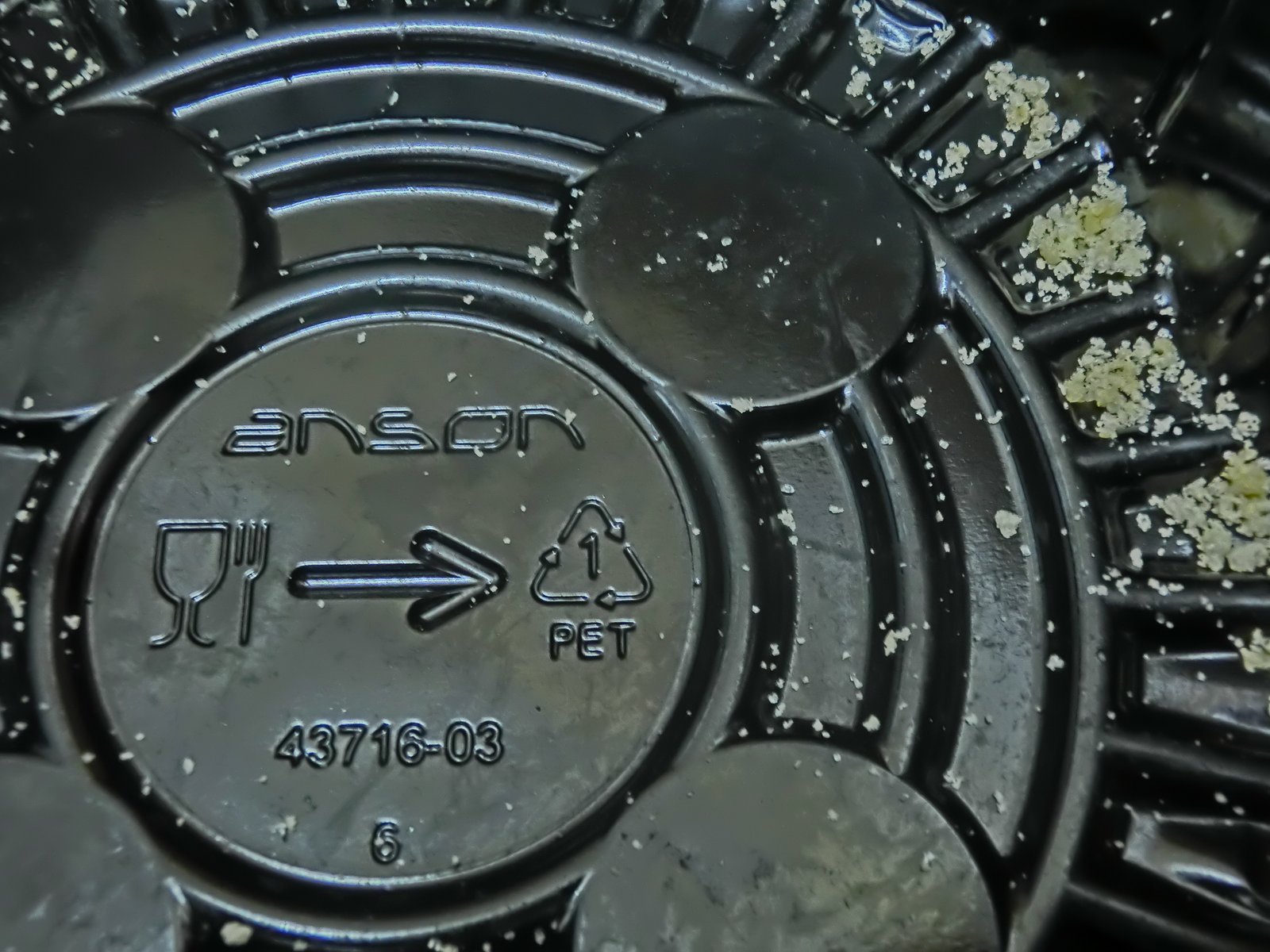
Photo: Woakamkurhram via Wikimedia Commons (CC BY-SA 3.0).
Once you know what does BPA free mean, plastic codes help you go further. The small number inside the recycling triangle, called the resin identification code, tells you the type of plastic. Although it is mainly a recycling tool, but it also hints at whether BPA is likely.
| Code | Plastic | Made with BPA? | Common Kitchen Uses |
|---|---|---|---|
| 1 | PET | No | Single-use bottles |
| 2 | HDPE | No | Milk jugs, cutting boards |
| 4 | LDPE | No | Squeeze bottles, bags |
| 5 | Polypropylene | No | Food containers, kettle bodies |
| 6 | Polystyrene | No | Foam cups, takeout boxes |
| 7 | Other, including polycarbonate | Sometimes | Hard clear bottles, some appliance parts |
In particular, code 7 is a catch-all, so it can include polycarbonate as well as newer BPA-free plastics. If a code 7 item is not labeled BPA-free, it may contain BPA. In that case, check the manufacturer’s information.
BPA-Free in Kitchen Appliances

Photo: Mark Morgan Trinidad B via Flickr (CC BY 2.0).
Today, many kitchen appliances advertise BPA-free parts, including electric kettles, blenders, coffee makers, and rice cookers. For appliances that heat water or food, knowing what does BPA free mean is helpful, but it is only a starting point.
- Electric kettles: Most plastic kettles use polypropylene, which is BPA-free by design. However, if you want to avoid plastic contact entirely, look for a stainless steel or glass water path. Our guide to the best electric kettle compares materials.
- Rice cookers: Also, many models now offer stainless steel inner pots. See our rice cooker with stainless steel pot guide for options.
- Coffee makers: In addition, check the water tank, the carafe, and any internal tubing materials.
- Food storage: Finally, glass containers avoid the question entirely for leftovers you reheat.
How to Reduce Exposure to Bisphenols
If you want to lower your exposure beyond the BPA-free label, these steps are practical and inexpensive.
- Use glass or steel for hot food. First, heat increases chemical migration from plastics.
- Avoid microwaving in plastic. Instead, transfer food to a glass or ceramic dish.
- Hand-wash plastics. Next, high dishwasher heat can wear plastic faster.
- Replace scratched or cloudy plastics. Also, worn surfaces may release more material.
- Limit canned foods if you are concerned. Meanwhile, fresh or frozen foods avoid can linings.
- Handle receipts less. Finally, decline paper receipts when you can.
For a broader look at safe materials, see our guide to the safest cookware for your health. And if your dishwasher ever melts a plastic item, our guide on how to get burnt plastic smell out of a dishwasher will help.
Common Myths About BPA-Free Products
- Myth: BPA-free means safe for any use. In fact, heat, age, and wear still matter, even with BPA-free plastic.
- Myth: All clear plastic contains BPA. However, many clear plastics, such as PET and copolyester, are not made with BPA.
- Myth: Glass and steel never contain plastic. Similarly, lids, seals, and filters may still be plastic or silicone.
- Myth: The label is regulated in detail. Instead, it is a manufacturer claim about one chemical, so read the full material list.
Quick BPA-Free Shopping Checklist
- First, check which parts touch food or drinks.
- Next, look for the material names, not just the BPA-free badge.
- Then, prefer glass or stainless steel for anything that gets hot.
- After that, check the resin code on older plastics.
- Finally, replace scratched, cloudy, or warped items.
If you remember just one thing about what does BPA free mean, make it this: the label is a helpful filter, not a full safety rating. Therefore, use it to narrow your choices, and then look at the actual materials, especially for products that hold hot water, coffee, soup, or leftovers you plan to reheat. That simple habit protects you better than any single badge on the box.
FAQ
What does BPA free mean on a water bottle?
It means the bottle was not made with bisphenol A. Most BPA-free bottles are made from plastics like PET, polypropylene, or copolyester, or from steel or glass.
Is BPA-free plastic safe to heat?
Many BPA-free plastics are rated for heat, but heat can still increase chemical migration and microplastic release. Therefore, glass or steel is the cautious choice for hot foods and drinks.
Is BPA-free the same as non-toxic?
No. BPA-free only means BPA is absent. “Non-toxic” is a broader marketing claim without one legal definition for food containers.
Are BPA substitutes safer?
Not necessarily. A 2015 review found BPS and BPF have hormonal activity in a similar range to BPA, so they may raise similar questions.
Do I need to throw away my old plastic containers?
Not automatically. However, consider replacing old, scratched, or cloudy items, especially any code 7 hard plastics without a BPA-free label.
What does BPA free mean on a kettle?
It means the kettle’s plastic parts were made without BPA. However, it does not mean no plastic touches the water, so check the lid, filter, and water window if that matters to you.
How can I tell if old plastic has BPA?
Look for the resin code. Code 7 hard, clear plastic without a BPA-free label may contain BPA, while codes 1, 2, 4, 5, and 6 are not made with BPA.
Does BPA-free plastic still leach chemicals?
It can release other substances or microplastics, especially with heat and wear. However, the amounts and health effects vary by material and are still being studied, so heat-resistant glass or steel is the cautious option.
Final Thoughts
Now you know what does BPA free mean: the product was made without bisphenol A, nothing more and nothing less. In short, it is a useful label, but it does not mean plastic-free or free of all bisphenols. The FDA considers BPA safe at current food levels, while Europe has set much stricter limits. If you want the most cautious approach, especially for anything hot, choose stainless steel or glass and replace worn plastics over time.


Hey, My name is MAMON. I am a SEO content creator and affiliate marketer with over 8 years of experience. I create honest product reviews, in-depth buying guides, and practical how-to articles to help readers make informed decisions. My mission is to provide trustworthy, research-backed content that delivers real value.