

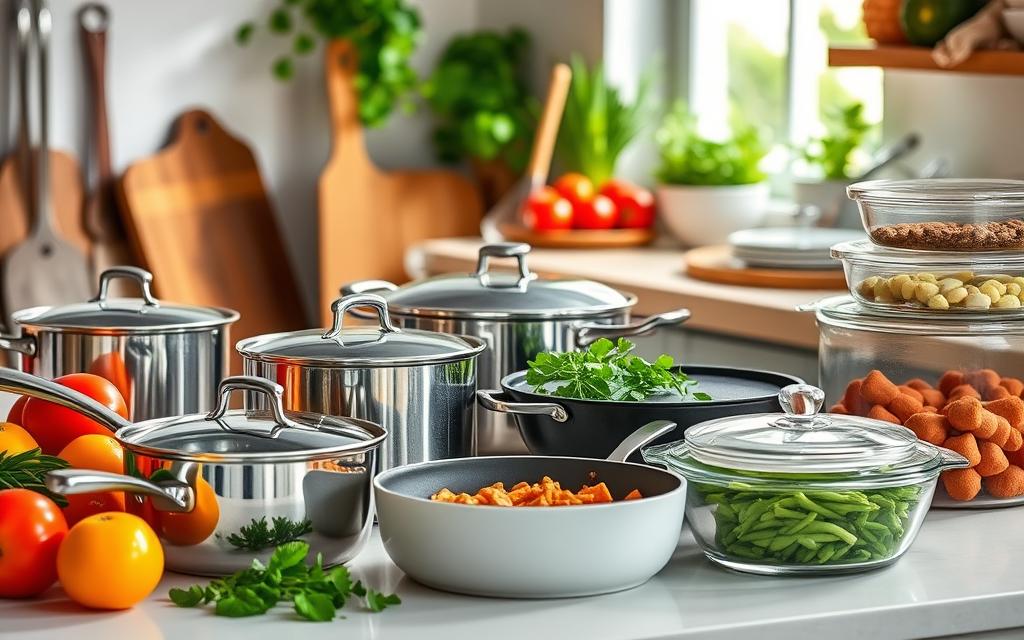

Figuring out what is the safest cookware for your health starts with materials, not marketing. A 2023 USGS study found at least 45% of U.S. tap water contains detectable PFAS, the same “forever chemicals” family used in many older non-stick coatings. That’s one more reason the pan matters as much as what’s in it.
The good news is that a handful of materials cover almost every cooking need without relying on PFAS-based coatings: stainless steel, glass, cast iron, ceramic, carbon steel, and enameled cast iron. This guide walks through each one. You’ll see what makes it safe, where it falls short, and how to keep it that way.
Key Takeaways
- Non-reactive materials like stainless steel, glass, and cast iron carry the lowest chemical-leaching risk
- Traditional PTFE/PFOA non-stick coatings can release fumes when overheated; PFOA itself was phased out by U.S. manufacturers under an EPA program completed in 2015
- Ceramic “non-stick” coatings are a different chemistry than PTFE and are generally free of PFAS, but they wear out faster
- Acidic, long-cooked foods leach more metal from reactive cookware like bare aluminum and unlined copper
- Inspect cookware regularly and replace anything with peeling coating, deep scratches, or cracks
Understanding the Health Impact of Cookware Materials
Your cookware does more than hold food while it cooks. Depending on the material, it can also transfer trace amounts of metal or chemical compounds into your meal. Understanding which materials do this is the real answer to what is the safest cookware for your health.

The Role of Coatings in Cookware Safety
Non-stick coatings are a trade-off. They make cooking and cleanup easier. But older PTFE (Teflon) coatings can break down at high heat, and some formulations historically used PFOA during manufacturing. Newer PTFE cookware sold in the U.S. is PFOA-free, but the coating itself can still degrade with heavy use, scratching, or overheating.
Common Health Concerns With Different Materials
Every material has its own trade-offs:
- Bare, non-anodized aluminum leaches more metal into acidic or long-simmered foods than anodized or coated aluminum does
- Unlined copper cookware can cause gastrointestinal upset if copper leaches directly into food
- Cast iron can add small amounts of dietary iron to food. That’s a benefit for people with iron-deficiency anemia, and a minor consideration for everyone else
Temperature Effects on Cookware Safety
Temperature changes the risk profile of a material. Non-stick surfaces can start breaking down above roughly 500°F (260°C). This releases fumes that can cause a short-term, flu-like reaction called polymer fume fever. Reactive metals like aluminum and copper also leach more into acidic foods, think tomato sauce, citrus, or wine-based braises, the longer they cook. Choosing non-reactive materials sidesteps both problems.
Stainless Steel: A Durable, Non-Reactive Option
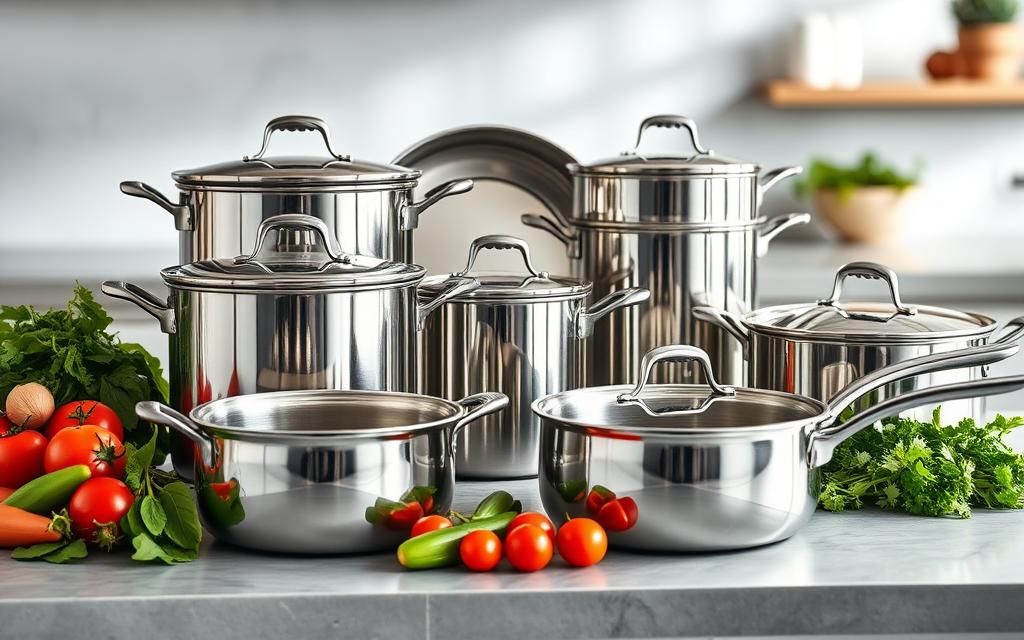

Stainless steel is one of the most consistently recommended answers to what is the safest cookware for your health. Its surface doesn’t react with food, even acidic ingredients, and it holds up for decades of daily use.
Its main advantages:
- Non-reactive; resists metal leaching even with acidic foods
- Even heat distribution with an aluminum or copper core
- Resists chipping, staining, and general wear
- Dishwasher-safe, though hand-washing extends its finish
Quality sets typically run $150 to $400, and most tri-ply or clad sets are oven-safe well above 500°F. See our guide on maintaining stainless steel cookware for care specifics. If you’re weighing hard-anodized aluminum too, our explainer on what anodized cookware means covers how anodizing changes aluminum’s safety profile.
Glass Cookware: The Most Inert Choice
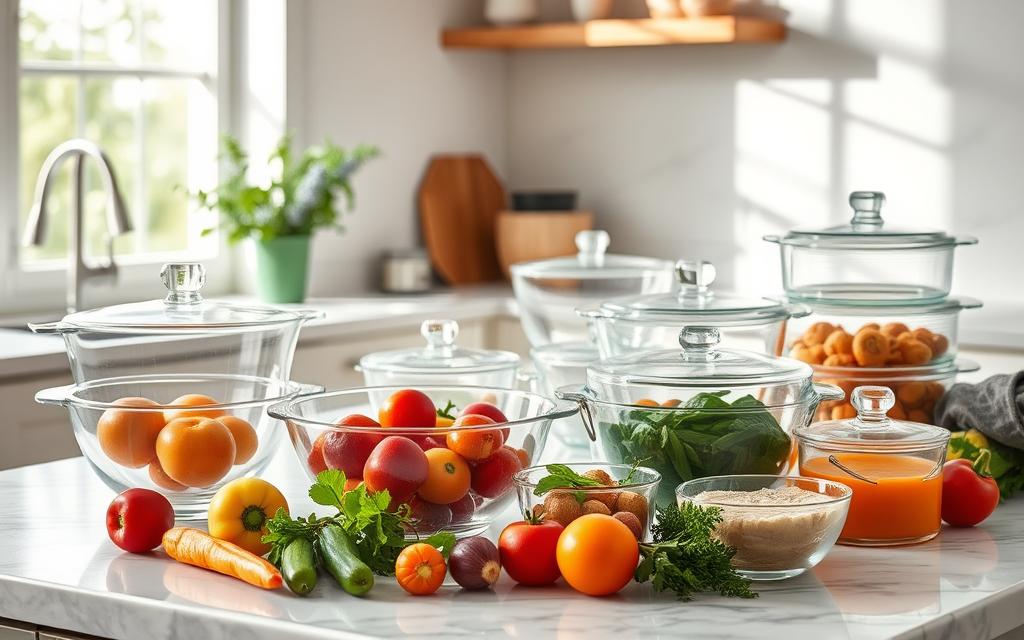

Glass doesn’t get enough credit in this conversation. It’s completely inert, meaning nothing leaches into food regardless of acidity or cooking time.
Benefits of Pyrex and Tempered Glass
- Completely non-reactive surface, at any food pH
- No chemical leaching during cooking or storage
- Transparent, so you can watch food cook without opening the oven
- Microwave- and oven-safe (check the manufacturer’s temperature limit)
Proper Care and Usage Guidelines
Glass cookware’s one real weakness is thermal shock, not chemical safety:
- Avoid moving glass straight from the fridge or freezer into a hot oven
- Use gentle, non-abrasive cleaning tools
- Check for chips or hairline cracks before each use
- Use silicone or wooden utensils to avoid scratching
Temperature Resistance and Versatility
Borosilicate glass, the type used in most Pyrex-style bakeware, handles roughly -40°F to 572°F. That range covers baking, freezer storage, and reheating in one material. Tempered soda-lime glass bakeware tops out lower, generally around 450°F, so it’s worth knowing which type you own before exposing it to extreme heat.
Cast Iron Cookware: Traditional and Reliable
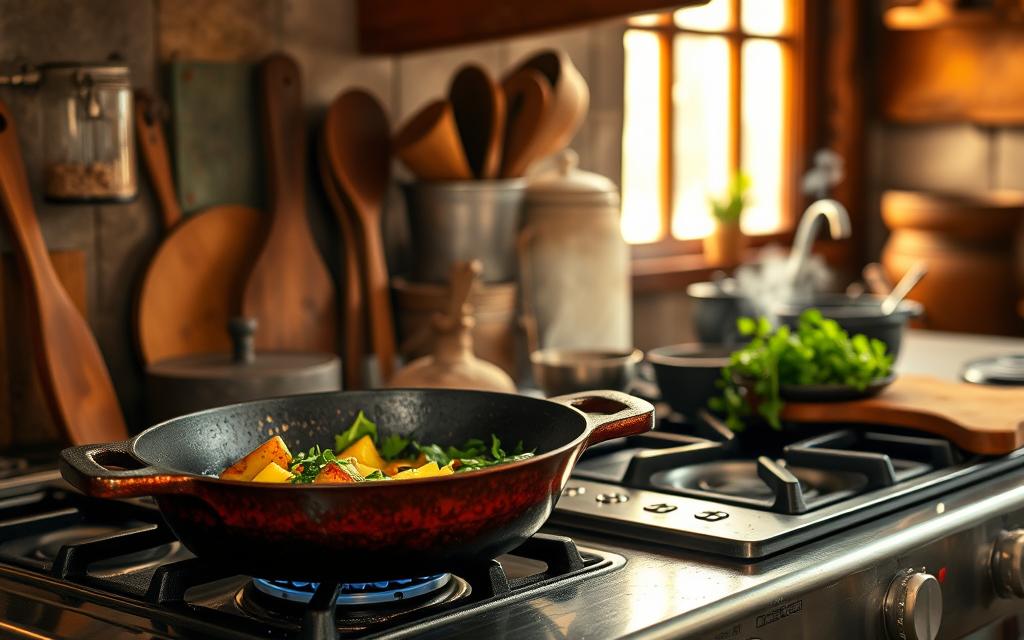
Cast iron has stayed a kitchen staple for generations, and it earns that spot on both performance and safety grounds. A well-seasoned pan is naturally non-stick without any synthetic coating at all.
Its practical advantages:
- Excellent heat retention once it’s hot
- Naturally non-stick when the seasoning layer is intact
- Adds small, generally beneficial amounts of dietary iron
- Can last for decades, even generations, with basic care
The main caveat is acidic cooking. Long-simmered tomato sauce or wine-based dishes can strip the seasoning and raise iron leaching beyond typical levels. Our guide on the full benefits of cast iron cookware goes deeper on seasoning and everyday use.
Ceramic Cookware: A Modern Non-toxic Alternative
Ceramic-coated cookware uses a sol-gel coating, silica-based rather than PTFE-based, which is generally free of PFAS and PFOA. It’s become one of the more popular non-stick alternatives for exactly that reason.
Types of Ceramic Coatings
- Sol-gel ceramic coating (the most common type)
- Silica-based ceramic layers
- Titanium-reinforced ceramic surfaces for added durability
Safety Features of Quality Ceramic
A properly made ceramic coating is non-porous, so it doesn’t leach metal into food. It also contains none of the PFAS compounds found in older non-stick coatings. The trade-off is durability. Even well-made ceramic coatings tend to lose their non-stick performance faster than PTFE, often within one to two years, so brand reputation and warranty matter more here than with other materials. See our full ceramic cookware pros and cons breakdown for how long these coatings actually last.
Maintenance and Longevity Tips
To keep a ceramic coating intact, skip metal utensils, avoid very high heat searing, and hand-wash it rather than running it through the dishwasher.

The Truth About Non-stick Coatings and PFAS
Non-stick cookware remains common in American kitchens. But questions about PFAS, short for per- and polyfluoroalkyl substances, have made plenty of home cooks reconsider it.
Understanding PTFE and PFOA Risks
PTFE and PFOA are two different things that get lumped together. PTFE is the actual non-stick polymer; Teflon is just a brand name for it. PFOA, by contrast, was a manufacturing chemical once used to produce PTFE, not an ingredient in the finished coating. Research on PFOA specifically has linked it to:
- Certain cancers, in occupational exposure studies
- Thyroid disease
- Immune system effects
- Elevated cholesterol
What Changed With PFOA
Under the EPA’s PFOA Stewardship Program, major U.S. manufacturers voluntarily phased out PFOA by 2015. That means new PTFE cookware sold in the U.S. today shouldn’t contain PFOA from manufacturing. The coating can still degrade physically, though, if it’s scratched, chipped, or overheated past its rated temperature.
Alternative Non-stick Options
If you’d rather avoid PTFE-based coatings entirely, the realistic alternatives are:
- Ceramic-coated cookware
- Well-seasoned carbon steel
- Well-seasoned cast iron
- Stainless steel, with enough oil and proper preheating technique
Whichever you choose, our guide on storing non-stick cookware properly covers protecting a coating you already own.
Carbon Steel: Professional-Grade Safety
Carbon steel is a favorite in professional kitchens, and it’s a solid fit for a health-focused home cook, too. It’s essentially cast iron’s cousin in a thinner, lighter form: roughly 99% iron and 1% carbon, no synthetic coating involved.
Its practical advantages:
- Withstands very high heat, well above what most non-stick coatings can handle
- Contains no PFOA, PTFE, or other synthetic coating chemicals
- Noticeably lighter than a comparable piece of cast iron
- Develops a natural non-stick surface through seasoning, the same way cast iron does
Like cast iron, carbon steel needs a seasoning layer to perform well and resist rust. Regular seasoning with a thin layer of oil, plus prompt drying after washing, keeps it in good shape for years.
Enameled Cast Iron: Combining Tradition With Modern Safety
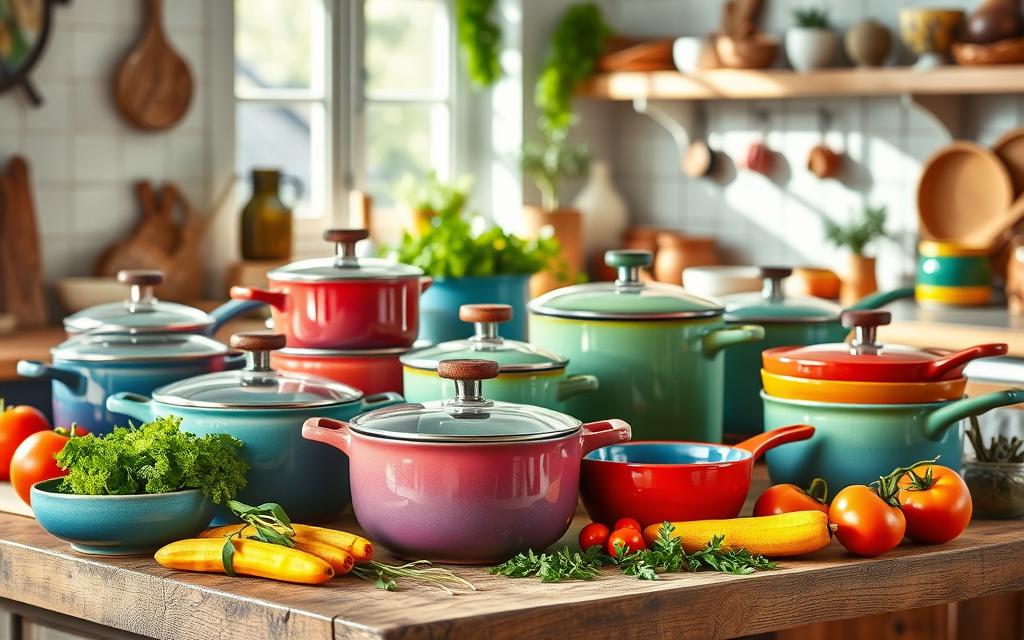
Enameled cast iron takes the heat retention of regular cast iron and adds a glass-based enamel coating over it. That coating means the cooking surface never touches raw iron directly. That reduces iron leaching and makes the pot safe for long-simmered acidic dishes that would otherwise strip bare cast iron’s seasoning.
- Strong heat retention and even distribution
- Non-reactive cooking surface, safe for acidic, long-cooked dishes
- Handles the kind of low-and-slow braising bare cast iron struggles with
Quality varies more here than with plain cast iron, mainly in the decorative exterior enamel rather than the cooking surface. Independent testing has occasionally found elevated lead in exterior glazes on older or imported pieces, especially in certain bright colors. Buying from manufacturers who publish third-party testing, and retiring any piece with a chipped exterior, is the most practical way to manage that risk. Our guide on caring for enamel-coated cast iron covers day-to-day maintenance.
So, What Is the Safest Cookware for Your Health?
Putting it all together, the honest answer to what is the safest cookware for your health isn’t a single winner. It’s a short list of materials that all avoid the same risks:
- Stainless steel: durable, non-reactive, and essentially maintenance-free for decades
- Glass: completely inert, though limited to lower-heat, non-searing cooking
- Cast iron and carbon steel: coating-free, naturally non-stick once seasoned, adds trace dietary iron
- Ceramic: PFAS-free non-stick convenience, with a shorter functional lifespan than the others
- Enameled cast iron: non-reactive surface for acidic, long-cooked dishes, buy from brands that publish third-party testing
Weighing granite-coated cookware too? It uses a mineral-infused non-stick layer over aluminum. Our review of whether granite stone cookware is good for your health covers how it compares.
A few habits matter more than the material itself. Retire any PFOA or PTFE coating that’s scratched or peeling, look for third-party safety certifications when they’re available, and skip long acidic cooking in bare aluminum, unlined copper, or uncoated cast iron.
Best Practices for Maintaining Safe Cookware
Whatever material you choose, how you care for it affects both its lifespan and its safety over time.
Proper Cleaning Methods
Each material needs slightly different handling:
- Stainless steel: mild detergent and a soft sponge; avoid steel wool on a regular basis
- Cast iron and carbon steel: hot water and light scrubbing, then dry immediately and re-oil
- Ceramic: avoid abrasive cleaners and metal scouring pads, which shorten coating life fast
- Non-stick surfaces: soft cloths and gentle dish soap only
Storage Recommendations
- Hang pots and pans when possible to avoid stacking scratches
- Use a protective liner or towel between stacked pieces if hanging isn’t an option
- Store in a dry area away from direct sunlight
- Keep lids separate to prevent trapped moisture
When to Replace Your Cookware
Watch for these signs that it’s time to retire a piece rather than keep using it:
- Deep scratches or gouges in a non-stick or ceramic coating
- Visible warping that prevents even contact with the burner
- Coating that’s peeling, flaking, or bubbling
- Rust that keeps returning despite proper drying and reseasoning
Frequently Asked Questions
What is the safest cookware for your health if you’re on a budget?
A basic stainless steel pan and a cast iron skillet cover most everyday cooking for well under $100 combined. Neither relies on a coating that can wear out.
Is ceramic cookware actually safer than Teflon?
Ceramic coatings are generally free of PFAS and PFOA, which addresses the main chemical concern with older Teflon. They just don’t last as long, so you’ll likely replace a ceramic pan sooner.
Does cast iron leach too much iron to be safe?
For most healthy adults, the small amount of iron cast iron adds to food is harmless and can even be beneficial. It becomes more of a consideration for people with hemochromatosis or other conditions involving iron overload.
Is it safe to use scratched non-stick cookware?
It’s best to replace it. A scratched or flaking coating can shed small particles into food. It also loses the even, sealed surface that made it non-stick in the first place.
What cookware should I avoid entirely?
Uncoated aluminum for acidic, long-simmered dishes, unlined copper for direct food contact, and any non-stick pan with visibly damaged coating are the clearest ones to skip.
Is stainless steel cookware really non-reactive with all foods?
Yes. Quality stainless steel doesn’t react with acidic foods like tomatoes, wine, or citrus the way bare aluminum or copper can, which is a big part of why it’s so widely recommended.
How do I know if my enameled cast iron is safe?
Check that the interior cooking surface and exterior enamel are both intact, with no chips or cracks. Buying from a manufacturer that publishes independent lab testing results adds an extra layer of confidence.
Conclusion
There’s no single perfect material. But there is a clear pattern: stainless steel, glass, cast iron, carbon steel, ceramic, and enameled cast iron all avoid the chemical risks tied to damaged or older non-stick coatings. Pick based on how you cook, take care of what you buy, and replace anything showing real wear. That combination, more than any single brand or material, is what actually keeps your kitchen safe.


Hey, My name is MAMON. I am a SEO content creator and affiliate marketer with over 8 years of experience. I create honest product reviews, in-depth buying guides, and practical how-to articles to help readers make informed decisions. My mission is to provide trustworthy, research-backed content that delivers real value.