

Rubber cutting boards are the quiet favorite of sushi chefs and knife enthusiasts, yet many American home cooks have never used one. They feel soft under the blade, they do not soak up juices, and in independent testing they were the gentlest surface for knife edges. On the other hand, they are heavier than plastic, they stain more easily, and they can warp with heat. So, in this guide, we explain what rubber boards are made of, how they compare with wood and plastic, how to care for them, and whether one belongs in your kitchen.


Photo: City Foodsters via Flickr (CC BY 2.0).
Key Takeaways
- First, rubber boards are made from synthetic rubber or soft polymers, and most top brands are made in Japan.
- Also, in Prudent Reviews’ lab test, rubber caused the least knife dulling of ten materials, losing just 10 sharpness points.
- They were also the quietest board tested, at 59.4 dBA, compared with 82.5 dBA for stainless steel.
- However, heat is their weak spot. For example, Asahi lists a maximum of 212°F, and Hi-Soft only 158°F.
- They suit cooks with good knives, while budget shoppers may prefer plastic or wood.
What Are Rubber Cutting Boards?
Rubber cutting boards are cutting surfaces made from synthetic rubber or similar soft, dense polymers instead of wood or hard plastic. They first became popular in Japanese commercial kitchens, especially sushi bars, where chefs use very hard, very sharp knives. Today, brands such as Asahi, Hasegawa, and Tenryo (maker of Hi-Soft) sell them for home use, too.
Not every “rubber” board is made from the same material, though. In fact, the three best-known brands use quite different recipes:
| Brand | Material | Feel | Max Heat (Maker) |
|---|---|---|---|
| Asahi (Cookin’ Cut / Pro) | Synthetic rubber with wood powder | Firm but forgiving | 212°F (100°C) |
| Tenryo Hi-Soft | Polyvinyl acetate | Very soft, lots of give | 158°F (70°C) |
| Hasegawa | Wood core wrapped in soft polyethylene | Soft surface, rigid core | Not listed |
According to Korin, a New York retailer of Japanese kitchen tools, Asahi boards blend synthetic rubber with wood powder for a more wood-like feel. Hi-Soft, by contrast, is made from a specialized polyvinyl acetate. Meanwhile, Hasegawa boards seal a wood core inside a soft plastic shell, which keeps them rigid but lighter.
How Rubber Boards Compare: The Lab Data
Above all, the biggest reason to buy a rubber board is knife care. To see whether that claim holds up, we looked at independent testing. Prudent Reviews made 300 rocking cuts and 300 chops on ten board materials, then measured each knife with a BESS edge tester. In this test, a bigger point loss means a duller blade. Here is what they found:
| Board Material | Sharpness Lost (BESS Points) | Chopping Noise (dBA) |
|---|---|---|
| Rubber | 10 | 59.4 |
| Teak, maple, walnut | 15 to 42 | Not listed |
| Bamboo | 55 | 75.5 |
| Plastic | 65 | Not listed |
| Composite (Richlite) | 117 | Not listed |
| Stainless steel | 184 | 82.5 |
In other words, rubber was the gentlest surface in the entire test. It caused roughly a sixth of the edge loss of plastic and less than a tenth of the loss from stainless steel. Moreover, it was by far the quietest board. Since every 10 dB increase sounds about twice as loud, a rubber board is roughly four times quieter to the human ear than steel.
Pros of Rubber Cutting Boards
- Kind to knives. As the lab data shows, the soft surface absorbs the blade’s impact instead of rolling the edge. As a result, you hone and sharpen less often.
- Quiet. Chopping sounds like a soft thud rather than a sharp clack, which is nice in open kitchens and apartments.
- Non-porous. Unlike wood, rubber does not absorb liquids, so juices and odors stay on the surface where you can wash them off.
- No oiling. Also, there is no mineral oil or wax routine, which saves time compared with wood.
- Stable. Rubber boards are heavy and grippy, so they rarely slide on the counter.
- Renewable surface. In addition, many can be sanded lightly to remove stains and smooth out knife marks.
Cons of Rubber Cutting Boards
- Heat sensitive. Notably, boiling water, dishwashers, and hot pans can warp or soften the board.
- Heavy. For example, Korin lists its 29.5 x 13-inch Asahi board at about 15 pounds, so large sizes are hard to lift into a sink.
- Stains. In particular, light-colored boards can pick up color from turmeric, beets, and carrots.
- Expensive. Professional sizes often cost $200 or more, while a good plastic board costs a fraction of that.
- Not for cleavers. Similarly, very soft boards like Hi-Soft are not recommended for heavy bone chopping.
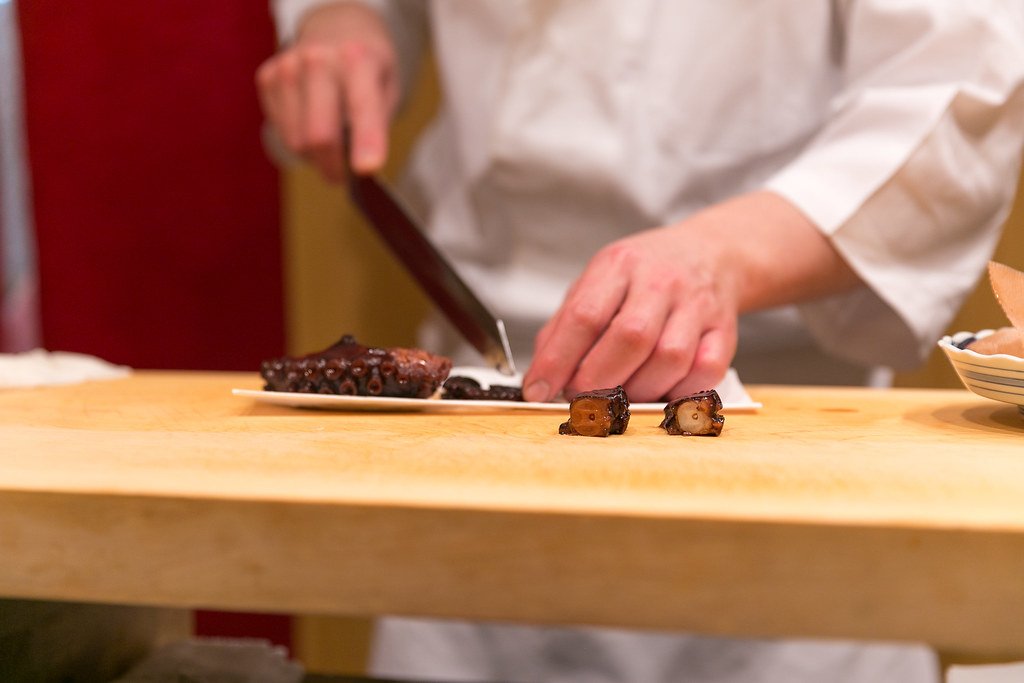
Photo: City Foodsters via Flickr (CC BY 2.0).
Rubber vs. Wood vs. Plastic: Quick Comparison
Each material has its own strengths, so the right pick depends on how you cook. Here is a side-by-side summary:
| Feature | Rubber | Wood | Plastic |
|---|---|---|---|
| Knife friendliness | Excellent | Very good | Good |
| Absorbs liquid | No | Yes, slightly | No |
| Oiling needed | No | Yes, monthly | No |
| Dishwasher | Usually no | No | Usually yes |
| Noise | Very quiet | Quiet | Moderate |
| Weight | Heavy | Heavy | Light |
| Typical price | High | Medium to high | Low |
Overall, rubber combines the knife care of wood with the non-porous surface of plastic. The trade-off is price and heat sensitivity. However, if you prefer wood, our guide to the best wood for cutting boards compares maple, walnut, cherry, and teak. Also, for thick wood boards that are gentle on knives, see our guide to end grain cutting boards.
Are Rubber Cutting Boards Safe and Sanitary?
Yes, rubber boards are safe for food when you clean them properly. Because the surface is non-porous, bacteria cannot soak deep into the board the way they can with cracks in old wood. Still, knife marks can trap food, so washing after every use is essential.
For extra cleaning, Korin advises letting bleach sit on stubborn stains for about 20 minutes, then washing the board thoroughly. In addition, you should always sanitize after cutting raw meat, poultry, or fish. For step-by-step methods, also see our guide on how to disinfect cutting boards.

Video: Never a Dull Moment compares Hi-Soft, Hasegawa, and Asahi boards.
How to Care for Rubber Cutting Boards
Rubber boards are easy to maintain, but they need a different routine than wood. So, follow these steps to keep yours flat and clean:
- Wash by hand. First, scrub with warm, soapy water and a nylon brush, which Korin recommends for Asahi boards.
- Avoid high heat. Next, never pour boiling water on the board or put it in a sterilizer. Similarly, skip the dishwasher unless the maker clearly approves it.
- Dry upright. Then towel it off and stand it on edge so both sides dry evenly.
- Flip it often. Korin suggests flipping the board daily, so both faces wear evenly and the board stays flat.
- Treat stains. For deep stains, apply diluted bleach for about 20 minutes, then wash. Alternatively, lightly sand the surface and polish it with a mild cleanser.
Storage matters, too. Since rubber boards are heavy, store them flat or upright on a sturdy rack. For this reason, a cutting board organizer with wide, adjustable slots works best for thick boards.
What Temperature Is Too Hot?
In fact, this is the most common way rubber boards get damaged. According to Korin, Asahi rubber boards handle temperatures from -22°F up to 212°F, while Tenryo Hi-Soft boards top out at 158°F. For context, many dishwashers run their hottest cycles around 140 to 160°F. Therefore, a Hi-Soft board is especially at risk in a dishwasher, and hand washing is the safer habit for all rubber boards.
Who Should Buy a Rubber Cutting Board?
Rubber boards are not for everyone, so here is how to tell if one fits your kitchen.
A Good Fit If You…
- Own Japanese or premium knives. After all, hard, thin edges benefit most from a soft surface.
- Cook a lot of fish or sushi. In fact, rubber is the traditional choice for slicing raw fish cleanly.
- Want a low-maintenance board. There is no oil or wax routine.
- Live with roommates or kids who sleep. As a result, the quiet surface makes early-morning prep less noisy.
Skip It If You…
- Want a dishwasher-safe board. In that case, plastic is the more practical choice.
- Chop bones with a cleaver. Soft boards can gouge, so a thick wood block is better.
- Are on a tight budget. By comparison, a good plastic or wood board costs much less.
- Need a light board. Rubber is heavy, especially at large sizes.


Photo: snowpea&bokchoi via Flickr (CC BY 2.0).
How to Choose a Rubber Board
So, if you decide to buy one, keep these factors in mind:
- Firmness. Asahi is firmer and more versatile, while Hi-Soft is softer and best for precise slicing. Meanwhile, Hasegawa sits in between, with a rigid core.
- Size. Larger boards are more useful but much heavier. Even so, for most homes, a board around 15 to 17 inches long is a practical start.
- Thickness. Thicker boards resist warping better. For example, Asahi’s home Cookin’ Cut boards are about 0.5 to 0.6 inch thick, while pro boards are closer to 1 inch.
- Color. Dark boards hide stains and make light foods such as onions easier to see. Light boards, by contrast, show stains sooner.
- Weight. Check the listed weight before buying, especially if you have wrist or back issues.
Popular Rubber Board Brands Explained
If you start shopping, you will see the same three Japanese names again and again. Here is what sets each one apart, so you can match the brand to your cooking style.
Asahi
Asahi is the best-known rubber board brand in the U.S. Its boards blend synthetic rubber with wood powder, which gives them a firm, slightly wood-like feel. As a result, they handle everyday chopping, slicing, and even some heavier tasks well. The home “Cookin’ Cut” line is thinner and lighter, while the professional line is thicker and much heavier. For most home cooks, Asahi is the most balanced choice.
Tenryo Hi-Soft
Hi-Soft boards are noticeably softer, with a lot of give under the blade. Because of this, many sushi chefs and knife collectors prefer them for delicate slicing with thin, hard Japanese knives. On the downside, their lower heat limit of 158°F makes them the most delicate of the three. They are also not meant for cleavers or bone chopping.
Hasegawa
Hasegawa takes a different approach. Instead of a solid slab, it wraps a wood core in a soft polyethylene surface. Consequently, the board stays rigid and resists bending, yet it weighs less than a solid rubber block of the same size. This makes Hasegawa a practical pick for cooks who want a softer surface without a heavy board.
How to Resurface a Rubber Cutting Board
One big advantage of rubber is that you can renew the surface. Over months of use, knife marks build up and can trap stains. Fortunately, a light sanding brings the board back:
- Clean it first. Wash and dry the board completely before you start.
- Sand gently. Use fine sandpaper (around 120 to 180 grit) on a sanding block, working in long, even strokes.
- Keep it flat. Sand the whole surface evenly, rather than one spot, so you do not create a dip.
- Polish. Then scrub with a mild powdered cleanser, as Korin suggests, and rinse well.
- Flip and repeat. Finally, treat the other side the same way to keep the board balanced.
In most homes, resurfacing is only needed once or twice a year. Even so, it extends the board’s life considerably.
Is Rubber the Same as Silicone?
No. Although both feel soft, they are very different products. Silicone cutting mats are thin and flexible, and they are often sold as bendable sheets you can fold to pour food into a pan. Rubber cutting boards, by contrast, are thick, dense, and rigid enough for serious prep. In other words, a silicone mat is a handy accessory, while a rubber board is a primary work surface.
Common Mistakes With Rubber Boards
- Running it through the dishwasher. This is the top cause of warping.
- Using it as a trivet. Otherwise, a hot pan can leave a permanent dent or soft spot.
- Never flipping it. Over time, using only one side can cause uneven wear and a slight bow.
- Leaving stains to set. Instead, rinse turmeric and beet juice right away.
- Scrubbing with steel wool. This scratches the surface, so use a nylon brush instead.
Food Safety: Use Separate Boards
A rubber board is a great prep surface, but it should not handle every task. Ideally, keep one board for raw meat, poultry, and seafood, and another for produce and ready-to-eat food. For details, our guide on how to prevent cross contamination with cutting boards explains the system. Also, for a broader look at materials, read our main guide to cutting boards that are the safest and healthiest.
FAQ
Are rubber cutting boards good for knives?
Yes. In Prudent Reviews’ testing, rubber caused the least edge loss of ten materials, losing only 10 sharpness points.
Can rubber cutting boards go in the dishwasher?
Usually not. That is because heat can warp them, and Hi-Soft boards are rated only to 158°F. So, hand washing is the safer choice.
Do rubber cutting boards stain?
Yes, especially light-colored ones. However, bleach and light sanding can remove most stains.
Why do sushi chefs use rubber cutting boards?
Mainly because they protect very sharp Japanese knives, they do not absorb fish juices, and they give a clean, controlled cut.
Are rubber cutting boards worth the price?
If you own premium knives and want a quiet, low-maintenance board, yes. Otherwise, a good wood or plastic board is a better value.
How long do rubber cutting boards last?
With good care, many last for years. Since you can sand away surface wear, a quality board can outlast several plastic boards.
Final Thoughts
Rubber cutting boards are one of the best ways to protect your knives, and the lab data backs that up. In addition, they are quiet, non-porous, and need no oiling. Still, they cost more, weigh more, and must be kept away from high heat. So, if you own good knives and cook often, a rubber board is a smart upgrade. Otherwise, start with a quality wood or plastic board, and keep your blades sharp with our whetstone grit guide.


Hey, My name is MAMON. I am a SEO content creator and affiliate marketer with over 8 years of experience. I create honest product reviews, in-depth buying guides, and practical how-to articles to help readers make informed decisions. My mission is to provide trustworthy, research-backed content that delivers real value.