

You slice raw chicken for dinner, then chop tomatoes for the salad on the same board. It feels harmless, but it is one of the most common ways germs spread in home kitchens. Preventing cross contamination, cutting boards included, starts with one simple rule: keep raw meat, poultry, and seafood away from foods that will not be cooked.
The CDC estimates that about 48 million Americans get sick from foodborne illness each year. Roughly 128,000 are hospitalized, and about 3,000 die. This cross contamination cutting boards guide explains how germs spread from board to food, how to set up a simple color-coded system, and how to clean boards after raw meat.

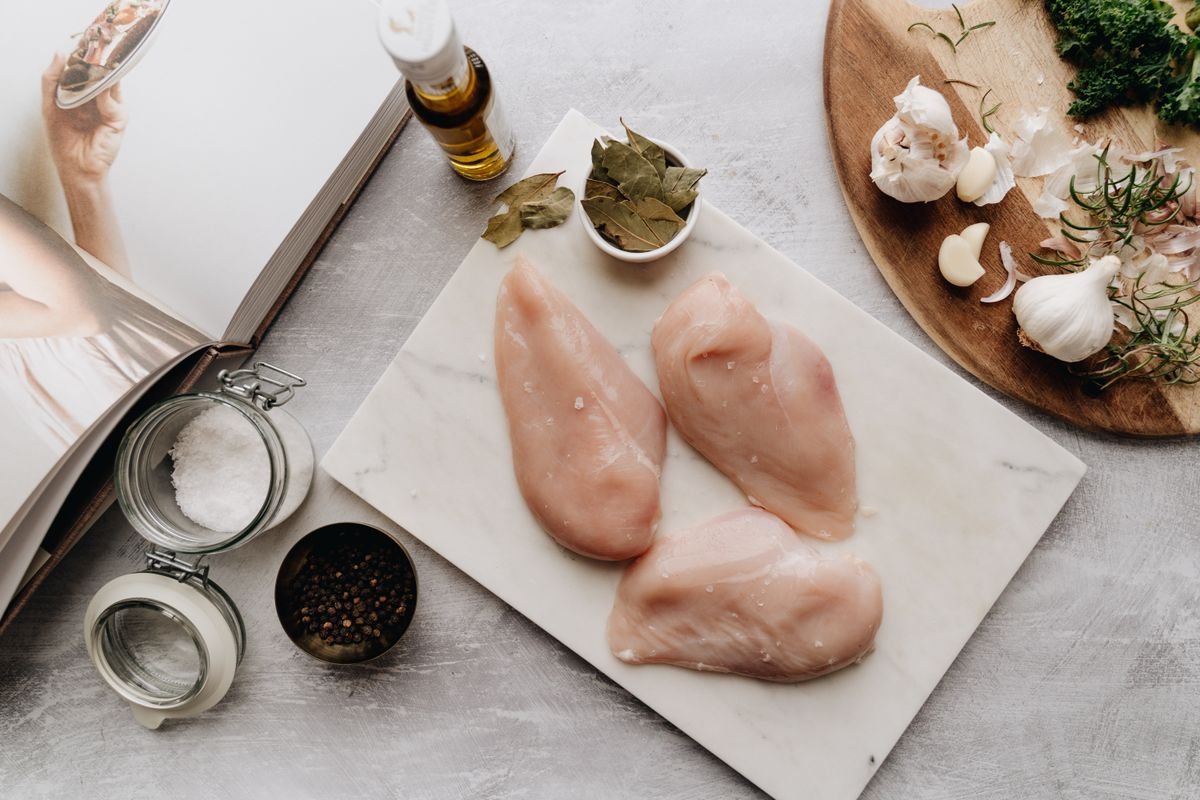
Raw poultry is a leading source of cross-contamination. Photo: alleksana via Pexels.
Key Takeaways
- Use one cutting board for raw meat, poultry, and seafood and another for produce and ready-to-eat foods.
- Color coded cutting boards make the system easy for everyone in the house to follow.
- Wash boards, knives, and hands with hot, soapy water after touching raw meat.
- Sanitize boards with 1 tablespoon of unscented bleach per gallon of water when needed.
- Never put cooked food back on a board or plate that held raw meat.
- Replace boards with deep grooves or cracks that are hard to clean.
What Is Cross Contamination on Cutting Boards?
Cross contamination is the transfer of harmful bacteria from one food, surface, or utensil to another. On cutting boards, it usually happens when raw meat juices are left behind and then touch food that will be eaten raw, such as salad greens, fruit, or bread.
Common culprits include Salmonella, Campylobacter, Listeria, and some strains of E. coli. Cooking to a safe temperature kills most of these germs. Ready-to-eat foods get no such protection, which is why separation matters so much.
How Common Is It at Home?
More common than most people think. In a 2019 USDA observational study of home cooks, researchers tracked bacteria from raw poultry during meal prep. Among participants who washed their raw chicken, 26% transferred bacteria to their salad lettuce. Among those who did not wash it, 31% still contaminated the lettuce, likely because of poor handwashing.
The same study found bacteria in the sinks of 60% of people who washed their poultry. Even after cleaning, 14% of those sinks still had bacteria. The lesson is clear: raw meat juices travel, and cutting boards, hands, and sinks all carry them.
How Cross Contamination Happens in the Kitchen
Most cases come from a handful of everyday habits:
- One board for everything: Cutting raw chicken, then vegetables, on the same unwashed surface.
- Dirty knives: Washing the board but reusing the knife that cut raw meat.
- Reusing plates: Putting grilled meat back on the plate that held it raw.
- Dripping juices: Letting raw meat liquid run across the counter or onto other foods.
- Unwashed hands: Touching raw meat, then handling bread, spices, or the fridge door.
- Worn boards: Deep knife grooves and cracks that trap food and moisture.
The Separate-Board Rule
The federal food safety site FoodSafety.gov lists four steps: clean, separate, cook, and chill. Under “separate,” it advises using one cutting board for fresh produce or other foods that will not be cooked, and another for raw meat, poultry, or seafood. It also says to replace boards when they are worn.
That is the foundation of preventing cross contamination: cutting boards should each have one job. A practical home setup looks like this:
| Setup | Boards | Best For |
|---|---|---|
| Minimum | 2 boards: raw proteins, everything else | Small kitchens and occasional cooks |
| Recommended | 3 boards: raw proteins, produce, bread and cooked foods | Most U.S. households |
| Full system | 4 to 7 color-coded boards | Frequent cooks, allergies, meal preppers |
For the raw protein board, choose a non-porous plastic board you can run through the dishwasher. Use a hardwood or bamboo board for produce, bread, and cooked foods. Our guide to the safest and healthiest cutting boards compares materials in detail.
Cutting Board Color Chart: What Each Color Means
Color coded cutting boards turn the separate-board rule into a system anyone can follow at a glance. Professional kitchens have used them for years. Here is a widely used cutting board color chart in U.S. food service:
| Color | Use For | Examples |
|---|---|---|
| Red | Raw red meat | Beef, pork, lamb |
| Yellow | Raw poultry | Chicken, turkey, duck |
| Blue | Raw seafood | Fish, shrimp, shellfish |
| Green | Fresh produce | Fruits, vegetables, herbs, salad |
| White | Dairy and bakery | Bread, cheese, pastries |
| Brown or tan | Cooked meats | Roasts, grilled chicken for slicing |
| Purple | Allergen-free prep | Gluten-free, nut-free, or other allergy-safe foods |
This color scheme is a common industry convention, not a federal law. Colors can vary between kitchens and brands, and some countries use slightly different charts. What matters most is consistency: pick a system, label it, and make sure everyone at home follows it.

Do You Need All Seven Colors at Home?
No. Most families do well with three or four color coded cutting boards:
- Red or yellow for all raw meat, poultry, and seafood
- Green for fruits and vegetables
- White or a wooden board for bread, cheese, and cooked foods
- Purple if someone in your home has a food allergy
If you already own wooden boards, you can still use the system. Keep one plastic board in a bright color for raw proteins, and reserve your wood or bamboo boards for everything else. Read our guide to the best wood for cutting boards if you need a new one.
Tips to Make a Color System Stick
- Post a small cutting board color chart inside a cabinet door.
- Store raw-meat boards separately from produce boards.
- Buy boards with grip corners or hang holes so the right one is easy to grab.
- If you only have one color, label boards with a permanent marker on the edge.
How to Prevent Cross Contamination When Using Cutting Boards
Separate boards are the biggest step, but a few more habits close the remaining gaps.
1. Prep Ready-to-Eat Foods First
If you have only one board, cut vegetables, fruit, and bread first. Move them to clean bowls, then wash the board and knife before handling raw meat.
2. Wash Your Hands for 20 Seconds
Use soap and warm running water for at least 20 seconds before cooking, after touching raw meat or eggs, and before handling ready-to-eat foods. Scrub between your fingers and under your nails.
3. Use Clean Knives and Plates
A clean board does not help if the knife is still dirty. Wash every tool that touched raw meat. Set out a clean plate for cooked food before you start grilling or roasting. A good dedicated knife makes this easier; see our picks for the best knife for cutting meat.
4. Contain Raw Meat Juices
Keep raw meat on one side of the counter. Use a rimmed tray or a board with juice grooves, and wipe up splashes right away with hot, soapy water.
5. Do Not Rinse Raw Poultry
Washing raw chicken does not remove bacteria safely. As the USDA study showed, it spreads germs around your sink and counter instead. Cooking poultry to 165°F is what makes it safe.

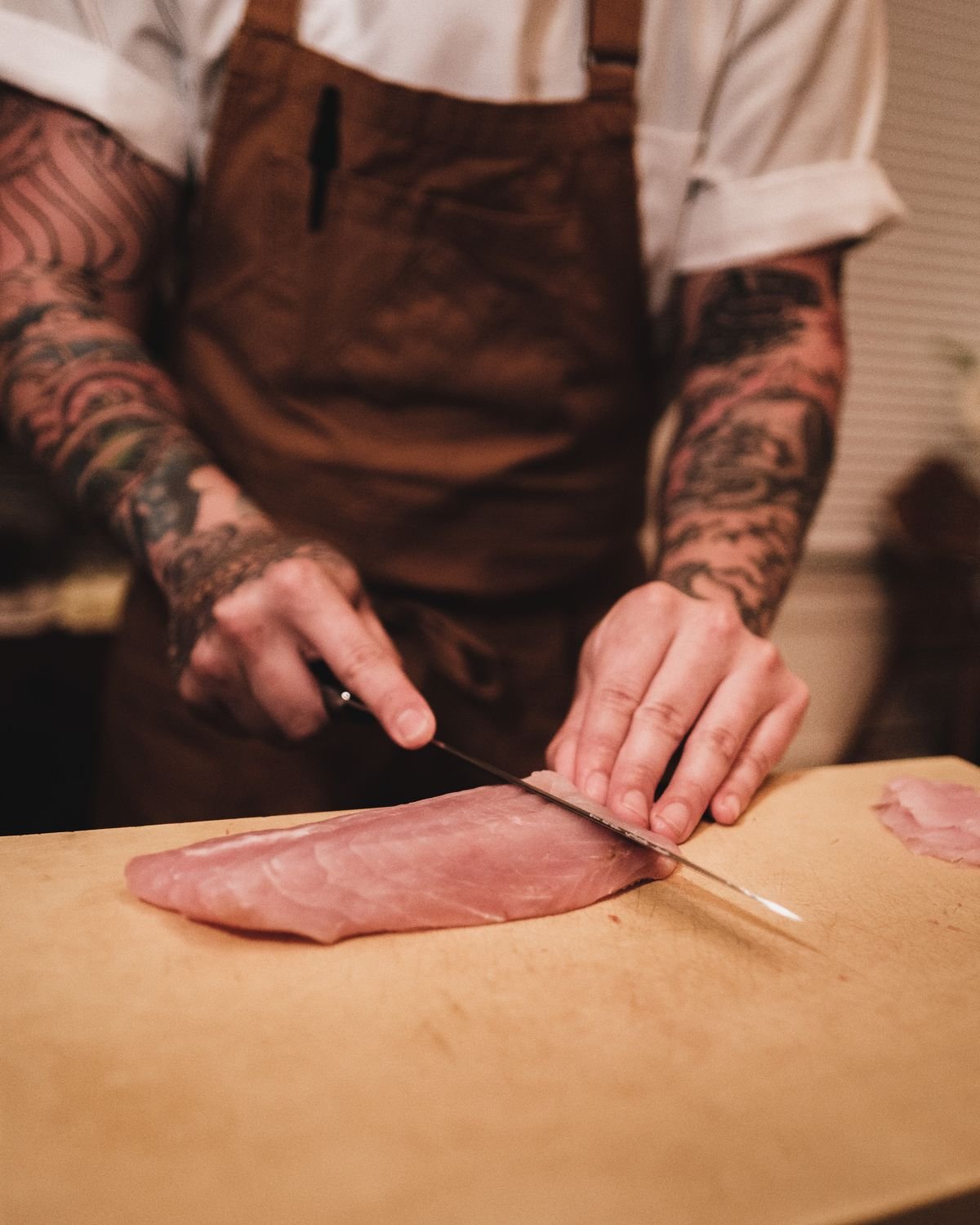
Give raw meat its own board and knife. Photo: Airam Dato-on via Pexels.
How to Clean a Cutting Board After Raw Meat
Cleaning removes food and grease. Sanitizing reduces the germs left behind. After raw meat, poultry, seafood, or eggs, do both.
- Scrape off scraps. Use a scraper or paper towel, and throw scraps away.
- Wash with hot, soapy water. Scrub the whole board, including edges, grooves, and handles.
- Sanitize. Flood the surface with a solution of 1 tablespoon of unscented liquid chlorine bleach per gallon of water. Let it stand for several minutes.
- Rinse and dry. Rinse with clean water, then air-dry upright or pat dry with clean paper towels.
Non-porous plastic boards can usually go in the dishwasher, which is the easiest option for raw meat. Wood and bamboo boards should be washed by hand and never soaked. For details, see our guide on how to take care of a wooden cutting board, and if you use bamboo, read are bamboo cutting boards safe.
Never mix bleach with ammonia or other cleaners. Also clean the sponges and towels you used, because they can spread bacteria too. Our guide on how to disinfect kitchen cloths after wiping raw meat walks you through it.
Which Cutting Board Material Is Best for Raw Meat?
| Material | Raw Meat? | Why |
|---|---|---|
| Plastic (polyethylene) | Best choice | Non-porous and usually dishwasher-safe |
| Composite (wood fiber) | Good | Non-porous; many models are dishwasher-safe |
| Hardwood (maple, walnut) | OK with care | Must be washed and sanitized by hand right away |
| Bamboo | OK with care | Hard and low-absorbing, but handwash only |
| Glass or marble | Not ideal | Easy to clean, but slippery and hard on knives |
That is why so many cooks pair a plastic board for raw proteins with a wooden board for everything else. It is the simplest way to manage cross contamination, cutting boards and all, in a real home kitchen.
Special Cases: Allergies, Eggs, Flour, and Seafood
Raw meat gets most of the attention, but a few other foods need the same care.
- Food allergies: Allergen residue is not killed by cooking. If someone in your home has a nut, gluten, or shellfish allergy, keep a dedicated purple board and knife for their food, and wash it separately.
- Raw eggs: FoodSafety.gov lists eggs alongside raw meat. Wash boards and bowls that touch raw egg with hot, soapy water.
- Raw flour and dough: Raw flour can carry E. coli. Clean any board used for rolling raw dough before cutting ready-to-eat foods on it.
- Raw seafood: Fish and shellfish carry their own bacteria and strong odors. A separate blue board keeps smells and germs off your produce board.
Cross Contamination Cutting Boards Checklist
Use this quick checklist every time you cook:
| Before Cooking | During Cooking | After Cooking |
|---|---|---|
| Wash hands for 20 seconds | Use the raw-meat board only for raw proteins | Wash boards and knives in hot, soapy water |
| Set out the right color boards | Keep juices contained on one side | Sanitize raw-meat boards |
| Prep produce and bread first | Move cooked food to a clean plate | Dry boards upright before storing |
| Set out a clean plate for cooked food | Wash hands after touching raw meat | Clean sponges, towels, and the sink |
When to Replace a Cutting Board
FoodSafety.gov advises replacing cutting boards when they are worn. Watch for these signs:
- Deep knife grooves that trap food or stay stained after washing
- Cracks, splits, or separating glue lines
- Warping that makes the board rock on the counter
- Odors that remain after washing and sanitizing
Plastic boards used for raw meat usually wear out first. Treat them as replaceable, and swap them out once scarring gets deep.
Common Cutting Board Mistakes to Avoid
- Only rinsing the board: Water alone does not remove raw meat residue. Use hot, soapy water.
- Using a sponge on raw-meat boards, then on dishes: Sponges spread bacteria fast. Clean or replace them often, and see our tips on how to clean kitchen dish towels without bleach.
- Mixing up board colors: A color system only works if everyone follows it.
- Cutting cooked meat on the raw board: Move cooked food to a clean board or plate.
- Storing boards wet: Damp boards can grow mold and odors. Dry them fully first.
Frequently Asked Questions
Can I use the same cutting board for meat and vegetables?
Only if you wash it thoroughly with hot, soapy water in between, and ideally sanitize it. Using separate boards is safer and faster.
What color cutting board is for raw chicken?
In the common U.S. food-service color chart, yellow is for raw poultry. Red is for raw red meat, and blue is for seafood. At home, any consistent color works as long as everyone knows which board is for raw meat.
Are color coded cutting boards required by law?
Not under federal law. They are an industry best practice. Some local health departments or employers may set their own rules for restaurants, so check locally if you run a food business.
How do I sanitize a cutting board after raw meat?
Wash it with hot, soapy water first. Then apply a solution of 1 tablespoon of unscented liquid chlorine bleach per gallon of water, let it stand for several minutes, rinse, and dry.
Are wooden cutting boards worse for cross contamination than plastic?
Not necessarily. Wood and plastic both work when they are cleaned well and replaced on time. Plastic is easier to sanitize in a dishwasher, so it is the most practical choice for raw meat. Wood is a great choice for produce, bread, and cooked foods. When it comes to cross contamination, cutting boards of any material are only as safe as the habits around them.
Should I use a separate board for raw seafood?
It is a good idea if you cook fish or shellfish often. A dedicated blue board keeps seafood bacteria and odors away from produce. If you only have one raw-protein board, wash and sanitize it between meat and seafood.
How many cutting boards should a home kitchen have?
At least two: one for raw meat, poultry, and seafood, and one for produce and ready-to-eat foods. Three or four boards make the system even easier.
Final Thoughts on Cross Contamination and Cutting Boards
Preventing cross contamination comes down to separation and cleaning. Give raw meat, poultry, and seafood their own board, wash boards and knives after every use, and replace boards once they are worn. With these habits, cutting boards stop being a hidden food safety risk.
A simple set of color coded cutting boards makes those habits automatic for the whole family. Start with two or three boards, post a cutting board color chart in your kitchen, and stick with it.


Hey, My name is MAMON. I am a SEO content creator and affiliate marketer with over 8 years of experience. I create honest product reviews, in-depth buying guides, and practical how-to articles to help readers make informed decisions. My mission is to provide trustworthy, research-backed content that delivers real value.