

A plastic cutting board is the most common board in American kitchens, and for good reason. It is cheap, light, and dishwasher safe, which makes it the go-to surface for raw meat and poultry. However, plastic boards have also drawn criticism in recent years, from knife scars that hold bacteria to research on microplastics. So, is plastic still a smart choice? In this guide, we look at the data on safety, knife wear, and microplastics, compare HDPE with polypropylene, and explain how to use, clean, and replace a plastic board the right way.

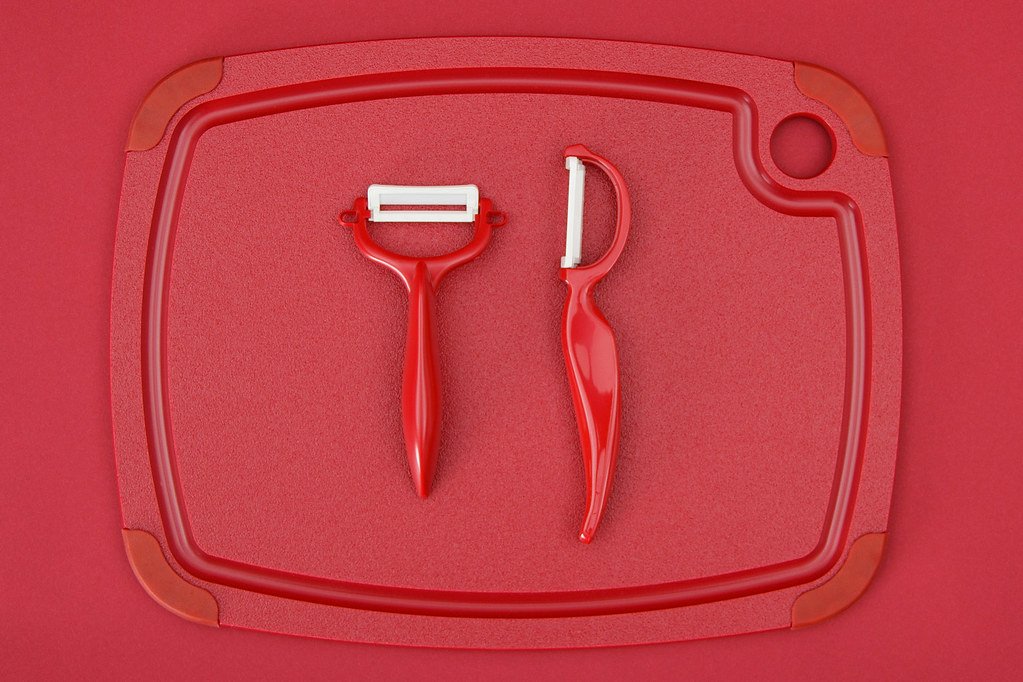
Photo: Didriks via Flickr (CC BY 2.0).
Key Takeaways
- First, a plastic cutting board is non-porous, dishwasher safe, and affordable, so it is ideal for raw meat, poultry, and seafood.
- In lab testing, plastic was moderately kind to knives: it caused 65 points of edge loss, compared with 10 for rubber and 15 to 42 for wood.
- A 2023 study estimated that chopping on plastic boards could release 14 to 79 million microplastic particles per person each year.
- However, the same study found no significant toxic effect on mouse cells from those particles.
- Above all, replace plastic boards once deep grooves appear, because scars are hard to clean.
What Is a Plastic Cutting Board Made Of?
Most plastic boards are made from one of two materials: high-density polyethylene (HDPE) or polypropylene (PP). Both are food-safe thermoplastics, but they behave a little differently.
| Feature | HDPE (Polyethylene) | Polypropylene (PP) |
|---|---|---|
| Feel | Slightly waxy, softer | Harder, slicker |
| Knife friendliness | Better | Slightly harder on edges |
| Heat resistance | Good for most dishwashers | Higher heat tolerance |
| Common use | Commercial and color-coded boards | Thin flexible mats, budget boards |
| Price | Low to moderate | Low |
In general, HDPE is the standard in restaurants. That is because it is thick, durable, and easy to sanitize. Polypropylene, by contrast, is common in thin flexible mats and inexpensive sets. Also, some brands use other materials, such as wood-fiber composites, that look like plastic but are actually different. If you see “composite” on the label, it is not a true plastic board.
Is a Plastic Cutting Board Safe?
Yes, a plastic cutting board is safe when you clean it properly and replace it when it wears out. The FDA Food Code allows plastic boards in commercial kitchens, and they are used in restaurants, hospitals, and schools across the United States.
Above all, the main strength of plastic is that it is non-porous. As a result, juices from raw meat stay on the surface rather than soaking in. In addition, plastic can go through a hot dishwasher cycle, which wood and bamboo cannot. For these reasons, many food safety experts recommend a dedicated plastic board for raw meat, poultry, and seafood.
However, plastic does have a weakness. Over time, knife cuts leave grooves in the surface, and those grooves can trap moisture, food, and bacteria. In fact, research from the University of California, Davis, led by food safety researcher Dean Cliver, found that knife-scarred plastic was harder to clean than new plastic. Therefore, the age and condition of your board matter as much as the material.
For a broader look at cross-contamination, see our guide on how to prevent cross contamination with cutting boards.
Plastic Cutting Boards and Microplastics: What the Research Says
One of the biggest concerns about plastic boards today is microplastics. In 2023, researchers led by Syeed Md Iskander published a study in Environmental Science & Technology that measured particles released while chopping carrots on plastic boards. According to the American Chemical Society, which publishes the journal, the team estimated:
- Polyethylene boards could release 14 to 71 million microplastic particles per person each year.
- Polypropylene boards could release about 79 million particles per person each year.
- Wooden boards also shed particles, in fact 4 to 22 times more microparticles than plastic boards in some tests.
Importantly, the study’s lab test on mouse cells found no substantial effect on cell viability from the polyethylene microplastics or the wood particles. In other words, boards clearly shed particles, but the health effect is still unclear. Researchers continue to study how microplastics affect people over the long term.
So, what should you do with this information? If you want to reduce plastic exposure, you can use wood, rubber, or bamboo for vegetables and keep plastic only for raw meat. Also, replacing worn plastic boards helps, since heavily scarred surfaces may shed more particles.
Is a Plastic Cutting Board Good for Knives?
Plastic sits in the middle of the pack for knife care. In independent testing by Prudent Reviews, a knife lost 65 points of sharpness on a BESS edge tester after 300 rocking cuts and 300 chops on plastic. Here is how that compares with other materials:
| Board Material | Sharpness Lost (BESS Points) |
|---|---|
| Rubber | 10 |
| Wood (teak, maple, walnut) | 15 to 42 |
| Bamboo | 55 |
| Plastic | 65 |
| Composite | 117 |
| Stainless steel | 184 |
In short, plastic is gentler than composite or metal, but harder on edges than wood or rubber. Therefore, if you own expensive Japanese knives, you may want a wooden board for most chopping. For more on board materials, see our guide to the best wood for cutting boards.
Plastic vs. Wood vs. Bamboo
Each board material has strengths; therefore, many cooks use more than one. This table shows how they compare on the factors that matter most:
| Factor | Plastic | Wood | Bamboo |
|---|---|---|---|
| Dishwasher safe | Yes | No | No |
| Knife friendliness | Fair | Very good | Fair |
| Absorbs juices | No | Slightly | Slightly |
| Needs oiling | No | Yes | Yes |
| Lifespan | 1 to 3 years with daily use | 10+ years with care | Several years |
| Typical price | Low | Moderate to high | Low to moderate |
| Best use | Raw meat, poultry, fish | Produce, bread, everyday prep | Light prep and serving |
As you can see, plastic wins on convenience, while wood wins on knife care and lifespan. Meanwhile, bamboo is a middle option. For more details, read whether bamboo cutting boards are safe. Also, if you want the most knife-friendly wood option, our guide to end grain cutting boards explains why they last so long.

Video: Burrfection shares results from four years of testing synthetic cutting boards.
Pros and Cons of a Plastic Cutting Board
Pros
- Affordable. Most plastic boards cost far less than a good wooden board.
- Dishwasher safe. In addition, high heat helps sanitize the surface after raw meat.
- Non-porous. As a result, juices stay on top, so cleanup is quick.
- Lightweight. Plus, plastic boards are easy to lift, wash, and store.
- Available in many colors. As a result, they work well for color-coded food safety systems.
Cons
- Scars over time. Eventually, deep grooves can trap bacteria and are hard to clean.
- Sheds microplastics. Although health effects are unclear, particles do end up in food.
- Harder on knives than wood. Consequently, edges dull faster.
- Can warp. For example, thin boards may bend in very hot dishwashers.
- Shorter lifespan. Finally, plastic boards need replacing more often than well-kept wooden ones.

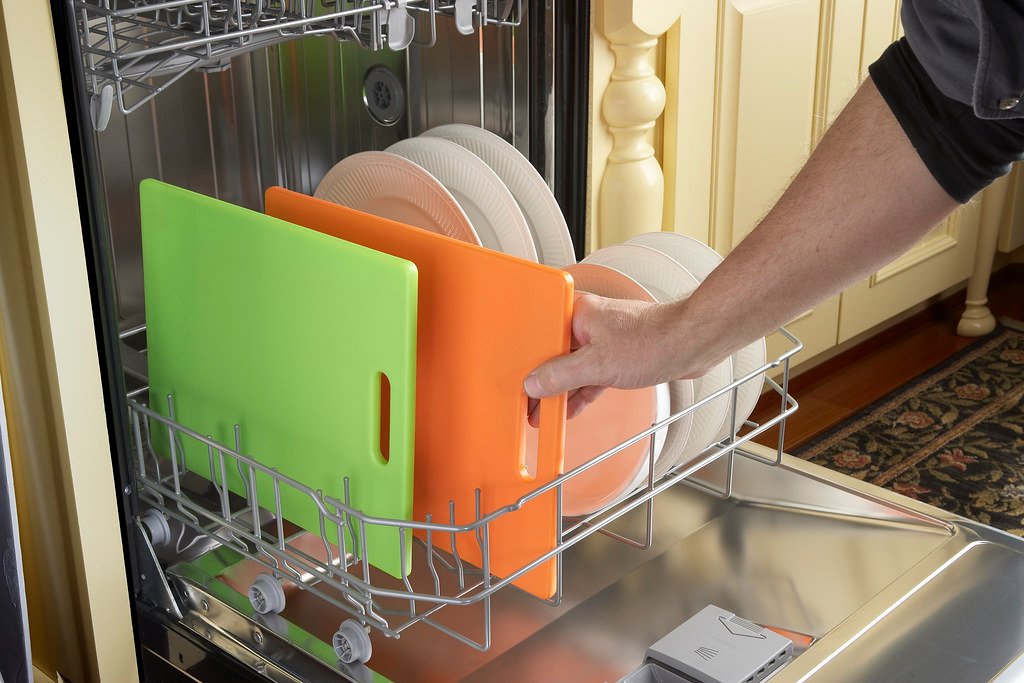
Photo: U.S. Department of Agriculture via Flickr (Public Domain).
How to Clean a Plastic Cutting Board
Cleaning plastic is simple; still, a few steps make a big difference. So, follow this routine after every use:
- Rinse right away. First, rinse off food bits before they dry onto the surface.
- Wash with hot, soapy water. Then scrub with a brush, paying attention to grooves and edges.
- Run it through the dishwasher. Most plastic boards are dishwasher safe. However, place thin boards away from the heating element so they do not warp.
- Sanitize after raw meat. For extra protection, FoodSafety.gov suggests a solution of 1 tablespoon of unscented liquid chlorine bleach per gallon of water. Let it sit for a few minutes, then rinse.
- Dry completely. Finally, stand the board upright so air can reach both sides.
For more methods, including vinegar and hydrogen peroxide, read our full guide on how to disinfect cutting boards.
How to Remove Stains and Odors
Plastic boards often stain from beets, turmeric, or tomatoes, and they can hold onions or garlic smells. Fortunately, these fixes usually work:
- Baking soda paste. Mix baking soda with a little water, scrub, and rinse.
- Lemon and salt. Similarly, rub half a lemon dipped in coarse salt over the surface.
- Diluted bleach soak. For tough stains, soak the board in a mild bleach solution, then rinse well.
When to Replace a Plastic Cutting Board
Unlike wood, plastic cannot be easily sanded or refinished at home. Therefore, replacement is part of owning one. Replace your plastic cutting board when you notice any of these signs:
- Deep grooves that stay dark or stained after washing
- Fuzzy, rough patches where the surface has frayed
- Warping, so the board rocks on the counter
- Cracks, especially near the edges or handle
- Lingering odors that do not wash out
As a general rule, boards used daily for raw meat often need replacing every one to two years. On the other hand, a board used lightly for produce can last much longer.
How to Choose a Good Plastic Cutting Board
Of course, not all plastic boards are equal. So, look for these features when you shop:
- Material. First, HDPE is the safest bet for a sturdy, knife-friendly board.
- Thickness. Generally, boards at least 1/2 inch thick resist warping and deep scarring.
- NSF certification. Ideally, boards certified to NSF/ANSI Standard 2 meet commercial food equipment standards.
- Non-slip feet or edges. These keep the board steady, which makes cutting safer.
- Juice groove. In particular, a groove helps on boards used for meat or juicy fruit.
- Size. Also, pick a size that fits your sink and dishwasher, as well as your tasks.
If you are short on space, our guide to small cutting boards for the kitchen covers compact options. Meanwhile, if you carve roasts or turkeys, a large wooden cutting board may be a better fit than plastic.
Best Ways to Use a Plastic Board in Your Kitchen
For most home cooks, the smartest setup is a mix of materials. For example:
- Plastic for raw proteins. Use one plastic board only for raw meat, poultry, and seafood, then run it through the dishwasher.
- Wood for everyday prep. Next, use a wooden board for vegetables, bread, and cooked foods.
- Separate storage. Store your raw-meat board apart from the others. A cutting board organizer keeps boards upright and dry.
This approach gives you the hygiene benefits of plastic while reducing knife wear and microplastic exposure on most of your food. In addition, if you go with wood for daily prep, our guide on how to take care of a wooden cutting board explains oiling and drying.
Is a Plastic Cutting Board BPA-Free?
Many shoppers worry about BPA (bisphenol A), a chemical linked to hormone concerns. Fortunately, this is mostly a non-issue for cutting boards. BPA is used to make polycarbonate plastic and some epoxy resins. By contrast, HDPE and polypropylene are not made with BPA. As a result, a standard plastic cutting board made from either material is BPA-free by nature, even if the label does not say so.
That said, a few hard, clear, glass-like boards are made from other plastics. So, if you buy an unusual board, check the material on the label. In general, stick with HDPE or polypropylene from a known brand, and avoid boards with no material listed at all. Also, never use a cracked or melted board, since damaged plastic is harder to clean and may release more particles.
How Many Plastic Boards Should You Own?
For most households, two plastic boards are plenty. Specifically, one handles raw meat and poultry, while the other handles raw fish or acts as a backup when the first is in the dishwasher. In addition, a color-coded pair makes it easy to tell them apart at a glance. On the other hand, if you cook large batches or entertain often, a third board saves time on busy days.
Common Mistakes With Plastic Boards
- Keeping a board too long. Remember, a scarred board is harder to clean, so do not wait for it to crack.
- Using one board for everything. Instead, separate raw meat from ready-to-eat food.
- Placing it near a heat source. For instance, a hot stovetop or oven door can warp or melt plastic.
- Stacking wet boards. Similarly, trapped moisture encourages bacteria and odors.
- Using harsh scouring pads. Steel wool and abrasive pads deepen scratches, so use a brush instead.
FAQ
Are plastic cutting boards better than wood?
Not overall. Admittedly, plastic is easier to sanitize in a dishwasher, while wood is kinder to knives and lasts longer. Many cooks use plastic for raw meat and wood for everything else.
Do plastic cutting boards release microplastics?
Yes. A 2023 study estimated 14 to 79 million particles per person per year, depending on the plastic. However, the study did not find a significant toxic effect in mouse cell tests.
Can a plastic cutting board go in the dishwasher?
Most can. Still, check the label, and keep thin boards away from the heating element to prevent warping.
How often should I replace a plastic cutting board?
Generally, replace it once deep grooves, stains, or warping appear. For daily raw-meat use, that is often every one to two years.
Is HDPE or polypropylene better?
In general, HDPE is better for a main board because it is thicker and a bit gentler on knives. Polypropylene works well for thin flexible mats.
Can I sand a plastic cutting board?
Some thick HDPE boards can be lightly sanded, but most home cooks find it easier and safer to replace the board.
Final Thoughts
A plastic cutting board remains one of the most practical tools in the kitchen, especially for raw meat, poultry, and seafood. It is affordable, non-porous, and dishwasher safe. However, it scars, sheds microplastics, and dulls knives faster than wood. So, the best approach is to use plastic where hygiene matters most, clean it after every use, and replace it once it shows deep wear. Finally, for a complete look at every board material, read our main guide to the safest and healthiest cutting boards.


Hey, My name is MAMON. I am a SEO content creator and affiliate marketer with over 8 years of experience. I create honest product reviews, in-depth buying guides, and practical how-to articles to help readers make informed decisions. My mission is to provide trustworthy, research-backed content that delivers real value.