

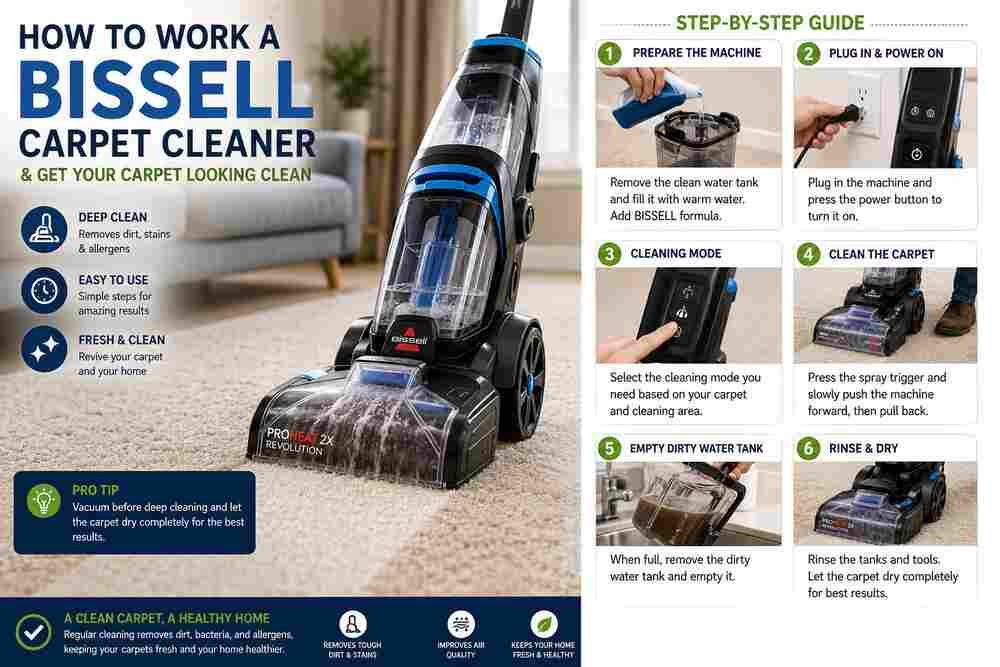

After cleaning your carpet by hand, you know the drill: aching knees, a sore back, and a rug that still doesn’t quite look right. Knowing how to work a Bissell carpet cleaner takes most of that effort out of the equation. This guide covers the process step by step, from your very first cleaning to routine upkeep afterward.
Bissell has built carpet cleaners for U.S. households for decades. The machines share a similar two-tank design across most models. Once you understand that basic system, switching between models gets a lot easier.
Key Takeaways
- Vacuum and pretreat stains before you ever fill the tanks. Skipping this step is the biggest reason for disappointing results.
- Clean each area twice. Go forward with the trigger pressed to apply solution, then backward with the trigger released to extract it, according to Bissell’s own cleaning guide.
- Plan on 4-6 hours before walking on the carpet again, and up to 24 hours for a full, deep dry.
- Only use cleaning formula made for your machine. Homemade or unapproved solutions can void your warranty and clog the internal hoses.
Why Use a Bissell Carpet Cleaner?
Bissell carpet cleaners offer a deep cleaning system built for both carpets and upholstery. They remove pet odors and set-in stains that a standard vacuum leaves behind. Dual rotating PowerBrushes, HeatWave technology, and EdgeSweep brushes work together to lift dirt from deep in the fibers rather than just the surface.
Many models also include a pet hair collection basket and a deep reach tool for tight spaces. A dedicated tough stain tool and trial-size pet stain and odor formula round out the accessories on most kits.
What to Consider Before You Buy
A few factors matter more than others when picking the right machine for your home.
Surface type
Think about the floors, upholstery, and other surfaces you’ll actually clean. A machine that maneuvers into corners and along baseboards works better for most homes than one built purely for open floor space.
Budget
Carpet cleaners span a wide price range. Spending a bit more upfront on a reputable model, including Bissell’s own lineup, usually pays off. You’ll see fewer repairs and better results over time.
Buy versus rent
Renting a machine or hiring a professional makes sense for a one-time deep clean. If you’re cleaning carpets regularly, though, owning a machine cuts your long-term cost significantly.
Portability
You’ll likely move the machine from room to room. Most Bissell models are built to be lightweight and maneuverable. That matters more than it sounds like once you’re hauling one up a flight of stairs.
Noise level
Carpet cleaners run for a while during a full cleaning session, so noise adds up. Bissell designs most of its machines to run relatively quiet compared to older shampooers.
Maintenance cost
Filters need occasional replacement to keep suction strong. A model with a washable filter cuts down on that ongoing cost.
Tank capacity
Larger tanks mean fewer refill trips during a big cleaning session, but they also add weight when full. Balance tank size against how much carpet you typically clean in one sitting, and how comfortably you can carry the machine when it’s loaded. A smaller apartment or a single room rarely needs the largest tank on the market, while a multi-room whole-house session benefits from one.

How to Work a Bissell Carpet Cleaner: Step-by-Step
Once your machine is unboxed and you understand your model’s basic layout, learning how to work a Bissell carpet cleaner comes down to seven repeatable steps.
Step 1: Vacuum first
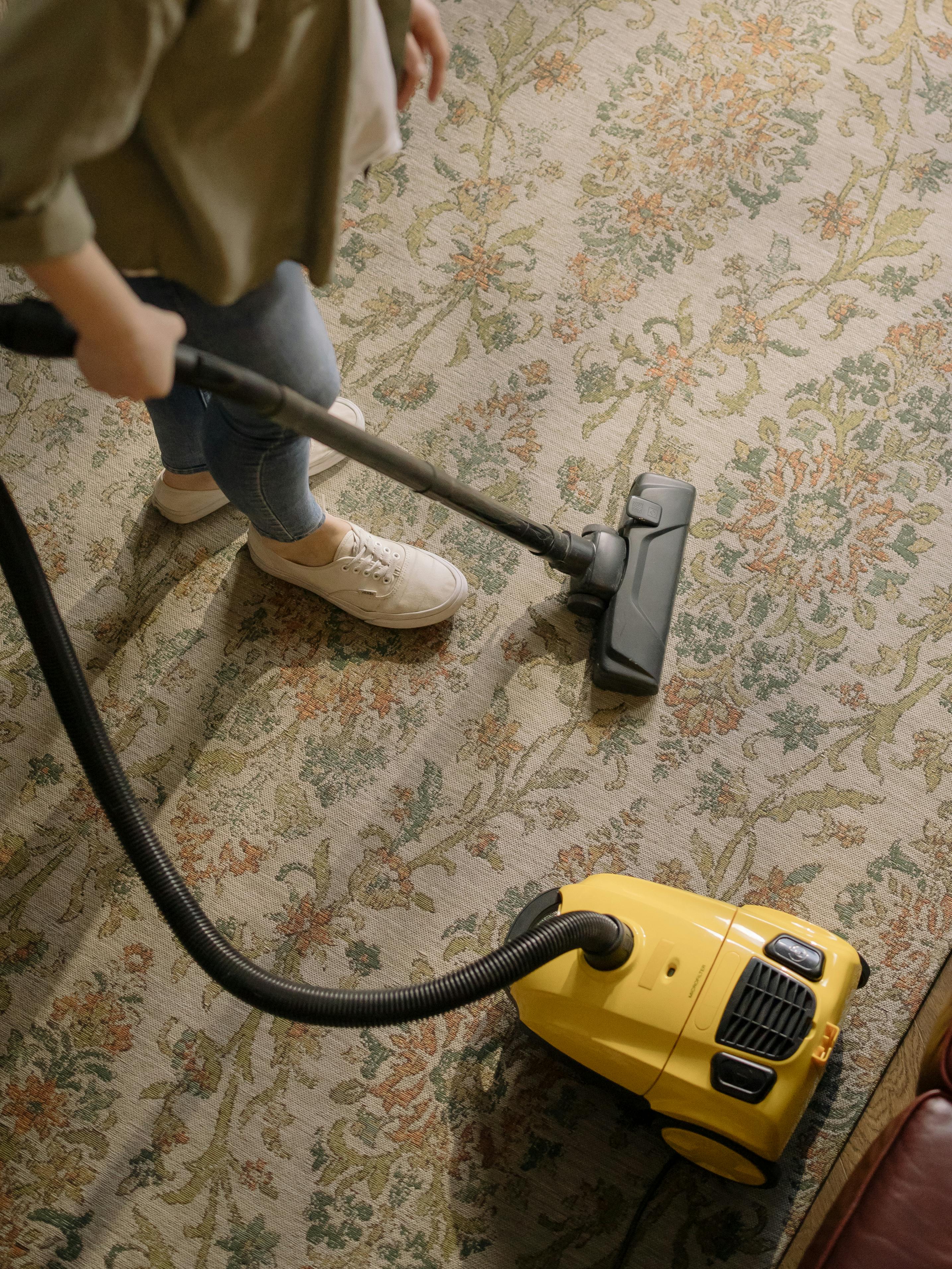
Run a standard vacuum over the whole area before you ever touch the carpet cleaner. This clears loose dirt, dust, and debris, especially in high-traffic zones and corners. That way, the machine’s solution and suction can focus on embedded stains instead.
Step 2: Clear the room
Move furniture out of the space, or at least away from the areas you’re cleaning. For pieces you can’t move, work carefully around them. You’ll still reach most of the surrounding carpet this way.
Step 3: Pretreat tough stains
Apply a spot treatment formula directly to stubborn stains before you start the full pass. Giving the pretreatment a few minutes to work loosens set-in dirt and makes the main cleaning pass far more effective.
Step 4: Fill both tanks correctly
Bissell machines use two separate tanks. One clean tank holds water and solution, and a separate recovery tank collects dirty water as you clean. Fill the clean tank with water up to its marked fill line. Then add cleaning formula up to its own separate line. Don’t guess on the ratio, since overfilling the formula line leaves excess residue in your carpet.
Step 5: Clean in forward-and-back passes
According to Bissell’s own step-by-step cleaning guide, you should clean each section of carpet twice. Push the machine forward with the trigger pressed down to release solution into the carpet. Then pull it back toward you with the trigger released, so the machine extracts the dirty water instead of adding more. Count to two on each pass to give the machine enough time to scrub and extract properly.
Step 6: Let the carpet dry fully
Plan on 4 to 6 hours before walking on the carpet again. Full drying through the padding underneath can take up to 24 hours. Opening a window, running your HVAC system, or using your machine’s quick-dry setting, if it has one, all speed this up. An extra dry pass with the trigger released and no water in the tank also pulls out leftover moisture.
Step 7: Vacuum once more
After the carpet is fully dry, run your vacuum over the area again. This restores the fibers’ natural texture, which the wet cleaning process tends to flatten. It also picks up any remaining loose debris.

Which Bissell Model Fits Your Home?
Bissell sells several distinct product lines, and picking the right one matters as much as knowing how to work a Bissell carpet cleaner once you own it. The table below breaks down a few popular lines by what they’re actually built for.
| Model Line | Best For | Notable Feature |
| SpotClean series | Spot and stain cleanup, stairs, upholstery | Compact, portable, no full-room tank |
| ProHeat 2X series | Whole-room carpet cleaning | HeatWave technology keeps water warm during the pass |
| TurboClean series | Quick, lighter-duty cleanups | Faster dry time, lighter overall weight |
| Big Green Machine | Large homes, heavy soil, pet households | Bigger tanks, commercial-style suction |
Troubleshooting Common Issues
A few problems come up often enough to cover in advance. If the machine isn’t picking up dirty water, check that the recovery tank is seated properly and not already full. Weak suction usually means the brushes or hose are tangled with hair or fibers and need a quick clear-out. A carpet that dries stiff or crunchy points to too much cleaning formula relative to water, which is worth double-checking against your model’s fill lines next time.
Cleaning Solution: What to Use and What to Avoid
Stick to cleaning formula made specifically for your Bissell machine. Homemade mixes, dish soap, or laundry detergent might seem like a cheaper shortcut. They tend to over-suds inside the machine, leave sticky residue in the carpet, and in some cases void your warranty. Our guide on whether you can use laundry detergent in a carpet cleaner covers exactly why that swap causes more problems than it solves.
Maintenance After Each Use
Empty and rinse both tanks after every session, even if you plan to clean again the next day. Leftover solution and dirty water breed bacteria and mold surprisingly fast in a sealed tank. Clean the brushes, too, since hair and fibers wrapped around the bristles reduce cleaning power over time. Our guide on how to clean carpet cleaner brushes walks through that process in detail.
Store the machine somewhere that avoids extreme heat or cold. Keep the tanks open or slightly ajar between uses, too, so they can air out completely.
Common Mistakes When Using a Bissell Carpet Cleaner
Skipping the pre-vacuum step is the most common mistake. Loose debris just gets pushed deeper into the carpet fibers instead of removed. Using too much cleaning solution is another. More formula doesn’t mean cleaner carpet. It usually means a longer drying time and a sticky residue that attracts dirt faster afterward. Walking on the carpet before it’s dry is a third misstep. It can flatten fibers and reintroduce dirt from your shoes into the still-damp carpet.
Watch: How to Use a Bissell Carpet Cleaner

This walkthrough shows the fill, clean, and rinse process on a popular Bissell model in real time. Curious how much faster you can get the carpet fully dry afterward? Our guide on how to dry carpet fast after cleaning covers a few extra tricks beyond the basics above.
Frequently Asked Questions About How to Work a Bissell Carpet Cleaner
How many passes does a Bissell carpet cleaner need per area?
Two passes per section is the standard recommendation. One forward pass, with the trigger pressed, applies solution. One backward pass, with the trigger released, extracts it. Heavily soiled spots may need a repeat of both passes.
Can I use hot water in my Bissell carpet cleaner?
Most Bissell machines call for clean, warm tap water rather than very hot water. Check your specific model’s manual, since water temperature recommendations can vary between models.
Why is my carpet still damp after 24 hours?
Poor airflow in the room, too much solution used during cleaning, or thick padding underneath the carpet can all extend drying time well past 24 hours. Open windows, run a fan, or use your machine’s dry-pass setting instead. Any of the three can speed things along.
Do I need a special cleaning solution for pet stains?
Yes, ideally. Pet-specific formulas are built to break down odor-causing enzymes that a general all-purpose solution won’t fully address, especially on set-in stains. They’re worth the extra cost if pet accidents are a recurring issue in your home.
How often should I deep clean my carpet with a Bissell machine?
Every 3 to 6 months for average households works well, more often for homes with pets, kids, or high foot traffic. Regular vacuuming between deep cleans keeps the carpet in better shape overall.
Conclusion
Once you understand the two-tank system and the forward-and-back cleaning pass, knowing how to work a Bissell carpet cleaner becomes second nature. Vacuum first, pretreat tough spots, fill both tanks correctly, and give the carpet enough time to dry fully afterward.
Stay consistent with cleaning the tanks and brushes after each use. Your machine will keep performing well for years this way. If you’re still shopping for the right model, our portable carpet cleaner reviews compare several options by price, weight, and cleaning power.


Hey, My name is MAMON. I am a SEO content creator and affiliate marketer with over 8 years of experience. I create honest product reviews, in-depth buying guides, and practical how-to articles to help readers make informed decisions. My mission is to provide trustworthy, research-backed content that delivers real value.