


Noticed your carpet cleaner isn’t working as well as it used to? The brushes are usually the first place to check. Learning how to clean carpet cleaner brushes is one of the simplest habits that keeps your machine running well. It’s also what keeps your carpets actually clean, rather than just damp.
The process takes only a few minutes with tools you likely already have at home. This guide walks through the full routine, from removing tangled hair to drying the brushes properly before storage, plus a few habits that stretch the life of your machine well beyond the basics.
Key Takeaways
- Dirty brushes block airflow and reduce suction. Your machine picks up less dirt even when everything else works fine.
- A comb, seam ripper, or utility knife clears tangled hair and fibers faster than pulling by hand.
- The EPA notes that damp materials should dry within 24-48 hours to prevent mold growth. That’s exactly why air-drying brushes fully matters.
- Clean the brushes after every few uses, or immediately if you notice visible buildup, hair tangles, or a musty smell.
Why You Should Clean Carpet Cleaner Brushes
Clean brushes are the difference between a machine that works well and one that just moves dirt around. Buildup on the bristles blocks airflow and reduces suction power, so your carpet cleaner stops picking up dirt and debris the way it should.
Dirty brushes also spread dust and bacteria back into your carpet and can leave your home smelling musty. Left unchecked, tangled hair and fibers put extra strain on the motor and can damage the machine over time. Regular cleaning keeps your home fresher and extends the life of the machine itself.
Signs Your Brushes Need Cleaning Right Now
A few warning signs mean it’s time to clean the brushes before your next session, not after. Visible hair or fiber tangles wrapped around the roller are the most obvious sign. A noticeable drop in suction is another, even on a freshly emptied tank. That usually points to airflow blocked by buildup rather than a tank or filter issue. A musty smell coming from the machine, even when it’s not running, is a third sign. It usually means moisture and debris have been sitting on the brush longer than they should. Streaks or residue left behind on the carpet after a cleaning pass round out the list. That can trace back to dirty bristles redistributing grime instead of lifting it.
Tools and Materials You’ll Need
Gather these before you start, so you’re not hunting for supplies mid-task:
- Comb or seam ripper
- Scissors or a utility knife
- Cleaning brush (an old toothbrush works well)
- Screwdriver, if your model requires one to remove the brush
- Mild dish soap
- De-greasing solution, optional for heavy buildup
- Gloves
How to Clean Carpet Cleaner Brushes: Step-by-Step
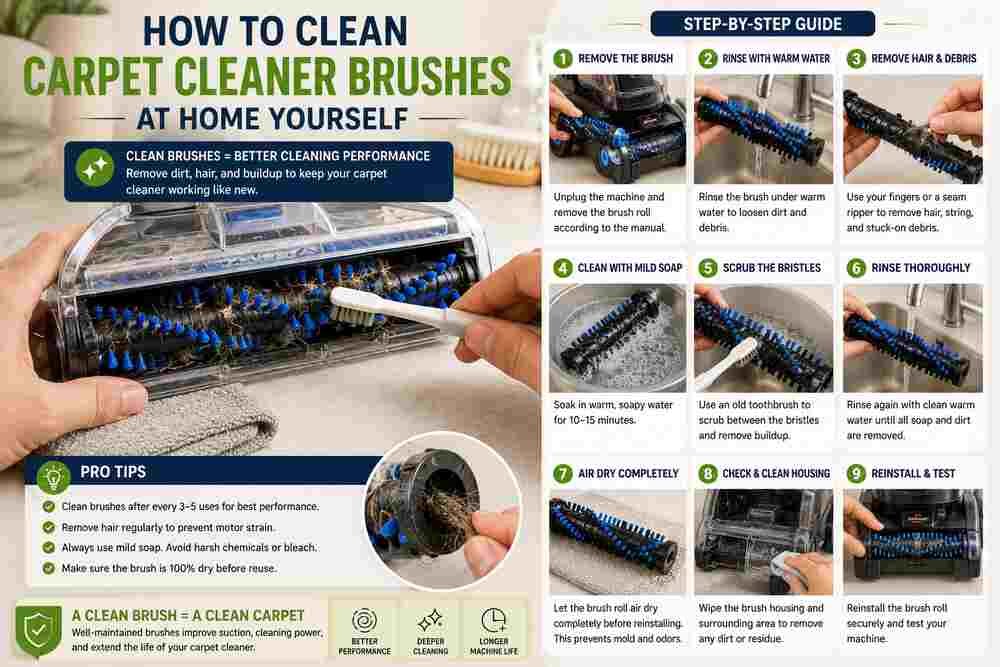
- Unplug the machine: Always start by unplugging your carpet cleaner for safety. Then remove the brushes following your manufacturer’s instructions, using a screwdriver if needed.
- Remove hair and fibers: Use a comb or scissors to pull out any tangled hair and fibers wrapped around the brush. Get out as much as you can before the next step.
- Soak the brushes: Fill a basin with warm, soapy water or a de-greasing solution. Submerge the brushes and let them soak for a few minutes to loosen dirt and grime.
- Scrub the brushes: Use a cleaning brush or your hands to scrub the bristles and remove any remaining dirt. Pay extra attention to spots where grime has caked on.
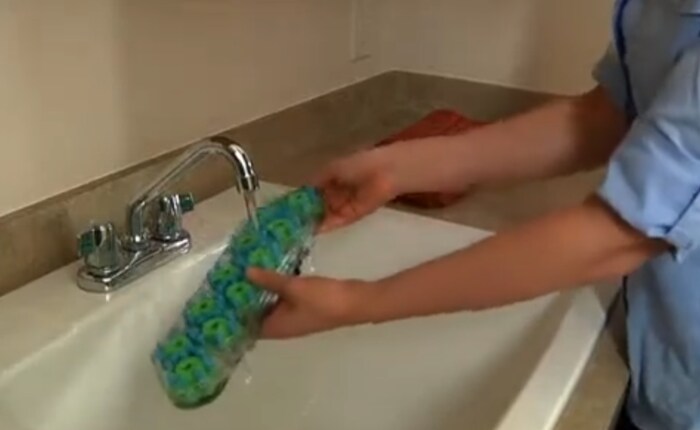
- Rinse thoroughly: Rinse the brushes under clean running water to wash away soap residue and loosened debris.
- Dry completely: Pat the brushes with a towel to remove excess water. Then let them air dry fully before putting them back in the machine.

Removing Tangled Hair and Fibers
Learning how to clean carpet cleaner brushes usually means dealing with hair and carpet fibers wrapped tightly around the roller. A metal comb works for most tangles, while a seam ripper handles the tougher, more matted sections.
A utility knife can also help. Run the blade carefully along the roller, between rows of bristles, then pull out the loosened debris and rinse the roller clean. For pet households, a fine-toothed comb designed for pet grooming works surprisingly well, too. It pulls embedded pet hair out of the bristles before you wash the brush.
Cleaning and Drying the Brushes Thoroughly
For a deeper clean, soak the brushes in warm water mixed with a de-greasing agent or regular dish soap. Use a flat-head plastic tool, not metal, to gently disassemble the brush head if your model allows it. Then remove any remaining clogged hair and fibers. Once the debris is cleared, rinse the brushes under clean water to wash away any leftover residue.
After rinsing, pat the brushes dry with a towel to remove excess water. Then set them somewhere with good airflow to air dry completely before reassembling the machine. The same airflow principle applies to your carpet itself after a cleaning session. Our guide on how to dry carpet fast after cleaning covers a few tricks for speeding that up.
Why Drying Matters More Than You’d Think
Skipping the drying step is one of the more common mistakes people make. According to the EPA’s guide to mold and moisture, wet materials need to dry within 24 to 48 hours to prevent mold growth. Brushes left damp inside a closed machine housing create exactly the kind of environment mold and bacteria thrive in.
Storing a slightly damp brush also risks rust on any metal components. It can leave a musty smell that transfers straight back onto your carpet the next time you clean.
Choosing the Right Cleaning Solution
| Solution | Best For | Notes |
| Mild dish soap | Everyday buildup | Gentle, safe for most bristle types |
| De-greasing solution | Heavy grease or grime | Stronger, rinse thoroughly afterward |
| Enzymatic pet cleaner | Pet hair and odor buildup | Breaks down organic residue effectively |
Avoid harsh chemicals or bleach on the bristles. They can degrade the material and shorten the brush’s lifespan faster than regular dirt exposure would. The same logic applies to the tank itself. Our guide on whether you can use laundry detergent in a carpet cleaner covers why that particular shortcut backfires.
How Often Should You Clean Carpet Cleaner Brushes?
A good rule of thumb is every few uses, or sooner if you notice visible buildup, tangled hair, or a musty smell. Households with pets or heavy foot traffic should check the brushes closer to every single use. If you’re also learning how to work a Bissell carpet cleaner, cleaning the brushes fits naturally into the same after-use routine as rinsing the tanks.
Making Your Carpet Cleaner Brushes Last Longer
A few habits extend the life of your brushes well beyond the basics above. Clean the brushes after each use rather than letting buildup accumulate over several sessions. Vacuum your carpet before running the carpet cleaner, too. That single step reduces how much loose debris the brushes have to fight through on the very first pass.
Store the machine somewhere dry to prevent rust, and check occasionally for worn or frayed bristles that need replacing. Bristles that look flattened or uneven won’t agitate the carpet fibers the way fresh ones do, even after a thorough cleaning.
This routine applies across brands, whether you own a Bissell, a Hoover, or another model entirely. The core maintenance barely changes from one manufacturer to the next, even though tank designs and brush-release mechanisms vary.
Replacing Brushes That Are Too Worn to Save
Cleaning only goes so far once bristles are physically worn down. Flattened, frayed, or unevenly spaced bristles won’t agitate carpet fibers effectively, no matter how thoroughly you wash them. Most manufacturers sell replacement brush rollers or brush heads that match specific model numbers. Check your machine’s model number first, usually printed on a label near the handle or base, before ordering a replacement. Swapping a worn brush is typically a quicker fix than it sounds. It often requires nothing more than the same screwdriver you used to remove it for cleaning.
Common Mistakes When Cleaning Carpet Cleaner Brushes
Using dirty water to rinse the brushes is a common misstep. It leaves behind mineral deposits and bacteria that work against the cleaning you just did. Skipping the drying step is another, since a damp brush stored inside a closed machine invites mold within days. Using harsh chemicals to speed up the process can also degrade bristle material faster than regular dirt would on its own.
Watch: How to Remove and Clean a Carpet Cleaner Brush Roller

This walkthrough shows the removal and reinstallation process in real time. It helps if your model’s screws or clips aren’t obvious at first glance. For the full cleaning cycle beyond just the brushes, Bissell’s own step-by-step cleaning guide covers the tank and hose maintenance too.
Frequently Asked Questions About How to Clean Carpet Cleaner Brushes
How often should I clean my carpet cleaner brushes?
Clean them after every few uses, or immediately if you notice buildup, tangled hair, or a musty smell. Regular cleaning keeps your machine working at full strength.
Can I use any cleaning solution on the brushes?
Stick with mild dish soap or a de-greasing solution made for this purpose. Avoid harsh chemicals or bleach, since they can damage the bristle material over time.
What if the brushes are damaged or worn out?
If the bristles are frayed, flattened, or not spinning properly, replace them rather than trying to keep cleaning them. Check your manufacturer’s site for compatible replacement parts.
Can I put carpet cleaner brushes in the dishwasher?
It’s not recommended for most models. Hand washing gives you more control. It also avoids exposing electrical components or adhesives to water pressure and heat they weren’t designed for.
Why does my carpet cleaner smell musty even after cleaning the brushes?
A musty smell often means moisture is trapped somewhere else in the machine, like the tanks or hose, not just the brushes. Rinse and fully air dry every removable part, not only the brush roller.
Is it normal for the brush roller to spin freely when the machine is off?
Yes, on most models the roller isn’t locked in place when the machine is powered down, so it should spin somewhat freely by hand. If it feels stiff, gritty, or won’t turn at all, that usually points to dried debris or a worn bearing that needs attention.
Conclusion
Cleaning your carpet cleaner doesn’t have to be a hassle. Once you know how to clean carpet cleaner brushes properly, keeping your machine running well becomes a quick, repeatable routine rather than a chore. Your carpets stay genuinely clean as a result, not just damp and dirt-free on the surface.
Don’t wait for buildup to slow your machine down. A few minutes after each use, or every few sessions at minimum, keeps everything working the way it should for years to come.


Hey, My name is MAMON. I am a SEO content creator and affiliate marketer with over 8 years of experience. I create honest product reviews, in-depth buying guides, and practical how-to articles to help readers make informed decisions. My mission is to provide trustworthy, research-backed content that delivers real value.