


A dishwasher soap dispenser door latch that won’t open or close leaves you with a puddle of undissolved detergent and dishes that come out just as dirty as they went in. The good news is that this is one of the more DIY-friendly dishwasher repairs: it usually comes down to a stuck latch, a worn spring, or a failed wax motor, and all three are things you can diagnose and fix yourself with basic tools. Here’s how to fix a soap dispenser door latch, step by step, including how to tell which part is actually causing the problem before you buy a replacement.
Key Takeaways
- Before replacing any parts, check for the simplest cause first: caked detergent, a blocked dispenser, or a bent spring can all mimic a failed latch.
- Most modern dishwashers use a small wax motor to release the dispenser door catch; older models often use a bi-metal release instead.
- You can test either component with a multimeter: a good wax motor typically reads between 1,400 and 2,800 ohms, while an infinite (open) reading means it’s failed.
- A complete OEM dispenser assembly typically costs $50-$130, while a latch-only kit like the Whirlpool 676413 runs closer to $10-$20.
- Always unplug the dishwasher or shut off its breaker before opening the door panel, since the dispenser terminals carry 120V during operation.
Signs Your Dispenser Latch Needs Attention
A few telltale symptoms usually show up before the dispenser fails completely:
- Detergent left in the cup after a full cycle, the clearest sign the door never opened.
- Dishes coming out with a filmy or gritty residue, which can also point to a dispenser issue if detergent is releasing late or only partially.
- A dispenser door that’s difficult to close or doesn’t latch with a firm click before you start the cycle.
- Visible cracks, warping, or corrosion around the dispenser door or latch mechanism.
- The dispenser door popping open prematurely, mid-cycle before the wash phase, which can point to a worn latch that isn’t holding under normal water pressure.
Catching these signs early usually means a simple latch or spring repair rather than a full dispenser replacement, since ignoring a sticking latch tends to accelerate wear on the surrounding plastic housing.
What Causes a Dishwasher Soap Dispenser Door Latch to Break?
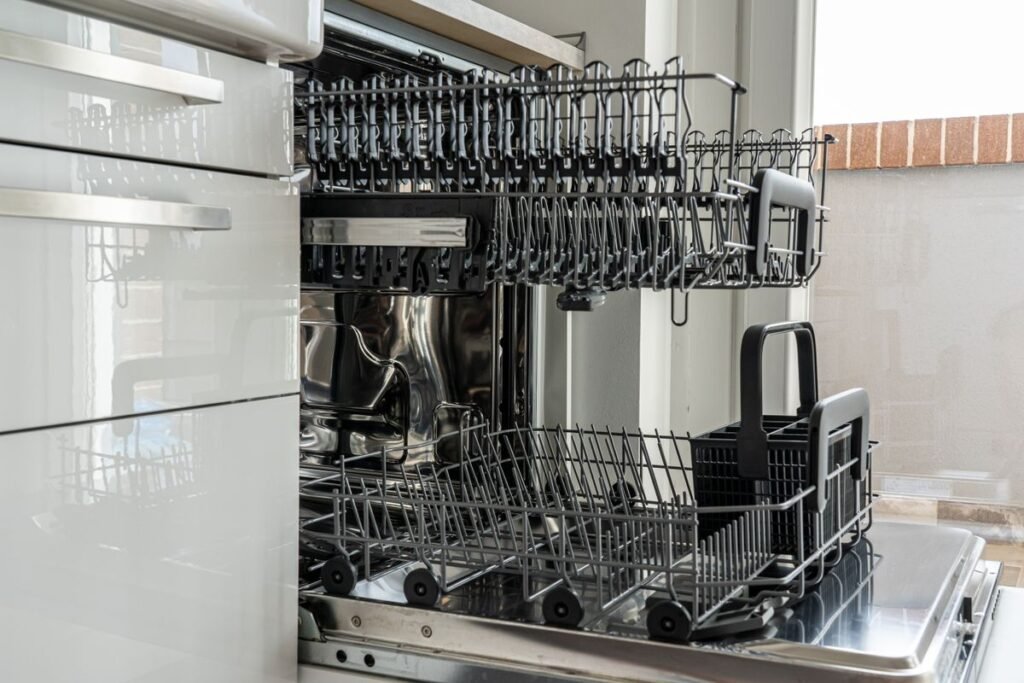

Several different issues can prevent the dispenser door from opening or latching properly, and they’re not all mechanical:
- Caked or hardened detergent. If the dispenser compartment was wet when detergent was loaded, powder or pods can activate early and glue themselves to the plastic, physically jamming the latch shut.
- Worn or corroded spring. The dispenser door is spring-loaded; over years of use, the spring can stretch, rust, or snap.
- A failed wax motor or bi-metal release. These are the electrical components that actually trigger the latch to release at the right point in the wash cycle. When they fail, the door simply never gets the signal to open.
- Hard water buildup. Mineral deposits can cement the latch mechanism shut over time, especially in areas with hard water.
- Physical damage. Impact from loading dishes, or a large pot or pan blocking the dispenser cover, can bend or crack the latch itself.
Diagnose Before You Replace
It’s worth ruling out the simple causes before assuming you need a replacement part:
- Check for blockages. Make sure a large pan, cutting board, or serving dish on the lower rack isn’t blocking the dispenser door from swinging open.
- Inspect for caked detergent. Open the dispenser and look for hardened residue. If you find it, clean the compartment thoroughly and always load detergent into a dry dispenser going forward.
- Test the latch by hand. With the dishwasher unplugged, close the dispenser door and see if it latches and releases smoothly when you press the release tab manually. Sticking or grinding suggests mechanical wear.
- Check the spring and hinge pin. These are usually visible once the dispenser door is open. Look for bending, corrosion, or a spring that’s lost its tension.
If all of that checks out and the door still won’t open during an actual wash cycle, the problem is most likely electrical, either the wax motor, the bi-metal release, or (less commonly) the timer or control board that signals them.
Testing the Wax Motor or Bi-Metal Release
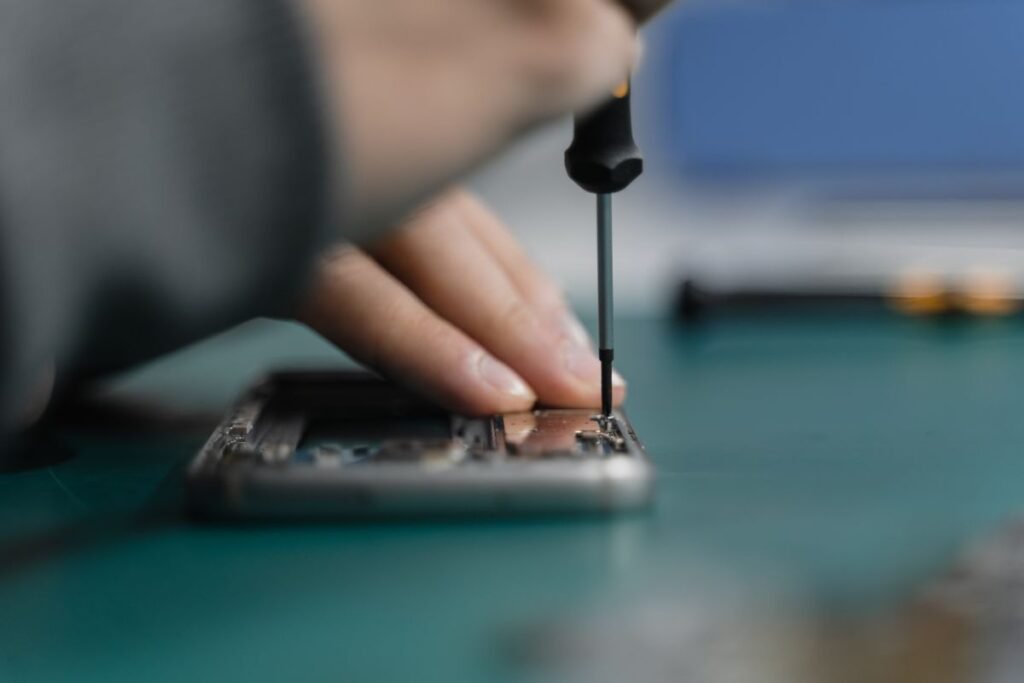
Most dishwashers built after the mid-2000s use a wax motor to release the dispenser latch; older models typically use a bi-metal release instead. According to PartSelect’s dishwasher repair guide, both components can be tested the same basic way:
- Unplug the dishwasher or shut off its breaker.
- Remove the screws around the inner door panel (usually Torx T-15) and carefully separate the inner and outer door panels.
- Locate the wax motor or bi-metal release near the detergent dispenser and disconnect its wire terminals.
- Set a multimeter to the ohms (resistance) setting and touch a probe to each terminal.
- Compare the reading: a functional wax motor typically reads somewhere between 1,400 and 2,800 ohms, depending on the model. An infinite or “OL” (open loop) reading means the component has failed and needs replacing.
If the component tests good but the dispenser still doesn’t open during a cycle, the issue is more likely in the timer or control board sending the signal, which is a more involved repair best left to a technician if you’re not comfortable working with the control board.
How to Replace a Soap Dispenser Door Latch
Once you’ve confirmed the latch, spring, or dispenser assembly itself is the problem, replacement follows a consistent sequence across most brands:
Things You’ll Need
- A Phillips or flathead screwdriver
- A Torx No. 15 screwdriver or bit
- Replacement latch kit or full dispenser assembly (matched to your model number)
- Needle-nose pliers
Step-by-Step Instructions
- Disconnect power. Unplug the dishwasher or switch off its breaker, then try the start button to confirm power is actually cut before touching anything inside.
- Remove the inner door panel. Open the dishwasher door and remove the Torx screws around the perimeter of the inner door panel. Set the panel aside.
- Access the dispenser assembly. With the panel off, you’ll see the back of the detergent dispenser, its wiring harness, and the spring or wax motor.
- Disconnect and remove the old parts. Unplug the wire connector from the dispenser, remove the mounting screws, and lift out the old latch or full dispenser module.
- Install the replacement. Set the new latch or dispenser assembly in place, reconnect the wiring harness, and reinstall the mounting screws.
- Reattach the inner door panel and replace all the Torx screws you removed earlier.
- Restore power and test. Plug the dishwasher back in, run a full cycle with detergent loaded, and confirm the dispenser opens and releases properly.
For genuine OEM parts, the Repair Clinic DIY guide recommends looking up your exact model number before ordering, since dispenser assemblies and latch kits are largely model-specific and not universal.
Watch: Fixing a Dishwasher Dispenser That Won’t Open

This walkthrough shows the wax motor and hinge inspection process on a real unit, useful for spotting the difference between a mechanical jam and an electrical failure.
How Much Does It Cost to Fix a Dispenser Latch?
Costs vary depending on how much of the assembly needs replacing. A latch-only kit, like the genuine Whirlpool 676413 latch kit used across several Whirlpool-family brands including Kenmore, Maytag, and Roper, typically runs around $10 to $20. If the wax motor or the entire dispenser module has failed, a full OEM replacement assembly generally costs between $50 and $130 depending on the brand and model. Either repair is well within reach for a confident DIYer with basic tools and typically takes well under an hour once the door panel is off.
Preventing Future Latch Problems
- Always load detergent into a dry dispenser. Moisture is the most common cause of caked, jam-inducing detergent buildup.
- Watch how you load the lower rack. Large pots, pans, and cutting boards placed near the door are a common cause of blocked dispenser doors.
- Wipe the dispenser and latch periodically. A quick wipe-down during your regular dishwasher cleaning routine prevents mineral and detergent buildup from accumulating on the latch mechanism.
- Address hard water separately. If you’re in a hard water area, running a dishwasher-safe descaling treatment periodically protects the latch along with the rest of the interior.
If you’re maintaining other dishwasher components at the same time, our guide to how much hot water a dishwasher uses covers related upkeep that affects overall wash performance, and if you’re deciding between dishwasher types for a future upgrade, our breakdowns of how portable dishwashers work and fully integrated dishwashers cover the two most common built-in and freestanding options.
Frequently Asked Questions
Why does my dishwasher detergent stay in the dispenser after a full cycle?
This almost always means the dispenser door never opened during the cycle, either from a mechanical jam (blocked door, caked detergent, broken spring) or a failed electrical component (wax motor, bi-metal release).
Can I fix a dishwasher soap dispenser door latch myself, or do I need a technician?
Most latch and spring repairs are straightforward DIY jobs that take under an hour with basic tools. If your multimeter testing points to a bad control board rather than the wax motor or bi-metal release itself, that repair is more involved and often worth calling a technician for.
Is a latch kit or a full dispenser assembly the right replacement?
If only the latch or spring is damaged and the rest of the dispenser is intact, a latch-only kit is the cheaper and simpler fix. If the wax motor, solenoid, or housing itself has failed, you’ll typically need the complete dispenser assembly, since these internal components are usually not sold separately.
How do I know if I have a wax motor or a bi-metal release?
Wax motors are more common in dishwashers made after the mid-2000s; bi-metal releases are more typical in older models. The safest way to confirm is to check your owner’s manual or look up your model number on a parts retailer’s site, which will show the exact dispenser components for your unit.
Why is my detergent caked solid even though the dispenser door opened fine?
This usually happens when the dispenser compartment was still wet when detergent was loaded. Moisture activates the detergent early, causing it to harden and stick to the plastic before the wash cycle even begins. Always dry the dispenser before adding detergent.
Conclusion
Fixing a dishwasher soap dispenser door latch usually comes down to identifying which of three things has failed: a mechanical jam, a worn spring, or an electrical component like the wax motor or bi-metal release. Rule out the simple causes first, blockages and caked detergent account for a surprising number of “broken” latches, then use a multimeter to confirm whether the wax motor or bi-metal release is actually at fault before ordering parts. With the right replacement part matched to your model, most homeowners can complete this repair themselves in under an hour without paying for a service call.


Hey, My name is MAMON. I am a SEO content creator and affiliate marketer with over 8 years of experience. I create honest product reviews, in-depth buying guides, and practical how-to articles to help readers make informed decisions. My mission is to provide trustworthy, research-backed content that delivers real value.