

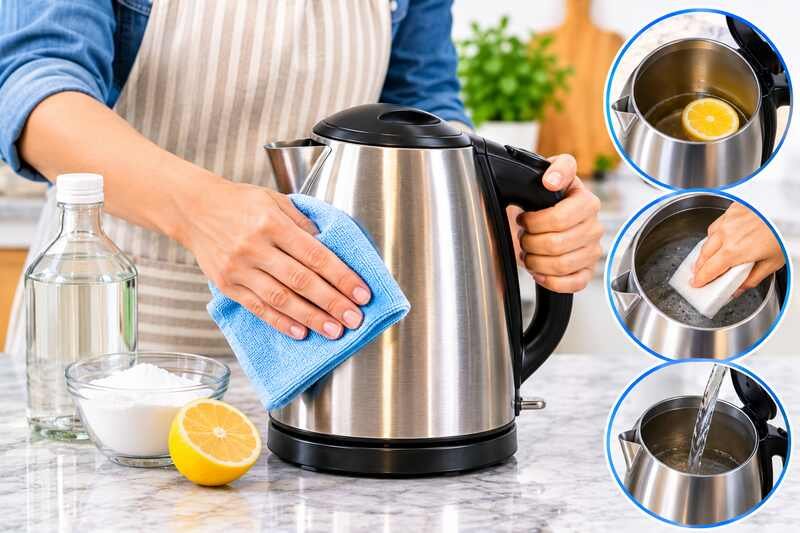
Knowing how to clean an electric kettle keeps your tea and coffee tasting fresh and helps the appliance last for years. Most people boil water daily but rarely clean the kettle itself, so mineral film, fingerprints, and even musty odors build up over time. Fortunately, the job takes only a few minutes with items you already own, such as white vinegar, baking soda, and dish soap. In this guide, you will learn how to clean the inside, the outside, the filter, and the base. In addition, we cover how to deal with mold, plastic smells, and stale-water odors, plus a simple cleaning schedule for U.S. homes.

Key Takeaways
- Always unplug the kettle, let it cool, and never put the base or the kettle body under running water or in a dishwasher.
- For routine cleaning, empty the kettle after each use and leave the lid open so the inside can dry.
- In NSF International’s household germ study of 22 families, yeast and mold turned up in 50% of coffee maker reservoirs, which shows how standing water invites growth.
- Also, a vinegar soak handles most inside buildup, while baking soda paste works well on outside stains and odors.
- Finally, match your deep-cleaning schedule to your water hardness, since hard water leaves scale much faster.
What You Need to Clean an Electric Kettle
Before you learn how to clean an electric kettle, gather a few basic supplies. Most of them cost very little, and you probably have them in your kitchen already.
- White distilled vinegar: In U.S. stores, it is typically labeled 5% acidity, which is strong enough to loosen mineral film.
- Baking soda: Also, it works as a gentle scrub and a natural odor absorber.
- Lemon or citric acid: These are a milder-smelling alternative to vinegar.
- Dish soap: In addition, a few drops of mild soap handle grease on the outside.
- Soft cloths and sponges: Choose microfiber or non-scratch sponges.
- A soft brush or old toothbrush: Finally, this reaches the spout, filter, and lid hinge.
Above all, avoid steel wool, scouring powder, and bleach. They can scratch stainless steel, cloud glass, and damage plastic parts.
Safety First: Rules Before You Clean
An electric kettle combines water and electricity, so a few rules matter more than any cleaning trick. First, unplug the base from the wall. Second, let the kettle cool completely, because a hot kettle can burn you and cold water on hot metal can stress some parts. Third, keep the base dry at all times, since it holds the electrical contacts.
In addition, never submerge the kettle body in water or run it through a dishwasher unless the manual says it is safe. Most kettles have electrical parts in the bottom of the body as well as in the base. Therefore, when you clean an electric kettle exterior, use a damp cloth rather than a faucet stream. Finally, check your user manual, because some brands list specific products to avoid.
How to Clean the Inside of an Electric Kettle
The inside is where taste problems start. Over time, minerals in tap water leave a chalky film, and leftover water can turn stale. Here is how to clean an electric kettle interior in about 30 minutes, mostly hands-off.
- Empty and rinse. First, pour out any old water and rinse the inside with fresh water.
- Add the cleaning solution. Then fill the kettle about halfway with equal parts white vinegar and water.
- Heat it. Next, bring the mixture to a boil and switch the kettle off.
- Let it soak. After that, leave it for 15 to 30 minutes so the acid can loosen deposits.
- Scrub gently. Use a soft brush on any remaining spots, especially near the heating plate.
- Rinse thoroughly. Pour out the solution and rinse two or three times.
- Boil clean water. Finally, boil a full kettle of plain water and discard it to remove any vinegar taste.
If you dislike the smell of vinegar, use the juice of one lemon or one tablespoon of citric acid in a full kettle of water instead. Both work the same way, because they are mild acids. However, heavy white crust usually needs a dedicated descaling routine, and we cover that in a separate guide.
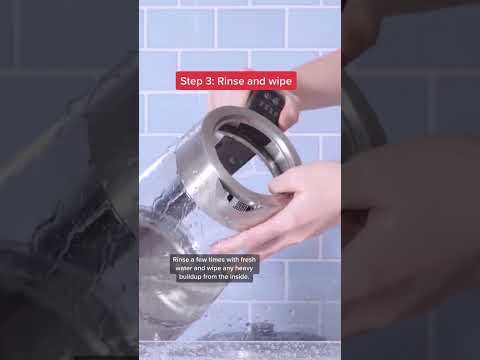
Video: Good Housekeeping shows how to clean stubborn buildup from an electric kettle.
How to Clean the Outside of an Electric Kettle
The outside collects fingerprints, splashes, and kitchen grease, especially if the kettle sits near the stove. Choosing how to clean an electric kettle exterior depends on the material, so use the table below as a quick guide.
| Exterior Material | Best Cleaner | Avoid | Finishing Tip |
|---|---|---|---|
| Stainless steel | Warm water with a drop of dish soap | Steel wool, bleach | Wipe with the grain and buff dry |
| Glass | Half vinegar, half water | Abrasive powder | Dry with microfiber to prevent spots |
| Plastic | Mild dish soap and water | Solvents, harsh sprays | Use baking soda paste on stains |
| Painted or enamel finish | Damp cloth only | Scrubbing pads | Pat dry to protect the finish |
Stainless Steel Kettles
To begin with, dampen a soft cloth with warm, soapy water and wipe the kettle in the direction of the grain. Then wipe again with a clean, damp cloth and buff it dry. For greasy spots, a paste of baking soda and a little water lifts residue without scratching. Similarly, our guide on how to clean discolored stainless steel pots covers rainbow stains and heat tint, which can also appear near a kettle’s base.
Glass Kettles
Glass shows every water spot, so dry it well after cleaning. A spray of equal parts vinegar and water removes most film. In addition, wipe the inside of the lid and the seam where the glass meets the metal base, since minerals tend to collect there.
Plastic Kettles
Plastic exteriors can yellow or stain over time. Generally, mild soap and water handle daily grime. For tougher marks, rub a baking soda paste on gently, wait five minutes, and wipe it off. However, avoid strong solvents, because they can cloud or crack the plastic.

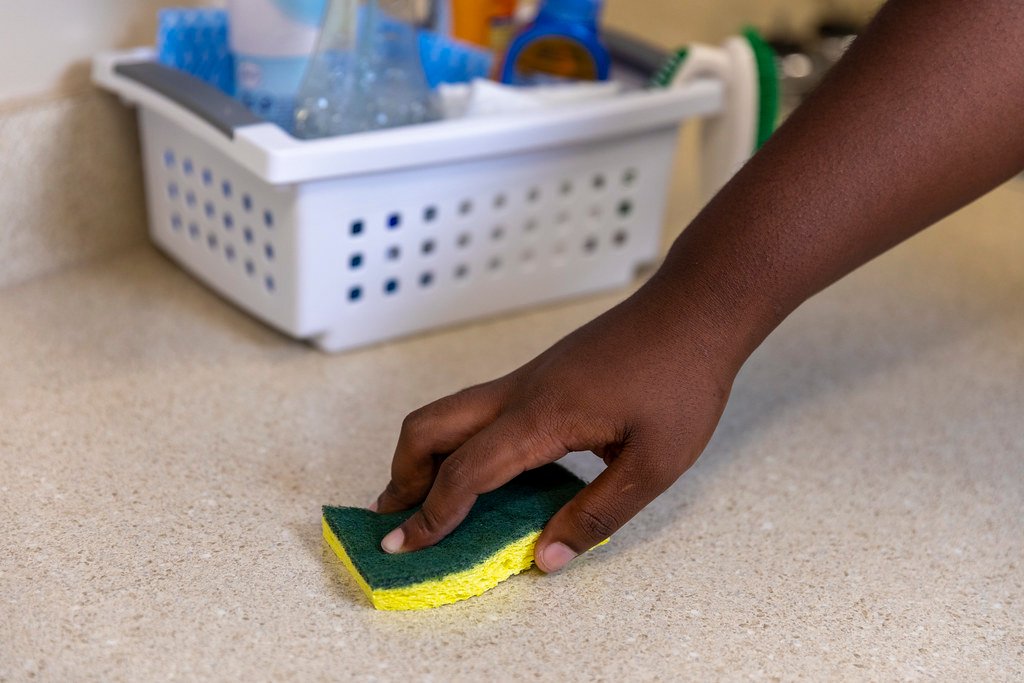
Photo: Alabama Extension via Flickr (CC0).
How to Clean the Filter, Spout, Lid, and Base
These small parts are easy to forget when you learn how to clean an electric kettle, yet they often hold the most buildup. Fortunately, each one takes only a minute.
- Filter: First, slide out the mesh filter if it is removable. Then soak it in warm vinegar water for 10 minutes and brush it gently.
- Spout: Next, use a soft toothbrush dipped in vinegar to clear the inside of the spout.
- Lid and hinge: Also, wipe the underside of the lid and the hinge, where steam leaves mineral spots.
- Base: Finally, wipe the base with a dry or barely damp cloth only, and make sure it is fully dry before you plug it in.
If the filter is torn or bent, replace it. A damaged filter lets scale flakes into your cup, and many brands sell replacements.
How to Remove Mold from an Electric Kettle
Mold in a kettle sounds unlikely, since boiling water kills many microbes. However, mold can grow in the spout, lid seal, filter, and any water left sitting for days. Warm, dark, damp spaces are ideal for it. For context, NSF International’s household germ study swabbed common items in 22 homes and found yeast and mold in 50% of coffee maker reservoirs, according to a summary published by MDLinx. Kettles were not part of that study, but the same principle applies: standing water is the problem.
Here is how to clean an electric kettle that shows black, green, or pink spots:
- Empty the kettle. First, discard all water and remove the filter.
- Scrub visible spots. Then scrub the spots with warm, soapy water and a soft brush.
- Soak with vinegar. Next, fill the kettle with equal parts vinegar and water, boil it, and let it sit for 30 minutes.
- Clean the seals. In addition, wipe the lid gasket and spout with a cloth dipped in vinegar.
- Rinse and boil twice. After that, rinse well and boil plain water two times, discarding each batch.
- Dry with the lid open. Finally, leave the lid open for several hours so every surface dries.
If mold keeps coming back, or if it has grown into cracks or under a seal you cannot reach, replace the kettle. Above all, never drink water from a kettle with visible mold.
How to Get Rid of Odors in an Electric Kettle

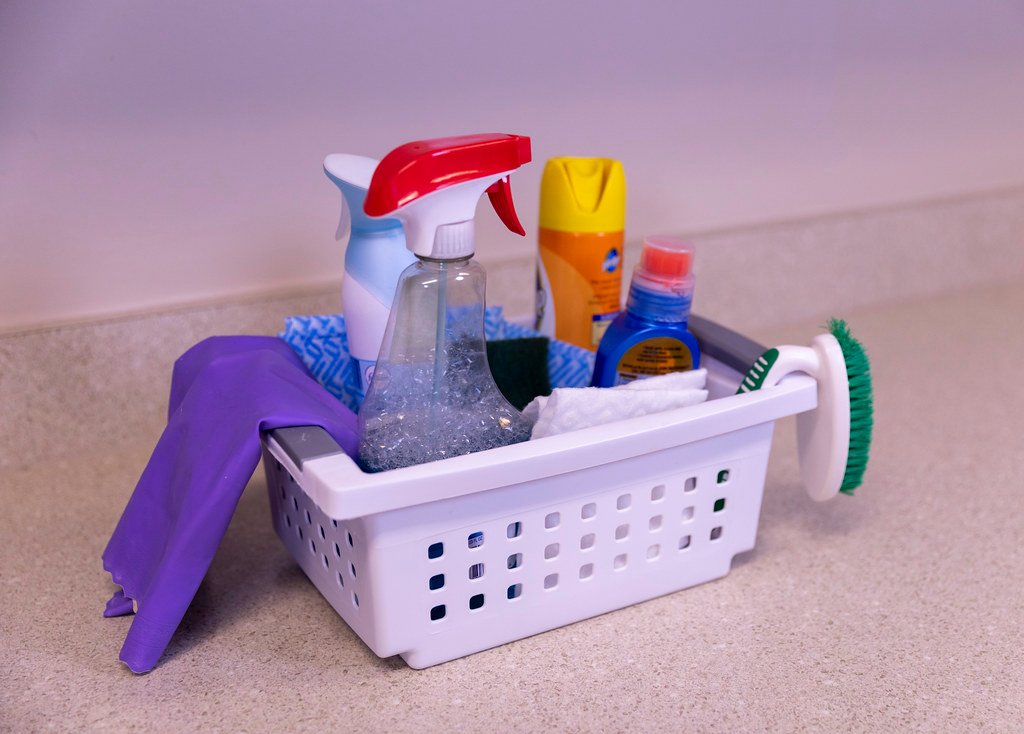
Photo: Alabama Extension via Flickr (CC0).
Odd smells are one of the most common kettle complaints. Usually, the cause falls into one of three groups, so knowing how to clean an electric kettle for each one makes the fix simple.
| Odor | Likely Cause | Fix |
|---|---|---|
| Plastic or chemical smell | New kettle residue | Boil and discard water 3 to 5 times, then try a lemon boil |
| Musty or stale smell | Water left sitting, mold in seals | Vinegar soak, then dry with the lid open |
| Metallic taste | New stainless steel or heavy scale | Boil and discard water, then descale |
| Chlorine smell | City tap water | Use filtered water or let tap water sit before boiling |
New Kettle Plastic Smell
Many new kettles smell like plastic for the first few uses. To fix it, fill the kettle, boil, and discard the water three to five times. Then boil water with a few lemon slices or a tablespoon of baking soda, let it sit for an hour, and rinse. If a strong chemical smell remains after a week, contact the seller, since it may signal a defect. Similarly, our guide on how to get burnt plastic smell out of a dishwasher explains why heat makes plastic odors stronger.
Musty or Stale Odors
Stale smells come from water that sits for days. Therefore, the best prevention is to empty the kettle after each use. If the smell is already there, run a vinegar soak, clean the seals, and dry the kettle with the lid open overnight.
How Often Should You Clean an Electric Kettle?
How often you need to clean an electric kettle depends mostly on your water. In other words, knowing how to clean an electric kettle on a schedule comes down to water hardness. The U.S. Geological Survey classifies water as soft at 0–60 mg/L of calcium carbonate and very hard above 180 mg/L, according to its water hardness FAQ. Harder water leaves scale faster, so it needs more frequent deep cleaning.
| Task | Soft Water | Hard Water |
|---|---|---|
| Empty and air-dry | After every use | After every use |
| Wipe the outside | Weekly | Weekly |
| Rinse filter and spout | Every 2 weeks | Weekly |
| Vinegar or citric acid soak | Every 2–3 months | Every 2–4 weeks |
This schedule is our practical suggestion, so adjust it to what you see inside your kettle. To find your hardness, check your water utility’s annual quality report. If scale is a constant fight, our guide to water descaler vs. water softener compares whole-home options.
Common Mistakes When Cleaning a Kettle
- Submerging the kettle. Water can reach the electrical parts and ruin the appliance.
- Using bleach. In fact, bleach can leave a taste and may damage stainless steel.
- Skipping the rinse boil. Otherwise, your next cup of tea may taste like vinegar.
- Storing water in the kettle. Instead, empty it after each use to prevent stale odors.
- Scrubbing glass with abrasives. As a result, you may leave permanent scratches.
- Forgetting the filter. Meanwhile, a clogged filter slows pouring and traps scale flakes.
Also, hard water affects other appliances too. For example, our guide on how to clean hard water from a dishwasher uses the same acid-based approach.
Tips to Keep Your Kettle Clean Longer
Once you know how to clean an electric kettle, a few small habits reduce how often you need a deep clean.
- Use filtered water. First, a pitcher filter reduces some minerals and chlorine taste.
- Boil only what you need. Then less water sits in the kettle afterward.
- Dry the outside after spills. In addition, quick wipes prevent hard-water spots.
- Keep it away from the stove. Similarly, distance limits grease splatter on the exterior.
- Replace worn parts. Finally, a cracked lid seal or damaged filter is worth replacing.
If your kettle is old, heavily scaled, or still smells after cleaning, it may be time for a new one. Our guide to the best electric kettle compares models by material, capacity, and buyer ratings. And if you also brew on the stove, see our guide on how to make tea in a pot on the stove.
FAQ
What is the easiest way to clean an electric kettle?
The easiest way is a vinegar soak. Fill the kettle halfway with equal parts white vinegar and water, boil it, and let it sit for 15 to 30 minutes. Then rinse well and boil plain water once to remove the taste.
Can I put my electric kettle in the dishwasher?
No, not unless the manual specifically says it is dishwasher safe. Most kettle bodies contain electrical parts, so water can damage them.
How do I clean an electric kettle without vinegar?
You can use the juice of one lemon or one tablespoon of citric acid in a full kettle of water. Both are mild acids, so they loosen mineral film in the same way.
Is it safe to use baking soda inside a kettle?
Yes. Baking soda is safe and helps with odors. However, it is a mild base rather than an acid, so it does little against hard white scale.
Why does my kettle smell after cleaning?
Usually, a lingering smell means the rinse was too short. Therefore, rinse two or three times and boil plain water once or twice before using it again.
Final Thoughts
Now you know how to clean an electric kettle inside and out, from the filter and spout to the base. In short, unplug it, let it cool, use vinegar or citric acid inside, and wipe the outside with mild soap. In addition, empty the kettle after each use to prevent mold and stale odors. With a few minutes of care each week, your kettle will heat faster, look better, and make cleaner-tasting tea and coffee for years.


Hey, My name is MAMON. I am a SEO content creator and affiliate marketer with over 8 years of experience. I create honest product reviews, in-depth buying guides, and practical how-to articles to help readers make informed decisions. My mission is to provide trustworthy, research-backed content that delivers real value.