

The electric kettle vs stovetop kettle debate comes down to speed, efficiency, convenience, and personal style. Electric kettles plug into the wall, boil quickly, and shut off on their own. Stovetop kettles sit on a burner, last for decades, and work even when the power is out on a gas range. So, which one belongs in your kitchen? In this guide, we compare both types on boil time, energy use, safety, cost, durability, and taste, using ENERGY STAR efficiency data and simple physics. We also cover induction kettles and help you decide based on how you actually use hot water.
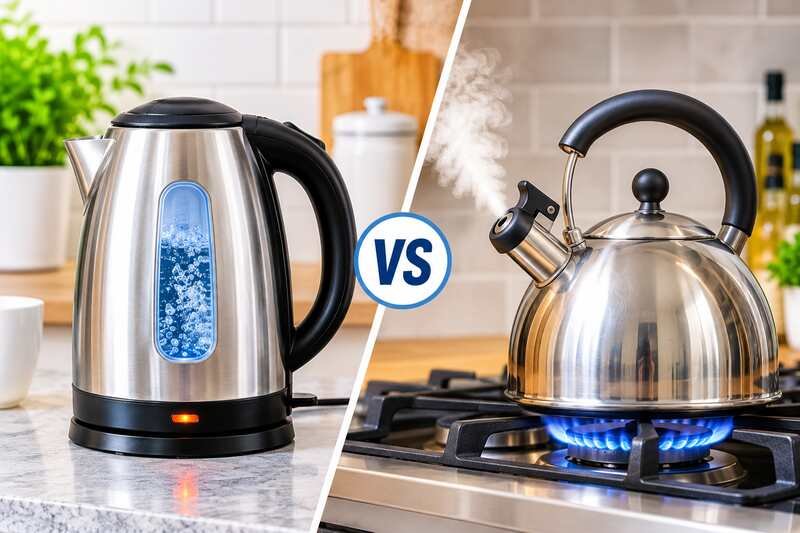

Key Takeaways
- Electric kettles are usually faster and more energy efficient than stovetop kettles on gas, which ENERGY STAR rates at only about one-third efficiency.
- On an induction cooktop, which ENERGY STAR rates at about 85% efficiency, a compatible stovetop kettle can match or beat an electric kettle.
- Electric kettles shut off automatically, while stovetop kettles rely on a whistle and your attention.
- Stovetop kettles have no electrical parts, so they often last longer and work on a gas stove during power outages.
- Above all, choose electric for speed and convenience, and choose stovetop for durability, simplicity, and style.
Electric Kettle vs Stovetop Kettle: Quick Comparison
To start, here is a side-by-side electric kettle vs stovetop kettle look before we dig into each factor.
| Factor | Electric Kettle | Stovetop Kettle |
|---|---|---|
| Heat source | Built-in element, wall outlet | Gas, electric coil, or induction burner |
| Typical speed for 1 liter | Fast | Slower on gas, fast on induction |
| Energy efficiency | High | Low on gas, high on induction |
| Auto shut-off | Yes | No |
| Temperature control | Available on many models | Thermometer only |
| Works without electricity | No | Yes, on a gas stove |
| Lifespan | Several years | Often decades |
| Counter space | Needs a spot and an outlet | Lives on the stove |
The speed and lifespan rows are general comparisons based on how each type works, not lab test results.
Speed: Which Boils Water Faster?
Speed is often the first question in any electric kettle vs stovetop kettle comparison. In most U.S. kitchens, an electric kettle boils water faster than a stovetop kettle on a gas burner. To show why, we estimated boil times for 1 liter of room-temperature water. We used ENERGY STAR’s efficiency figures for gas and induction, an assumed 80% efficiency for the electric kettle, and a typical 9,000 BTU per hour gas burner.
| Method | Input Power | Efficiency Used | Estimated Time for 1 Liter |
|---|---|---|---|
| Electric kettle | 1,500 W | 80% (assumed) | About 4.7 minutes |
| Stovetop kettle on gas | 9,000 BTU/hr (about 2,640 W) | About 33% | About 6.4 minutes |
| Stovetop kettle on induction | 1,800 W | About 85% | About 3.6 minutes |
These estimates are simplified, so real times vary with burner size, kettle shape, and starting water temperature. Still, the pattern is clear: electric kettles beat gas, while induction can be the fastest of all.

Video: Basic Barista compares stovetop and electric kettles for coffee.
Energy Efficiency
Efficiency is where the electric kettle vs stovetop kettle comparison gets interesting. According to an ENERGY STAR guide to electric cooking products, induction cooking is about 85% efficient, while gas cooking is only about one-third efficient. In other words, about two-thirds of the heat from a gas flame never reaches the food or water.
An electric kettle avoids most of that loss, because its element sits right under the water. As a result, it typically uses less than half the energy of a stovetop kettle on gas for the same amount of water. However, a stovetop kettle on induction can be just as efficient as an electric kettle.
| Setup | Approximate Energy for 1 Liter |
|---|---|
| Electric kettle (80% assumed) | 0.12 kWh |
| Stovetop kettle on induction (85%) | 0.11 kWh |
| Stovetop kettle on gas (33%) | 0.28 kWh equivalent |
Keep in mind that gas is often cheaper per unit of energy than electricity, so lower efficiency does not always mean higher cost. For electric costs, the EIA reported a U.S. average residential price of 18.16 cents per kWh for August 2026, which puts an electric kettle’s liter at roughly 2 cents.
Safety

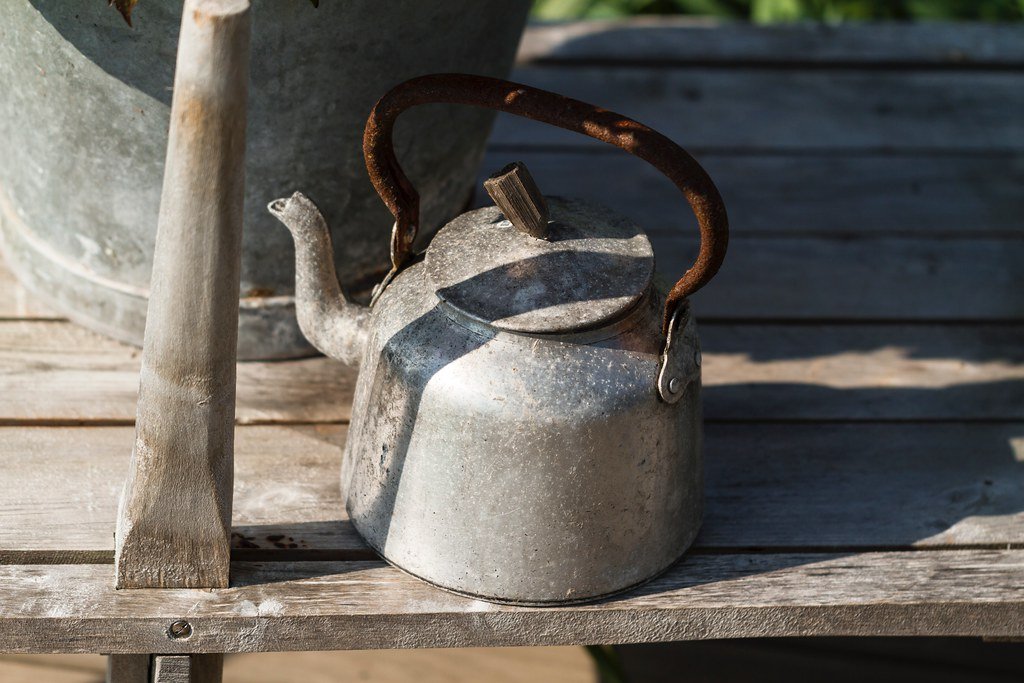
Photo: John Beans via Flickr (CC BY 2.0).
On safety, the electric kettle vs stovetop kettle comparison clearly favors electric for everyday use. First, they shut off automatically when the water boils. Second, most include boil-dry protection. Third, there is no open flame or hot burner left behind. In contrast, a stovetop kettle depends on its whistle and your attention. If you forget it, it can boil dry, scorch, and even damage the burner.
That said, stovetop kettles have no electrical parts to fail, and they are not affected by product recalls on cords or switches. For example, the CPSC recalled about 113,440 ZWILLING ENFINIGY 1.5 L electric kettles in 2026 after reports of handles loosening. So, whichever you choose, check handles, buy from known brands, and follow safe habits.
Convenience and Features
Generally, electric kettles win on features. For example, many offer temperature presets, keep-warm modes, and cordless bases. In addition, they free up a burner while you cook. On the other hand, stovetop kettles are simple: no buttons, no settings, and nothing to program.
- Temperature control: First, electric models can hit 175°F for green tea or 200°F for coffee at the press of a button.
- Keep-warm: Also, many electric kettles hold water hot for 30 minutes or more.
- Burner use: In addition, an electric kettle leaves every burner free.
- Portability: Meanwhile, an electric kettle works anywhere with an outlet, including offices and dorms.
- Power outages: Finally, a stovetop kettle on a gas range still works when the power is out.
For tea lovers, temperature matters. According to the Tea Association of the USA, green tea brews best at 165–185°F, which is easy with a temperature-control electric kettle and harder with a stovetop model.
Durability and Lifespan
On durability, however, stovetop kettles usually last longer. After all, a good stainless steel or enamel kettle has no electronics, so it can last for decades with basic care. Electric kettles, by contrast, have heating elements, thermostats, switches, and cords that can wear out. Many last several years with regular descaling, but they rarely last as long as a quality stovetop kettle.
Cost
In terms of price, both types come in a wide range, from budget models to premium designer pieces. In general, basic electric kettles and basic stovetop kettles cost about the same. However, feature-rich electric kettles with temperature control and keep-warm modes usually cost more. Over time, a stovetop kettle may be cheaper because it lasts longer, while an electric kettle may save a little energy compared with gas. For broader budgeting, see our kitchen appliance pricing guide.
Taste and Water Quality
Overall, water from either kettle tastes the same if both are clean. However, materials can make a difference. Some new plastic electric kettles have a plastic smell at first, while new stainless steel kettles may taste slightly metallic. Both usually fade after a few boil-and-discard cycles. In addition, hard water leaves scale in both types, so regular descaling keeps the taste fresh. Our guide to water descaler vs. water softener explains how to reduce scale at the source.
What About Induction Kettles?

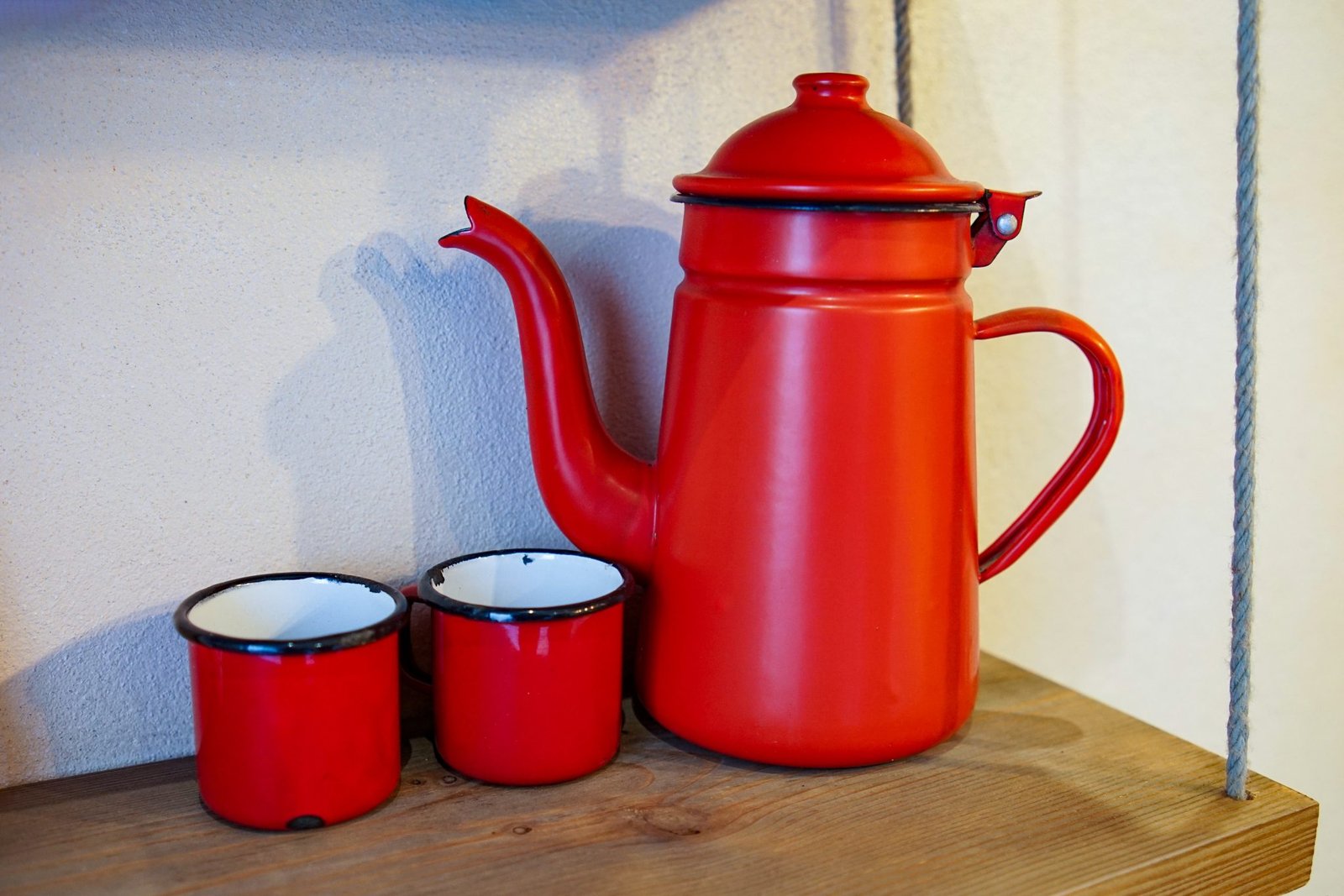
Photo: Nilo Velez via the WordPress Photo Directory (CC0).
Simply put, an induction kettle is a stovetop kettle with a magnetic base that works on induction cooktops. Because induction heats the kettle directly through a magnetic field, it is highly efficient and very fast. If you already cook on induction, a compatible stovetop kettle can be an excellent alternative to an electric kettle.
To check compatibility, hold a magnet to the bottom of the kettle. If it sticks firmly, the kettle will usually work on induction. Many enameled steel and magnetic stainless steel kettles pass this test, while aluminum, copper, and glass kettles usually do not.
Electric Kettle vs Stovetop Kettle for Coffee
Coffee brewers often face the electric kettle vs stovetop kettle choice when buying a gooseneck for pour-over. Both styles come with long, thin spouts. However, electric gooseneck kettles usually add precise temperature settings, which help you hit the 198–205°F range many baristas aim for. In contrast, a stovetop gooseneck needs a separate thermometer or a short wait after boiling. As a result, electric models are easier for consistent pour-over, while stovetop goosenecks appeal to people who want simplicity or already own an induction cooktop.
Electric Kettle vs Stovetop Kettle for Tea
For black and herbal tea, either kettle works well, since both teas use fully boiling water. On the other hand, green, white, and oolong teas taste best below a boil. Therefore, tea drinkers who enjoy those styles often prefer a temperature-control electric kettle. Meanwhile, people who mostly brew black tea for a crowd may love a large stovetop kettle that holds more water and keeps the ritual simple.
Cleaning and Maintenance Differences
Both kettles collect limescale from hard water, so both need regular descaling with vinegar or citric acid. However, the details differ:
- Electric kettles: First, never submerge the kettle or base, because they contain electrical parts.
- Stovetop kettles: In contrast, many can be washed like a regular pot, although enamel needs gentle care.
- Outside surfaces: Also, stovetop kettles collect soot or burnt-on grease from the burner, while electric kettles mainly collect fingerprints.
- Parts to replace: Finally, electric kettles may need a new filter, while stovetop kettles may need a new whistle cap or handle over time.
If your stovetop kettle shows heat stains, our guide on how to clean discolored stainless steel pots works well on kettles too.
Space and Kitchen Layout
An electric kettle needs a spot on the counter near an outlet, ideally away from the sink and the counter edge. Meanwhile, a stovetop kettle can live on a back burner, which saves counter space in small kitchens. However, it may get in the way when you need every burner for a big meal. For layout ideas, our guide on where to put a coffee maker in the kitchen applies to kettles as well.
Which One Should You Choose?
Ultimately, the best electric kettle vs stovetop kettle choice depends on your kitchen and habits.
| Your Situation | Better Choice |
|---|---|
| You want the fastest boil on a gas or coil stove | Electric kettle |
| You drink green, white, or oolong tea | Temperature-control electric kettle |
| You cook on induction | Either, including an induction-compatible stovetop kettle |
| You want a kettle that lasts decades | Stovetop kettle |
| You have frequent power outages and a gas stove | Stovetop kettle |
| You live in a dorm or work in an office | Electric kettle |
| You love a classic look and whistle | Stovetop kettle |
If you lean electric, our guide to the best electric kettle compares top picks. If you prefer the stove, our guide on how to make tea in a pot on the stove covers stovetop brewing.

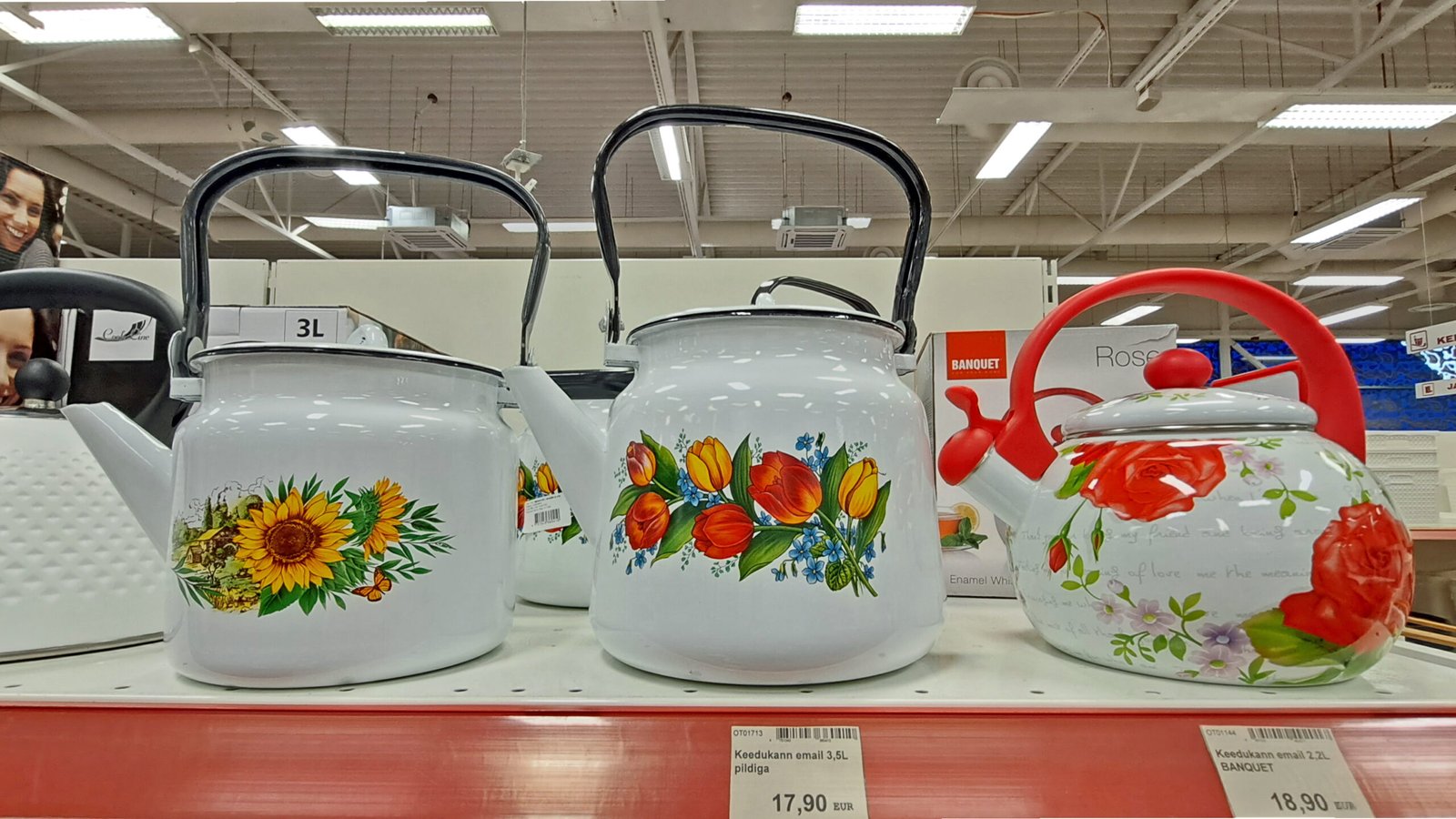
Photo: Liilia Moroz via Wikimedia Commons (CC BY-SA 4.0).
Should You Own Both?
Some households keep one of each, and that can make sense. For example, an electric kettle handles quick weekday tea and coffee, while a large stovetop kettle comes out for holiday gatherings or camping trips. In addition, a stovetop kettle is a handy backup during power outages if you cook on gas. On the other hand, if counter and cabinet space is tight, pick the one that matches your daily routine and skip the duplicate. In short, owning both is a convenience, not a necessity.
Common Myths
- Myth: Stovetop kettles are always slower. In fact, on induction they can be faster than electric kettles.
- Myth: Electric kettles waste electricity. However, they draw high power for only a few minutes.
- Myth: Whistling kettles are unsafe. Instead, they are safe when you stay nearby and keep the handle cool.
Pros and Cons Summary
Electric Kettle
- Pros: Fast, efficient, automatic shut-off, temperature control, frees a burner.
- Cons: Needs an outlet, uses counter space, shorter lifespan, electronics can fail.
Stovetop Kettle
- Pros: Durable, simple, works during outages on gas, classic style.
- Cons: Slower and less efficient on gas, no auto shut-off, can boil dry if forgotten.
FAQ
Is an electric kettle better than a stovetop kettle?
For most people, yes, because it is faster, more efficient on gas homes, and shuts off automatically. However, a stovetop kettle is better for durability and power outages.
Is it cheaper to boil water in an electric kettle or on a gas stove?
It depends on your local rates. An electric kettle uses less energy, but gas is often cheaper per unit, so compare your utility prices.
Can I use a stovetop kettle on an induction cooktop?
Only if it has a magnetic base. Test it with a magnet; if it sticks firmly, it should work.
Do stovetop kettles last longer?
Generally, yes. With no electrical parts, a quality stovetop kettle can last for decades.
Which is safer for kids?
A cool-touch electric kettle with auto shut-off is usually safer, since it turns itself off and has no open flame.
Does water taste different from an electric kettle vs stovetop kettle?
Not if both kettles are clean. In fact, any difference usually comes from new materials or scale, so rinse new kettles well and descale both types regularly.
Final Thoughts
In the electric kettle vs stovetop kettle matchup, there is no single winner for everyone. In short, electric kettles win on speed, efficiency on gas homes, safety, and temperature control. Meanwhile, stovetop kettles win on durability, simplicity, and outage resilience, and they can be just as efficient on induction. Think about your stove type, your favorite drinks, and how often you boil water, and the right choice will be clear.


Hey, My name is MAMON. I am a SEO content creator and affiliate marketer with over 8 years of experience. I create honest product reviews, in-depth buying guides, and practical how-to articles to help readers make informed decisions. My mission is to provide trustworthy, research-backed content that delivers real value.